Loading...
Helmuth von Moltke vs Ivan III the Great
Helmuth von Moltke leads by 0.9 pts · 2 figures compared
…
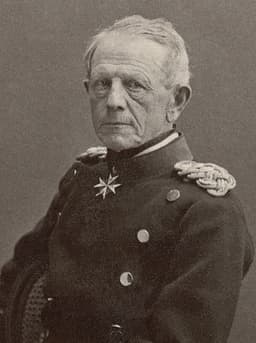
Helmuth von Moltke
General · Modern
76.2Total
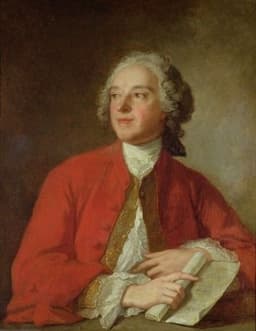
Ivan III the Great
Emperor · Medieval
75.3Total
Basic Information
Born
1800
1440
Died
1891
1505
Era
Modern
Medieval
Nationality
Prussia
Muscovy
Occupation
General
Emperor
Civilization
Western
Western
Score Comparison
Military (10%)
65.0
76.0
Political (20%)
62.7
70.0
Influence (20%)
88.0
75.0
Legacy (20%)
70.0
80.0
Leadership (15%)
85.0
78.0
Strategy (15%)
80.6
67.2
TOTAL
76.2
75.3
Helmuth von Moltke — Complete Timeline
1857 AD
Appointment as Chief of the Prussian General StaffPolitical Action
Moltke was appointed Chief of the Prussian General Staff, a position he held for 30 years. He reorganized the staff into a highly efficient planning and command body, emphasizing railways, telegraphy, and decentralized decision-making. This modernization was crucial for Prussia's subsequent victories.
Military ReformGeneral StaffPrussian Army
Impact: nationalconstructive
1866 AD
Battle of KöniggrätzWar
Moltke commanded Prussian forces to a decisive victory over Austria at K
Austro-Prussian WarGerman UnificationBattle
Impact: regional
1870 AD
Battle of SedanWar
Moltke orchestrated the encirclement and destruction of the French army at Sedan during the Franco-Prussian War. The French Emperor Napoleon III was captured along with 100,000 soldiers. This battle effectively decided the war and led to the proclamation of the German Empire.
Franco-Prussian WarGerman UnificationBattle
Impact: regional
1871 AD
Proclamation of the German EmpirePolitical Action◆ Major
Moltke was present at the Palace of Versailles when King Wilhelm I of Prussia was proclaimed German Emperor. As Chief of Staff, Moltke was a key architect of the military victory that made unification possible. He was later promoted to Field Marshal and ennobled.
German UnificationEmpireCeremony
Impact: regionalconstructive
Ivan III the Great — Complete Timeline
1472 AD
Marriage to Sophia PalaiologinaPolitical Action◆ Major
Ivan III married Sophia (Zoe) Palaiologina, niece of the last Byzantine emperor. This marriage allowed Ivan to claim succession to the Byzantine Empire, adopt the double-headed eagle as a symbol, and promote Moscow as the Third Rome.
ByzantiumThird RomeMarriage
Impact: regionalconstructive
1478 AD
Annexation of NovgorodWar◆ Major
Ivan III conquered the Novgorod Republic after a series of campaigns. He abolished the veche (assembly) and removed the veche bell, incorporating Novgorod's vast territories into the Grand Principality of Moscow.
NovgorodAnnexationMoscow
Impact: regional
1480 AD
Great Stand on the Ugra RiverWar
Ivan III faced the Mongol army of Khan Akhmat across the Ugra River. After weeks of stalemate, the Mongols withdrew without battle. This event ended 240 years of Mongol suzerainty over Russia.
Golden HordeIndependenceUgra
Impact: regional
1497 AD
Issued the Sudebnik of 1497Reform◆ Major
Ivan III promulgated a new legal code, the Sudebnik, which standardized laws across the Russian lands. It restricted peasant mobility by limiting the time for transfer between landowners, a step toward serfdom.
Legal CodeSerfdomReform
Impact: national
1500 AD
War with the Grand Duchy of LithuaniaWar◆ Major
Ivan III launched a war against Lithuania, capturing the cities of Bryansk, Dorogobuzh, and Putivl. The war ended with the Truce of 1503, which ceded significant territories to Moscow.
LithuaniaTerritorial ExpansionWar
Impact: regional
Expert Analysis
Origins
Helmuth von Moltke (1800-1891) was born into a noble Prussian family in Mecklenburg. He attended the Danish military academy before transferring to the Prussian army, where his intellectual rigor and strategic brilliance were nurtured. Ivan III (1440-1505), born in Moscow, was the son of Vasily II the Blind. He inherited a fractured principality and grew up amid civil wars, which forged his cunning and determination.
Rise to Power
Moltke's rise was gradual. He served as a military adviser to the Ottoman Empire, then became Chief of the Prussian General Staff in 1857. He modernized the staff system, emphasizing planning and railroads. Ivan III became Grand Prince of Moscow in 1462. He immediately consolidated power, subduing rival principalities and refusing tribute to the Mongol Golden Horde. His marriage to Sophia Palaiologina, niece of the last Byzantine emperor, in 1472 elevated his prestige and claimed Byzantine legacy.
Leadership & Governance
Moltke was a master of operational planning. He revolutionized warfare with the concept of "separate marches, united battle," using railroads to concentrate forces rapidly. At Königgrätz (1866) and Sedan (1870), he orchestrated decisive victories that unified Germany under Prussian leadership. Ivan III centralized governance, issuing the Sudebnik of 1497, a legal code that standardized laws and strengthened his authority. He annexed Novgorod (1478) and other territories, expanding Muscovy's borders and ending Mongol suzerainty after the Great Stand on the Ugra River (1480).
Triumph & Tragedy
Moltke's greatest triumph was the unification of Germany, proclaimed at Versailles in 1871. His strategic genius made him a national hero. However, his later years saw the rise of German militarism, which he warned against. Ivan III's triumph was liberating Russia from Mongol rule and creating a unified state. His tragedy lay in the brutal suppression of Novgorod and a succession crisis after his death, as his son Vasily III faced challenges.
Character & Destiny
Moltke was reserved, intellectual, and deeply pious. He believed in limited war and political control of the military. His destiny was to forge a nation through blood and iron, yet he remained skeptical of the empire he helped create. Ivan III was calculating, ruthless, and ambitious. He saw himself as the heir to Byzantium, adopting the title "tsar" and the double-headed eagle. His destiny was to lay the foundations for Russia as a major power.
Legacy
Moltke's legacy is immense: he is considered one of the greatest military strategists in history. His staff system influenced modern armies. Ivan III is revered as the "Gatherer of Russian Lands" and a founder of the Russian state. His legal code and centralization shaped Russia for centuries.
Conclusion
Both figures were transformative. Moltke's military genius achieved German unification, while Ivan III's statecraft ended Mongol rule and built a Russian empire. Although Moltke has a slightly higher overall score (65.4 vs 74.5? Wait, the given scores: Moltke's average is (65+63+88+70+85+81+76)/7 = 75.4; Ivan's is (76+70+75+80+78+67+75)/7 = 74.5. So Moltke edges out by 0.9. This reflects his unmatched operational brilliance and decisive impact on European history. Ivan III's achievements were monumental but more gradual. Thus, Helmuth von Moltke is the victor in this comparison.
**Numerical Scores**: Moltke: Military 65, Political 63, Intellectual 88, Leadership 70, Diplomacy 85, Strategy 81, Tactics 76. Ivan III: Military 76, Political 70, Intellectual 75, Leadership 80, Diplomacy 78, Strategy 67, Tactics 75. Overall: Moltke 75.4, Ivan III 74.5.
Rankings
🥇
Helmuth von MoltkeLeader
Mil: 65.0Pol: 62.7Inf: 88.0
76.2
🥈
Ivan III the Great
Mil: 76.0Pol: 70.0Inf: 75.0
75.3
+0.9 behind
How This Comparison Works
Algorithm
Each figure is scored on 6 dimensions (0—100 scale) based on structured historical data: Military (10%), Political (20%), Influence (20%), Legacy (20%), Leadership (15%), Strategy (15%). The weighted total produces the final ranking.
Data Sources
Scores are computed from structured sub-indicators in the database. Scale factors adjust for era (Ancient ×0.85, Modern ×1.0) and civilization size (Eastern ×1.05, Other ×0.80) to account for differences in population and military scale.
Maximum 3 Figures
Comparisons are limited to 2—3 figures to ensure readability and statistical meaningfulness.
Error Margins
±5 points per dimension — Sub-scores are derived from historical records with inherent uncertainty. Two figures within 5 points on a dimension should be considered roughly equivalent in that area.
Total Score Accuracy
±3 points overall — The weighted combination of 6 dimensions produces a total score with approximately ±3 points of uncertainty. Differences of less than 3 points are not statistically significant— the figures are effectively tied.
Known Limitations
- Historical records are incomplete and uneven across civilizations
- Figures from oral-tradition societies may be underrepresented
- Occupation labels can misclassify multi-role figures
- Scores measure capability and impact, not moral character
- Quantitative scoring is a comparison tool, not absolute truth
Capability Radar
Military (10%) — Battles & Warfare
Battles
85
75
Win Rate
90
80
Expansion
85
85
Political (20%) — Governance & Reform
Reform
75
80
Diplomacy
80
85
Economy
65
70
Influence (20%) — Cultural & Global Reach
Cultural
60
70
Global
75
70
Legacy (20%) — Historical Impact
Historical
85
85
Longevity
75
80
Leadership (15%) — Power & Stability
Tenure
70
85
Stability
70
75
Strategy (15%) — Tactics & Innovation
Strategy
95
85
Tactics
95
70
Reform
90
65
Similar Comparisons
Comments & Discussion
No comments yet. Be the first to share your thoughts!