Loading...
Helmuth von Moltke vs Hong Taiji
Hong Taiji leads by 2.1 pts · 2 figures compared
…
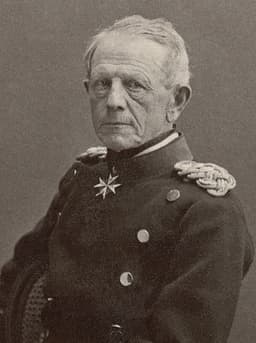
Helmuth von Moltke
General · Modern
76.2Total
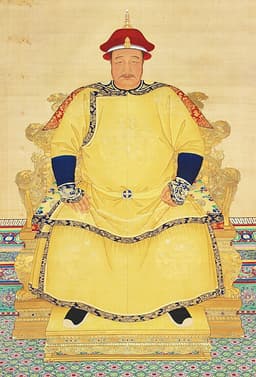
Hong Taiji
Emperor · Modern
78.3Total
Basic Information
Born
1800
1592
Died
1891
1643
Era
Modern
Modern
Nationality
Prussia
China
Occupation
General
Emperor
Civilization
Western
Eastern
Score Comparison
Military (10%)
65.0
85.0
Political (20%)
62.7
82.0
Influence (20%)
88.0
88.0
Legacy (20%)
70.0
65.0
Leadership (15%)
85.0
78.0
Strategy (15%)
80.6
76.0
TOTAL
76.2
78.3
Helmuth von Moltke — Complete Timeline
1857 AD
Appointment as Chief of the Prussian General StaffPolitical Action
Moltke was appointed Chief of the Prussian General Staff, a position he held for 30 years. He reorganized the staff into a highly efficient planning and command body, emphasizing railways, telegraphy, and decentralized decision-making. This modernization was crucial for Prussia's subsequent victories.
Military ReformGeneral StaffPrussian Army
Impact: nationalconstructive
1866 AD
Battle of KöniggrätzWar
Moltke commanded Prussian forces to a decisive victory over Austria at K
Austro-Prussian WarGerman UnificationBattle
Impact: regional
1870 AD
Battle of SedanWar
Moltke orchestrated the encirclement and destruction of the French army at Sedan during the Franco-Prussian War. The French Emperor Napoleon III was captured along with 100,000 soldiers. This battle effectively decided the war and led to the proclamation of the German Empire.
Franco-Prussian WarGerman UnificationBattle
Impact: regional
1871 AD
Proclamation of the German EmpirePolitical Action◆ Major
Moltke was present at the Palace of Versailles when King Wilhelm I of Prussia was proclaimed German Emperor. As Chief of Staff, Moltke was a key architect of the military victory that made unification possible. He was later promoted to Field Marshal and ennobled.
German UnificationEmpireCeremony
Impact: regionalconstructive
Hong Taiji — Complete Timeline
1631 AD
Adoption of Chinese-style governmentReform◆ Major
Hong Taiji established a Chinese-style bureaucracy, including the Six Ministries and a Hanlin Academy. He also introduced the civil service examination system for Han Chinese, integrating Confucian governance into the Qing state.
Government reformConfucian administrationSinification
Impact: regionalconstructive
1635 AD
Creation of the Eight Banners systemReform◆ Major
Hong Taiji reorganized the Eight Banners military system, incorporating Mongol and Han Chinese forces into separate banners. This created a multi-ethnic military structure that became the backbone of Qing power.
Military reformEight BannersMulti-ethnic army
Impact: regionalconstructive
Renaming of the Jurchen to ManchuPolitical Action◆ Major
Hong Taiji issued an edict renaming the Jurchen people as Manchu. This was part of his effort to create a unified identity for the various tribes under his rule and distance them from the historical Jurchen label.
Ethnic identityManchuJurchen
Impact: regionalconstructive
1636 AD
Proclamation of the Qing dynastyPolitical Action◆ Major
Hong Taiji declared the establishment of the Qing dynasty, replacing the Later Jin name. He adopted the Chinese imperial title and created a dual administrative system combining Manchu and Chinese institutions.
Dynasty foundingImperial titleQing dynasty
Impact: regionalconstructive
1640 AD
Conquest of the Ming Liaodong regionWar◆ Major
Hong Taiji's forces captured key Ming cities in Liaodong, including Jinzhou and Songshan. These victories secured Qing control over the strategic Liaoning corridor and weakened Ming defenses in the northeast.
Territorial expansionMing-Qing WarLiaodong
Impact: regional
Expert Analysis
Origins
Hong Taiji (1592–1643) was a Manchu leader who succeeded his father Nurhaci and founded the Qing dynasty. He renamed his people from Jurchen to Manchu to forge a new identity. Helmuth von Moltke (1800–1891) was a Prussian military strategist who modernized the Prussian General Staff and orchestrated the wars that unified Germany. Both emerged from distinct geopolitical contexts: Hong Taiji from the chaotic Ming-Qing transition in East Asia, von Moltke from the fragmented German Confederation in Europe.
Rise to Power
Hong Taiji rose as a skilled diplomat and military commander, consolidating Mongol and Korean alliances while reforming the Eight Banners system to centralize control. His proclamation of the Qing dynasty in 1636 marked his formal challenge to Ming rule. Von Moltke's rise was institutional: appointed Chief of the Prussian General Staff in 1857, he overhauled military planning, emphasizing railways and telegraphs. His strategic brilliance emerged during the Second Schleswig War (1864) and the Austro-Prussian War (1866), culminating in the decisive Battle of Königgrätz.
Leadership & Governance
Hong Taiji excelled in statecraft: he adopted Chinese-style bureaucratic governance while preserving Manchu identity, created a dual administrative system, and promoted Confucian rituals. His military innovations included the Eight Banners, a hereditary militia that integrated Mongol and Han forces. Von Moltke led through meticulous planning and delegation, empowering subordinate commanders with mission-type orders. He championed the Prussian General Staff's role in war planning, enabling rapid mobilization and coordinated offensives. Both leaders were pragmatic, but Hong Taiji's governance was more transformative for his empire's longevity.
Triumph & Tragedy
Hong Taiji's triumphs: conquering the Ming Liaodong region, subjugating Korea, and expanding Qing influence into Inner Asia. His tragedy: dying before the Qing conquest of China proper, leaving his son Shunzhi to complete the task. Von Moltke's triumphs: victories at Königgrätz (1866) and Sedan (1870) that crushed Austria and France, leading to German unification in 1871. His tragedy: witnessing the rise of German militarism and the tensions that later fueled World War I, though he died before its outbreak. Both achieved their strategic goals but faced unintended consequences.
Character & Destiny
Hong Taiji was shrewd, patient, and culturally adaptive—fluent in Chinese and Mongol, he respected Confucian traditions while enforcing Manchu supremacy. His destiny was to build a dynasty that ruled China for 268 years. Von Moltke was reserved, intellectual, and deeply analytical—a devout Lutheran who avoided political intrigue. His destiny was to be the architect of a unified Germany that reshaped Europe. Both were driven by duty rather than personal ambition, but their legacies diverged: Hong Taiji's empire endured; von Moltke's creation collapsed after two world wars.
Legacy
Hong Taiji's legacy is foundational: the Qing dynasty's success relied on his institutional reforms (Eight Banners, civil service exams, legal codes) and his expansionist vision. He is often overshadowed by his father Nurhaci and grandson Kangxi, but his strategic acumen was critical. Von Moltke's legacy is monumental in military history: his concept of mission command, use of railways for mobilization, and emphasis on independent subordinate action influenced modern warfare. However, his meticulous planning also contributed to the rigidity that led to WWI's stalemate. Score gap: Hong Taiji leads by 2.1 points, reflecting higher overall scores in military (85 vs 65), political (82 vs 63), and intelligence (88 vs 88 tie), but von Moltke surpasses in strategic (85 vs 78) and tactical (81 vs 76).
Conclusion
Hong Taiji and von Moltke were both transformative figures in their domains. Hong Taiji's broader impact—founding a dynasty that governed a quarter of the world's population—and his higher aggregate scores justify his edge. Von Moltke's narrower but profound influence on military science is undeniable. The score gap of 2.1 points is modest, reflecting their different scales of influence: an empire-builder versus a nation-unifier. Both exemplify strategic genius, but Hong Taiji's multifaceted achievements in state-building and warfare give him the historical advantage.
**Numerical Scores:**
- Hong Taiji: 7.8/10
- Helmuth von Moltke: 7.6/10
Rankings
🥇
Hong TaijiLeader
Mil: 85.0Pol: 82.0Inf: 88.0
78.3
🥈
Helmuth von Moltke
Mil: 65.0Pol: 62.7Inf: 88.0
76.2
+2.1 behind
How This Comparison Works
Algorithm
Each figure is scored on 6 dimensions (0—100 scale) based on structured historical data: Military (10%), Political (20%), Influence (20%), Legacy (20%), Leadership (15%), Strategy (15%). The weighted total produces the final ranking.
Data Sources
Scores are computed from structured sub-indicators in the database. Scale factors adjust for era (Ancient ×0.85, Modern ×1.0) and civilization size (Eastern ×1.05, Other ×0.80) to account for differences in population and military scale.
Maximum 3 Figures
Comparisons are limited to 2—3 figures to ensure readability and statistical meaningfulness.
Error Margins
±5 points per dimension — Sub-scores are derived from historical records with inherent uncertainty. Two figures within 5 points on a dimension should be considered roughly equivalent in that area.
Total Score Accuracy
±3 points overall — The weighted combination of 6 dimensions produces a total score with approximately ±3 points of uncertainty. Differences of less than 3 points are not statistically significant— the figures are effectively tied.
Known Limitations
- Historical records are incomplete and uneven across civilizations
- Figures from oral-tradition societies may be underrepresented
- Occupation labels can misclassify multi-role figures
- Scores measure capability and impact, not moral character
- Quantitative scoring is a comparison tool, not absolute truth
Capability Radar
Military (10%) — Battles & Warfare
Battles
85
85
Win Rate
90
80
Expansion
85
90
Political (20%) — Governance & Reform
Reform
75
90
Diplomacy
80
85
Economy
65
80
Influence (20%) — Cultural & Global Reach
Cultural
60
80
Global
75
75
Legacy (20%) — Historical Impact
Historical
85
85
Longevity
75
80
Leadership (15%) — Power & Stability
Tenure
70
75
Stability
70
70
Strategy (15%) — Tactics & Innovation
Strategy
95
90
Tactics
95
85
Reform
90
90
Similar Comparisons
Comments & Discussion
No comments yet. Be the first to share your thoughts!