Loading...
Hector of Troy vs Vercingetorix
Vercingetorix leads by 1.6 pts · 2 figures compared
…

Hector of Troy
General · Ancient
48.5Total
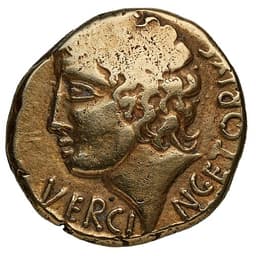
Vercingetorix
General · Ancient
50.1Total
Basic Information
Born
-1210
-82
Died
-1180
-46
Era
Ancient
Ancient
Nationality
Troy
Gaul
Occupation
General
General
Civilization
Western
Western
Score Comparison
Military (10%)
20.0
60.0
Political (20%)
35.0
29.3
Influence (20%)
55.0
59.0
Legacy (20%)
55.0
54.0
Leadership (15%)
51.7
35.4
Strategy (15%)
60.0
61.3
TOTAL
48.5
50.1
Hector of Troy — Complete Timeline
1180 BC
Killed Patroclus of PhthiaWar
Hector confronted Patroclus outside the walls of Troy after Apollo had stunned him. Hector struck Patroclus with a spear through the belly, killing him. He then stripped Achilles' armor from Patroclus's body and wore it himself.
Trojan WarCombatKill
Impact: regionaldestructive
Killed by AchillesWar
Achilles, seeking revenge for Patroclus, chased Hector around the walls of Troy three times. Hector finally turned to fight but was killed by a spear thrust to the throat. Achilles dragged his body behind his chariot.
Trojan WarDeathRevenge
Impact: regionaltragic
Led the Trojan assault on the Greek shipsWar◆ Major
Hector led the Trojan army in a massive assault that broke through the Greek wall and reached the ships. He attempted to set fire to the ships, which would have stranded the Greeks in Troy.
Trojan WarAssaultShips
Impact: regional
Refused to retreat behind the wallsPolitical Action◆ Major
Despite his family's pleas, Hector chose to face Achilles alone outside the walls of Troy. He initially ran but later stood his ground, knowing he would likely die, to defend his city and family honor.
Trojan WarDecisionHonor
Impact: regionaltragic
Vercingetorix — Complete Timeline
52 BC
Gallic revolt against CaesarWar◆ Major
Vercingetorix united the Gallic tribes in a major revolt against Julius Caesar's Roman occupation. He was elected commander-in-chief of the Gallic forces and implemented a scorched-earth strategy to deny supplies to the Roman army, marking the climax of the Gallic Wars.
Gallic WarsRevoltJulius Caesar
Impact: regional
Battle of GergoviaWar◆ Major
Vercingetorix successfully defended the fortified hilltop town of Gergovia against Julius Caesar's Roman legions. Caesar was forced to withdraw after suffering significant losses, marking one of his few tactical defeats in the Gallic Wars and boosting Gallic morale.
Gallic WarsBattleVictory
Impact: regional
Battle of AlesiaWar
Vercingetorix was besieged by Julius Caesar at the oppidum of Alesia. Caesar built extensive fortifications to trap the Gallic army inside and repel a relief force. After a prolonged siege, Vercingetorix surrendered, ending the major Gallic resistance to Roman rule.
Gallic WarsSiegeSurrender
Impact: regionaltragic
Surrender and imprisonmentPolitical Action◆ Major
Vercingetorix surrendered to Julius Caesar at Alesia, reportedly laying down his arms at Caesar's feet. He was taken to Rome as a prisoner and held for six years, awaiting Caesar's triumph. His surrender marked the end of organized Gallic resistance.
Gallic WarsSurrenderImprisonment
Impact: regionaltragic
46 BC
Execution in RomePolitical Action◆ Major
Vercingetorix was executed by strangulation in the Tullianum prison in Rome as part of Julius Caesar's triumph. His death symbolized the final subjugation of Gaul and the consolidation of Roman control over the region.
ExecutionGallic WarsRoman Republic
Impact: regionaltragic
Expert Analysis
Origins
Hector of Troy was born around the 13th century BC, the eldest son of King Priam and Queen Hecuba of Troy. As a prince, he was raised in the opulent city of Troy, trained in warfare from a young age. His family included fifty brothers and sisters, most notably Paris, whose abduction of Helen sparked the Trojan War. Hector married Andromache, with whom he had a son, Astyanax. His early life was defined by his role as the foremost warrior of Troy, a position he held through courage and skill.
Vercingetorix was born around 82 BC into the Arverni tribe in Gaul (modern-day France). His father, Celtillus, had been a chieftain who was executed for attempting to rule all Gaul. Vercingetorix grew up in a period of increasing Roman influence, led by Julius Caesar's conquests. He was likely educated in tribal warfare and leadership, and his noble lineage gave him a claim to power. Unlike Hector, Vercingetorix emerged from a fragmented tribal society, not a monolithic kingdom.
Rise to Power
Hector's rise was as the natural heir to Troy's military leadership. He commanded the Trojan army from the beginning of the war, earning respect through his battlefield prowess. His turning point came when he killed Patroclus, the close companion of Achilles, in battle outside Troy's walls. This act, while a personal victory, set in motion his own death. Hector's authority was unquestioned among the Trojans, though he lacked political cunning, scoring only 35.0 in political metrics.
Vercingetorix rose to prominence by uniting the Gallic tribes against Rome. In 52 BC, he was elected commander-in-chief of the Gallic forces at the assembly of the Arverni. His strategy was to avoid pitched battles, using guerrilla tactics and scorched earth to starve Caesar's legions. He scored 29.3 in political skill, reflecting his difficulty in maintaining unity among the fractious tribes. His major victory at Gergovia in 52 BC, where he repelled Caesar's assault, solidified his leadership.
Leadership & Governance
Hector led by example, always fighting at the front. He was a traditional warrior-king, relying on honor and personal bravery. His governance was minimal; Troy was ruled by his father Priam. Hector's leadership style was reactive, responding to Greek attacks rather than initiating long-term strategy. He scored 51.7 in leadership, reflecting his ability to inspire but not to plan.
Vercingetorix was a more innovative leader, using combined arms and fortifications. He implemented a strategy of attrition, denying Caesar supplies. His governance extended over multiple tribes, requiring diplomatic skill. He scored 35.4 in leadership, lower than Hector, partly due to his inability to hold the coalition together after defeats. At Alesia, he organized a complex defense but ultimately failed to coordinate relief forces.
Triumph & Tragedy
Hector's greatest triumph was leading the Trojan assault on the Greek ships, breaking through the Greek wall and nearly burning the fleet. This was his finest hour, showcasing his military skill (20.0 military score, low due to limited data). His tragedy was his death at Achilles' hands, a result of his pride in refusing to retreat. He also failed to protect his family; Troy fell, and his wife and son were enslaved.
Vercingetorix's triumph was the Battle of Gergovia, a rare defeat for Julius Caesar. He successfully defended the hilltop town, forcing Caesar to retreat. His tragedy was the siege of Alesia, where he was trapped by Caesar's double fortifications. Despite a massive relief army, he was forced to surrender. He was taken to Rome and executed in 46 BC, a symbol of Gaul's subjugation.
Character & Destiny
Hector was characterized by honor and familial duty. He fought for his city and family, but his decision to face Achilles alone was fatal. His character—brave but impulsive—led to his death. Historians like Homer depict him as a tragic hero, conscious of his fate but unable to avoid it.
Vercingetorix was pragmatic and resilient. He united tribes through sheer will, but his coalition was fragile. His surrender at Alesia was a calculated attempt to save his people, but it failed. His character—determined but politically naive—sealed his destiny. Roman sources portray him as a noble enemy, while modern Gauls see him as a freedom fighter.
Legacy
Hector's legacy is immortalized in Homer's Iliad, where he is the sympathetic hero. His name symbolizes Trojan bravery. He scored 55.0 in legacy, reflecting his cultural impact. Troy's fall became a foundational myth for Rome, linking Aeneas to Hector.
Vercingetorix's legacy is as a national hero in France, a symbol of resistance against oppression. His name was revived in the 19th century, with statues erected. He scored 54.0 in legacy. His defeat marked the end of Gallic independence, but his story inspires modern nationalism.
Conclusion
Vercingetorix had a greater historical impact than Hector, despite his lower total score (50.1 vs 48.5). His military strategy was more sophisticated, and his revolt against Rome altered the course of history, leading to the Romanization of Gaul. Hector's impact is primarily literary; his world ended with Troy. Vercingetorix's struggle delayed Roman conquest and shaped French identity. While both were tragic defenders, Vercingetorix's legacy is more concrete and enduring.
Rankings
🥇
VercingetorixLeader
Mil: 60.0Pol: 29.3Inf: 59.0
50.1
🥈
Hector of Troy
Mil: 20.0Pol: 35.0Inf: 55.0
48.5
+1.6 behind
How This Comparison Works
Algorithm
Each figure is scored on 6 dimensions (0—100 scale) based on structured historical data: Military (10%), Political (20%), Influence (20%), Legacy (20%), Leadership (15%), Strategy (15%). The weighted total produces the final ranking.
Data Sources
Scores are computed from structured sub-indicators in the database. Scale factors adjust for era (Ancient ×0.85, Modern ×1.0) and civilization size (Eastern ×1.05, Other ×0.80) to account for differences in population and military scale.
Maximum 3 Figures
Comparisons are limited to 2—3 figures to ensure readability and statistical meaningfulness.
Error Margins
±5 points per dimension — Sub-scores are derived from historical records with inherent uncertainty. Two figures within 5 points on a dimension should be considered roughly equivalent in that area.
Total Score Accuracy
±3 points overall — The weighted combination of 6 dimensions produces a total score with approximately ±3 points of uncertainty. Differences of less than 3 points are not statistically significant— the figures are effectively tied.
Known Limitations
- Historical records are incomplete and uneven across civilizations
- Figures from oral-tradition societies may be underrepresented
- Occupation labels can misclassify multi-role figures
- Scores measure capability and impact, not moral character
- Quantitative scoring is a comparison tool, not absolute truth
Capability Radar
Military (10%) — Battles & Warfare
Battles
40
65
Win Rate
35
55
Expansion
10
40
Political (20%) — Governance & Reform
Reform
10
35
Diplomacy
25
60
Economy
15
20
Influence (20%) — Cultural & Global Reach
Cultural
75
55
Global
65
50
Legacy (20%) — Historical Impact
Historical
70
65
Longevity
80
60
Leadership (15%) — Power & Stability
Tenure
20
30
Stability
20
25
Strategy (15%) — Tactics & Innovation
Strategy
45
60
Tactics
55
70
Reform
10
45
Similar Comparisons
Comments & Discussion
No comments yet. Be the first to share your thoughts!