Loading...
Corbulo vs Vercingetorix
Corbulo leads by 3.8 pts · 2 figures compared
…

Corbulo
General · Ancient
53.9Total
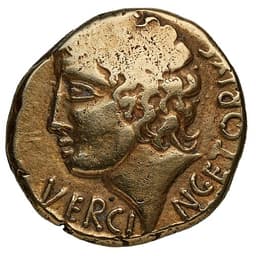
Vercingetorix
General · Ancient
50.1Total
Basic Information
Born
7
-82
Died
67
-46
Era
Ancient
Ancient
Nationality
Roman Empire
Gaul
Occupation
General
General
Civilization
Western
Western
Score Comparison
Military (10%)
65.0
60.0
Political (20%)
33.6
29.3
Influence (20%)
56.4
59.0
Legacy (20%)
50.0
54.0
Leadership (15%)
54.2
35.4
Strategy (15%)
76.0
61.3
TOTAL
53.9
50.1
Corbulo — Complete Timeline
58 AD
Campaign in Armenia (Corbulo)War◆ Major
Corbulo was appointed governor of Cappadocia and Galatia with command against the Parthians in Armenia. He reorganized the Roman army, restored discipline, and captured the Armenian capital Artaxata, installing a Roman client king.
Parthian WarArmeniaMilitary Reform
Impact: regional
59 AD
Capture of TigranocertaWar◆ Major
Corbulo captured the Armenian city of Tigranocerta after a siege. The city surrendered without a major battle. Corbulo then crowned Tigranes VI as king of Armenia, a Roman client, solidifying Roman influence in the region.
SiegeArmeniaClient Kingdom
Impact: regional
63 AD
Retreat from Armenia (Corbulo)War◆ Major
After the Parthians reasserted control over Armenia, Corbulo was ordered to withdraw. He negotiated a compromise with the Parthian king Vologases I, agreeing that a Parthian prince, Tiridates, would rule Armenia as a Roman client, ending the war.
DiplomacyParthiaArmenia
Impact: regional
67 AD
Forced Suicide under NeroPolitical Action◆ Major
Nero, suspicious of Corbulo's popularity and military success, summoned him to Greece and ordered his execution. Corbulo was forced to commit suicide. His death removed a potential rival but also a capable general from the Roman command.
ExecutionNeroPolitical Purge
Impact: nationaltragic
Vercingetorix — Complete Timeline
52 BC
Gallic revolt against CaesarWar◆ Major
Vercingetorix united the Gallic tribes in a major revolt against Julius Caesar's Roman occupation. He was elected commander-in-chief of the Gallic forces and implemented a scorched-earth strategy to deny supplies to the Roman army, marking the climax of the Gallic Wars.
Gallic WarsRevoltJulius Caesar
Impact: regional
Battle of GergoviaWar◆ Major
Vercingetorix successfully defended the fortified hilltop town of Gergovia against Julius Caesar's Roman legions. Caesar was forced to withdraw after suffering significant losses, marking one of his few tactical defeats in the Gallic Wars and boosting Gallic morale.
Gallic WarsBattleVictory
Impact: regional
Battle of AlesiaWar
Vercingetorix was besieged by Julius Caesar at the oppidum of Alesia. Caesar built extensive fortifications to trap the Gallic army inside and repel a relief force. After a prolonged siege, Vercingetorix surrendered, ending the major Gallic resistance to Roman rule.
Gallic WarsSiegeSurrender
Impact: regionaltragic
Surrender and imprisonmentPolitical Action◆ Major
Vercingetorix surrendered to Julius Caesar at Alesia, reportedly laying down his arms at Caesar's feet. He was taken to Rome as a prisoner and held for six years, awaiting Caesar's triumph. His surrender marked the end of organized Gallic resistance.
Gallic WarsSurrenderImprisonment
Impact: regionaltragic
46 BC
Execution in RomePolitical Action◆ Major
Vercingetorix was executed by strangulation in the Tullianum prison in Rome as part of Julius Caesar's triumph. His death symbolized the final subjugation of Gaul and the consolidation of Roman control over the region.
ExecutionGallic WarsRoman Republic
Impact: regionaltragic
Expert Analysis
Origins
**Corbulo** was born around 7 AD into a patrician family of the Roman Republic. His father, a praetor, died early, but his mother, Vistilia, ensured a senatorial education. Corbulo entered the military as a tribune, gaining experience in Germania and the East. His early career was shaped by the Julio-Claudian dynasty, notably under Claudius and Nero.
**Vercingetorix** was born around 82 BC into the Arverni tribe in Gaul. His father, Celtillus, was a chieftain executed for seeking kingship. Vercingetorix grew up amid Roman encroachment and tribal rivalries. He likely received military training in Gallic warfare, lacking formal education but steeped in oral traditions of resistance.
Rise to Power
Corbulo rose through senatorial ranks, serving as consul in 39 AD. His major break came in 54 AD when Nero appointed him governor of Cappadocia and Galatia to counter Parthian influence in Armenia. Corbulo reorganized legions suffering from corruption and low morale, imposing strict discipline: he executed deserters and forced soldiers to camp in harsh conditions. This turnaround earned him Nero's trust and military command.
Vercingetorix seized power in 52 BC during a Gallic revolt. After the massacre of Roman traders at Cenabum, he rallied his Arverni tribe and was proclaimed king. He united disparate Gallic tribes—a rare feat—by diplomacy and force, becoming commander-in-chief of a coalition. His victory at Gergovia (52 BC) over Julius Caesar's sieging legions cemented his reputation as a capable leader.
Leadership & Governance
Corbulo's leadership was authoritarian and reformist. He restored Roman military discipline through harsh measures: soldiers were forced to dig ditches and build fortifications, even in winter. He scored 76.0 in strategy, reflecting his methodical approach. In Armenia, he avoided pitched battles, using sieges and negotiations. He crowned Tigranes VI as king in 60 AD without major bloodshed, but his political score (33.6) shows his weakness in court intrigue.
Vercingetorix governed through consensus and tribal councils. He implemented a scorched-earth policy to deny Caesar supplies, burning towns and crops. His strategy at Gergovia exploited terrain and Roman overconfidence. However, his leadership score (35.4) reflects his inability to maintain unity under pressure. At Alesia, he tried to coordinate a relief army but failed to break Caesar's fortifications.
Triumph & Tragedy
Corbulo's greatest triumph was his Armenian campaign (58-63 AD). He captured Tigranocerta without a major battle and negotiated a compromise with Parthia that secured Roman influence. His tragedy came from political suspicion: Nero, fearing his popularity, ordered his suicide in 67 AD. Corbulo complied, dying as a loyal servant of a paranoid emperor.
Vercingetorix's triumph was the victory at Gergovia, where he forced Caesar to retreat with losses. His tragedy was the defeat at Alesia (52 BC). Surrounded by Caesar's double fortifications, he surrendered to save his starving army. He was paraded in Caesar's triumph and executed by strangulation in 46 BC.
Character & Destiny
Corbulo was disciplined, pragmatic, and politically naive. He believed in military excellence as a path to honor, but underestimated Nero's jealousy. His character shaped his fate: he obeyed orders even to death, embodying Roman duty.
Vercingetorix was charismatic, bold, but ultimately outmatched. He united Gaul against a superior military machine, but his leadership faltered under siege. His surrender was a dramatic act of sacrifice, but it sealed Gaul's subjugation.
Legacy
Corbulo's military reforms influenced later Roman commanders like Trajan. His campaigns secured Armenia for decades. However, his legacy is overshadowed by his tragic end and the lack of a lasting dynasty. He scored 50.0 in legacy.
Vercingetorix became a symbol of Gallic resistance, especially in 19th-century France. He is remembered as a national hero who defied Rome. His legacy score (54.0) is higher due to cultural impact, but his defeat ended Gallic independence.
Conclusion
Corbulo had greater immediate impact: his reforms and campaigns stabilized a key Roman frontier. Vercingetorix's revolt, while heroic, failed to prevent Roman conquest. Corbulo's total score (53.9) exceeds Vercingetorix's (50.1) by 3.8 points. While Vercingetorix's symbolic legacy endures, Corbulo's military achievements were more decisive and strategically significant. Corbulo emerges as the more effective leader, despite his tragic end.
Rankings
🥇
CorbuloLeader
Mil: 65.0Pol: 33.6Inf: 56.4
53.9
🥈
Vercingetorix
Mil: 60.0Pol: 29.3Inf: 59.0
50.1
+3.8 behind
How This Comparison Works
Algorithm
Each figure is scored on 6 dimensions (0—100 scale) based on structured historical data: Military (10%), Political (20%), Influence (20%), Legacy (20%), Leadership (15%), Strategy (15%). The weighted total produces the final ranking.
Data Sources
Scores are computed from structured sub-indicators in the database. Scale factors adjust for era (Ancient ×0.85, Modern ×1.0) and civilization size (Eastern ×1.05, Other ×0.80) to account for differences in population and military scale.
Maximum 3 Figures
Comparisons are limited to 2—3 figures to ensure readability and statistical meaningfulness.
Error Margins
±5 points per dimension — Sub-scores are derived from historical records with inherent uncertainty. Two figures within 5 points on a dimension should be considered roughly equivalent in that area.
Total Score Accuracy
±3 points overall — The weighted combination of 6 dimensions produces a total score with approximately ±3 points of uncertainty. Differences of less than 3 points are not statistically significant— the figures are effectively tied.
Known Limitations
- Historical records are incomplete and uneven across civilizations
- Figures from oral-tradition societies may be underrepresented
- Occupation labels can misclassify multi-role figures
- Scores measure capability and impact, not moral character
- Quantitative scoring is a comparison tool, not absolute truth
Capability Radar
Military (10%) — Battles & Warfare
Battles
75
65
Win Rate
80
55
Expansion
65
40
Political (20%) — Governance & Reform
Reform
40
35
Diplomacy
60
60
Economy
30
20
Influence (20%) — Cultural & Global Reach
Cultural
40
55
Global
40
50
Legacy (20%) — Historical Impact
Historical
55
65
Longevity
50
60
Leadership (15%) — Power & Stability
Tenure
50
30
Stability
45
25
Strategy (15%) — Tactics & Innovation
Strategy
80
60
Tactics
85
70
Reform
70
45
Similar Comparisons
Comments & Discussion
No comments yet. Be the first to share your thoughts!