Loading...
Hannibal Barca vs Huan Wen
Hannibal Barca leads by 0.1 pts · 2 figures compared
…
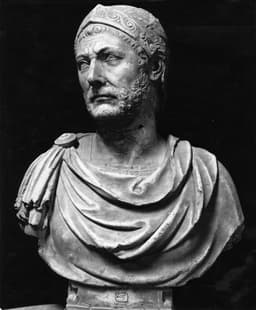
Hannibal Barca
General · Ancient
57.2Total
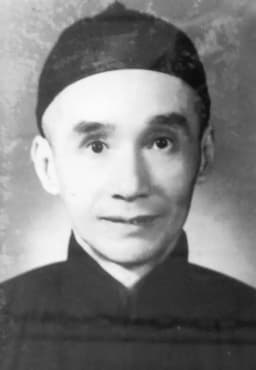
Huan Wen
General · Ancient
57.1Total
Basic Information
Born
-247
312
Died
-183
373
Era
Ancient
Ancient
Nationality
Carthage
China
Occupation
General
General
Civilization
Middle Eastern
Eastern
Score Comparison
Military (10%)
92.0
85.0
Political (20%)
35.0
43.7
Influence (20%)
55.0
54.1
Legacy (20%)
40.0
47.5
Leadership (15%)
68.0
61.1
Strategy (15%)
88.0
75.0
TOTAL
57.2
57.1
Hannibal Barca — Complete Timeline
219 BC
Siege of SaguntumWar◆ Major
Hannibal besieged and captured Saguntum, a Roman ally in Spain. This act violated a treaty with Rome and directly triggered the Second Punic War. The eight-month siege demonstrated Hannibal's determination and military skill, but also his willingness to provoke conflict.
SiegeProvocationWar Start
Impact: regionaldestructive
218 BC
Crossing of the AlpsWar
Hannibal led a Carthaginian army, including war elephants, from Spain across the Alps into Italy. The journey was arduous, with significant losses from terrain, weather, and attacks by mountain tribes. This strategic maneuver surprised the Romans and brought the war to their homeland.
Military CampaignAlpsStrategy
Impact: global
216 BC
Battle of CannaeWar
Hannibal's outnumbered army encircled and annihilated a larger Roman force at Cannae in southern Italy. The Romans suffered up to 70,000 casualties in one day. This battle is considered a masterpiece of tactical encirclement and remains studied in military academies.
BattleTacticsRoman Defeat
Impact: globaldestructive
202 BC
Battle of ZamaWar
Hannibal was defeated by Scipio Africanus at Zama in North Africa. Scipio's tactics neutralized Hannibal's elephants and cavalry, leading to a decisive Roman victory. This battle ended the Second Punic War and forced Carthage to accept harsh peace terms.
BattleDefeatEnd of War
Impact: globaltragic
183 BC
Exile and DeathPolitical Action◆ Major
After the war, Hannibal became a politician in Carthage, but Roman pressure forced him into exile. He fled to the Seleucid court, then to Bithynia. When the Romans demanded his extradition, he committed suicide by poison, ending his life as a fugitive.
ExileSuicideRoman Pursuit
Impact: regionaltragic
Huan Wen — Complete Timeline
346 AD
Conquest of ShuWar
Huan Wen led a campaign to conquer the Cheng Han state in Sichuan. He defeated the Cheng Han army and captured its capital Chengdu, annexing the region into the Jin Dynasty and expanding Jin territory.
Jin DynastyCheng HanConquestSichuan
Impact: regionalconstructive
354 AD
Northern ExpeditionsWar◆ Major
Huan Wen launched a series of northern expeditions against the Former Qin and other states. He achieved initial victories but failed to hold territory, ultimately retreating due to lack of supplies and political opposition at court.
Jin DynastyNorthern ExpeditionFormer Qin
Impact: regional
371 AD
Attempted UsurpationPolitical Action
Huan Wen deposed Emperor Fei of Jin and installed Emperor Jianwen, a puppet ruler. He sought to usurp the throne but died in 373 before completing his plans, leaving his son Huan Xuan to later attempt the same.
Jin DynastyUsurpationCoupHuan Xuan
Impact: nationaldestructive
Expert Analysis
Origins
Hannibal Barca (247–183 BCE) was born into the Barcid family of Carthage, a powerful merchant oligarchy. His father, Hamilcar Barca, was a leading general in the First Punic War and instilled in Hannibal a lifelong hatred of Rome. Hannibal spent his youth in Spain, where Hamilcar expanded Carthaginian influence. He was educated in military tactics and likely accompanied his father on campaigns. Huan Wen (312–373 CE) was born into a prominent family of the Eastern Jin dynasty. His father, Huan Yi, was a general, and his uncle Huan Xuan was a high official. The Huan family had military and political influence, but Huan Wen rose through his own talents. He began his career as a minor official in the Jin court, but his military ambitions soon became evident.
Rise to Power
Hannibal rose to command in 221 BCE at age 26, after his brother-in-law Hasdrubal the Fair was assassinated. The Carthaginian army in Spain acclaimed him as general. He immediately consolidated control and besieged Saguntum in 219 BCE, a Roman ally, triggering the Second Punic War. Huan Wen rose to prominence by suppressing rebellions and leading successful campaigns. His first major achievement was the conquest of the Cheng Han state in 346–347 CE, which annexed the Shu region to Jin. This victory earned him the title of Duke of Linhe and control over the crucial Yangtze River region. He then used his military success to gain political leverage, deposing Emperor Fei in 371 CE and installing Emperor Jianwen as a puppet.
Leadership & Governance
Hannibal led by personal example and tactical genius. He maintained the loyalty of a multi-ethnic army through shared hardships and rewards. His governance in Carthage after the war was focused on financial reforms to pay the war indemnity, but his political score of 35.0 reflects his limited domestic impact. Huan Wen was a shrewd political operator. He used his military power to control the Jin court, appointing allies and eliminating rivals. His political score of 43.7 indicates a stronger political hand than Hannibal, but his governance was marred by corruption and nepotism. He failed to implement lasting reforms, focusing instead on personal ambition.
Triumph & Tragedy
Hannibal's greatest triumph was the Battle of Cannae (216 BCE), where his 50,000 troops encircled and annihilated a Roman army of 86,000, inflicting up to 70,000 casualties. His tragedy was Zama (202 BCE), where he was decisively defeated by Scipio Africanus, ending the war. His later exile and suicide in 183 BCE prevented any return. Huan Wen's triumph was the conquest of Shu, which added rich territory to Jin. His tragedy was his failed northern expeditions, which drained resources and weakened his reputation. He attempted to usurp the throne but died in 373 before completing his coup, leaving his family vulnerable to later purges.
Character & Destiny
Hannibal was strategic and patient, but his hatred of Rome blinded him to the need for a decisive siege of Rome after Cannae. His character scored 68.0 in leadership, showing he could inspire troops but not secure long-term political support. Huan Wen was ambitious and calculating, but his arrogance alienated allies. He scored 61.1 in leadership, indicating competent command but flawed judgment. Both men's destinies were shaped by their inability to consolidate power: Hannibal lacked Carthaginian support, while Huan Wen faced opposition from the Jin aristocracy.
Legacy
Hannibal's legacy is immense in military history. He is studied for his tactics, especially the double envelopment at Cannae. His influence score of 55.0 reflects his lasting impact on warfare. Huan Wen is less known globally but is remembered in Chinese history as a powerful minister who expanded Jin territory. His legacy score of 47.5 is lower, partly because his usurpation attempt failed. Both men's legacies are overshadowed by their ultimate failures: Hannibal's defeat and Huan Wen's incomplete coup.
Conclusion
Hannibal Barca had a greater impact than Huan Wen. Despite a narrow total score gap (57.2 vs 57.1), Hannibal's military innovations and influence on global military strategy are unparalleled. His tactics at Cannae are still taught, while Huan Wen's northern expeditions are largely forgotten. Hannibal's story also symbolizes resistance against an empire, giving him cultural significance. Therefore, Hannibal is the more consequential figure.
Rankings
🥇
Hannibal BarcaLeader
Mil: 92.0Pol: 35.0Inf: 55.0
57.2
🥈
Huan Wen
Mil: 85.0Pol: 43.7Inf: 54.1
57.1
+0.1 behind
How This Comparison Works
Algorithm
Each figure is scored on 6 dimensions (0—100 scale) based on structured historical data: Military (10%), Political (20%), Influence (20%), Legacy (20%), Leadership (15%), Strategy (15%). The weighted total produces the final ranking.
Data Sources
Scores are computed from structured sub-indicators in the database. Scale factors adjust for era (Ancient ×0.85, Modern ×1.0) and civilization size (Eastern ×1.05, Other ×0.80) to account for differences in population and military scale.
Maximum 3 Figures
Comparisons are limited to 2—3 figures to ensure readability and statistical meaningfulness.
Error Margins
±5 points per dimension — Sub-scores are derived from historical records with inherent uncertainty. Two figures within 5 points on a dimension should be considered roughly equivalent in that area.
Total Score Accuracy
±3 points overall — The weighted combination of 6 dimensions produces a total score with approximately ±3 points of uncertainty. Differences of less than 3 points are not statistically significant— the figures are effectively tied.
Known Limitations
- Historical records are incomplete and uneven across civilizations
- Figures from oral-tradition societies may be underrepresented
- Occupation labels can misclassify multi-role figures
- Scores measure capability and impact, not moral character
- Quantitative scoring is a comparison tool, not absolute truth
Capability Radar
Military (10%) — Battles & Warfare
Battles
95
75
Win Rate
92
70
Expansion
85
70
Political (20%) — Governance & Reform
Reform
30
55
Diplomacy
60
60
Economy
35
50
Influence (20%) — Cultural & Global Reach
Cultural
85
45
Global
85
30
Legacy (20%) — Historical Impact
Historical
95
55
Longevity
90
40
Leadership (15%) — Power & Stability
Tenure
40
65
Stability
25
40
Strategy (15%) — Tactics & Innovation
Strategy
95
75
Tactics
99
80
Reform
70
60
Similar Comparisons
Comments & Discussion
No comments yet. Be the first to share your thoughts!