Loading...
Hannibal Barca vs Qin Shi Huang
Qin Shi Huang leads by 28.0 pts · 2 figures compared
…
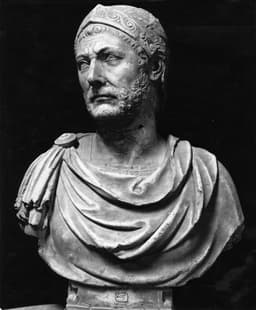
Hannibal Barca
General · Ancient
57.2Total
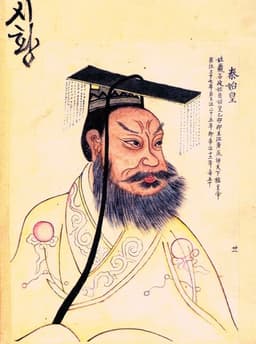
Qin Shi Huang
Emperor · Ancient
85.2Total
Basic Information
Born
-247
-259
Died
-183
-210
Era
Ancient
Ancient
Nationality
Carthage
China
Occupation
General
Emperor
Civilization
Middle Eastern
Eastern
Score Comparison
Military (10%)
92.0
80.0
Political (20%)
35.0
90.0
Influence (20%)
55.0
85.0
Legacy (20%)
40.0
90.0
Leadership (15%)
68.0
78.0
Strategy (15%)
88.0
82.0
TOTAL
57.2
85.2
Hannibal Barca — Complete Timeline
219 BC
Siege of SaguntumWar◆ Major
Hannibal besieged and captured Saguntum, a Roman ally in Spain. This act violated a treaty with Rome and directly triggered the Second Punic War. The eight-month siege demonstrated Hannibal's determination and military skill, but also his willingness to provoke conflict.
SiegeProvocationWar Start
Impact: regionaldestructive
218 BC
Crossing of the AlpsWar
Hannibal led a Carthaginian army, including war elephants, from Spain across the Alps into Italy. The journey was arduous, with significant losses from terrain, weather, and attacks by mountain tribes. This strategic maneuver surprised the Romans and brought the war to their homeland.
Military CampaignAlpsStrategy
Impact: global
216 BC
Battle of CannaeWar
Hannibal's outnumbered army encircled and annihilated a larger Roman force at Cannae in southern Italy. The Romans suffered up to 70,000 casualties in one day. This battle is considered a masterpiece of tactical encirclement and remains studied in military academies.
BattleTacticsRoman Defeat
Impact: globaldestructive
202 BC
Battle of ZamaWar
Hannibal was defeated by Scipio Africanus at Zama in North Africa. Scipio's tactics neutralized Hannibal's elephants and cavalry, leading to a decisive Roman victory. This battle ended the Second Punic War and forced Carthage to accept harsh peace terms.
BattleDefeatEnd of War
Impact: globaltragic
183 BC
Exile and DeathPolitical Action◆ Major
After the war, Hannibal became a politician in Carthage, but Roman pressure forced him into exile. He fled to the Seleucid court, then to Bithynia. When the Romans demanded his extradition, he committed suicide by poison, ending his life as a fugitive.
ExileSuicideRoman Pursuit
Impact: regionaltragic
Qin Shi Huang — Complete Timeline
246 BC
Construction of the Mausoleum and Terracotta ArmyOther◆ Major
Qin Shi Huang commissioned a vast mausoleum complex near Xi'an, guarded by thousands of life-sized terracotta soldiers, horses, and chariots. The project employed hundreds of thousands of workers and reflected his obsession with immortality and imperial power.
Impact: global
230 BC
Conquest of the Six Warring StatesWar
From 230 to 221 BCE, Ying Zheng led the Qin state in a series of campaigns that conquered the Han, Zhao, Wei, Chu, Yan, and Qi states. This unified China under a single ruler for the first time, ending the Warring States period.
Impact: global
221 BC
Standardization of Writing, Currency, and MeasurementsReform◆ Major
Qin Shi Huang ordered the standardization of Chinese script, currency, and weights and measures across the unified empire. This facilitated administration, trade, and cultural integration, laying a foundation for future dynasties.
Impact: globalconstructive
Proclamation of the Qin DynastyPolitical Action
After conquering the last independent state, Ying Zheng declared himself Shi Huangdi (First Emperor), founding the Qin Dynasty. He adopted a new title to signify his supreme authority and initiated centralized imperial rule.
Impact: global
214 BC
Initiation of the Great Wall ConstructionOther◆ Major
Qin Shi Huang ordered the connection and extension of existing northern fortifications to create a unified defensive wall against nomadic Xiongnu raids. This project involved massive conscripted labor and became the precursor to the later Great Wall.
Impact: regional
213 BC
Burning of Books and Burying of ScholarsPolitical Action◆ Major
On the advice of Li Si, Qin Shi Huang ordered the burning of historical records and philosophical texts not aligned with Legalist doctrine. He also had 460 Confucian scholars buried alive to suppress dissent and consolidate ideological control.
Impact: nationaldestructive
Expert Analysis
hannibal-barca-vs-qin-shi-huang
# The Visionary and the Avenger
In the winter of 218 BC, a Carthaginian army emerged from the Alpine snow like ghosts, their war elephants staggering down icy slopes into the Roman heartland. Twenty thousand men had perished in the crossing, but the survivors carried something more dangerous than steel—the audacity of a general who believed he could strangle an empire with his bare hands. Just seven years earlier, on the other side of the world, a Chinese king had completed his own impossible feat: the conquest of six warring states, forging a realm so vast that its borders stretched from the Gobi Desert to the tropical south. One man sought to destroy the greatest power of his age; the other sought to create one. Their names were Hannibal Barca and Qin Shi Huang, and their divergent fates reveal the deepest riddles of ambition, power, and human limitation.
Origins
Qin Shi Huang was born into certainty. The state of Qin, perched on the western frontier of Zhou China, had spent generations perfecting a brutal philosophy: Legalism, which taught that humans were base creatures who could only be controlled through strict laws and harsh punishments. His father, King Zhuangxiang, ruled a kingdom already primed for dominance, and young Ying Zheng absorbed the cold logic of Machiavellian statecraft before he could read. When he ascended the throne at thirteen, his regents had already laid the groundwork for conquest.
Hannibal’s birth was a wound. Carthage had lost Sicily and Sardinia to Rome in the First Punic War, and his father Hamilcar Barca forced the boy to swear eternal hatred of Rome at an altar. Where Qin Shi Huang inherited a machine of war, Hannibal inherited a grudge. His childhood was spent in the Spanish mountains, learning to command mercenaries from a dozen tribes, forging loyalty not through laws but through shared hardship and personal charisma. The Carthaginian state was a commercial republic, fractured by merchant factions and suspicious of its own generals. Hannibal would have to conquer not just Rome, but his own government.
Rise to Power
Ying Zheng’s rise was methodical, almost mechanical. At twenty-two, he crushed a coup by his own chancellor and took personal control of the Qin war machine. Between 230 and 221 BC, he unleashed a campaign of terrifying efficiency: each of the six rival kingdoms fell in sequence, their armies outmaneuvered, their walls breached, their kings captured or killed. He did not win through genius on the battlefield—his military score of 80 reflects competence, not brilliance—but through relentless logistics, espionage, and the systematic application of Legalist doctrine. When the last kingdom fell, he simply declared himself *Shi Huangdi*, the First Emperor, as if the universe had always intended this outcome.
Hannibal’s rise was theater. In 219 BC, he provoked war by besieging Saguntum, a Roman ally in Spain, knowing full well it meant conflict with the Mediterranean superpower. Then he did what no one expected: he marched his army over the Alps. The crossing was a catastrophe of avalanches, hostile tribes, and dying elephants, but it was also a masterpiece of propaganda. Rome had never faced an enemy who could bring war to their doorstep from across the known world. At Cannae in 216 BC, Hannibal achieved the impossible: his 50,000 men encircled and slaughtered 80,000 Romans in a single afternoon. The ring of steel closed so perfectly that Roman soldiers died standing, unable to lift their arms. It remains the archetype of the perfect battle.
Leadership & Governance
Here lies the chasm between them. Qin Shi Huang governed. He standardized script, currency, and axle widths so that carts could travel the empire’s new roads. He built the Great Wall by linking existing fortifications, not as a single barrier but as a system of watchtowers and garrisons. He imposed a unified legal code and replaced feudal lords with centrally appointed bureaucrats. His political score of 88 reflects a man who understood that conquest is fleeting, but systems endure. Even his atrocities—the burning of books, the burying of scholars alive—were acts of governance, however brutal: he sought to erase the past to control the future.
Hannibal never governed. His political score of 45.7 is not a failure of intelligence but of circumstance. After Cannae, he could not besiege Rome itself because he lacked siege engines and supply lines. He spent fifteen years in Italy, winning battles but losing the war, because Carthage’s merchant oligarchs refused to send reinforcements. He was a general without a state, a hammer without an anvil. When he finally returned to Africa to face Scipio at Zama in 202 BC, his army was a shadow of the force that had crossed the Alps. Scipio simply copied his tactics: he opened lanes for the Carthaginian elephants to charge through harmlessly, then enveloped Hannibal’s veterans with cavalry. The master was beaten by his own student.
Triumph & Tragedy
Qin Shi Huang’s greatest moment was also his most obsessive: the construction of his mausoleum, guarded by the Terracotta Army. Eight thousand life-sized soldiers, each with unique faces, stand in battle formation to this day, a monument to his belief that even death could be conquered through sheer will. But his tragedy was the fragility of his creation. He died in 210 BC while on a tour of his empire, and within three years, the Qin Dynasty collapsed in rebellion. His centralized state survived, but his family was exterminated. He had built an empire that would last two thousand years, yet could not secure his own bloodline.
Hannibal’s tragedy unfolded in slow motion. After Zama, he became a reformer in Carthage, rooting out corruption and paying off the war indemnity to Rome. But Rome, haunted by his memory, demanded his surrender. He fled to the Seleucid court, then to Armenia, then to Bithynia, always one step ahead of Roman assassins. In 183 BC, surrounded in a villa, he swallowed poison rather than be captured. His last words, according to tradition, were a bitter joke: “Let us relieve the Romans of their anxiety, since they think it too long to wait for the death of an old man.”
Character & Destiny
Qin Shi Huang was a builder; Hannibal was a destroyer. The First Emperor’s personality was shaped by absolute control—he believed that order could be imposed from above, that human nature could be reshaped by law. Hannibal’s character was forged in resistance—he believed that cunning and courage could overturn any fate. One created a system that outlasted him; the other created a legend that never died.
Their military scores tell a partial truth: Hannibal’s 92 versus Qin Shi Huang’s 80 reflects the Carthaginian’s tactical genius, but the Chinese emperor’s strategic vision was broader. Hannibal won battles; Qin Shi Huang won civilizations. Yet Hannibal’s leadership score of 35.5 seems almost cruel—it measures not his ability to inspire men (his mercenaries followed him through hell) but his failure to unite Carthage behind him. Qin Shi Huang’s 88 reflects a ruler who commanded not just armies but an entire society.
Legacy
Qin Shi Huang’s legacy is the Chinese state itself. Every emperor who came after him, from the Han to the Qing, ruled over a unified realm that he had conceived. The written language he standardized is still used today. The Great Wall, though rebuilt, began with his vision. He is remembered as a tyrant and a founder, a monster and a genius—the architect of China’s imperial destiny.
Hannibal’s legacy is the nightmare he gave Rome. For centuries afterward, Roman mothers would tell their children, “Hannibal is at the gates,” to make them behave. He became the archetype of the enemy who almost won, the outsider who challenged the established order with nothing but audacity and intellect. Napoleon studied him. Rommel studied him. Every general who faces impossible odds dreams of being Hannibal.
Conclusion
The First Emperor built a world; the Carthaginian tried to burn one down. Qin Shi Huang’s triumph was that his system endured beyond his death; Hannibal’s tragedy was that his brilliance could not be translated into lasting power. One was a visionary who saw the future and forced humanity into it; the other was an avenger who saw the past and could not escape it. In the end, they represent the two poles of historical greatness: the creator and the destroyer, the architect and the storm. And perhaps the final lesson is this: that building a world requires not just genius, but the willingness to be forgotten—while the destroyer, however magnificent, is remembered only for what he could not save.
Rankings
🥇
Qin Shi HuangLeader
Mil: 80.0Pol: 90.0Inf: 85.0
85.2
🥈
Hannibal Barca
Mil: 92.0Pol: 35.0Inf: 55.0
57.2
+28.0 behind
How This Comparison Works
Algorithm
Each figure is scored on 6 dimensions (0—100 scale) based on structured historical data: Military (10%), Political (20%), Influence (20%), Legacy (20%), Leadership (15%), Strategy (15%). The weighted total produces the final ranking.
Data Sources
Scores are computed from structured sub-indicators in the database. Scale factors adjust for era (Ancient ×0.85, Modern ×1.0) and civilization size (Eastern ×1.05, Other ×0.80) to account for differences in population and military scale.
Maximum 3 Figures
Comparisons are limited to 2—3 figures to ensure readability and statistical meaningfulness.
Error Margins
±5 points per dimension — Sub-scores are derived from historical records with inherent uncertainty. Two figures within 5 points on a dimension should be considered roughly equivalent in that area.
Total Score Accuracy
±3 points overall — The weighted combination of 6 dimensions produces a total score with approximately ±3 points of uncertainty. Differences of less than 3 points are not statistically significant— the figures are effectively tied.
Known Limitations
- Historical records are incomplete and uneven across civilizations
- Figures from oral-tradition societies may be underrepresented
- Occupation labels can misclassify multi-role figures
- Scores measure capability and impact, not moral character
- Quantitative scoring is a comparison tool, not absolute truth
Capability Radar
Military (10%) — Battles & Warfare
Battles
95
85
Win Rate
92
90
Expansion
85
90
Political (20%) — Governance & Reform
Reform
30
95
Diplomacy
60
75
Economy
35
90
Influence (20%) — Cultural & Global Reach
Cultural
85
95
Global
85
85
Legacy (20%) — Historical Impact
Historical
95
95
Longevity
90
95
Leadership (15%) — Power & Stability
Tenure
40
70
Stability
25
65
Strategy (15%) — Tactics & Innovation
Strategy
95
85
Tactics
99
80
Reform
70
95
Similar Comparisons
Comments & Discussion
HannibalTheHustler6/17/2026
People romanticize Hannibal as a lone genius, but let’s be real—he failed to siege Rome even once. Crossing elephants over the Alps is a cool party trick, but Qin Shi Huang actually conquered six kingdoms and united China with iron laws. Hannibal won battles, sure, but Qin built an empire that outlasted him by millennia. Rome didn’t fall, but Qin’s system shaped East Asia forever. I’d rather be a successful builder than a flashy loser.