Loading...
Gyeongjong of Goryeo vs Zhu Wen
Zhu Wen leads by 3.2 pts · 2 figures compared
…
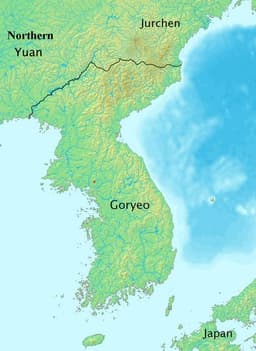
Gyeongjong of Goryeo
Emperor · Medieval
47.1Total
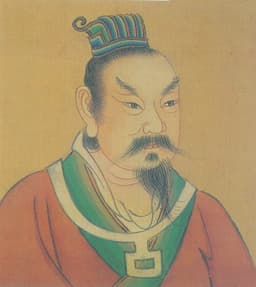
Zhu Wen
Emperor · Medieval
50.3Total
Basic Information
Born
955
852
Died
981
912
Era
Medieval
Medieval
Nationality
Korea
China
Occupation
Emperor
Emperor
Civilization
Eastern
Eastern
Score Comparison
Military (10%)
20.0
72.5
Political (20%)
53.8
35.1
Influence (20%)
53.3
53.3
Legacy (20%)
47.5
45.8
Leadership (15%)
48.8
48.4
Strategy (15%)
45.0
57.5
TOTAL
47.1
50.3
Gyeongjong of Goryeo — Complete Timeline
976 AD
Institution of the Jeonsigwa Land SystemReform◆ Major
King Gyeongjong established the jeonsigwa, a land distribution system that allocated state-owned farmland to government officials based on their rank. This reform aimed to secure royal revenue and control over land, while providing a stable income for the bureaucracy.
Impact: nationalconstructive
Zhu Wen — Complete Timeline
881 AD
Rebellion against TangWar◆ Major
Zhu Wen, originally a rebel under Huang Chao, defected to the Tang dynasty in 882. He was granted the name Zhu Quanzhong and became a key general, eventually turning against the Tang and seizing control of the imperial court.
Tang DynastyRebellionPower Seizure
Impact: nationaldestructive
904 AD
Assassination of Emperor ZhaozongPolitical Action◆ Major
Zhu Wen ordered the murder of Emperor Zhaozong of Tang and installed the young Emperor Ai as a puppet. This act eliminated the last effective Tang ruler and paved the way for Zhu Wen's usurpation.
Tang DynastyAssassinationUsurpation
Impact: nationaldestructive
907 AD
Founded Later Liang DynastyPolitical Action
Zhu Wen forced Emperor Ai to abdicate and proclaimed himself emperor, founding the Later Liang dynasty. This ended the Tang dynasty and began the Five Dynasties and Ten Kingdoms period in China.
Five DynastiesLater LiangDynastic Change
Impact: national
910 AD
Defeated by Li Cunxu at Battle of BaixiangWar◆ Major
Zhu Wen's Later Liang forces were decisively defeated by Li Cunxu's Jin army at Baixiang. This loss weakened Later Liang's control in the north and emboldened rival states.
Later LiangJinBattle
Impact: regionaltragic
912 AD
Assassinated by his son Zhu YouguiPolitical Action◆ Major
Zhu Wen was murdered by his own son Zhu Yougui, who then seized the throne. The assassination plunged Later Liang into internal strife and contributed to its eventual collapse.
Later LiangAssassinationDynastic Crisis
Impact: nationaltragic
Expert Analysis
Gyeongjong of Goryeo vs Zhu Wen
### The Usurper and the Reformer: Two Paths from the Ruins of Empire
On a summer day in 907, the last boy-emperor of the Tang dynasty handed his jade seal to a former rebel with scarred hands. The ceremony was a pantomime of legitimacy: the child wept, the courtiers averted their eyes, and the man now called Emperor Taizu of Later Liang accepted the mandate of heaven as one might pick a lock. Half a century later and a thousand miles east, on the Korean peninsula, another king sat on a very different throne. Gyeongjong of Goryeo did not seize power; he inherited it, and his first great act was not murder, but a law. He carved up the land of his kingdom not with a sword but with a ledger, distributing fields to officials according to rank. Both men lived in the shadow of fallen dynasties. One chose to burn the house down; the other, to rebuild it.
### Origins
Zhu Wen was born in 852 into a world already rotting. The Tang dynasty, once the glittering center of the Eastern world, was collapsing under the weight of warlords, eunuchs, and peasant revolts. Zhu’s family was desperately poor, his father dying when he was young. He grew up rough, a drifter who joined the rebellion of Huang Chao in 881, a cataclysm that would kill millions. Zhu was not an idealist; he was a survivor. When he saw the rebel cause failing, he defected to the Tang in 882, was given the name Zhu Quanzhong ("Loyal Entirely"), and began a long, patient climb over the bodies of his former comrades.
Gyeongjong was born in 955, into a kingdom that was still being forged. Goryeo had unified the peninsula only decades earlier, and its kings were trying to build a state from the chaos of the Later Three Kingdoms period. His father, King Gwangjong, was a ruthless reformer who had purged the old aristocracy and freed slaves to centralize power. Gyeongjong grew up in a court where the air was thick with fear and ambition, but also with the language of Confucian governance. He was not a warrior; he was a prince educated in the arts of administration. His inheritance was not a crumbling empire, but an unfinished one.
### Rise to Power
Zhu Wen’s rise was a masterclass in opportunism. After defecting to the Tang, he was given a provincial command and began a brutal campaign to eliminate rivals. He played the game of warlord politics with cold precision, allying with one faction, then betraying it. By 904, he controlled the imperial court. He did not merely kill Emperor Zhaozong that year; he ordered the assassination while the emperor was drunk, then installed the emperor’s thirteen-year-old son as a puppet. Three years later, in 907, he forced the boy to abdicate. The Tang dynasty, which had ruled for nearly three centuries, ended not with a battle, but with a shove.
Gyeongjong’s path was the opposite. He became king in 975 at the age of twenty, upon his father’s death. There was no coup, no civil war. He inherited a throne that was stable but tense. The old aristocracy, humiliated by his father, was watching for weakness. Gyeongjong’s rise was not a conquest; it was a succession. His challenge was not to seize power, but to wield it without breaking what his father had built.
### Leadership & Governance
Zhu Wen governed as he had conquered: with violence and suspicion. He moved the capital to Kaifeng, a city he could control, and tried to build a new bureaucracy from his military followers. But he was no administrator. His Later Liang dynasty was a military camp masquerading as a state. He taxed heavily, trusted no one, and saw every general as a potential rival. His military score of 73.4 reflects real skill—he was a tough commander—but his political score of 66.7 reveals the weakness: he could not build institutions. The Battle of Baixiang in 910, where his forces were crushed by the Jin army under Li Cunxu, exposed the fragility of his regime. Victory had always depended on his personal cunning; defeat was fatal.
Gyeongjong’s governance was the antithesis. In 976, just one year into his reign, he instituted the *jeonsigwa* land system. This was not a dramatic reform; it was a quiet revolution. State-owned farmland was allocated to officials based on their rank, not their birth. It stabilized state finances, tied the bureaucracy to the crown, and reduced the power of hereditary landowners. His strategy score is a low 30.0—he fought no great battles—but his leadership score of 73.5 suggests a different kind of strength: the patience to govern. He did not need to conquer; he needed to codify.
### Triumph & Tragedy
Zhu Wen’s greatest triumph was also his greatest crime: ending the Tang dynasty. For centuries, historians have debated whether he was a necessary evil or a pure destroyer. His tragedy was that his victory was hollow. He died in 912, murdered by his own son, Zhu Yougui, who stabbed him in the palace. The parricide was a fitting end for a man who had built his throne on betrayal. Within a decade, the Later Liang would fall to Li Cunxu’s new Later Tang dynasty. Zhu Wen’s legacy was a warning: power taken by the sword is held by the sword.
Gyeongjong’s triumph was quieter, but more durable. The *jeonsigwa* system would be refined by his successors and become a cornerstone of Goryeo governance for centuries. His tragedy was his early death. He reigned only six years, from 975 to 981, and died at the age of twenty-six. He left no great wars, no dramatic conquests. He left a ledger. But that ledger outlasted every sword.
### Character & Destiny
Zhu Wen was driven by hunger—literal in his youth, metaphorical for the rest of his life. He saw the world as a zero-sum game: to rise, others must fall. His cruelty was not madness; it was calculation. He killed his emperor because he could not trust him. He was murdered by his son because his son could not trust him. His destiny was shaped by his inability to imagine a world where power was shared.
Gyeongjong was driven by a different instinct: order. He had seen his father’s purges and understood that terror alone could not hold a kingdom. He chose to build a system, not a following. His early death was a tragedy of timing, but his character—cautious, administrative, legalistic—was exactly what Goryeo needed. He was not a hero; he was a bureaucrat who understood that the state is a machine, not a throne.
### Legacy
Zhu Wen is remembered as a villain. In Chinese historiography, he is the man who broke the Tang, the founder of a short-lived dynasty that was never considered legitimate. His total score of 69.0 reflects a figure of moderate impact but deeply negative reputation. He is a footnote between golden ages.
Gyeongjong is remembered as a reformer. His legacy score of 64.4 is modest, but it is positive. In Korea, he is one of the kings who built the Goryeo state, the quiet architect of a system that lasted. He is not a household name, but his work outlived his name.
### Conclusion
Two men, two centuries, two outcomes. Zhu Wen tore down an empire and could not build one. Gyeongjong inherited a kingdom and gave it structure. One trusted only himself; the other trusted a system. The difference was not in their ambition—both wanted power—but in their vision. Zhu Wen saw power as a prize to be seized. Gyeongjong saw it as a responsibility to be organized. In the end, the usurper was consumed by his own fire, while the reformer’s quiet flame burned long after he was gone. The lesson is as old as history: the sharpest sword is not always the one that lasts longest. Sometimes, it is the ink on a page.
Rankings
🥇
Zhu WenLeader
Mil: 72.5Pol: 35.1Inf: 53.3
50.3
🥈
Gyeongjong of Goryeo
Mil: 20.0Pol: 53.8Inf: 53.3
47.1
+3.2 behind
How This Comparison Works
Algorithm
Each figure is scored on 6 dimensions (0—100 scale) based on structured historical data: Military (10%), Political (20%), Influence (20%), Legacy (20%), Leadership (15%), Strategy (15%). The weighted total produces the final ranking.
Data Sources
Scores are computed from structured sub-indicators in the database. Scale factors adjust for era (Ancient ×0.85, Modern ×1.0) and civilization size (Eastern ×1.05, Other ×0.80) to account for differences in population and military scale.
Maximum 3 Figures
Comparisons are limited to 2—3 figures to ensure readability and statistical meaningfulness.
Error Margins
±5 points per dimension — Sub-scores are derived from historical records with inherent uncertainty. Two figures within 5 points on a dimension should be considered roughly equivalent in that area.
Total Score Accuracy
±3 points overall — The weighted combination of 6 dimensions produces a total score with approximately ±3 points of uncertainty. Differences of less than 3 points are not statistically significant— the figures are effectively tied.
Known Limitations
- Historical records are incomplete and uneven across civilizations
- Figures from oral-tradition societies may be underrepresented
- Occupation labels can misclassify multi-role figures
- Scores measure capability and impact, not moral character
- Quantitative scoring is a comparison tool, not absolute truth
Capability Radar
Military (10%) — Battles & Warfare
Battles
5
65
Win Rate
5
60
Expansion
5
55
Political (20%) — Governance & Reform
Reform
70
25
Diplomacy
40
35
Economy
65
30
Influence (20%) — Cultural & Global Reach
Cultural
30
25
Global
20
15
Legacy (20%) — Historical Impact
Historical
45
45
Longevity
40
20
Leadership (15%) — Power & Stability
Tenure
55
40
Stability
50
20
Strategy (15%) — Tactics & Innovation
Strategy
5
60
Tactics
5
55
Reform
5
30
Similar Comparisons
Comments & Discussion
Tally-Ho Historian6/16/2026
Zhu Wen wasn’t just a usurper—he was a failed state-builder. Look at his "reforms" after 907: he couldn’t even control his own generals. By 912, his own son Zhu Yougui stabbed him to death in the palace. That’s not a dynasty; that’s a bloodbath with a pretender. Gyeongjong’s land distribution system of 976, meanwhile, kept Goryeo stable for three centuries. Facts don’t lie. Give me the reformer over the parricide every time.
古籍侦探6/16/2026
Zhu Wen篡位那天,唐朝最后一个小皇帝哭着交出玉玺,这场景简直像一出蹩脚戏。你查查《旧五代史》就知道,这个"梁太祖"连年号都抄唐朝的,毫无原创性。反观高丽景宗,他出台"田柴科"制度,用土地分封稳住贵族,这才是治国之道。篡位者只会破坏,改革者才懂得建设。历史不会原谅那个弑君小人。
Data Skeptic Max6/16/2026
Stop romanticizing Gyeongjong’s "reforms." The 976 "land distribution" was just a tax grab dressed up as fairness—he gave away land he didn’t own to buy loyalty from officials. Meanwhile, Zhu Wen actually fought to unify North China post-Tang, even if he failed. Raw comparison: Zhu’s Later Liang lasted 17 years; Goryeo lasted 500. But let’s not pretend Gyeongjong was a visionary—he was a prince who did what princes do: hand out spoils.
铁血粉的逆袭6/16/2026
别吹景宗了,他那个"田柴科"根本就是抄袭唐朝的均田制,还玩砸了。高丽史记载,976年后土地兼并反而更厉害,贵族照样吃香喝辣。朱温虽然狠,但至少敢从底层杀出来,当了皇帝还整顿漕运、修水利。你对比看看:一个靠祖荫的乖乖牌,一个靠拳头打天下的硬汉,我选后者。历史需要血性,不是文书。