Loading...
Gyeongjong of Goryeo vs Napoleon Bonaparte
Napoleon Bonaparte leads by 23.8 pts · 2 figures compared
…
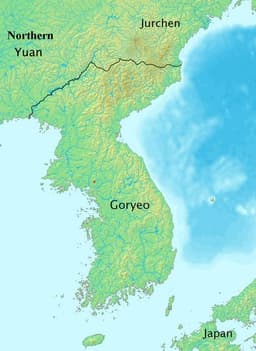
Gyeongjong of Goryeo
Emperor · Medieval
47.1Total

Napoleon Bonaparte
General · Modern
70.9Total
Basic Information
Born
955
1769
Died
981
1821
Era
Medieval
Modern
Nationality
Korea
France
Occupation
Emperor
General
Civilization
Eastern
Western
Score Comparison
Military (10%)
20.0
94.0
Political (20%)
53.8
72.0
Influence (20%)
53.3
40.0
Legacy (20%)
47.5
80.0
Leadership (15%)
48.8
78.0
Strategy (15%)
45.0
90.0
TOTAL
47.1
70.9
Gyeongjong of Goryeo — Complete Timeline
976 AD
Institution of the Jeonsigwa Land SystemReform◆ Major
King Gyeongjong established the jeonsigwa, a land distribution system that allocated state-owned farmland to government officials based on their rank. This reform aimed to secure royal revenue and control over land, while providing a stable income for the bureaucracy.
Impact: nationalconstructive
Napoleon Bonaparte — Complete Timeline
1799 AD
Coup of 18 BrumaireOther◆ Major
Napoleon Bonaparte, with support from his brother Lucien and key political figures, overthrew the Directory in a bloodless coup. He established the Consulate with himself as First Consul, effectively becoming the ruler of France. This event ended the French Revolution's most unstable period.
French RevolutionCoupRise to Power
Impact: regional
1804 AD
Promulgation of the Napoleonic CodeOther◆ Major
Napoleon enacted the Civil Code of the French, known as the Napoleonic Code, a comprehensive set of laws that replaced the fragmented feudal legal systems. The code established legal equality, protected property rights, and secularized law. It became the basis for legal systems in many European and world countries.
Legal ReformNapoleonic CodeCivil Law
Impact: globalconstructive
1805 AD
Battle of AusterlitzWar◆ Major
Napoleon's Grande Arm
Napoleonic WarsBattleDecisive Victory
Impact: global
1812 AD
Invasion of RussiaWar◆ Major
Napoleon led the Grande Arm
Napoleonic WarsInvasionDisaster
Impact: globaldestructive
1815 AD
Battle of WaterlooWar◆ Major
Napoleon's French army was defeated by the combined forces of the Duke of Wellington's Anglo-Allied army and Gebhard Leberecht von Bl
Napoleonic WarsBattleFinal Defeat
Impact: globaldestructive
Expert Analysis
Napoleon Bonaparte vs Gyeongjong of Goryeo
# The Conqueror and the Reformer
On a June morning in 1815, Napoleon Bonaparte watched his Imperial Guard march into the muddy fields of Waterloo, their blue coats a final flash of glory before the Prussian cannons tore them apart. More than eight centuries earlier, on the Korean peninsula, King Gyeongjong of Goryeo sat in his palace in Gaegyeong, signing a land reform decree that would outlast his brief reign by generations. One man built an empire that collapsed in a single day. Another built a system that endured for centuries. What drove such different outcomes?
Origins
Napoleon was born in 1769 on the island of Corsica, a recent French acquisition, to a minor noble family struggling to maintain status. His childhood was shaped by the tensions of a conquered people and the ambitions of a rising bourgeoisie. The French Revolution erupted when he was twenty, shattering the old order and creating a world where talent, not birth, could lead to power. He devoured military history, studied artillery, and emerged from the chaos of revolutionary France with a hunger for order and glory.
Gyeongjong was born in 955 into the heart of Goryeo’s royal dynasty, the fourth king of a kingdom still consolidating its rule over the Korean peninsula. His father, King Gwangjong, had been a ruthless reformer who purged the old aristocracy and freed slaves to centralize power. Gyeongjong inherited a court exhausted by conflict, a bureaucracy in flux, and a kingdom that needed stability, not conquest. His world was not one of revolutionary upheaval but of dynastic consolidation, where survival meant managing noble factions rather than commanding armies across continents.
Rise to Power
Napoleon’s ascent was meteoric. In 1793, at age twenty-four, he drove British forces from Toulon with a daring artillery strategy. By 1796, he commanded the Army of Italy, winning battle after battle against the Austrians. His 1798 Egyptian campaign was a gamble—a blend of military ambition and scientific curiosity—but it made him a legend. When he returned to France in 1799, the Directory was collapsing, and he seized power in a coup d’état. By 1804, he crowned himself Emperor of the French.
Gyeongjong’s rise was quieter. He became king in 975 upon his father’s death, inheriting a throne his father had fought to strengthen. There was no coup, no dramatic battlefield—just the weight of a crown passed down through blood. His path was not forged through personal ambition but through the obligations of lineage. Where Napoleon had to fight every step of the way, Gyeongjong had only to survive the intrigues of a court still wary of royal power.
Leadership & Governance
Napoleon ruled through force and genius. His military campaigns—Austerlitz in 1805, Jena in 1806, Wagram in 1809—reshaped Europe. He was a master of speed, deception, and decisive battle, crushing coalitions with relentless energy. But his political wisdom was uneven. The Napoleonic Code, introduced in 1804, standardized French law, abolished feudal privileges, and spread ideals of meritocracy across Europe. Yet his empire became a machine of conquest, bleeding men and treasure into Spain and Russia. His reforms were brilliant, but his ambition knew no limit.
Gyeongjong ruled through a single, transformative reform. In 976, he instituted the *jeonsigwa* land system, which allocated state-owned farmland to government officials based on their rank, not their family connections. This stabilized state finances by ensuring that land—the source of all wealth in medieval Korea—flowed to those who served the crown, not to hereditary aristocrats. It was a quiet revolution, achieved not through war but through administrative decree. Where Napoleon conquered, Gyeongjong codified. The system endured for centuries, shaping Korean governance long after his death.
Triumph & Tragedy
Napoleon’s greatest triumph was his empire at its height in 1810—from Spain to Poland, from the North Sea to Italy. His tragedy was the invasion of Russia in 1812. The Grande Armée of 600,000 men marched into a frozen graveyard; fewer than 40,000 returned. By 1814, he was exiled to Elba. He escaped in 1815, rallied France, and fell again at Waterloo, ending his story in exile on Saint Helena.
Gyeongjong’s triumph was the *jeonsigwa* itself—a reform that worked so well it became the foundation of Goryeo’s land policy for generations. His tragedy was his early death in 981 at age twenty-six, after only six years on the throne. He never saw his system fully mature, never fought a great battle, never built a lasting dynasty of his own. His reign was brief, his ambition modest, his impact quiet but deep.
Character & Destiny
Napoleon was driven by an insatiable will. “Impossible is a word to be found only in the dictionary of fools,” he once said. His personality—restless, brilliant, arrogant—pushed him to remake Europe in his image. But that same will led him to overreach, to ignore limits, to believe that victory was always one more battle away. His destiny was shaped by his refusal to stop.
Gyeongjong was shaped by caution. He inherited a kingdom exhausted by his father’s reforms, and he understood that lasting power came from stability, not conquest. His personality is harder to read—few records survive of his private thoughts—but his actions suggest a ruler who knew his limits. He did not try to expand Goryeo’s borders or crush his rivals. He built a system that would work without him.
Legacy
Napoleon’s legacy is a paradox. He spread the ideals of the French Revolution—legal equality, secular government, meritocracy—across Europe, yet his empire was built on war and ended in defeat. He is remembered as a military genius, a reformer, and a tyrant. The Napoleonic Code lives on in legal systems from France to Louisiana. His shadow looms over modern Europe, a symbol of ambition and its costs.
Gyeongjong’s legacy is quieter but equally profound. The *jeonsigwa* system stabilized Goryeo’s finances and set a precedent for land reform that influenced later Korean dynasties. He is remembered not as a conqueror but as a consolidator, a king who understood that the pen could be mightier than the sword. His reign was short, his name less famous, but his work outlasted Napoleon’s empire by centuries.
Conclusion
Napoleon and Gyeongjong faced the same fundamental question: how to wield power. Napoleon answered with fire and steel, reshaping the world in a blaze of glory that burned out in a decade. Gyeongjong answered with ink and parchment, building a system that endured for generations. One sought to conquer the world; the other sought to govern it. In the end, perhaps the quieter reformer left the deeper mark. For while empires crumble, systems of justice—if they are built well—can outlast the men who made them.
Rankings
🥇
Napoleon BonaparteLeader
Mil: 94.0Pol: 72.0Inf: 40.0
70.9
🥈
Gyeongjong of Goryeo
Mil: 20.0Pol: 53.8Inf: 53.3
47.1
+23.8 behind
How This Comparison Works
Algorithm
Each figure is scored on 6 dimensions (0—100 scale) based on structured historical data: Military (10%), Political (20%), Influence (20%), Legacy (20%), Leadership (15%), Strategy (15%). The weighted total produces the final ranking.
Data Sources
Scores are computed from structured sub-indicators in the database. Scale factors adjust for era (Ancient ×0.85, Modern ×1.0) and civilization size (Eastern ×1.05, Other ×0.80) to account for differences in population and military scale.
Maximum 3 Figures
Comparisons are limited to 2—3 figures to ensure readability and statistical meaningfulness.
Error Margins
±5 points per dimension — Sub-scores are derived from historical records with inherent uncertainty. Two figures within 5 points on a dimension should be considered roughly equivalent in that area.
Total Score Accuracy
±3 points overall — The weighted combination of 6 dimensions produces a total score with approximately ±3 points of uncertainty. Differences of less than 3 points are not statistically significant— the figures are effectively tied.
Known Limitations
- Historical records are incomplete and uneven across civilizations
- Figures from oral-tradition societies may be underrepresented
- Occupation labels can misclassify multi-role figures
- Scores measure capability and impact, not moral character
- Quantitative scoring is a comparison tool, not absolute truth
Capability Radar
Military (10%) — Battles & Warfare
Battles
5
95
Win Rate
5
90
Expansion
5
95
Political (20%) — Governance & Reform
Reform
70
95
Diplomacy
40
80
Economy
65
85
Influence (20%) — Cultural & Global Reach
Cultural
30
85
Global
20
90
Legacy (20%) — Historical Impact
Historical
45
95
Longevity
40
90
Leadership (15%) — Power & Stability
Tenure
55
85
Stability
50
70
Strategy (15%) — Tactics & Innovation
Strategy
5
95
Tactics
5
98
Reform
5
92
Similar Comparisons
Comments & Discussion
NapoleonSimp6/16/2026
As a military historian, let's cut the crap: Gyeongjong couldn't hold Napoleon's horse. Bonaparte transformed warfare with corps system and rapid maneuvers, winning 60+ battles against coalitions that outnumbered him. Gyeongjong signed land reform papers. That's administration, not greatness. Waterloo was a tactical loss, not a strategic failure—Napoleon's impact reshaped Europe for good. Stop comparing a reform clerk to a battlefield god.
朝鲜改革家6/16/2026
作为数据狂人,我盯着数字就笑了:拿破仑在1812年损失了50万大军,滑铁卢只活了一天。高丽景宗的田柴科制度呢?持续了300年!300年对比1天,哪个更有持久性?拿破仑的帝国就像烟花,漂亮但转瞬即逝;景宗的土地改革像地基,默默支撑了东亚文明的延续。别被战场的烟雾迷了眼,看长远影响,景宗完胜。
ClassicistAthena6/16/2026
True comparison reveals stark contrasts in legacy. Napoleon's Napoleonic Code influenced civil law globally—a monumental reform shaping modern justice. But Gyeongjong's land redistribution under Goryeo stabilized Korean society for centuries, enabling cultural flowering like metal movable type. Both were reformers, but Gyeongjong achieved systemic change without rivers of blood. My vote: the king who fixed the economy, not the conqueror who littered Europe with corpses.
韩国历史控6/16/2026
我这个朝鲜史爱好者必须发声:景宗不是软弱的国王!他继承父亲光宗的土地改革,在宫廷斗争里稳住了局面。田柴科制度给了底层军官和百姓立足之地,对比拿破仑的贵族封赏,谁更接地气?而且高丽当时面对辽国威胁,景宗用外交手腕免了战争,拿破仑却把自己葬送在滑铁卢的泥泞里。智者治国,非战者。
RevisionistSpice6/16/2026
Oh please, the "reformer" vs "conqueror" binary is lazy propaganda. Napoleon wasn't just glory—he ended feudalism in Europe, spread meritocracy. Gyeongjong wasn't just calm—he purged opponents to centralize power, same as his dad. Both were ruthless operators shaped by crisis. Don't romanticize Gyeongjong's "stability"—it was authoritarian consolidation. They're two sides of the same coin: men who used violence and reform to build strong states. Pick your poison.