Loading...
Gyeongjong of Goryeo vs Tailapa II
Tailapa II leads by 13.3 pts · 2 figures compared
…
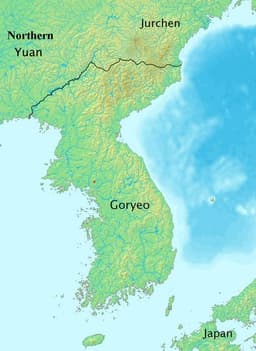
Gyeongjong of Goryeo
Emperor · Medieval
47.1Total
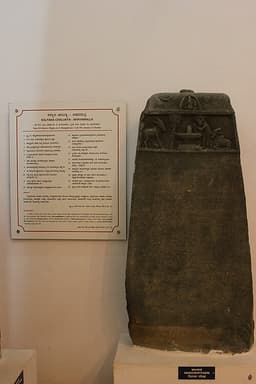
Tailapa II
Emperor · Medieval
60.4Total
Basic Information
Born
955
957
Died
981
997
Era
Medieval
Medieval
Nationality
Korea
India
Occupation
Emperor
Emperor
Civilization
Eastern
Indian
Score Comparison
Military (10%)
20.0
74.7
Political (20%)
53.8
53.8
Influence (20%)
53.3
61.0
Legacy (20%)
47.5
52.0
Leadership (15%)
48.8
72.0
Strategy (15%)
45.0
58.0
TOTAL
47.1
60.4
Gyeongjong of Goryeo — Complete Timeline
976 AD
Institution of the Jeonsigwa Land SystemReform◆ Major
King Gyeongjong established the jeonsigwa, a land distribution system that allocated state-owned farmland to government officials based on their rank. This reform aimed to secure royal revenue and control over land, while providing a stable income for the bureaucracy.
Impact: nationalconstructive
Tailapa II — Complete Timeline
973 AD
Founding of the Western Chalukya DynastyPolitical Action◆ Major
Tailapa II overthrew the Rashtrakuta ruler Karka II and established the Western Chalukya dynasty. This marked the end of Rashtrakuta rule in the Deccan and the beginning of a new Chalukya era.
Impact: regional
995 AD
Defeat of the Paramara King MunjaWar◆ Major
Tailapa II defeated and captured the Paramara king Munja of Malwa. This victory consolidated Western Chalukya control over the northern Deccan and established their military reputation.
Impact: regional
Expert Analysis
Gyeongjong of Goryeo vs Tailapa II
# A Tale of Two Founders
On a spring morning in 976, King Gyeongjong of Goryeo sat in his palace in Kaesong, studying a scroll that would reshape his kingdom’s future. Thousands of miles away, in the Deccan plateau of India, a warrior named Tailapa II was sharpening his sword for a campaign that would topple an empire. Both men ruled in the same century, both faced the challenge of stabilizing their realms, yet their paths diverged dramatically—one a reformer who built systems, the other a conqueror who built dynasties. What drove these two medieval monarchs to such different outcomes?
Origins
Gyeongjong was born into the royal bloodline of Goryeo, the son of King Gwangjong, a ruler known for purging aristocrats and centralizing power. Growing up in the shadow of his father’s iron fist, Gyeongjong learned early that survival depended on subtlety, not strength. The Korean peninsula was still healing from the chaos of the Later Three Kingdoms period, and the aristocracy—bruised but not broken—watched the throne with hungry eyes. Gyeongjong inherited a kingdom where loyalty was measured in land grants and rebellion was a family tradition.
Tailapa II, by contrast, emerged from the ashes of a fallen house. A scion of the Chalukya dynasty that had once ruled the Deccan, he spent his early years in obscurity as the Rashtrakuta empire swallowed his family’s legacy. Where Gyeongjong had a throne handed to him, Tailapa had to carve one from stone. The Deccan of the 10th century was a battlefield of shifting alliances, where the Paramara kings of Malwa, the Cholas of the south, and the Rashtrakutas all vied for supremacy. Tailapa’s childhood was likely spent dreaming of revenge, not reforms.
Rise to Power
Gyeongjong ascended the throne in 975 at the age of twenty, inheriting a kingdom his father had forcibly unified. His rise was quiet, almost scripted—a prince becoming king by the natural order of succession. But the real test came not on the battlefield but in the court, where the aristocracy bristled under the centralizing policies of his predecessors. Gyeongjong’s path to power was not about conquest; it was about finding a balance that kept him on the throne.
Tailapa’s rise was a thunderclap. In 973, he led a rebellion against the Rashtrakuta ruler Karka II, overthrowing a dynasty that had dominated the Deccan for over two centuries. The battle was not just a military victory but a symbolic restoration—the Chalukya name, once buried, rose again. For Tailapa, power was seized, not inherited. Every step forward was a gamble; every victory was a declaration that the old order was dead.
Leadership & Governance
Gyeongjong’s genius lay in his pen, not his sword. In 976, just a year into his reign, he instituted the *jeonsigwa* land system, a reform that allocated state-owned farmland according to official rank. This was not a radical break but a masterful compromise: it stabilized state finances by bringing land under bureaucratic control while giving aristocrats a stake in the system. Gyeongjong understood that in Goryeo, power flowed through land titles, not cavalry charges. His military score of 55.1 reflects a king who avoided war, preferring to govern through decrees and distribution.
Tailapa II ruled with the sword and the scepter. His military score of 67.3 tells only part of the story; his strategy score of 55.4 hints at a man who fought not just to conquer but to consolidate. In 995, he defeated and captured Munja, the Paramara king of Malwa, a victory that secured the northern frontier of his new Western Chalukya dynasty. But Tailapa was no mere warlord. His political score of 62.2 suggests he understood that a kingdom built on conquest required administration. He reestablished Chalukya rule not by erasing the past but by positioning himself as the rightful heir to a glorious legacy. Where Gyeongjong distributed land to pacify, Tailapa distributed it to reward loyalty.
Triumph & Tragedy
Gyeongjong’s greatest triumph was the *jeonsigwa* system, which provided the fiscal foundation for Goryeo’s golden age under later kings. It was a quiet victory—no monuments, no epic poems—but its effects rippled for centuries. His tragedy was that he died young, in 981, at just twenty-six years old. His reforms were only the beginning; he never saw them flourish. History remembers him as a transitional figure, a bridge between his father’s tyranny and his successor’s prosperity.
Tailapa’s triumph was the founding of the Western Chalukya dynasty itself, a restoration that gave the Deccan a stable ruling house for over two centuries. Defeating Munja in 995 was a moment of pure glory, a captured king paraded as proof of Chalukya might. Yet his tragedy was the same as Gyeongjong’s: he died just two years later, in 997, leaving his young dynasty to face the Chola empire’s rising power. Both men built foundations they would not live to see tested.
Character & Destiny
Gyeongjong was a reformer by necessity. He ruled a kingdom where the aristocracy had teeth and the throne had limits. His personality—cautious, diplomatic, perhaps even timid—shaped a reign of legislation rather than war. He was the administrator who cleans the house before the feast. Tailapa was a restorer, a man driven by the conviction that his family’s name deserved to rule again. His personality—bold, vengeful, strategic—drove him to risk everything on a rebellion. He was the warrior who rebuilds the temple with his own hands.
Their destinies reflected their characters. Gyeongjong’s legacy is a system; Tailapa’s is a dynasty. One built for stability, the other for glory. Neither was wrong, but their choices echo the fundamental divide in medieval leadership: the choice between order and ambition.
Legacy
Today, Gyeongjong is remembered primarily in Korean history textbooks as the king who introduced the *jeonsigwa*. His influence score of 72.7 and legacy score of 64.4 place him as a significant but not towering figure in East Asian history. Tailapa II, with an influence score of 73.5 and legacy score of 66.9, casts a slightly longer shadow, particularly in Indian history, where the Western Chalukyas are celebrated for their architecture and patronage of Kannada literature.
Yet both men share a quiet tragedy: they are footnotes to greater names. Gyeongjong is overshadowed by his father Gwangjong and his successor Seongjong; Tailapa is often eclipsed by his more famous son, Vikramaditya V, and the later Chalukya kings who fought the Cholas. History, it seems, has a short memory for founders who die too young.
Conclusion
Standing at the edge of their respective empires, Gyeongjong and Tailapa II faced the same question: how do you build something that lasts? One answered with a land reform, the other with a sword. One sought to tame the aristocracy, the other to embody it. Their different paths remind us that in the medieval world, there was no single formula for power. Sometimes the quiet reformer outlasts the roaring conqueror; sometimes the conqueror’s dynasty crumbles, but his name endures. What remains is the echo of their choices—a land grant in Korea, a captured king in India—still whispering across the centuries, asking us which kind of founder we would choose to be.
Rankings
🥇
Tailapa IILeader
Mil: 74.7Pol: 53.8Inf: 61.0
60.4
🥈
Gyeongjong of Goryeo
Mil: 20.0Pol: 53.8Inf: 53.3
47.1
+13.3 behind
How This Comparison Works
Algorithm
Each figure is scored on 6 dimensions (0—100 scale) based on structured historical data: Military (10%), Political (20%), Influence (20%), Legacy (20%), Leadership (15%), Strategy (15%). The weighted total produces the final ranking.
Data Sources
Scores are computed from structured sub-indicators in the database. Scale factors adjust for era (Ancient ×0.85, Modern ×1.0) and civilization size (Eastern ×1.05, Other ×0.80) to account for differences in population and military scale.
Maximum 3 Figures
Comparisons are limited to 2—3 figures to ensure readability and statistical meaningfulness.
Error Margins
±5 points per dimension — Sub-scores are derived from historical records with inherent uncertainty. Two figures within 5 points on a dimension should be considered roughly equivalent in that area.
Total Score Accuracy
±3 points overall — The weighted combination of 6 dimensions produces a total score with approximately ±3 points of uncertainty. Differences of less than 3 points are not statistically significant— the figures are effectively tied.
Known Limitations
- Historical records are incomplete and uneven across civilizations
- Figures from oral-tradition societies may be underrepresented
- Occupation labels can misclassify multi-role figures
- Scores measure capability and impact, not moral character
- Quantitative scoring is a comparison tool, not absolute truth
Capability Radar
Military (10%) — Battles & Warfare
Battles
5
70
Win Rate
5
75
Expansion
5
75
Political (20%) — Governance & Reform
Reform
70
65
Diplomacy
40
60
Economy
65
65
Influence (20%) — Cultural & Global Reach
Cultural
30
55
Global
20
40
Legacy (20%) — Historical Impact
Historical
45
60
Longevity
40
50
Leadership (15%) — Power & Stability
Tenure
55
70
Stability
50
60
Strategy (15%) — Tactics & Innovation
Strategy
5
70
Tactics
5
65
Reform
5
60
Similar Comparisons
Comments & Discussion
铁血金乌6/16/2026
别看Tailapa二世是个征服者,他不过是走运罢了——捡了Rashtrakuta帝国的烂摊子,靠着篡位起家。Gyeongjong才是真本事:继承的是老爹高压统治后的烂摊子,却用田柴科制度稳住局面,把军权攥在手里。Tailapa砍人砍出个王朝,Gyeongjong立法立出个体系。要我选,我宁要一个能写法治蓝图的文人王,也不要只会挥剑的武夫。Tailapa吹牛说是“复兴”,其实就是趁乱抢地盘!
ChariotKing6/16/2026
Comparing Gyeongjong and Tailapa is like comparing a chess grandmaster to a gladiator. Tailapa fought tooth-and-nail to restore his dynasty, sure, but that’s just bronze-age muscle flexing. Gyeongjong worked smarter: he institutionalized power through the *Jeonsigwa* land system, checking aristocratic influence without a bloodbath. The fact that Goryeo lasted four more centuries proves who built for the long haul. Tailapa’s Western Chalukyas? Crippled by succession crises within a century. Real
RevisionistRebel6/16/2026
得了吧,Gyeongjong就是个被夸大的书呆子!他搞的田柴科表面上漂亮,实际上后来变成豪强兼并的温床,朝鲜史书上吹的“太平盛世”全是糊弄人的。Tailapa倒是真刀真枪干出来的:58年耐心布局,从一个小土包起家,硬生生砍翻Rashtrakuta这个巨人。Gyeongjong有老爹Gwangjong留下的强兵强将,Tailapa就靠自己一双手。把两人换个个儿,看Gyeongjong在印度丛林里能活几天?
DataSkeptic6/16/2026
We’re romanticizing two rulers with almost zero reliable data. Gyeongjong’s land reforms? Only fragmentary mentions in the *Goryeosa*, written centuries later with obvious political spin. Tailapa’s “origins from obscurity”? Mostly mythologized in Chalukya copperplates that were pure propaganda. Both men are artifacts of nationalistic historiography—we project modern state-building ideals onto them. The truth is, we don’t know whether Gyeongjong was a brilliant reformer or just lucky, and Tailapa
古典刀笔客6/16/2026
Gyeongjong和Tailapa这场对比,看着热闹,其实是个误会。韩国史官爱把Goryeo写成“统一新罗之后”,印度编年史家也爱把Chalukya吹成“德干正