Loading...
Guan Xing vs Lu Bu
Lu Bu leads by 13.3 pts · 2 figures compared
…
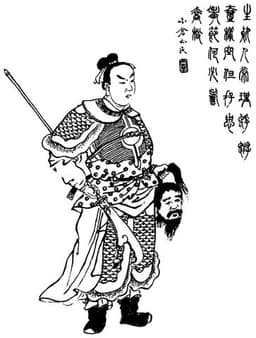
Guan Xing
General · Ancient
40.6Total
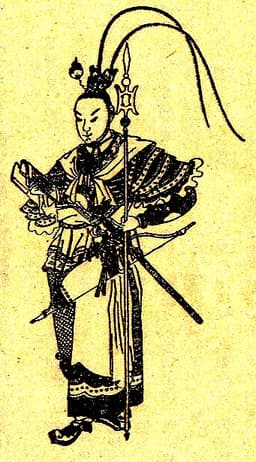
Lu Bu
General · Ancient
53.9Total
Basic Information
Born
198
156
Died
234
198
Era
Ancient
Ancient
Nationality
China
China
Occupation
General
General
Civilization
Eastern
Eastern
Score Comparison
Military (10%)
38.3
70.0
Political (20%)
39.4
35.0
Influence (20%)
51.0
55.0
Legacy (20%)
33.3
52.0
Leadership (15%)
35.4
62.6
Strategy (15%)
45.0
55.0
TOTAL
40.6
53.9
Guan Xing — Complete Timeline
220 AD
Succeeded Guan Yu as GeneralPolitical Action
After Guan Yu's death, Guan Xing inherited his father's title and military command. He was appointed a general in Shu, though his career was cut short by his early death.
InheritanceShu HanMilitary
Impact: national
222 AD
Participated in Yi Ling CampaignWar
Guan Xing fought in the Battle of Yi Ling (Xiaoting) under Liu Bei against Wu. He commanded a unit and survived the disastrous defeat, retreating with the remnants of Shu forces.
Yi LingShu HanBattle
Impact: regional
234 AD
Died Young in Shu ServiceOther
Guan Xing died at a relatively young age, around 36, while still serving Shu. His early death prevented him from achieving the military prominence of his father, Guan Yu.
DeathShu HanGeneral
tragic
Lu Bu — Complete Timeline
192 AD
Lu Bu's Assassination of Dong ZhuoPolitical Action◆ Major
Lu Bu, sworn son and bodyguard of the warlord Dong Zhuo, turned against him and killed him in a palace ambush. This act, orchestrated by Wang Yun, removed the tyrant from power but plunged the capital into further chaos.
AssassinationBetrayalPower Shift
Impact: national
194 AD
Battle of Yan ProvinceWar
Lu Bu, after being driven from Chang'an, attacked Cao Cao's base in Yan Province. He initially gained the support of local officials but was ultimately defeated by Cao Cao at the Battle of Puyang, forcing him to flee east.
BattleCao CaoDefeat
Impact: regional
Lu Bu's Seizure of Xu ProvinceWar◆ Major
While Liu Bei was fighting Yuan Shu, Lu Bu seized control of Xu Province's capital, Xiapi, betraying Liu Bei's hospitality. He then styled himself as the governor of Xu, establishing a short-lived independent base.
BetrayalTerritorial ConquestPower Grab
Impact: regional
198 AD
Battle of XiapiWar◆ Major
Cao Cao and Liu Bei besieged Lu Bu in his stronghold of Xiapi. After a prolonged siege, Lu Bu's own officers mutinied and surrendered him. He was captured, and on Cao Cao's orders, executed by hanging.
SiegeExecutionDefeat
Impact: regionaltragic
Expert Analysis
Origins
Guan Xing (born circa 200 AD) was the second son of Guan Yu, the famed general of Shu Han. Little is known of his early life; he grew up in the shadow of his father's legendary reputation. His family background placed him among the elite of Shu, but his father's execution in 220 AD by Sun Quan forced him to inherit a legacy of vengeance and military command at a young age.
Lu Bu (born circa 151 AD) hailed from a modest background in Wuyuan Commandery. He gained fame as a formidable cavalry commander under Ding Yuan, then under Dong Zhuo. His exceptional martial prowess earned him the title "Flying General," but his lack of noble birth meant he constantly sought patronage and power through shifting alliances.
Rise to Power
Guan Xing's rise was abrupt and familial. After Guan Yu's death, Liu Bei appointed Guan Xing as a general to succeed his father's title and command. He participated in the Yi Ling Campaign (221-222 AD) under Liu Bei against Wu, commanding a unit. Following the catastrophic defeat at Xiaoting, he retreated with the remnants of Shu forces. His career was cut short by his early death at around age 36, preventing him from achieving independent prominence.
Lu Bu's rise was marked by betrayal and audacity. He first gained recognition as Ding Yuan's adopted son, but in 189 AD he murdered Ding Yuan and defected to Dong Zhuo, becoming his sworn son. In 192 AD, under Wang Yun's instigation, Lu Bu assassinated Dong Zhuo in a palace coup, briefly controlling the capital Chang'an. After being driven out by Li Jue and Guo Si, he wandered as a warlord, eventually seizing Xu Province from Liu Bei in 194 AD while Liu Bei was away fighting Yuan Shu. He styled himself as governor of Xu, but his rule was unstable.
Leadership & Governance
Guan Xing's leadership was constrained by his youth and short career. He commanded troops in battle but left no record of administrative reforms or political initiatives. His governance, if any, was likely a continuation of his father's policies, but his early death means his leadership score of 35.4 reflects potential rather than achievement.
Lu Bu's leadership style was charismatic but erratic. He inspired fierce loyalty among his personal bodyguards (like Zhang Liao and Gao Shun) but alienated allies through repeated betrayals. As ruler of Xu Province, he failed to establish stable governance; his reliance on force and lack of diplomatic acumen led to constant conflict with neighbors. He scored 62.6 in leadership, but his political score of 35.0 underscores his inability to build lasting alliances or administer territory effectively.
Triumph & Tragedy
Guan Xing's greatest success was surviving the Yi Ling Campaign and continuing his father's legacy, preserving the Guan family name in Shu. His tragedy was dying young (around 236 AD) before he could prove himself as a commander. His early death left him as a footnote in history, overshadowed by his father and other Shu generals.
Lu Bu's greatest triumph was his military prowess: he defeated Cao Cao at the Battle of Yan Province in 194 AD and held Xiapi for months against a coalition. His tragedy was his downfall at the Battle of Xiapi (199 AD), where his own officers mutinied and surrendered him to Cao Cao. He was executed by strangulation, his reputation as a betrayer sealing his fate. His military score of 70.0 reflects his combat skill, but his legacy is marred by his political failures.
Character & Destiny
Guan Xing was dutiful and loyal, but his destiny was shaped by his father's death and his own early demise. He lacked the ambition to carve his own path, instead fulfilling a filial role. Historical assessments note that he died without achieving significant military renown, his potential unfulfilled.
Lu Bu was impulsive, ambitious, and untrustworthy. His character—constantly seeking personal gain through betrayal—led to his isolation. Chen Gong advised him to be more strategic, but Lu Bu ignored counsel. His destiny was to be a brilliant warrior undone by his own duplicity, a cautionary tale of raw power without wisdom.
Legacy
Guan Xing's legacy is minimal: he is remembered primarily as Guan Yu's son, appearing in historical records only briefly. His military contributions were negligible, and his influence score of 51.0 derives from his lineage rather than his actions. He died without leaving a lasting mark on Shu or the Three Kingdoms.
Lu Bu's legacy is immense in Chinese culture. He is immortalized as the ultimate warrior in the "Romance of the Three Kingdoms," known for his unmatched martial skill (often depicted with his steed Red Hare). His name became synonymous with betrayal and strength. In historical terms, his actions shifted power dynamics: his assassination of Dong Zhuo destabilized the central government, and his seizure of Xu Province weakened Liu Bei. He scored 52.0 in legacy, reflecting his cultural impact, though his political score of 35.0 highlights his failure to build a lasting state.
Conclusion
Lu Bu had a significantly greater impact on the Three Kingdoms period than Guan Xing. His military score of 70.0 dwarfs Guan Xing's 38.3, and his total score of 53.9 exceeds Guan Xing's 40.6 by 13.3 points. While Guan Xing's life was cut short, Lu Bu's actions—betraying Dong Zhuo, seizing Xu Province, and battling Cao Cao—directly shaped the era's conflicts. Guan Xing's legacy is a footnote; Lu Bu's is legendary. Therefore, Lu Bu is the more consequential figure, despite his flaws.
Rankings
🥇
Lu BuLeader
Mil: 70.0Pol: 35.0Inf: 55.0
53.9
🥈
Guan Xing
Mil: 38.3Pol: 39.4Inf: 51.0
40.6
+13.3 behind
How This Comparison Works
Algorithm
Each figure is scored on 6 dimensions (0—100 scale) based on structured historical data: Military (10%), Political (20%), Influence (20%), Legacy (20%), Leadership (15%), Strategy (15%). The weighted total produces the final ranking.
Data Sources
Scores are computed from structured sub-indicators in the database. Scale factors adjust for era (Ancient ×0.85, Modern ×1.0) and civilization size (Eastern ×1.05, Other ×0.80) to account for differences in population and military scale.
Maximum 3 Figures
Comparisons are limited to 2—3 figures to ensure readability and statistical meaningfulness.
Error Margins
±5 points per dimension — Sub-scores are derived from historical records with inherent uncertainty. Two figures within 5 points on a dimension should be considered roughly equivalent in that area.
Total Score Accuracy
±3 points overall — The weighted combination of 6 dimensions produces a total score with approximately ±3 points of uncertainty. Differences of less than 3 points are not statistically significant— the figures are effectively tied.
Known Limitations
- Historical records are incomplete and uneven across civilizations
- Figures from oral-tradition societies may be underrepresented
- Occupation labels can misclassify multi-role figures
- Scores measure capability and impact, not moral character
- Quantitative scoring is a comparison tool, not absolute truth
Capability Radar
Military (10%) — Battles & Warfare
Battles
5
65
Win Rate
5
40
Expansion
0
20
Political (20%) — Governance & Reform
Reform
0
5
Diplomacy
0
10
Economy
0
5
Influence (20%) — Cultural & Global Reach
Cultural
5
70
Global
0
55
Legacy (20%) — Historical Impact
Historical
5
65
Longevity
5
75
Leadership (15%) — Power & Stability
Tenure
5
15
Stability
0
5
Strategy (15%) — Tactics & Innovation
Strategy
5
30
Tactics
5
85
Reform
0
5
Similar Comparisons
Comments & Discussion
No comments yet. Be the first to share your thoughts!