Loading...
Lu Bu vs Napoleon Bonaparte
Napoleon Bonaparte leads by 17.0 pts · 2 figures compared
…
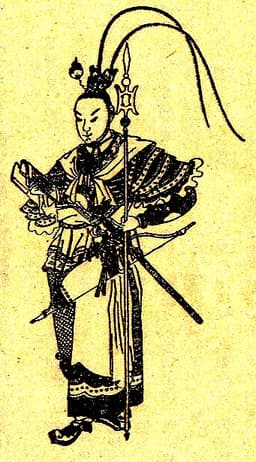
Lu Bu
General · Ancient
53.9Total

Napoleon Bonaparte
General · Modern
70.9Total
Basic Information
Born
156
1769
Died
198
1821
Era
Ancient
Modern
Nationality
China
France
Occupation
General
General
Civilization
Eastern
Western
Score Comparison
Military (10%)
70.0
94.0
Political (20%)
35.0
72.0
Influence (20%)
55.0
40.0
Legacy (20%)
52.0
80.0
Leadership (15%)
62.6
78.0
Strategy (15%)
55.0
90.0
TOTAL
53.9
70.9
Lu Bu — Complete Timeline
192 AD
Lu Bu's Assassination of Dong ZhuoPolitical Action◆ Major
Lu Bu, sworn son and bodyguard of the warlord Dong Zhuo, turned against him and killed him in a palace ambush. This act, orchestrated by Wang Yun, removed the tyrant from power but plunged the capital into further chaos.
AssassinationBetrayalPower Shift
Impact: national
194 AD
Battle of Yan ProvinceWar
Lu Bu, after being driven from Chang'an, attacked Cao Cao's base in Yan Province. He initially gained the support of local officials but was ultimately defeated by Cao Cao at the Battle of Puyang, forcing him to flee east.
BattleCao CaoDefeat
Impact: regional
Lu Bu's Seizure of Xu ProvinceWar◆ Major
While Liu Bei was fighting Yuan Shu, Lu Bu seized control of Xu Province's capital, Xiapi, betraying Liu Bei's hospitality. He then styled himself as the governor of Xu, establishing a short-lived independent base.
BetrayalTerritorial ConquestPower Grab
Impact: regional
198 AD
Battle of XiapiWar◆ Major
Cao Cao and Liu Bei besieged Lu Bu in his stronghold of Xiapi. After a prolonged siege, Lu Bu's own officers mutinied and surrendered him. He was captured, and on Cao Cao's orders, executed by hanging.
SiegeExecutionDefeat
Impact: regionaltragic
Napoleon Bonaparte — Complete Timeline
1799 AD
Coup of 18 BrumaireOther◆ Major
Napoleon Bonaparte, with support from his brother Lucien and key political figures, overthrew the Directory in a bloodless coup. He established the Consulate with himself as First Consul, effectively becoming the ruler of France. This event ended the French Revolution's most unstable period.
French RevolutionCoupRise to Power
Impact: regional
1804 AD
Promulgation of the Napoleonic CodeOther◆ Major
Napoleon enacted the Civil Code of the French, known as the Napoleonic Code, a comprehensive set of laws that replaced the fragmented feudal legal systems. The code established legal equality, protected property rights, and secularized law. It became the basis for legal systems in many European and world countries.
Legal ReformNapoleonic CodeCivil Law
Impact: globalconstructive
1805 AD
Battle of AusterlitzWar◆ Major
Napoleon's Grande Arm
Napoleonic WarsBattleDecisive Victory
Impact: global
1812 AD
Invasion of RussiaWar◆ Major
Napoleon led the Grande Arm
Napoleonic WarsInvasionDisaster
Impact: globaldestructive
1815 AD
Battle of WaterlooWar◆ Major
Napoleon's French army was defeated by the combined forces of the Duke of Wellington's Anglo-Allied army and Gebhard Leberecht von Bl
Napoleonic WarsBattleFinal Defeat
Impact: globaldestructive
Expert Analysis
lu-bu-vs-napoleon-bonaparte
# The Conqueror and the Warrior: Why Napoleon Built an Empire While Lu Bu Built Only Ruins
On a June morning in 1815, Napoleon Bonaparte stood before his Imperial Guard near a muddy field in Belgium, about to stake his destiny on a single, desperate gamble. Seventeen centuries earlier and half a world away, a Chinese general named Lu Bu was dragged before his captors in chains, his legendary strength useless against the ropes that bound him. Both men were warriors of extraordinary skill. Both rose from obscurity to dominate their eras. Yet one reshaped the legal and political foundations of Europe, while the other left behind little more than a cautionary tale about raw talent untethered from wisdom. The difference between them was never about ability. It was about the kind of ambition that builds versus the kind that consumes.
Origins
Napoleon was born in 1769 on the island of Corsica, a place that had only recently become French territory. His family was minor nobility, poor enough to feel the sting of social inferiority but connected enough to secure him a place at French military academies. There, the young Corsican devoured books on military history, artillery science, and Enlightenment philosophy. He was an outsider—short, accented, and ambitious in a way that made his peers uncomfortable. That outsider's hunger, combined with the intellectual discipline of an artillery officer, forged a mind that could calculate probabilities while imagining grand strategies.
Lu Bu came from a very different world. Born in 156 during the late Eastern Han dynasty, he emerged from the chaos of a collapsing empire. China was fragmenting into warring factions, and in such times, a man with a horse and a halberd could carve a name for himself. Lu Bu had both, and more. He was said to be unmatched in personal combat, a warrior whose mere presence on the battlefield could turn the tide. But where Napoleon had schools and books, Lu Bu had only the sword. Where Napoleon learned to think in systems, Lu Bu learned to trust his reflexes. One was forged in the library; the other, on the killing ground.
Rise to Power
Napoleon’s ascent was a masterpiece of timing and calculation. The French Revolution had torn down the old order, creating a vacuum that talent could fill. In 1793, at just 24, he distinguished himself at the Siege of Toulon, where his artillery plan drove the British from the port. By 1796, he was commanding the Army of Italy, and his lightning campaign against the Austrians made him a national hero. Each victory was a stepping stone, but Napoleon understood that military glory alone would not secure power. He cultivated politicians, managed his public image, and in 1799, when the moment was right, he seized control of France in a coup d'état. He became First Consul, then Emperor in 1804. It was a path built on ambition, yes, but also on political calculation.
Lu Bu’s rise followed a different logic—one of opportunism rather than strategy. He first served Ding Yuan, a regional governor, but when the warlord Dong Zhuo offered him a better horse and higher rank, Lu Bu killed Ding Yuan and switched sides. He then became Dong Zhuo’s sworn son and bodyguard. In 192, he turned again, assassinating Dong Zhuo in a palace ambush. Each betrayal brought him short-term gain but long-term isolation. Warlords came to see him as a weapon to be used, not an ally to be trusted. Where Napoleon built coalitions, Lu Bu burned bridges.
Leadership & Governance
As ruler of France, Napoleon was a whirlwind of reform. He centralized the government, established the Bank of France, and negotiated the Concordat with the Pope to stabilize religious relations. His greatest achievement was the Napoleonic Code of 1804, a comprehensive legal system that enshrined equality before the law, protected property rights, and secularized justice. It was a political masterwork that influenced legal systems from Europe to Latin America. On the battlefield, his strategy scores of 93 and military rating of 94 reflect a genius who could coordinate corps-sized armies across vast distances, striking at enemy weaknesses with devastating precision. His leadership rating of 80 shows a commander who inspired fierce loyalty—his soldiers called him "the Little Corporal" with affection.
Lu Bu’s governance, if it can be called that, was a study in failure. His political score of 28.2 and leadership rating of 26.1 tell a stark story. When he seized Xu Province in 194 from Liu Bei, he proved incapable of holding it. He alienated local officials, failed to build administrative structures, and relied entirely on personal charisma and fear. His strategy score of 57.1 is mediocre because he thought in terms of single battles, not campaigns. He was a brilliant duelist in an age that demanded generalship. His military rating of 74.3 is respectable but not legendary—because war is not a martial arts contest. It is logistics, alliances, and patience, and Lu Bu had none of those.
Triumph & Tragedy
Napoleon’s greatest moment was the Battle of Austerlitz in 1805, where he crushed the combined armies of Russia and Austria. It was a triumph of deception, timing, and tactical brilliance. His worst tragedy was the invasion of Russia in 1812—a catastrophic overreach that cost half a million men. He was exiled to Elba in 1814, returned for a Hundred Days, and met final defeat at Waterloo in 1815. His downfall came from the same ambition that drove his rise: he could not stop.
Lu Bu’s greatest triumph was probably his defense of Yan Province in 194 against Cao Cao, where his personal valor temporarily turned the tide. But his tragedy was the Battle of Xiapi in 198. Besieged by Cao Cao and Liu Bei, his own officers mutinied and delivered him in chains. His final plea for mercy was denied, and he was executed. He died at 42, having risen and fallen in just six years of prominence.
Character & Destiny
Napoleon was a man of immense self-discipline and calculation. He worked eighteen-hour days, read voraciously, and micromanaged his empire. His flaw was hubris—a belief that his genius could override reality. "Impossible is a word to be found only in the dictionary of fools," he once said. That confidence built an empire and then destroyed it.
Lu Bu was a man of impulse. He trusted his instincts, his strength, and his horse. His flaw was the inability to delay gratification or consider consequences. He switched sides whenever it seemed advantageous, never understanding that trust is a form of capital that must be accumulated. His famous saying—if he had one—might have been "I am stronger than them," which is true until it isn't.
Legacy
Napoleon’s legacy is enormous. The Napoleonic Code remains the foundation of civil law in much of the world. His military campaigns are still studied at war colleges. His influence score of 82 and legacy of 78 reflect a man who changed the structure of Europe permanently. Even his enemies adopted his reforms.
Lu Bu’s legacy is cultural rather than institutional. He lives on in Chinese opera, novels, and video games as the archetype of the invincible but foolish warrior. His legacy score of 55 is modest because he left no institutions, no laws, no lasting political structures. He is remembered, but as a warning.
Conclusion
Napoleon and Lu Bu both began with talent and ambition. The difference is that Napoleon understood that power requires structure, while Lu Bu believed that power is personal. One built a code; the other built a reputation. One changed the world; the other merely passed through it. In the end, the question is not who was stronger, but who understood that strength alone is never enough.
Rankings
🥇
Napoleon BonaparteLeader
Mil: 94.0Pol: 72.0Inf: 40.0
70.9
🥈
Lu Bu
Mil: 70.0Pol: 35.0Inf: 55.0
53.9
+17.0 behind
How This Comparison Works
Algorithm
Each figure is scored on 6 dimensions (0—100 scale) based on structured historical data: Military (10%), Political (20%), Influence (20%), Legacy (20%), Leadership (15%), Strategy (15%). The weighted total produces the final ranking.
Data Sources
Scores are computed from structured sub-indicators in the database. Scale factors adjust for era (Ancient ×0.85, Modern ×1.0) and civilization size (Eastern ×1.05, Other ×0.80) to account for differences in population and military scale.
Maximum 3 Figures
Comparisons are limited to 2—3 figures to ensure readability and statistical meaningfulness.
Error Margins
±5 points per dimension — Sub-scores are derived from historical records with inherent uncertainty. Two figures within 5 points on a dimension should be considered roughly equivalent in that area.
Total Score Accuracy
±3 points overall — The weighted combination of 6 dimensions produces a total score with approximately ±3 points of uncertainty. Differences of less than 3 points are not statistically significant— the figures are effectively tied.
Known Limitations
- Historical records are incomplete and uneven across civilizations
- Figures from oral-tradition societies may be underrepresented
- Occupation labels can misclassify multi-role figures
- Scores measure capability and impact, not moral character
- Quantitative scoring is a comparison tool, not absolute truth
Capability Radar
Military (10%) — Battles & Warfare
Battles
65
95
Win Rate
40
90
Expansion
20
95
Political (20%) — Governance & Reform
Reform
5
95
Diplomacy
10
80
Economy
5
85
Influence (20%) — Cultural & Global Reach
Cultural
70
85
Global
55
90
Legacy (20%) — Historical Impact
Historical
65
95
Longevity
75
90
Leadership (15%) — Power & Stability
Tenure
15
85
Stability
5
70
Strategy (15%) — Tactics & Innovation
Strategy
30
95
Tactics
85
98
Reform
5
92
Similar Comparisons
Comments & Discussion
No comments yet. Be the first to share your thoughts!