Loading...
Lu Bu vs Wei Yan
Lu Bu leads by 8.7 pts · 2 figures compared
…
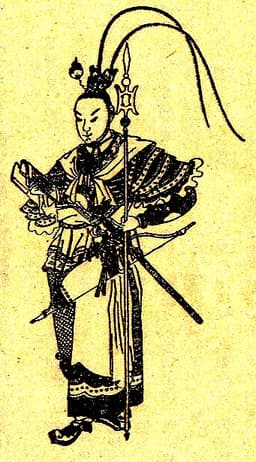
Lu Bu
General · Ancient
53.9Total
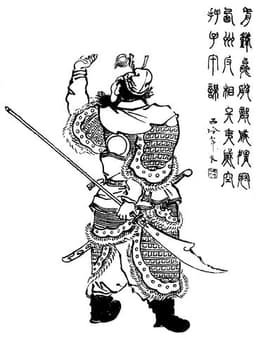
Wei Yan
General · Ancient
45.2Total
Basic Information
Born
156
175
Died
198
234
Era
Ancient
Ancient
Nationality
China
China
Occupation
General
General
Civilization
Eastern
Eastern
Score Comparison
Military (10%)
70.0
52.5
Political (20%)
35.0
35.0
Influence (20%)
55.0
48.6
Legacy (20%)
52.0
42.5
Leadership (15%)
62.6
46.3
Strategy (15%)
55.0
50.0
TOTAL
53.9
45.2
Lu Bu — Complete Timeline
192 AD
Lu Bu's Assassination of Dong ZhuoPolitical Action◆ Major
Lu Bu, sworn son and bodyguard of the warlord Dong Zhuo, turned against him and killed him in a palace ambush. This act, orchestrated by Wang Yun, removed the tyrant from power but plunged the capital into further chaos.
AssassinationBetrayalPower Shift
Impact: national
194 AD
Battle of Yan ProvinceWar
Lu Bu, after being driven from Chang'an, attacked Cao Cao's base in Yan Province. He initially gained the support of local officials but was ultimately defeated by Cao Cao at the Battle of Puyang, forcing him to flee east.
BattleCao CaoDefeat
Impact: regional
Lu Bu's Seizure of Xu ProvinceWar◆ Major
While Liu Bei was fighting Yuan Shu, Lu Bu seized control of Xu Province's capital, Xiapi, betraying Liu Bei's hospitality. He then styled himself as the governor of Xu, establishing a short-lived independent base.
BetrayalTerritorial ConquestPower Grab
Impact: regional
198 AD
Battle of XiapiWar◆ Major
Cao Cao and Liu Bei besieged Lu Bu in his stronghold of Xiapi. After a prolonged siege, Lu Bu's own officers mutinied and surrendered him. He was captured, and on Cao Cao's orders, executed by hanging.
SiegeExecutionDefeat
Impact: regionaltragic
Wei Yan — Complete Timeline
219 AD
Wei Yan's Appointment as Governor of HanzhongPolitical Action◆ Major
After Liu Bei conquered Hanzhong, he appointed Wei Yan as the governor of this strategic region, bypassing the more senior Zhang Fei. Wei Yan successfully defended Hanzhong against Wei attacks for years, proving his competence.
AppointmentDefenseHanzhong
Impact: regionalconstructive
228 AD
Wei Yan's Northern Expeditions under Zhuge LiangWar◆ Major
Wei Yan served as a frontline commander in Zhuge Liang's Northern Expeditions against Wei. He proposed the risky 'Ziwu Valley' plan to attack Chang'an directly, but Zhuge Liang rejected it. Wei Yan's forces achieved several tactical victories.
ExpeditionMilitary CampaignStrategy
Impact: regional
234 AD
Wei Yan's Rebellion and DeathPolitical Action◆ Major
After Zhuge Liang's death, Wei Yan clashed with the chief of staff Yang Yi over command. Wei Yan burned the retreat route and was accused of rebellion. He was defeated, captured, and executed by Ma Dai. The historical accuracy of his 'rebellion' is debated.
RebellionExecutionPower Struggle
Impact: nationaltragic
Expert Analysis
Origins
Lu Bu was born in 151 AD in Wuyuan Commandery (modern Inner Mongolia). His early life is obscure, but he gained fame as a formidable warrior in the service of Ding Yuan, a Han general. Lu Bu's exceptional martial skills earned him the nickname "Flying General." He was known for his personal bravery and archery, but his lack of political acumen would define his career.
Wei Yan was born around 175 AD in Yiyang, Jing Province. Little is known of his early life, but he rose from a common soldier to become a trusted officer under Liu Bei. His military talent was recognized early, leading to rapid promotion. Unlike Lu Bu, Wei Yan's origins were humble, and his career was built on merit rather than noble birth.
Rise to Power
Lu Bu's rise began as a subordinate to Ding Yuan, whom he served as a military officer. In 189 AD, after the death of Emperor Ling, the eunuch faction was purged, and Dong Zhuo seized control of the capital. Dong Zhuo bribed Lu Bu to assassinate Ding Yuan, which Lu Bu did, then adopted Dong Zhuo as his father. Lu Bu became Dong Zhuo's bodyguard and was given high ranks. However, in 192 AD, Lu Bu turned against Dong Zhuo, killing him in a plot with Wang Yun. After Dong Zhuo's death, Lu Bu was briefly in control of Chang'an but was soon driven out by Li Jue and Guo Si. He then wandered, seeking refuge with various warlords, betraying many, including Liu Bei, by seizing Xu Province in 196 AD.
Wei Yan's rise was steadier. He joined Liu Bei's forces during the chaos of the late Han. He distinguished himself in battles, particularly in the conquest of Shu in 214 AD. His loyalty and competence earned him the governorship of Hanzhong in 219 AD, a strategic position that protected Shu's northern border. This appointment bypassed senior generals like Zhang Fei, showing Liu Bei's trust. Wei Yan successfully defended Hanzhong for years, employing a strategy of fortification and deterrence.
Leadership & Governance
Lu Bu's leadership was based on personal prowess and charisma, but he lacked administrative skill. He ruled Xu Province through fear and force, but his erratic behavior and frequent betrayals alienated allies. He failed to build a stable administration, instead relying on his generals like Zhang Liao and Gao Shun. His military leadership was aggressive but undisciplined; he often led cavalry charges but struggled with logistics and siegecraft. For example, at the Battle of Yan Province against Cao Cao, he initially succeeded but was ultimately outmaneuvered.
Wei Yan was a capable administrator and military commander. As governor of Hanzhong, he implemented a defensive system that repelled Cao Wei's invasions. He was known for his discipline and strategic foresight. During Zhuge Liang's Northern Expeditions, Wei Yan served as a frontline commander and proposed the ambitious "Ziwu Valley" plan to strike Chang'an directly. However, Zhuge Liang deemed it too risky. Wei Yan's leadership style was strict, and he had a contentious relationship with colleagues like Yang Yi, which later contributed to his downfall.
Triumph & Tragedy
Lu Bu's greatest triumph was his military reputation. He was virtually unbeatable in duels and small-scale engagements. His victory over Cao Cao at Yan Province in 194 AD and his defense of Xu Province showcased his tactical skill. However, his tragedy was his inability to secure long-term power. His betrayal of allies, including Ding Yuan, Dong Zhuo, and Liu Bei, made him untrustworthy. His final defeat at the Battle of Xiapi in 199 AD came when his own officers surrendered him to Cao Cao, leading to his execution. His military score of 70.0 reflects his prowess but his political score of 35.0 highlights his failures.
Wei Yan's triumph was his successful tenure as governor of Hanzhong, where he prevented Wei incursions for a decade. He also performed well in the Northern Expeditions, particularly at the Battle of Jieting, where his forces were not involved but he contributed to overall strategy. His tragedy came after Zhuge Liang's death in 234 AD. He clashed with Yang Yi over command, burned the retreat route, and was accused of rebellion. He was killed by Ma Dai, and his family was executed. The historical record is ambiguous: some sources suggest he intended to continue the campaign, not rebel. His influence score of 48.6 and legacy of 42.5 reflect the controversy.
Character & Destiny
Lu Bu was impulsive, proud, and driven by personal gain. He lacked loyalty and strategic thinking. His character led him to betray others, which ultimately isolated him. His destiny was to be a celebrated warrior but a failed leader. Historical assessments, like Chen Shou's in the Records of the Three Kingdoms, describe him as having "the strength of a tiger but the heart of a beast."
Wei Yan was ambitious, proud, and stubborn. He felt undervalued by Zhuge Liang and resented Yang Yi's authority. His character led him to act rashly after Zhuge Liang's death, sealing his fate. Historians debate whether his rebellion was real or a fabrication by his rivals. His destiny was to be remembered as a rebel, though his contributions to Shu were significant.
Legacy
Lu Bu's legacy is that of the ultimate warrior in Chinese culture. He appears in novels, operas, and games as the epitome of martial prowess. His name is synonymous with strength and betrayal. However, his political legacy is nil. His military score of 70.0 and influence of 55.0 reflect his lasting fame.
Wei Yan's legacy is more complex. He is remembered as a capable but controversial general. In Shu Han, his defensive system in Hanzhong influenced later strategies. However, his rebellion tarnished his record. Modern historians reassess him more favorably, suggesting he was a victim of factional politics. His total score of 45.2 places him below Lu Bu.
Conclusion
Lu Bu had greater impact in terms of personal fame and military reputation, scoring 53.9 overall versus Wei Yan's 45.2. Lu Bu's martial prowess was exceptional, and his actions shaped the early Three Kingdoms period. Wei Yan's contributions were more localized and his legacy ambiguous. Therefore, Lu Bu is the more significant figure historically, though his flaws limited his long-term influence.
Rankings
🥇
Lu BuLeader
Mil: 70.0Pol: 35.0Inf: 55.0
53.9
🥈
Wei Yan
Mil: 52.5Pol: 35.0Inf: 48.6
45.2
+8.7 behind
How This Comparison Works
Algorithm
Each figure is scored on 6 dimensions (0—100 scale) based on structured historical data: Military (10%), Political (20%), Influence (20%), Legacy (20%), Leadership (15%), Strategy (15%). The weighted total produces the final ranking.
Data Sources
Scores are computed from structured sub-indicators in the database. Scale factors adjust for era (Ancient ×0.85, Modern ×1.0) and civilization size (Eastern ×1.05, Other ×0.80) to account for differences in population and military scale.
Maximum 3 Figures
Comparisons are limited to 2—3 figures to ensure readability and statistical meaningfulness.
Error Margins
±5 points per dimension — Sub-scores are derived from historical records with inherent uncertainty. Two figures within 5 points on a dimension should be considered roughly equivalent in that area.
Total Score Accuracy
±3 points overall — The weighted combination of 6 dimensions produces a total score with approximately ±3 points of uncertainty. Differences of less than 3 points are not statistically significant— the figures are effectively tied.
Known Limitations
- Historical records are incomplete and uneven across civilizations
- Figures from oral-tradition societies may be underrepresented
- Occupation labels can misclassify multi-role figures
- Scores measure capability and impact, not moral character
- Quantitative scoring is a comparison tool, not absolute truth
Capability Radar
Military (10%) — Battles & Warfare
Battles
65
45
Win Rate
40
40
Expansion
20
30
Political (20%) — Governance & Reform
Reform
5
10
Diplomacy
10
20
Economy
5
10
Influence (20%) — Cultural & Global Reach
Cultural
70
30
Global
55
10
Legacy (20%) — Historical Impact
Historical
65
35
Longevity
75
30
Leadership (15%) — Power & Stability
Tenure
15
30
Stability
5
15
Strategy (15%) — Tactics & Innovation
Strategy
30
50
Tactics
85
55
Reform
5
20
Similar Comparisons
Comments & Discussion
No comments yet. Be the first to share your thoughts!