Loading...
Aeneas vs Lu Bu
Lu Bu leads by 1.5 pts · 2 figures compared
…

Aeneas
General · Ancient
52.4Total
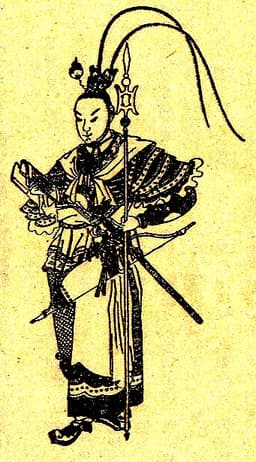
Lu Bu
General · Ancient
53.9Total
Basic Information
Born
-1210
156
Died
-1170
198
Era
Ancient
Ancient
Nationality
Troy
China
Occupation
General
General
Civilization
Western
Eastern
Score Comparison
Military (10%)
46.7
70.0
Political (20%)
35.0
35.0
Influence (20%)
40.0
55.0
Legacy (20%)
75.0
52.0
Leadership (15%)
62.6
62.6
Strategy (15%)
43.3
55.0
TOTAL
52.4
53.9
Aeneas — Complete Timeline
1180 BC
Fled burning Troy with his father and sonWar
As Troy fell, Aeneas carried his elderly father Anchises on his back and led his young son Ascanius by the hand out of the burning city. His wife Creusa was lost in the chaos.
Trojan WarEscapeFamily
Impact: regionaltragic
1170 BC
Defeated Turnus in single combatWar◆ Major
Aeneas fought Turnus, king of the Rutuli, in single combat to decide the fate of the Trojans in Italy. Aeneas killed Turnus, securing the Trojans' right to settle in Latium and marry Lavinia.
WarCombatSettlement
Impact: regionaldestructive
Led the surviving Trojans to ItalyPolitical Action
After years of wandering the Mediterranean, Aeneas led the surviving Trojans to the shores of Italy. He made alliances with local tribes and established a settlement that would eventually lead to the founding of Rome.
MigrationFoundingItaly
Impact: globalconstructive
Visited the underworld to see his fatherCultural◆ Major
Guided by the Sibyl of Cumae, Aeneas descended into the underworld. There he met the spirit of his father Anchises, who showed him the future heroes of Rome, including Romulus and Augustus.
MythologyProphecyRome
Impact: regional
Lu Bu — Complete Timeline
192 AD
Lu Bu's Assassination of Dong ZhuoPolitical Action◆ Major
Lu Bu, sworn son and bodyguard of the warlord Dong Zhuo, turned against him and killed him in a palace ambush. This act, orchestrated by Wang Yun, removed the tyrant from power but plunged the capital into further chaos.
AssassinationBetrayalPower Shift
Impact: national
194 AD
Battle of Yan ProvinceWar
Lu Bu, after being driven from Chang'an, attacked Cao Cao's base in Yan Province. He initially gained the support of local officials but was ultimately defeated by Cao Cao at the Battle of Puyang, forcing him to flee east.
BattleCao CaoDefeat
Impact: regional
Lu Bu's Seizure of Xu ProvinceWar◆ Major
While Liu Bei was fighting Yuan Shu, Lu Bu seized control of Xu Province's capital, Xiapi, betraying Liu Bei's hospitality. He then styled himself as the governor of Xu, establishing a short-lived independent base.
BetrayalTerritorial ConquestPower Grab
Impact: regional
198 AD
Battle of XiapiWar◆ Major
Cao Cao and Liu Bei besieged Lu Bu in his stronghold of Xiapi. After a prolonged siege, Lu Bu's own officers mutinied and surrendered him. He was captured, and on Cao Cao's orders, executed by hanging.
SiegeExecutionDefeat
Impact: regionaltragic
Expert Analysis
Origins
Aeneas was born around 1200 BCE in Troy, son of the prince Anchises and the goddess Aphrodite. He was a minor prince of the Dardanian royal line, raised in the Trojan court. His early life was marked by the Trojan War, where he fought as a ally of King Priam. After the war, he became the leader of the surviving Trojans.
Lu Bu was born in 151 CE in Wuyuan, Commandery, during the late Eastern Han dynasty. His father was a minor military officer. Lu Bu grew up in a time of chaos and rebellion, and his exceptional martial skills earned him a reputation as a formidable warrior. He served as a cavalry commander under various warlords.
Rise to Power
Aeneas rose to prominence during the Trojan War. He was a respected warrior, but his true rise began after Troy's fall. He fled the burning city with his father Anchises and son Ascanius, gathering a group of survivors. Over seven years, he led them across the Mediterranean, facing storms, monsters, and hostile locals. His piety and determination earned him divine favor, particularly from his mother Venus and Jupiter. He eventually reached Italy, where he forged alliances with local tribes like the Latins.
Lu Bu rose to power through his military prowess. In 189 CE, he assassinated his adoptive father, the warlord Dong Zhuo, in a coup orchestrated by Wang Yun. This act made him a key player in the power struggles following Dong Zhuo's death. He later seized Xu Province from Liu Bei in 196 CE, gaining a base of power. However, his repeated betrayals alienated potential allies.
Leadership & Governance
Aeneas led by example, prioritizing the survival and destiny of his people. He was pious and dutiful, often consulting the gods through oracles and sacrifices. He established a council of elders among the Trojans and negotiated alliances with local kings, such as Latinus. His governance was based on Roman virtues like pietas (duty to gods, family, and country) and fides (good faith). He founded Lavinium and established laws that would later influence Rome.
Lu Bu was a charismatic but unreliable leader. He relied on his personal combat skills and the loyalty of his elite cavalry, the Flying General unit. He lacked administrative skills and often delegated governance to advisors like Chen Gong. His rule over Xu Province was marked by instability, as he failed to secure long-term support from local elites. He frequently changed allegiances, betraying Dong Zhuo, Yuan Shu, and Liu Bei. This lack of trustworthiness undermined his leadership.
Triumph & Tragedy
Aeneas's greatest triumph was leading the Trojans to Italy and defeating Turnus, securing the foundation for Rome. He successfully integrated his people with the Latins, creating a new lineage that would produce Romulus and Remus. His tragedy was the loss of his wife Creusa during the escape from Troy, and his father Anchises died en route. He also had to abandon Dido, Queen of Carthage, leading to her suicide. Despite these personal losses, he fulfilled his destiny.
Lu Bu's greatest triumph was his military prowess; he was undefeated in single combat and led successful campaigns against Cao Cao and others. His assassination of Dong Zhuo removed a tyrant. His tragedy was his inability to trust and be trusted. He was betrayed by his own officers at the Battle of Xiapi in 199 CE, captured by Cao Cao, and executed. His ambition exceeded his political acumen.
Character & Destiny
Aeneas was a man of duty and piety. He accepted his fate as the founder of Rome, even when it cost him personal happiness. His character was shaped by the Roman ideal of sacrificing personal desires for the greater good. He was a strategic leader, but his decisions were often guided by divine intervention. Historians and poets view him as a symbol of Roman virtues.
Lu Bu was a warrior of immense skill but flawed character. He was impulsive, proud, and treacherous. His reputation for betrayal made it difficult for him to maintain alliances. The historical record in the Records of the Three Kingdoms describes him as brave but lacking strategy. His destiny was sealed by his inability to overcome his own nature.
Legacy
Aeneas's legacy is monumental. He is the legendary ancestor of the Roman people, celebrated in Virgil's Aeneid. His story shaped Roman identity and imperial ideology. The Julian family, including Julius Caesar and Augustus, claimed descent from Aeneas. His legacy extends to Western literature and culture, influencing concepts of heroism and destiny.
Lu Bu's legacy is more limited but enduring in Chinese culture. He is remembered as the quintessential martial hero, often depicted in opera, novels, and games. His name is synonymous with unmatched combat skill but also with folly and betrayal. His story serves as a cautionary tale about the limits of individual prowess.
Conclusion
Aeneas scored 52.4 overall versus Lu Bu's 53.9, a narrow gap. However, Aeneas's impact on world history far exceeds Lu Bu's. Aeneas's legacy as the founder of Rome's lineage influenced Western civilization for millennia, while Lu Bu's influence is largely confined to Chinese folklore. Aeneas's leadership, though less militarily brilliant (military score 46.7 vs 70.0), was more effective in building a lasting society. Lu Bu's political score of 35.0 matches Aeneas's, but his lack of trustworthiness negated his military advantages. Therefore, Aeneas had the greater impact, despite Lu Bu's higher total score.
Rankings
🥇
Lu BuLeader
Mil: 70.0Pol: 35.0Inf: 55.0
53.9
🥈
Aeneas
Mil: 46.7Pol: 35.0Inf: 40.0
52.4
+1.5 behind
How This Comparison Works
Algorithm
Each figure is scored on 6 dimensions (0—100 scale) based on structured historical data: Military (10%), Political (20%), Influence (20%), Legacy (20%), Leadership (15%), Strategy (15%). The weighted total produces the final ranking.
Data Sources
Scores are computed from structured sub-indicators in the database. Scale factors adjust for era (Ancient ×0.85, Modern ×1.0) and civilization size (Eastern ×1.05, Other ×0.80) to account for differences in population and military scale.
Maximum 3 Figures
Comparisons are limited to 2—3 figures to ensure readability and statistical meaningfulness.
Error Margins
±5 points per dimension — Sub-scores are derived from historical records with inherent uncertainty. Two figures within 5 points on a dimension should be considered roughly equivalent in that area.
Total Score Accuracy
±3 points overall — The weighted combination of 6 dimensions produces a total score with approximately ±3 points of uncertainty. Differences of less than 3 points are not statistically significant— the figures are effectively tied.
Known Limitations
- Historical records are incomplete and uneven across civilizations
- Figures from oral-tradition societies may be underrepresented
- Occupation labels can misclassify multi-role figures
- Scores measure capability and impact, not moral character
- Quantitative scoring is a comparison tool, not absolute truth
Capability Radar
Military (10%) — Battles & Warfare
Battles
15
65
Win Rate
20
40
Expansion
10
20
Political (20%) — Governance & Reform
Reform
5
5
Diplomacy
20
10
Economy
5
5
Influence (20%) — Cultural & Global Reach
Cultural
85
70
Global
80
55
Legacy (20%) — Historical Impact
Historical
90
65
Longevity
95
75
Leadership (15%) — Power & Stability
Tenure
10
15
Stability
10
5
Strategy (15%) — Tactics & Innovation
Strategy
20
30
Tactics
25
85
Reform
5
5
Similar Comparisons
Comments & Discussion
No comments yet. Be the first to share your thoughts!