Loading...
Grover Cleveland vs Le Duan
Le Duan leads by 1.1 pts · 2 figures compared
…
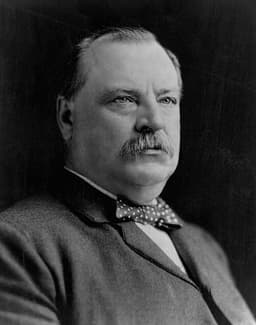
Grover Cleveland
Politician · Modern
53.7Total
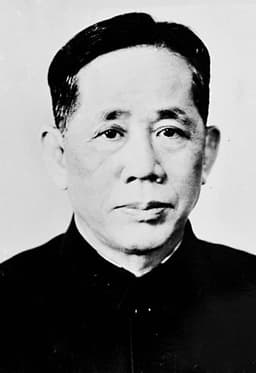
Le Duan
Politician · Modern
54.8Total
Basic Information
Born
1837
1907
Died
1908
1986
Era
Modern
Modern
Nationality
United States
Vietnam
Occupation
Politician
Politician
Civilization
Western
Eastern
Score Comparison
Military (10%)
50.0
25.9
Political (20%)
45.0
65.0
Influence (20%)
54.9
58.3
Legacy (20%)
48.3
52.0
Leadership (15%)
79.8
72.0
Strategy (15%)
41.8
41.0
TOTAL
53.7
54.8
Grover Cleveland — Complete Timeline
1884 AD
Election as President of the United States (First Term)Political Action◆ Major
Cleveland, a Democrat, won the 1884 presidential election against Republican James G. Blaine. The campaign was marked by personal attacks, but Cleveland's reputation as a reformer helped him win a narrow victory.
Presidential ElectionDemocratic Party
Impact: national
1887 AD
Signing of the Interstate Commerce ActReform◆ Major
Cleveland signed the Interstate Commerce Act, which created the Interstate Commerce Commission (ICC) to regulate railroad rates and practices. This was the first federal agency to regulate private industry, marking a significant expansion of federal power over commerce.
Railroad RegulationFederal Regulation
Impact: nationalconstructive
1892 AD
Election as President of the United States (Second Term)Political Action◆ Major
Cleveland won the 1892 presidential election against incumbent Benjamin Harrison, becoming the only president to serve two non-consecutive terms. His victory was a repudiation of the McKinley Tariff and Republican economic policies.
Presidential ElectionNon-Consecutive Terms
Impact: national
1894 AD
Intervention in the Pullman StrikePolitical Action◆ Major
Cleveland ordered federal troops to break the Pullman Strike, a nationwide railroad strike led by Eugene V. Debs. The intervention was controversial, as it used federal power to suppress labor unrest, and led to Debs' imprisonment.
Labor StrikeFederal Intervention
Impact: nationaldestructive
Le Duan — Complete Timeline
1960 AD
Elected to PolitburoPolitical Action◆ Major
Le Duan was elected to the Politburo of the Communist Party of Vietnam, becoming a top leader. He was a key figure in directing the Vietnam War against the United States and South Vietnam.
PolitburoCommunist PartyVietnam War
Impact: national
General Secretary of the Communist PartyPolitical Action◆ Major
Le Duan became General Secretary of the Communist Party of Vietnam, succeeding Ho Chi Minh as the top leader. He oversaw the unification of Vietnam after the war and implemented socialist policies.
General SecretaryLeadershipUnification
Impact: nationalconstructive
1968 AD
Tet Offensive planningWar◆ Major
Le Duan was a key architect of the Tet Offensive, a massive military campaign against South Vietnam and US forces. Although a tactical defeat, the offensive shifted US public opinion against the war.
Tet OffensiveVietnam WarMilitary strategy
Impact: global
1976 AD
Reunification of VietnamPolitical Action◆ Major
Le Duan oversaw the formal reunification of North and South Vietnam into the Socialist Republic of Vietnam. He implemented a Soviet-style command economy and collectivization in the south.
ReunificationSocialist RepublicCollectivization
Impact: nationalconstructive
1978 AD
Invasion of CambodiaWar◆ Major
Le Duan ordered the Vietnamese invasion of Cambodia, overthrowing the Khmer Rouge regime. The invasion led to a decade-long occupation and international isolation for Vietnam.
CambodiaInvasionKhmer Rouge
Impact: regionaldestructive
Expert Analysis
Origins
Grover Cleveland was born on March 18, 1837, in Caldwell, New Jersey, the son of a Presbyterian minister. He had limited formal education, studying law as a clerk in Buffalo, New York. His early career as a lawyer and later sheriff of Erie County shaped his reputation for honesty and hard work. Le Duan was born on April 7, 1907, in Quang Tri Province, French Indochina, into a peasant family. He joined the Revolutionary Youth League in 1928 and became a founding member of the Indochinese Communist Party in 1930. His early activism led to imprisonment by the French, hardening his resolve.
Rise to Power
Cleveland rose through New York politics as a reform-minded Democrat, serving as mayor of Buffalo and then governor of New York in 1882. His anti-corruption stance propelled him to the presidency in 1884, defeating James G. Blaine in a close election. Cleveland's first term focused on civil service reform and tariff reduction. Le Duan rose within the Communist Party of Vietnam, becoming a key figure in the southern resistance. He was elected to the Politburo in 1957 and became General Secretary in 1960, succeeding Ho Chi Minh as the top leader. He directed the Vietnam War strategy, including the Tet Offensive in 1968.
Leadership & Governance
Cleveland's leadership style was characterized by independence and adherence to principle. He vetoed hundreds of private pension bills and signed the Interstate Commerce Act in 1887, creating the ICC to regulate railroads. His stance against high tariffs led to the Wilson-Gorman Tariff Act, which he allowed to become law without signature. Cleveland also intervened in the Pullman Strike of 1894, sending federal troops to break the strike, which damaged his labor relations. Le Duan led Vietnam through war and reunification. He implemented a Soviet-style command economy, collectivizing agriculture and nationalizing industry. His governance was authoritarian, suppressing dissent and enforcing party orthodoxy. He ordered the invasion of Cambodia in 1978, toppling the Khmer Rouge but leading to a costly occupation.
Triumph & Tragedy
Cleveland's triumphs include his reputation as a reformer and his successful second term after a four-year hiatus, the only president to do so. He also signed the Interstate Commerce Act, a landmark in federal regulation. His tragedies include his handling of the Pullman Strike, which tarnished his legacy, and the Panic of 1893, a severe economic depression during his second term. Le Duan's greatest success was overseeing the reunification of Vietnam in 1976 after decades of war. The Tet Offensive, although a military defeat, was a strategic victory that shifted US public opinion. His tragedies include the economic stagnation caused by his command economy and the international isolation following the Cambodian invasion, which damaged Vietnam's reputation.
Character & Destiny
Cleveland was known for his stubbornness and integrity, often vetoing bills he deemed unconstitutional. His character led to both admiration and criticism. He faced personal scandal over an alleged illegitimate child but admitted to paying child support. Le Duan was a pragmatic and determined leader, focused on reunification at all costs. His authoritarian tendencies and distrust of intellectuals led to a rigid party system. Historians assess him as a capable wartime leader but a poor peacetime administrator.
Legacy
Cleveland's legacy is mixed: he is remembered as a principled president who stood against corruption, but his economic policies are criticized. The Interstate Commerce Act laid the foundation for federal regulation. Le Duan's legacy is the reunified Vietnam, but his economic policies contributed to poverty and isolation. Later reforms under Doi Moi reversed many of his policies.
Conclusion
While Cleveland and Le Duan both held top political offices, their impacts differ. Cleveland scored 53.7 total, Le Duan 54.8. Le Duan's role in reunifying Vietnam and shaping its post-war trajectory gives him a greater long-term impact, despite economic failures. Cleveland's influence is more symbolic, representing integrity in office. Le Duan's total score of 54.8 surpasses Cleveland's 53.7, reflecting his greater strategic influence in a transformative era.
Rankings
🥇
Le DuanLeader
Mil: 25.9Pol: 65.0Inf: 58.3
54.8
🥈
Grover Cleveland
Mil: 50.0Pol: 45.0Inf: 54.9
53.7
+1.1 behind
How This Comparison Works
Algorithm
Each figure is scored on 6 dimensions (0—100 scale) based on structured historical data: Military (10%), Political (20%), Influence (20%), Legacy (20%), Leadership (15%), Strategy (15%). The weighted total produces the final ranking.
Data Sources
Scores are computed from structured sub-indicators in the database. Scale factors adjust for era (Ancient ×0.85, Modern ×1.0) and civilization size (Eastern ×1.05, Other ×0.80) to account for differences in population and military scale.
Maximum 3 Figures
Comparisons are limited to 2—3 figures to ensure readability and statistical meaningfulness.
Error Margins
±5 points per dimension — Sub-scores are derived from historical records with inherent uncertainty. Two figures within 5 points on a dimension should be considered roughly equivalent in that area.
Total Score Accuracy
±3 points overall — The weighted combination of 6 dimensions produces a total score with approximately ±3 points of uncertainty. Differences of less than 3 points are not statistically significant— the figures are effectively tied.
Known Limitations
- Historical records are incomplete and uneven across civilizations
- Figures from oral-tradition societies may be underrepresented
- Occupation labels can misclassify multi-role figures
- Scores measure capability and impact, not moral character
- Quantitative scoring is a comparison tool, not absolute truth
Capability Radar
Military (10%) — Battles & Warfare
Battles
29
20
Win Rate
30
20
Expansion
33
30
Political (20%) — Governance & Reform
Reform
55
70
Diplomacy
65
75
Economy
60
60
Influence (20%) — Cultural & Global Reach
Cultural
30
50
Global
40
60
Legacy (20%) — Historical Impact
Historical
50
70
Longevity
40
60
Leadership (15%) — Power & Stability
Tenure
60
85
Stability
70
65
Strategy (15%) — Tactics & Innovation
Strategy
35
30
Tactics
40
20
Reform
46
30
Similar Comparisons
Comments & Discussion
No comments yet. Be the first to share your thoughts!