Loading...
Le Duan vs Numa Droz
Le Duan leads by 6.3 pts · 2 figures compared
…
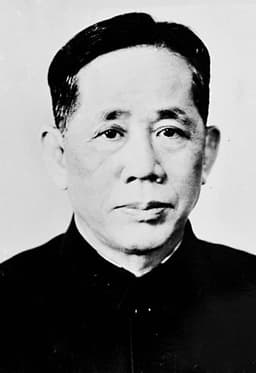
Le Duan
Politician · Modern
54.8Total

Numa Droz
Politician · Modern
48.5Total
Basic Information
Born
1907
1844
Died
1986
1899
Era
Modern
Modern
Nationality
Vietnam
Switzerland
Occupation
Politician
Politician
Civilization
Eastern
Western
Score Comparison
Military (10%)
25.9
12.0
Political (20%)
65.0
68.0
Influence (20%)
58.3
50.2
Legacy (20%)
52.0
40.8
Leadership (15%)
72.0
72.0
Strategy (15%)
41.0
35.2
TOTAL
54.8
48.5
Le Duan — Complete Timeline
1960 AD
Elected to PolitburoPolitical Action◆ Major
Le Duan was elected to the Politburo of the Communist Party of Vietnam, becoming a top leader. He was a key figure in directing the Vietnam War against the United States and South Vietnam.
PolitburoCommunist PartyVietnam War
Impact: national
General Secretary of the Communist PartyPolitical Action◆ Major
Le Duan became General Secretary of the Communist Party of Vietnam, succeeding Ho Chi Minh as the top leader. He oversaw the unification of Vietnam after the war and implemented socialist policies.
General SecretaryLeadershipUnification
Impact: nationalconstructive
1968 AD
Tet Offensive planningWar◆ Major
Le Duan was a key architect of the Tet Offensive, a massive military campaign against South Vietnam and US forces. Although a tactical defeat, the offensive shifted US public opinion against the war.
Tet OffensiveVietnam WarMilitary strategy
Impact: global
1976 AD
Reunification of VietnamPolitical Action◆ Major
Le Duan oversaw the formal reunification of North and South Vietnam into the Socialist Republic of Vietnam. He implemented a Soviet-style command economy and collectivization in the south.
ReunificationSocialist RepublicCollectivization
Impact: nationalconstructive
1978 AD
Invasion of CambodiaWar◆ Major
Le Duan ordered the Vietnamese invasion of Cambodia, overthrowing the Khmer Rouge regime. The invasion led to a decade-long occupation and international isolation for Vietnam.
CambodiaInvasionKhmer Rouge
Impact: regionaldestructive
Numa Droz — Complete Timeline
1875 AD
Elected to the Swiss Federal CouncilPolitical Action◆ Major
Numa Droz was elected to the Swiss Federal Council at age 31, representing the canton of Neuch
Swiss Federal CouncilYoungestRadical Party
Impact: nationalconstructive
1881 AD
First Term as President of the Swiss ConfederationPolitical Action◆ Major
Droz served his first of two terms as President of the Swiss Confederation, holding the office in 1881 and 1887. The presidency rotates annually among Federal Councillors.
Swiss PresidencyRotating Office
Impact: nationalconstructive
1887 AD
Led the Federal Department of Foreign AffairsPolitical Action
As head of the Federal Department of Foreign Affairs, Droz represented Switzerland in international diplomacy. He worked to maintain Swiss neutrality and strengthen ties with neighboring countries.
Foreign AffairsDiplomacyNeutrality
Impact: nationalconstructive
1892 AD
Resigned from the Federal CouncilPolitical Action
Droz resigned from the Federal Council to become the director of the Universal Postal Union (UPU) in Bern. His resignation ended his 17-year tenure in the Swiss executive.
ResignationUniversal Postal UnionInternational Role
Impact: national
Director of the Universal Postal UnionPolitical Action◆ Major
Droz became the director of the Universal Postal Union, an international organization coordinating postal services among member states. He served in this role until his death in 1899.
Universal Postal UnionInternational OrganizationPostal Service
Impact: globalconstructive
Expert Analysis
Origins
Le Duan was born in 1907 in Quảng Trị Province, French Indochina, into a modest family. He joined the Revolutionary Youth League in 1928 and became a founding member of the Indochinese Communist Party in 1930. His early activism led to multiple arrests by French colonial authorities. Numa Droz, born in 1844 in La Chaux-de-Fonds, Switzerland, came from a Protestant family of watchmakers. He studied law at the University of Neuchâtel and entered politics early, joining the Radical Party.
Rise to Power
Le Duan rose through the Communist Party ranks, becoming a Politburo member in 1951. After Ho Chi Minh's death in 1969, he assumed leadership as General Secretary, directing North Vietnam's war effort. His key turning point was the 1968 Tet Offensive, which he helped plan, shifting the war's dynamics. Numa Droz was elected to the Swiss Federal Council in 1875 at age 31, becoming one of the youngest councillors. He served as President of the Swiss Confederation in 1881 and 1887, the office rotating annually.
Leadership & Governance
Le Duan led a centralized, authoritarian regime focused on reunifying Vietnam under communism. He implemented a Soviet-style command economy, collectivizing agriculture and nationalizing industry. His governance prioritized military victory over economic development. Numa Droz, by contrast, operated within Switzerland's decentralized federal system, emphasizing diplomacy and neutrality. As head of the Federal Department of Foreign Affairs, he maintained Swiss neutrality during European tensions.
Triumph & Tragedy
Le Duan's greatest triumph was overseeing the reunification of Vietnam in 1975, ending decades of war. However, his post-war policies led to economic stagnation, with GDP per capita dropping below $200 by the 1980s. The 1978 invasion of Cambodia isolated Vietnam internationally. Numa Droz's successes included strengthening the Universal Postal Union (UPU) and promoting Swiss neutrality. His tragedy was limited impact; his presidency was largely ceremonial and his influence waned after leaving office.
Character & Destiny
Le Duan was pragmatic and ruthless, willing to sacrifice military defeats for strategic gains. The Tet Offensive, though a tactical loss, broke US will to continue. His character drove Vietnam toward unification but at huge human cost. Numa Droz was a skilled diplomat and administrator, but lacked the drive for transformative change. His fate was to be a competent steward of a stable system.
Legacy
Le Duan's legacy is mixed: he unified Vietnam but left a devastated economy. His score of 65.0 in political impact reflects his role in shaping modern Vietnam. The invasion of Cambodia and subsequent isolation tarnished his reputation. Numa Droz's legacy is more modest: he modernized Swiss foreign service and the UPU, earning a political score of 68.0. However, his influence score of 50.2 is lower due to Switzerland's limited global role.
Conclusion
Le Duan had greater impact on world history, scoring 54.8 total compared to Droz's 48.5. His decisions shaped the Vietnam War and its aftermath, affecting millions. While Droz was an effective diplomat, his influence was confined to Swiss neutrality and postal coordination. Le Duan's leadership score of 72.0 ties with Droz's, but his strategic vision (41.0) and legacy (52.0) underscore a more consequential figure. The 6.3-point gap reflects the scale of change he enacted, for better or worse.
Rankings
🥇
Le DuanLeader
Mil: 25.9Pol: 65.0Inf: 58.3
54.8
🥈
Numa Droz
Mil: 12.0Pol: 68.0Inf: 50.2
48.5
+6.3 behind
How This Comparison Works
Algorithm
Each figure is scored on 6 dimensions (0—100 scale) based on structured historical data: Military (10%), Political (20%), Influence (20%), Legacy (20%), Leadership (15%), Strategy (15%). The weighted total produces the final ranking.
Data Sources
Scores are computed from structured sub-indicators in the database. Scale factors adjust for era (Ancient ×0.85, Modern ×1.0) and civilization size (Eastern ×1.05, Other ×0.80) to account for differences in population and military scale.
Maximum 3 Figures
Comparisons are limited to 2—3 figures to ensure readability and statistical meaningfulness.
Error Margins
±5 points per dimension — Sub-scores are derived from historical records with inherent uncertainty. Two figures within 5 points on a dimension should be considered roughly equivalent in that area.
Total Score Accuracy
±3 points overall — The weighted combination of 6 dimensions produces a total score with approximately ±3 points of uncertainty. Differences of less than 3 points are not statistically significant— the figures are effectively tied.
Known Limitations
- Historical records are incomplete and uneven across civilizations
- Figures from oral-tradition societies may be underrepresented
- Occupation labels can misclassify multi-role figures
- Scores measure capability and impact, not moral character
- Quantitative scoring is a comparison tool, not absolute truth
Capability Radar
Military (10%) — Battles & Warfare
Battles
20
22
Win Rate
20
23
Expansion
30
29
Political (20%) — Governance & Reform
Reform
70
45
Diplomacy
75
60
Economy
60
50
Influence (20%) — Cultural & Global Reach
Cultural
50
20
Global
60
20
Legacy (20%) — Historical Impact
Historical
70
25
Longevity
60
20
Leadership (15%) — Power & Stability
Tenure
85
55
Stability
65
55
Strategy (15%) — Tactics & Innovation
Strategy
30
33
Tactics
20
37
Reform
30
40
Similar Comparisons
Comments & Discussion
No comments yet. Be the first to share your thoughts!