Loading...
Le Duan vs Napoleon Bonaparte
Napoleon Bonaparte leads by 16.1 pts · 2 figures compared
…
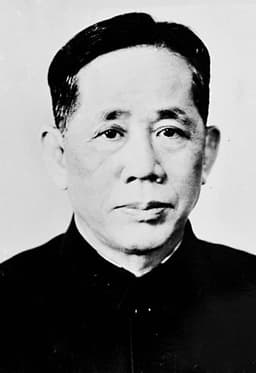
Le Duan
Politician · Modern
54.8Total

Napoleon Bonaparte
General · Modern
70.9Total
Basic Information
Born
1907
1769
Died
1986
1821
Era
Modern
Modern
Nationality
Vietnam
France
Occupation
Politician
General
Civilization
Eastern
Western
Score Comparison
Military (10%)
25.9
94.0
Political (20%)
65.0
72.0
Influence (20%)
58.3
40.0
Legacy (20%)
52.0
80.0
Leadership (15%)
72.0
78.0
Strategy (15%)
41.0
90.0
TOTAL
54.8
70.9
Le Duan — Complete Timeline
1960 AD
Elected to PolitburoPolitical Action◆ Major
Le Duan was elected to the Politburo of the Communist Party of Vietnam, becoming a top leader. He was a key figure in directing the Vietnam War against the United States and South Vietnam.
PolitburoCommunist PartyVietnam War
Impact: national
General Secretary of the Communist PartyPolitical Action◆ Major
Le Duan became General Secretary of the Communist Party of Vietnam, succeeding Ho Chi Minh as the top leader. He oversaw the unification of Vietnam after the war and implemented socialist policies.
General SecretaryLeadershipUnification
Impact: nationalconstructive
1968 AD
Tet Offensive planningWar◆ Major
Le Duan was a key architect of the Tet Offensive, a massive military campaign against South Vietnam and US forces. Although a tactical defeat, the offensive shifted US public opinion against the war.
Tet OffensiveVietnam WarMilitary strategy
Impact: global
1976 AD
Reunification of VietnamPolitical Action◆ Major
Le Duan oversaw the formal reunification of North and South Vietnam into the Socialist Republic of Vietnam. He implemented a Soviet-style command economy and collectivization in the south.
ReunificationSocialist RepublicCollectivization
Impact: nationalconstructive
1978 AD
Invasion of CambodiaWar◆ Major
Le Duan ordered the Vietnamese invasion of Cambodia, overthrowing the Khmer Rouge regime. The invasion led to a decade-long occupation and international isolation for Vietnam.
CambodiaInvasionKhmer Rouge
Impact: regionaldestructive
Napoleon Bonaparte — Complete Timeline
1799 AD
Coup of 18 BrumaireOther◆ Major
Napoleon Bonaparte, with support from his brother Lucien and key political figures, overthrew the Directory in a bloodless coup. He established the Consulate with himself as First Consul, effectively becoming the ruler of France. This event ended the French Revolution's most unstable period.
French RevolutionCoupRise to Power
Impact: regional
1804 AD
Promulgation of the Napoleonic CodeOther◆ Major
Napoleon enacted the Civil Code of the French, known as the Napoleonic Code, a comprehensive set of laws that replaced the fragmented feudal legal systems. The code established legal equality, protected property rights, and secularized law. It became the basis for legal systems in many European and world countries.
Legal ReformNapoleonic CodeCivil Law
Impact: globalconstructive
1805 AD
Battle of AusterlitzWar◆ Major
Napoleon's Grande Arm
Napoleonic WarsBattleDecisive Victory
Impact: global
1812 AD
Invasion of RussiaWar◆ Major
Napoleon led the Grande Arm
Napoleonic WarsInvasionDisaster
Impact: globaldestructive
1815 AD
Battle of WaterlooWar◆ Major
Napoleon's French army was defeated by the combined forces of the Duke of Wellington's Anglo-Allied army and Gebhard Leberecht von Bl
Napoleonic WarsBattleFinal Defeat
Impact: globaldestructive
Expert Analysis
le-duan-vs-napoleon-bonaparte
# The Emperor and the Secretary
On a June morning in 1815, Napoleon Bonaparte watched his imperial guard march toward the smoking ridges of Mont-Saint-Jean, convinced that one more crushing blow would shatter the British lines. On an April morning in 1975, Le Duan received word that North Vietnamese tanks had crashed through the gates of the Presidential Palace in Saigon, ending a war that had consumed his life for two decades. Both men achieved what seemed impossible—one conquered a continent, the other united a divided nation. Yet their paths diverged so dramatically that comparing them reveals not just two different leaders, but two different definitions of power itself.
Origins
Napoleon was born in 1769 on the Mediterranean island of Corsica, a territory only recently annexed by France. His family were minor nobility, proud and impoverished. He spoke Italian before French, carried a colonial’s resentment toward the mainland, and devoured military history with a hunger that bordered on obsession. The French Revolution, erupting when he was twenty, shattered the old order and opened paths that noble birth would have otherwise blocked. For a brilliant young artillery officer, the chaos of revolution was not a catastrophe—it was an opportunity.
Le Duan was born in 1907 in central Vietnam, then part of French Indochina. His family were peasants, and his early life was one of colonial subjugation. Unlike Napoleon, who grew up reading Caesar and Alexander, Le Duan grew up watching French officials collect taxes from starving villages. He joined the revolutionary movement in his twenties, was imprisoned by the French, and spent years in the shadows. His education was not military academies but communist cells and prison walls. Where Napoleon learned to command armies, Le Duan learned to survive.
Rise to Power
Napoleon’s ascent was meteoric. At twenty-four, he drove the British out of Toulon and was promoted to brigadier general. At twenty-six, he crushed a royalist uprising in Paris with a “whiff of grapeshot.” At thirty, he conquered Italy. By thirty-five, he was Emperor of France. His rise was visible, dramatic, and personal—he seized every opportunity with a combination of genius, ambition, and ruthless calculation. The Directory sent him to Egypt hoping to be rid of him; he turned exile into legend.
Le Duan’s rise was slow, patient, and collective. He was elected to the Politburo in 1960, the same year he became General Secretary of the Communist Party, succeeding Ho Chi Minh. But his power was not the power of a conqueror—it was the power of a bureaucrat who understood how a revolutionary party worked. He did not lead from the front like Napoleon; he managed from behind, building consensus, navigating factions, and waiting. Napoleon would have found this maddening. Le Duan found it necessary.
Leadership & Governance
Napoleon governed through sheer force of personality. He commanded armies personally, leading from horseback under fire. He reformed French law with the Napoleonic Code—a system of civil law that spread across Europe. He centralized administration, built schools, and established the Bank of France. But his governance was also autocratic, militaristic, and expansionist. His military genius—scored at 93 in strategy, 94 in military skill—was matched by a political score of 75. He conquered brilliantly but governed recklessly, mistaking military victory for political stability.
Le Duan governed through party discipline. His leadership score of 84 and political score of 80 reflect a different kind of mastery—not of armies, but of organizations. He was the architect of the Tet Offensive in 1968, a military gamble that cost tens of thousands of lives but shattered American will. He oversaw the reunification of Vietnam in 1976, then ordered the invasion of Cambodia in 1978 to overthrow the Khmer Rouge. His governance was harsh, centralized, and ideologically rigid. He did not inspire love; he commanded obedience.
Triumph & Tragedy
Napoleon’s greatest triumph was Austerlitz in 1805, where he destroyed the combined armies of Russia and Austria in a single day. His greatest tragedy was the invasion of Russia in 1812—a catastrophic miscalculation that cost half a million men. He was exiled to Elba, returned, raised another army, and was finally defeated at Waterloo in 1815. His tragedy was the tragedy of overreach: the man who could conquer anything could not stop conquering.
Le Duan’s greatest triumph was the fall of Saigon in 1975, the culmination of a war that had killed over a million Vietnamese. His greatest tragedy was the economic collapse that followed—a forced collectivization that created famine and flight. Hundreds of thousands fled Vietnam as boat people. Le Duan died in 1986, just as his party began to acknowledge that his policies had failed. His tragedy was the tragedy of ideology: the man who won the war could not win the peace.
Character & Destiny
Napoleon was a man of boundless ambition, extraordinary charisma, and catastrophic impatience. “Greatness is nothing unless it be lasting,” he once said—yet he could not make his own greatness last. His personality drove him to constant motion, constant war, constant risk. He was his own worst enemy, and he knew it. On Saint Helena, he reflected: “I should have died at Austerlitz.”
Le Duan was a man of iron discipline, deep suspicion, and limited vision. He trusted no one, purged rivals, and surrounded himself with loyalists. His personality was suited for a long war of attrition, not for building a prosperous nation. He could endure anything—but he could not imagine anything beyond endurance. He was a revolutionary who never learned to be a statesman.
Legacy
Napoleon’s legacy is written across Europe: in the legal codes of France, Italy, Germany, and beyond; in the streets and monuments of Paris; in the memory of a man who reshaped a continent. His legacy score of 78 reflects both his achievements and his failures. He is remembered as a genius and a tyrant, a liberator and a conqueror.
Le Duan’s legacy is more contested. His legacy score of 78.5 is almost identical to Napoleon’s, but it rests on different foundations. He reunified Vietnam, but at enormous cost. He defeated the United States, but left his country impoverished and isolated. He is honored in official history but quietly criticized in private memory. Unlike Napoleon, he has no monuments—only a country that survived him and must now decide what his victory truly meant.
Conclusion
Napoleon and Le Duan never met, never corresponded, never could have understood each other. One conquered the world and lost it; the other conquered his country and kept it, only to find it slipping through his fingers in a different way. Their lives suggest a sobering truth: that victory is not the same as success, and that the qualities that win wars are not the qualities that build nations. Napoleon died a prisoner, Le Duan died a party secretary. Both shaped history. Neither escaped its judgment.
Rankings
🥇
Napoleon BonaparteLeader
Mil: 94.0Pol: 72.0Inf: 40.0
70.9
🥈
Le Duan
Mil: 25.9Pol: 65.0Inf: 58.3
54.8
+16.1 behind
How This Comparison Works
Algorithm
Each figure is scored on 6 dimensions (0—100 scale) based on structured historical data: Military (10%), Political (20%), Influence (20%), Legacy (20%), Leadership (15%), Strategy (15%). The weighted total produces the final ranking.
Data Sources
Scores are computed from structured sub-indicators in the database. Scale factors adjust for era (Ancient ×0.85, Modern ×1.0) and civilization size (Eastern ×1.05, Other ×0.80) to account for differences in population and military scale.
Maximum 3 Figures
Comparisons are limited to 2—3 figures to ensure readability and statistical meaningfulness.
Error Margins
±5 points per dimension — Sub-scores are derived from historical records with inherent uncertainty. Two figures within 5 points on a dimension should be considered roughly equivalent in that area.
Total Score Accuracy
±3 points overall — The weighted combination of 6 dimensions produces a total score with approximately ±3 points of uncertainty. Differences of less than 3 points are not statistically significant— the figures are effectively tied.
Known Limitations
- Historical records are incomplete and uneven across civilizations
- Figures from oral-tradition societies may be underrepresented
- Occupation labels can misclassify multi-role figures
- Scores measure capability and impact, not moral character
- Quantitative scoring is a comparison tool, not absolute truth
Capability Radar
Military (10%) — Battles & Warfare
Battles
20
95
Win Rate
20
90
Expansion
30
95
Political (20%) — Governance & Reform
Reform
70
95
Diplomacy
75
80
Economy
60
85
Influence (20%) — Cultural & Global Reach
Cultural
50
85
Global
60
90
Legacy (20%) — Historical Impact
Historical
70
95
Longevity
60
90
Leadership (15%) — Power & Stability
Tenure
85
85
Stability
65
70
Strategy (15%) — Tactics & Innovation
Strategy
30
95
Tactics
20
98
Reform
30
92
Similar Comparisons
Comments & Discussion
No comments yet. Be the first to share your thoughts!