Loading...
Fredrik Reinfeldt vs Le Duan
Le Duan leads by 2.3 pts · 2 figures compared
…

Fredrik Reinfeldt
Politician · Modern
52.5Total
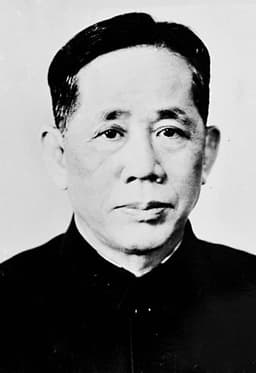
Le Duan
Politician · Modern
54.8Total
Basic Information
Born
1965
1907
Died
—
1986
Era
Modern
Modern
Nationality
Sweden
Vietnam
Occupation
Politician
Politician
Civilization
Western
Eastern
Score Comparison
Military (10%)
48.7
25.9
Political (20%)
53.8
65.0
Influence (20%)
54.1
58.3
Legacy (20%)
44.2
52.0
Leadership (15%)
72.0
72.0
Strategy (15%)
41.7
41.0
TOTAL
52.5
54.8
Fredrik Reinfeldt — Complete Timeline
2006 AD
Election as Prime Minister of SwedenPolitical Action◆ Major
Fredrik Reinfeldt led the Alliance for Sweden coalition to victory in the general election, becoming Prime Minister. His government implemented tax cuts, welfare reforms, and labour market changes, marking a shift to centre-right policies.
Swedish PoliticsModerate PartyCoalition Government
Impact: nationalconstructive
2009 AD
Swedish EU PresidencyPolitical Action◆ Major
Sweden held the EU presidency under Reinfeldt's leadership. The presidency focused on the Lisbon Treaty implementation, climate change negotiations, and the EU's response to the financial crisis.
European UnionSwedish Presidency
Impact: regionalconstructive
2014 AD
Defeat in the 2014 Swedish General ElectionPolitical Action◆ Major
Reinfeldt's Alliance for Sweden lost the general election to the Social Democrats and the Green Party. He resigned as Prime Minister and later as party leader, ending eight years of centre-right government.
Swedish PoliticsElection Defeat
Impact: national
Le Duan — Complete Timeline
1960 AD
Elected to PolitburoPolitical Action◆ Major
Le Duan was elected to the Politburo of the Communist Party of Vietnam, becoming a top leader. He was a key figure in directing the Vietnam War against the United States and South Vietnam.
PolitburoCommunist PartyVietnam War
Impact: national
General Secretary of the Communist PartyPolitical Action◆ Major
Le Duan became General Secretary of the Communist Party of Vietnam, succeeding Ho Chi Minh as the top leader. He oversaw the unification of Vietnam after the war and implemented socialist policies.
General SecretaryLeadershipUnification
Impact: nationalconstructive
1968 AD
Tet Offensive planningWar◆ Major
Le Duan was a key architect of the Tet Offensive, a massive military campaign against South Vietnam and US forces. Although a tactical defeat, the offensive shifted US public opinion against the war.
Tet OffensiveVietnam WarMilitary strategy
Impact: global
1976 AD
Reunification of VietnamPolitical Action◆ Major
Le Duan oversaw the formal reunification of North and South Vietnam into the Socialist Republic of Vietnam. He implemented a Soviet-style command economy and collectivization in the south.
ReunificationSocialist RepublicCollectivization
Impact: nationalconstructive
1978 AD
Invasion of CambodiaWar◆ Major
Le Duan ordered the Vietnamese invasion of Cambodia, overthrowing the Khmer Rouge regime. The invasion led to a decade-long occupation and international isolation for Vietnam.
CambodiaInvasionKhmer Rouge
Impact: regionaldestructive
Expert Analysis
Origins
Fredrik Reinfeldt was born in 1965 in Stockholm, Sweden, into a middle-class family. His father was a lawyer and his mother a consultant. He studied at Stockholm University but left before completing a degree to pursue politics. Reinfeldt joined the Moderate Party's youth wing and rose through the ranks, influenced by liberal economic ideas.
Le Duan was born in 1907 in Quang Tri, French Indochina, into a peasant family. He joined the Communist Party early and was imprisoned by the French. He studied Marxism-Leninism and became a key party organizer. His formative years were shaped by colonial oppression and revolutionary struggle.
Rise to Power
Reinfeldt became leader of the Moderate Party in 2003 and formed the Alliance for Sweden coalition. In the 2006 general election, the Alliance won 48.2% of the vote, and Reinfeldt became Prime Minister at age 41. His rise was marked by rebranding the Moderates as "new moderates," moving toward the center.
Le Duan was elected to the Politburo in 1957 and became General Secretary of the Communist Party in 1960, succeeding Ho Chi Minh. He was a key planner of the Vietnam War, including the 1968 Tet Offensive. His rise was through party hierarchy and his role in directing the war against the US and South Vietnam.
Leadership & Governance
Reinfeldt governed with a focus on economic reforms: cutting taxes, reducing welfare, and promoting job creation. He led Sweden during the 2008 financial crisis, implementing stimulus measures. His leadership style was consensus-oriented, working within the EU. He scored 72.0 in leadership, reflecting his ability to maintain coalition unity.
Le Duan led Vietnam through war and reunification. He imposed a Soviet-style command economy, collectivizing agriculture and nationalizing industry. His leadership was authoritarian, suppressing dissent. He scored 72.0 in leadership as well, but his approach was rigid and centralized. The difference lies in context: Reinfeldt's leadership was in a stable democracy, Le Duan's in a war-torn revolutionary state.
Triumph & Tragedy
Reinfeldt's greatest success was steering Sweden through the financial crisis with relatively low unemployment and debt. He also held a successful EU presidency in 2009. His greatest failure was the 2014 election loss, partly due to rising immigration and far-right gains. His legacy score of 44.2 reflects limited long-term impact.
Le Duan's greatest success was overseeing the reunification of Vietnam in 1976 after decades of war. He also ordered the invasion of Cambodia in 1978, overthrowing the Khmer Rouge. His greatest failure was the economic stagnation and poverty that followed his policies, leading to the need for reforms. His legacy score of 52.0 is higher, reflecting his role in a major historical transformation.
Character & Destiny
Reinfeldt was pragmatic, moderate, and diplomatic. He reshaped his party's image but was seen as disconnected from working-class concerns. His character suited Sweden's consensus politics but led to defeat when populism rose.
Le Duan was ideological, determined, and ruthless. He maintained power through party control and did not tolerate dissent. His character was shaped by revolutionary struggle, and he remained a hardliner until his death in 1986. His destiny was to lead Vietnam through unification but also into economic hardship.
Legacy
Reinfeldt's legacy is mixed: he modernized the Moderate Party but his economic policies were partially reversed. He is remembered as a competent manager but not a transformative figure. His influence score is 54.1.
Le Duan's legacy is substantial: he completed the unification of Vietnam and expanded communist influence in Indochina. However, his economic policies failed, leading to later reforms. His influence score is 58.3 and legacy 52.0, reflecting his central role in Vietnamese history.
Conclusion
While both scored similarly in leadership (72.0 each), Le Duan had greater impact overall. His total score of 54.8 vs Reinfeldt's 52.5 is close, but Le Duan's actions shaped the fate of millions: winning a war, unifying a nation, and invading Cambodia. Reinfeldt's reforms were important within Sweden but did not alter global history. Le Duan's legacy, despite failures, is more enduring and consequential.
Rankings
🥇
Le DuanLeader
Mil: 25.9Pol: 65.0Inf: 58.3
54.8
🥈
Fredrik Reinfeldt
Mil: 48.7Pol: 53.8Inf: 54.1
52.5
+2.3 behind
How This Comparison Works
Algorithm
Each figure is scored on 6 dimensions (0—100 scale) based on structured historical data: Military (10%), Political (20%), Influence (20%), Legacy (20%), Leadership (15%), Strategy (15%). The weighted total produces the final ranking.
Data Sources
Scores are computed from structured sub-indicators in the database. Scale factors adjust for era (Ancient ×0.85, Modern ×1.0) and civilization size (Eastern ×1.05, Other ×0.80) to account for differences in population and military scale.
Maximum 3 Figures
Comparisons are limited to 2—3 figures to ensure readability and statistical meaningfulness.
Error Margins
±5 points per dimension — Sub-scores are derived from historical records with inherent uncertainty. Two figures within 5 points on a dimension should be considered roughly equivalent in that area.
Total Score Accuracy
±3 points overall — The weighted combination of 6 dimensions produces a total score with approximately ±3 points of uncertainty. Differences of less than 3 points are not statistically significant— the figures are effectively tied.
Known Limitations
- Historical records are incomplete and uneven across civilizations
- Figures from oral-tradition societies may be underrepresented
- Occupation labels can misclassify multi-role figures
- Scores measure capability and impact, not moral character
- Quantitative scoring is a comparison tool, not absolute truth
Capability Radar
Military (10%) — Battles & Warfare
Battles
31
20
Win Rate
32
20
Expansion
35
30
Political (20%) — Governance & Reform
Reform
60
70
Diplomacy
55
75
Economy
60
60
Influence (20%) — Cultural & Global Reach
Cultural
30
50
Global
35
60
Legacy (20%) — Historical Impact
Historical
35
70
Longevity
30
60
Leadership (15%) — Power & Stability
Tenure
65
85
Stability
55
65
Strategy (15%) — Tactics & Innovation
Strategy
36
30
Tactics
40
20
Reform
44
30
Similar Comparisons
Comments & Discussion
No comments yet. Be the first to share your thoughts!