Loading...
Giuseppe Garibaldi vs Louis Botha
Louis Botha leads by 6.1 pts · 2 figures compared
…
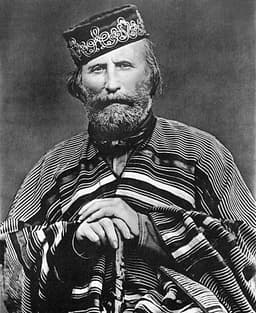
Giuseppe Garibaldi
General · Modern
55.0Total
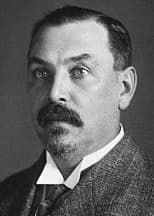
Louis Botha
General · Modern
61.1Total
Basic Information
Born
1807
1862
Died
1882
1919
Era
Modern
Modern
Nationality
Italy
South Africa
Occupation
General
General
Civilization
Western
Other
Score Comparison
Military (10%)
61.7
61.7
Political (20%)
54.7
70.0
Influence (20%)
40.0
56.7
Legacy (20%)
68.0
50.0
Leadership (15%)
54.2
79.8
Strategy (15%)
55.0
58.0
TOTAL
55.0
61.1
Giuseppe Garibaldi — Complete Timeline
1849 AD
Defense of the Roman RepublicWar◆ Major
Garibaldi commanded the defense of the short-lived Roman Republic against French forces sent to restore papal rule. Despite heroic resistance, the republic fell, and Garibaldi led a retreat through central Italy.
Italian UnificationRoman RepublicDefense
Impact: regionaltragic
1860 AD
Expedition of the ThousandWar
Garibaldi led a volunteer force of about 1,000 men to conquer Sicily and Naples. His campaign overthrew the Bourbon monarchy and unified southern Italy with the Kingdom of Sardinia.
Italian UnificationExpeditionVolunteers
Impact: nationalconstructive
Battle of CalatafimiWar◆ Major
Garibaldi's Redshirts defeated a larger Bourbon army at Calatafimi in Sicily. The victory boosted morale and demonstrated the effectiveness of his volunteers, opening the way to Palermo.
Italian UnificationBattleSicily
Impact: regional
Battle of VolturnusWar◆ Major
Garibaldi's forces defeated the Neapolitan army at the Volturno River. The victory secured his conquest of Naples and forced King Francis II into exile, completing the unification of southern Italy.
Italian UnificationBattleNaples
Impact: regional
Cession of Sicily and Naples to Victor Emmanuel IIPolitical Action
After conquering southern Italy, Garibaldi voluntarily handed over his conquests to King Victor Emmanuel II of Sardinia. This act unified Italy under the monarchy and avoided civil war.
Italian UnificationCessionMonarchy
Impact: nationalconstructive
Louis Botha — Complete Timeline
1899 AD
Battle of ColensoWar◆ Major
Botha commanded Boer forces at the Battle of Colenso during the Second Boer War. His troops repelled a British attack under General Buller, inflicting heavy casualties and boosting Boer morale.
Second Boer WarBattleVictory
Impact: regional
1900 AD
Boer War Guerrilla CommanderWar◆ Major
After the British captured Pretoria, Botha led Boer guerrilla forces in the Transvaal. He conducted hit-and-run attacks against British columns, prolonging the war and becoming a symbol of Afrikaner resistance.
Second Boer WarGuerrillaResistance
Impact: regional
1902 AD
Signed the Treaty of VereenigingPolitical Action
Botha, as a leading Boer general, signed the Treaty of Vereeniging which ended the Second Boer War. The treaty granted the Boer republics self-government under British sovereignty and promised eventual self-rule.
TreatyPeaceSecond Boer War
Impact: regional
1910 AD
First Prime Minister of the Union of South AfricaPolitical Action
Botha became the first Prime Minister of the newly formed Union of South Africa. He led a coalition government that sought to reconcile Afrikaners and English-speaking whites, while implementing segregationist policies.
Prime MinisterUnion of South AfricaFounding
Impact: nationalconstructive
1914 AD
Suppressed the 1914 RebellionWar◆ Major
Botha personally led government forces to suppress the Maritz Rebellion, an Afrikaner uprising against South Africa's entry into World War I. He defeated the rebels, asserting state authority and maintaining support for the British Empire.
RebellionWorld War ISuppression
Impact: national
1915 AD
Conquered German South West AfricaWar◆ Major
Botha commanded South African forces in the invasion and conquest of German South West Africa. The campaign succeeded, and the territory was later administered by South Africa under a League of Nations mandate.
World War IConquestGerman South West Africa
Impact: regional
Expert Analysis
Louis Botha vs Giuseppe Garibaldi
The General Who Gave Away a Kingdom
On a crisp autumn day in 1860, Giuseppe Garibaldi rode into Naples at the head of his Redshirts, a kingmaker without a crown. He had just conquered the entire southern half of Italy with a ragtag volunteer army. Yet within weeks, he would hand it all over to a monarch he barely knew. Half a century later and half a world away, another general—Louis Botha—faced a different choice. Having lost a war to the British Empire, he would not surrender his people’s future. Instead, he would become their prime minister, forging a nation from the ashes of defeat. Both men were warriors who became statesmen, but their paths diverged like the currents of the Atlantic and the Mediterranean. What drove one to renounce power and the other to embrace it?
Origins
Giuseppe Garibaldi was born in 1807 in Nice, a port city then part of the French Empire. His father was a fisherman, his mother a woman of deep faith. The sea and the struggle for Italian unity shaped his youth. He joined the secret society of Young Italy, inspired by Giuseppe Mazzini’s vision of a unified republic. Exiled after a failed uprising, he fled to South America, where he fought in wars of liberation in Brazil and Uruguay. There he learned guerrilla warfare, wore the red shirt that became his trademark, and met his Brazilian wife, Anita. His world was one of romantic nationalism—a belief that a people bound by language and history deserved their own state.
Louis Botha was born in 1862 in the Orange Free State, a Boer republic carved from the African veld. His family were Dutch-speaking farmers who had trekked inland to escape British rule. He grew up on a vast farm, learning to ride and shoot before he could read. The Boers were a stubborn, independent people who believed the land was theirs by divine right. Botha’s education was practical: he managed cattle, fought skirmishes with African tribes, and absorbed the deep resentment of British imperialism. His era was one of colonial confrontation, where survival meant negotiation as much as battle.
Rise to Power
Garibaldi’s rise was a series of romantic gambles. In 1849, he led the defense of the Roman Republic against French forces sent to restore papal rule. Outnumbered and outgunned, he fought a desperate campaign, retreating through the Apennines with Anita dying in his arms. It was a defeat that made him a legend. For the next decade, he lived in exile, working as a candle maker in Staten Island, New York, and later as a farmer on the island of Caprera. But his name never faded.
The turning point came in 1860. With the secret backing of King Victor Emmanuel II of Sardinia, Garibaldi gathered about 1,000 volunteers—the Expedition of the Thousand. They sailed from Genoa to Sicily, landing at Marsala. At the Battle of Calatafimi, his Redshirts defeated a larger Bourbon army, their bayonets gleaming in the Sicilian sun. The victory electrified Italy. Garibaldi marched on Palermo, then crossed the Strait of Messina to the mainland. By September, he had conquered Naples. The kingdom of the Two Sicilies, the largest state in Italy, had fallen to a fisherman’s son.
Botha’s rise was forged in the crucible of the Second Boer War. In 1899, he commanded Boer forces at the Battle of Colenso, where his troops repelled a British attack under General Sir Redvers Buller. His calm under fire and ability to read the terrain made him a natural leader. When the British captured Pretoria in 1900, Botha transformed into a guerrilla commander. He led hit-and-run raids across the Transvaal, striking supply lines and vanishing into the veld. The British responded with a scorched-earth policy, burning farms and herding Boer women and children into concentration camps. Botha fought on, but by 1902, the war was lost. He signed the Treaty of Vereeniging, accepting British sovereignty in exchange for promises of self-government.
Leadership & Governance
Garibaldi’s leadership was pure charisma. He led from the front, sharing the hardships of his men, eating the same rations, sleeping on the same ground. His military strategy was aggressive and intuitive—he believed in speed, surprise, and the moral power of a just cause. At the Battle of Volturnus, his forces defeated the Neapolitan army, securing his conquest. But he was no politician. When he met Victor Emmanuel II at Teano, he dismounted and saluted the king, handing over his conquests. “I obey,” he said. He believed that Italian unity required a monarch, not a republic, and he sacrificed his own dream for that goal.
Botha’s leadership was pragmatic and diplomatic. After the war, he worked to reconcile Boers and Britons. In 1910, he became the first prime minister of the Union of South Africa, leading a coalition government. He sought to unite the former Boer republics with the British colonies, balancing the needs of Afrikaners and English-speakers. When a faction of bitter Afrikaners rebelled in 1914, Botha personally led government forces to suppress the Maritz Rebellion. He then commanded South African troops in the conquest of German South West Africa in 1915, proving his loyalty to the British Empire. His political wisdom lay in compromise: he knew that independence could only come through cooperation.
Triumph & Tragedy
Garibaldi’s greatest triumph was the Expedition of the Thousand. He had liberated an entire kingdom with a handful of volunteers. His tragedy was the surrender of that kingdom. He had hoped for a democratic Italy, but the new nation was a monarchy dominated by the north. He spent his final years on Caprera, planting olive trees and receiving visitors. He died in 1882, a hero to the world but a man who had given away his greatest victory.
Botha’s triumph was the creation of the Union of South Africa. He had transformed from a guerrilla fighter into a statesman who governed a nation. His tragedy was the seeds of apartheid. The Treaty of Vereeniging had left the status of black South Africans to be decided later, and Botha’s government enacted laws that restricted their rights. He died in 1919, having unified whites but divided a country.
Character & Destiny
Garibaldi was a romantic idealist. He believed in the power of sacrifice and the purity of the cause. His decision to hand over Sicily and Naples was not weakness but conviction—he saw himself as a servant of Italy, not its master. His destiny was to be a symbol, not a ruler.
Botha was a realist. He understood that power required institutions, not just courage. He chose to lead within the system, shaping it from the inside. His destiny was to build a nation, flawed but real.
Legacy
Garibaldi is remembered as the “Hero of Two Worlds,” a figure of liberation who inspired generations. Statues of him stand in cities across Italy and the Americas. He is a symbol of the struggle for freedom, even if his dream of a republic died.
Botha is a more contested figure. He is honored as a founder of South Africa, but his legacy is shadowed by the racial policies that followed. His name is on buildings and streets, but also on the wrong side of history.
Conclusion
Two generals, two paths. Garibaldi gave away a kingdom because he believed in something greater than himself. Botha built a nation because he believed in something practical. One was a dreamer who acted, the other a fighter who governed. Their stories remind us that leadership is not just about winning battles, but about knowing what to do with victory—and with defeat.
Rankings
🥇
Louis BothaLeader
Mil: 61.7Pol: 70.0Inf: 56.7
61.1
🥈
Giuseppe Garibaldi
Mil: 61.7Pol: 54.7Inf: 40.0
55.0
+6.1 behind
How This Comparison Works
Algorithm
Each figure is scored on 6 dimensions (0—100 scale) based on structured historical data: Military (10%), Political (20%), Influence (20%), Legacy (20%), Leadership (15%), Strategy (15%). The weighted total produces the final ranking.
Data Sources
Scores are computed from structured sub-indicators in the database. Scale factors adjust for era (Ancient ×0.85, Modern ×1.0) and civilization size (Eastern ×1.05, Other ×0.80) to account for differences in population and military scale.
Maximum 3 Figures
Comparisons are limited to 2—3 figures to ensure readability and statistical meaningfulness.
Error Margins
±5 points per dimension — Sub-scores are derived from historical records with inherent uncertainty. Two figures within 5 points on a dimension should be considered roughly equivalent in that area.
Total Score Accuracy
±3 points overall — The weighted combination of 6 dimensions produces a total score with approximately ±3 points of uncertainty. Differences of less than 3 points are not statistically significant— the figures are effectively tied.
Known Limitations
- Historical records are incomplete and uneven across civilizations
- Figures from oral-tradition societies may be underrepresented
- Occupation labels can misclassify multi-role figures
- Scores measure capability and impact, not moral character
- Quantitative scoring is a comparison tool, not absolute truth
Capability Radar
Military (10%) — Battles & Warfare
Battles
65
65
Win Rate
70
70
Expansion
60
60
Political (20%) — Governance & Reform
Reform
40
65
Diplomacy
50
70
Economy
20
55
Influence (20%) — Cultural & Global Reach
Cultural
70
45
Global
65
50
Legacy (20%) — Historical Impact
Historical
75
55
Longevity
65
40
Leadership (15%) — Power & Stability
Tenure
30
60
Stability
25
50
Strategy (15%) — Tactics & Innovation
Strategy
60
72
Tactics
75
68
Reform
55
55
Similar Comparisons
Comments & Discussion
No comments yet. Be the first to share your thoughts!