Loading...
Gia Long vs Vijayaraji of Kutch
Gia Long leads by 12.0 pts · 2 figures compared
…
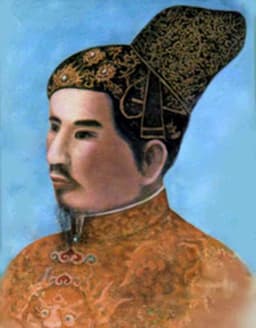
Gia Long
Emperor · Modern
65.4Total

Vijayaraji of Kutch
Emperor · Modern
53.4Total
Basic Information
Born
1762
1885
Died
1820
1948
Era
Modern
Modern
Nationality
Vietnam
India
Occupation
Emperor
Emperor
Civilization
Eastern
Indian
Score Comparison
Military (10%)
78.0
43.3
Political (20%)
70.3
68.0
Influence (20%)
61.0
50.2
Legacy (20%)
54.0
39.2
Leadership (15%)
78.0
74.0
Strategy (15%)
66.3
54.6
TOTAL
65.4
53.4
Gia Long — Complete Timeline
1787 AD
Treaty of Versailles with FrancePolitical Action◆ Major
Nguyen Anh signed the Treaty of Versailles with King Louis XVI, securing French military and financial support in exchange for trade concessions and the cession of Da Nang and Poulo Condore. This treaty marked the beginning of French involvement in Vietnam.
French ColonialismTreatyNguyen Dynasty
Impact: regional
1788 AD
Capture of SaigonWar◆ Major
Nguyen Anh (later Gia Long) captured Saigon from the Tay Son forces with the help of French military advisors. This victory established his base of power in the Mekong Delta region.
Tay Son WarNguyen DynastyFrench Support
Impact: regional
1801 AD
Battle of Thien MuWar◆ Major
Nguyen Anh's forces, supported by French-built ships and artillery, defeated the Tay Son navy at Thien Mu. This naval victory allowed him to capture Hue, the Tay Son capital.
Tay Son WarNaval BattleFrench Support
Impact: national
1802 AD
Founding of the Nguyen DynastyPolitical Action
Nguyen Anh ascended the throne as Emperor Gia Long, founding the Nguyen dynasty. He unified Vietnam from the Red River Delta to the Mekong Delta, establishing the country's modern borders.
Nguyen DynastyUnificationVietnamese History
Impact: regionalconstructive
1804 AD
Construction of the Hue CitadelCultural◆ Major
Emperor Gia Long ordered the construction of the Hue Citadel, a massive fortified palace complex modeled on the Forbidden City in Beijing. The citadel served as the imperial capital of the Nguyen dynasty until 1945.
ArchitectureHueImperial Capital
Impact: nationalconstructive
Vijayaraji of Kutch — Complete Timeline
1914 AD
Regency of KutchPolitical Action◆ Major
Upon the death of her husband Maharao Sir Pragmalji II, Vijayaraji became regent for her minor son Maharao Shri Madansinhji. She ruled Kutch until 1918, implementing progressive reforms in education, infrastructure, and public health.
RegencyProgressive RuleKutch
Impact: regionalconstructive
1915 AD
Construction of the Kutch MuseumCultural
Vijayaraji oversaw the establishment of the Kutch Museum in Bhuj, one of the oldest museums in Gujarat. The museum housed archaeological artifacts, natural history specimens, and local crafts, promoting cultural preservation and education.
MuseumCultural HeritageEducation
constructive
1916 AD
Introduction of Girls' EducationReform◆ Major
Vijayaraji established the first girls' school in Kutch, promoting female literacy and education. This was a progressive step in a conservative princely state, setting a precedent for women's empowerment in the region.
Education ReformWomen's RightsKutch
Impact: regionalprogressive
Expert Analysis
Origins
Gia Long, born Nguyen Phuc Anh in 1762, was a member of the Nguyen lords who had ruled southern Vietnam. His early life was marked by the chaos of the Tay Son rebellion, which overthrew the Nguyen dynasty and forced him into exile. He spent years fleeing and seeking support, eventually finding refuge in Siam and later with French missionaries. His formative experiences were shaped by warfare and the need to reclaim his heritage.
Vijayaraji of Kutch, born in 1867 as a princess of the Jethwa dynasty, married Maharao Sir Pragmalji II of Kutch. Her early life was rooted in the princely state's traditions. Upon her husband's death in 1875, she became regent for her infant son, Madansinhji, navigating the complexities of British colonial oversight. Her education and exposure to progressive ideas, possibly through British contacts, influenced her later reforms.
Rise to Power
Gia Long's rise was a military campaign lasting over 20 years. After the Tay Son captured Saigon in 1777, Nguyen Anh fled to the island of Phu Quoc. In 1784, he sought help from King Rama I of Siam, but a joint Siamese-Nguyen expedition failed. In 1787, he signed the Treaty of Versailles with France, securing French military support. With French-built ships and artillery, he recaptured Saigon in 1788. By 1802, he had defeated the Tay Son and unified Vietnam, proclaiming himself Emperor Gia Long. His political score of 70.3 reflects his diplomatic acumen in securing foreign aid.
Vijayaraji's rise was through regency. After her husband's death, she assumed control of Kutch's administration, a rare role for a woman in 19th-century India. She ruled from 1875 to 1914, navigating the challenges of a princely state under British paramountcy. Her political score of 68.0 indicates effective governance despite limited autonomy.
Leadership & Governance
Gia Long's leadership style was centralized and authoritarian. He modeled his dynasty on the Chinese Qing, constructing the Hue Citadel as a symbol of power. He implemented a Confucian bureaucracy, codified laws, and promoted agriculture through irrigation projects. However, he also suppressed Christianity, persecuting converts and missionaries, which strained relations with France. His military score of 78.0 reflects his success in conquest, but his governance was harsh and conservative.
Vijayaraji was a progressive reformer. She introduced girls' education by establishing the first girls' school in Kutch, a significant step in a conservative society. She also oversaw the construction of the Kutch Museum, preserving regional artifacts. Her leadership score of 74.0 is high for a regent, showing her ability to implement change within constraints. However, her military score of 43.3 reflects her limited role in warfare.
Triumph & Tragedy
Gia Long's greatest triumph was unifying Vietnam after centuries of division, a feat scored at 78.0 in military and 70.3 in political. His construction of the Hue Citadel stands as a cultural monument. His tragedy was his harsh rule: he executed many Tay Son supporters and suppressed religious freedom, leading to social tension. His legacy score of 54.0 is moderate, as his dynasty later declined.
Vijayaraji's triumph was her educational reforms, which empowered women in Kutch. The Kutch Museum remains a cultural landmark. Her tragedy was that her progressive policies were limited in scope and did not survive long after her regency ended in 1914. With a legacy score of 39.2, her impact was localized and temporary.
Character & Destiny
Gia Long was determined and pragmatic, willing to ally with foreigners to achieve his goals. His character was shaped by years of exile and hardship, making him both resilient and ruthless. He scored 78.0 in leadership, but his strategic score of 66.3 shows a reliance on French support rather than purely indigenous strategy.
Vijayaraji was enlightened and diplomatic, using her position to advocate for social reforms. Her leadership score of 74.0 reflects her ability to rule effectively in a patriarchal society. However, her political score of 68.0 shows she operated within colonial constraints, limiting her long-term impact.
Legacy
Gia Long's legacy is the Nguyen dynasty, which ruled Vietnam until 1945. His unification of Vietnam set the stage for modern Vietnamese national identity. However, his persecution of Christians and reliance on France had negative long-term effects. His influence score of 61.0 reflects his role in shaping Vietnamese history.
Vijayaraji's legacy is more modest. She is remembered as a progressive ruler in Kutch, but her reforms did not spark widespread change. Her influence score of 50.2 indicates a limited impact beyond her state.
Conclusion
Gia Long had a greater impact due to his unification of Vietnam, which shaped the country's history for centuries. His military and political achievements, with a total score of 65.4, outweigh Vijayaraji's 53.4. While Vijayaraji's reforms were admirable, they were confined to a small region and did not alter the course of history. Gia Long's actions had national and lasting consequences, making him the more significant figure.
Rankings
🥇
Gia LongLeader
Mil: 78.0Pol: 70.3Inf: 61.0
65.4
🥈
Vijayaraji of Kutch
Mil: 43.3Pol: 68.0Inf: 50.2
53.4
+12.0 behind
How This Comparison Works
Algorithm
Each figure is scored on 6 dimensions (0—100 scale) based on structured historical data: Military (10%), Political (20%), Influence (20%), Legacy (20%), Leadership (15%), Strategy (15%). The weighted total produces the final ranking.
Data Sources
Scores are computed from structured sub-indicators in the database. Scale factors adjust for era (Ancient ×0.85, Modern ×1.0) and civilization size (Eastern ×1.05, Other ×0.80) to account for differences in population and military scale.
Maximum 3 Figures
Comparisons are limited to 2—3 figures to ensure readability and statistical meaningfulness.
Error Margins
±5 points per dimension — Sub-scores are derived from historical records with inherent uncertainty. Two figures within 5 points on a dimension should be considered roughly equivalent in that area.
Total Score Accuracy
±3 points overall — The weighted combination of 6 dimensions produces a total score with approximately ±3 points of uncertainty. Differences of less than 3 points are not statistically significant— the figures are effectively tied.
Known Limitations
- Historical records are incomplete and uneven across civilizations
- Figures from oral-tradition societies may be underrepresented
- Occupation labels can misclassify multi-role figures
- Scores measure capability and impact, not moral character
- Quantitative scoring is a comparison tool, not absolute truth
Capability Radar
Military (10%) — Battles & Warfare
Battles
75
5
Win Rate
80
5
Expansion
80
5
Political (20%) — Governance & Reform
Reform
75
60
Diplomacy
70
50
Economy
65
55
Influence (20%) — Cultural & Global Reach
Cultural
55
30
Global
40
10
Legacy (20%) — Historical Impact
Historical
60
25
Longevity
55
20
Leadership (15%) — Power & Stability
Tenure
70
40
Stability
60
45
Strategy (15%) — Tactics & Innovation
Strategy
85
5
Tactics
70
5
Reform
75
10
Similar Comparisons
Comments & Discussion
No comments yet. Be the first to share your thoughts!