Loading...
Carlos I of Portugal vs Vijayaraji of Kutch
Vijayaraji of Kutch leads by 9.3 pts · 2 figures compared
…
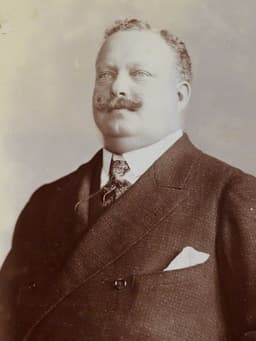
Carlos I of Portugal
Emperor · Modern
44.1Total

Vijayaraji of Kutch
Emperor · Modern
53.4Total
Basic Information
Born
1863
1885
Died
1908
1948
Era
Modern
Modern
Nationality
Portugal
India
Occupation
Emperor
Emperor
Civilization
Western
Indian
Score Comparison
Military (10%)
10.8
43.3
Political (20%)
43.7
68.0
Influence (20%)
47.9
50.2
Legacy (20%)
36.7
39.2
Leadership (15%)
62.2
74.0
Strategy (15%)
60.0
54.6
TOTAL
44.1
53.4
Carlos I of Portugal — Complete Timeline
1890 AD
1890 British UltimatumPolitical Action
Britain issued an ultimatum demanding Portugal withdraw from territories in Africa (the Pink Map) that Britain claimed. Carlos I, under pressure, capitulated, causing a national humiliation and a wave of republican sentiment in Portugal, severely damaging the monarchy's prestige.
Colonial CrisisNational HumiliationRepublicanism
Impact: nationaldestructive
1906 AD
Dictatorship of João FrancoPolitical Action◆ Major
Carlos I appointed Jo
AuthoritarianismPolitical RepressionMonarchy Crisis
Impact: nationaldestructive
1908 AD
Lisbon RegicidePolitical Action
Carlos I and his heir, Prince Lu
AssassinationRegicideEnd of Monarchy
Impact: nationaltragic
Vijayaraji of Kutch — Complete Timeline
1914 AD
Regency of KutchPolitical Action◆ Major
Upon the death of her husband Maharao Sir Pragmalji II, Vijayaraji became regent for her minor son Maharao Shri Madansinhji. She ruled Kutch until 1918, implementing progressive reforms in education, infrastructure, and public health.
RegencyProgressive RuleKutch
Impact: regionalconstructive
1915 AD
Construction of the Kutch MuseumCultural
Vijayaraji oversaw the establishment of the Kutch Museum in Bhuj, one of the oldest museums in Gujarat. The museum housed archaeological artifacts, natural history specimens, and local crafts, promoting cultural preservation and education.
MuseumCultural HeritageEducation
constructive
1916 AD
Introduction of Girls' EducationReform◆ Major
Vijayaraji established the first girls' school in Kutch, promoting female literacy and education. This was a progressive step in a conservative princely state, setting a precedent for women's empowerment in the region.
Education ReformWomen's RightsKutch
Impact: regionalprogressive
Expert Analysis
Origins
**Carlos I of Portugal** was born on September 28, 1863, in Lisbon, the son of King Luís I and Queen Maria Pia. He was educated in the military and diplomatic traditions, but his reign was marked by economic decline and political instability. His family background tied him to the Braganza dynasty, which had ruled Portugal for centuries. Carlos ascended the throne in 1889, inheriting a country facing colonial disputes and rising republicanism.
**Vijayaraji of Kutch** was born in 1868 in the princely state of Kutch, India. She was the daughter of a noble family and married Maharao Sir Pragmalji II in 1885. After her husband's death in 1914, she became regent for her minor son, Madansinhji. Her upbringing in a traditional royal household contrasted with her later progressive policies.
Rise to Power
Carlos I became king in 1889 at the age of 25, but his reign was immediately challenged by the 1890 British Ultimatum. Britain demanded Portugal withdraw from territories in Africa (the Pink Map) claimed by both nations. Carlos, facing a weak military and diplomatic isolation, capitulated. This event severely damaged his prestige and fueled republican sentiment. He scored 10.8 in military and 43.7 in political scores, reflecting his inability to assert Portuguese power.
Vijayaraji rose to power through regency. In 1914, after her husband's death, she became regent for her 12-year-old son. She navigated the complexities of British colonial rule and internal court politics. Her political score of 68.0 indicates effective governance. She consolidated authority by focusing on welfare and education, avoiding direct confrontation with the British.
Leadership & Governance
Carlos I governed through a constitutional monarchy but increasingly relied on authoritarian measures. In 1906, he appointed João Franco as prime minister with dictatorial powers to suppress opposition. Franco's rule alienated liberals and republicans, leading to the Lisbon Regicide in 1908. Carlos's leadership score of 62.2 reflects a decisive but flawed approach. He failed to modernize the economy or address social inequality.
Vijayaraji adopted a progressive governance style. She introduced the first girls' school in Kutch in 1915, promoting female literacy. She also oversaw the construction of the Kutch Museum in Bhuj, preserving cultural heritage. Her leadership score of 74.0 is higher than Carlos's, indicating more effective and inclusive governance. She balanced tradition with reform, earning respect from subjects and British authorities.
Triumph & Tragedy
Carlos I's greatest success was his patronage of science and culture, including support for oceanography and the Lisbon Aquarium. However, his reign was marred by the British Ultimatum, which exposed Portuguese weakness. His greatest failure was the appointment of João Franco, which polarized the nation and culminated in his assassination. The Lisbon Regicide of 1908 killed both Carlos and his heir, plunging Portugal into crisis. His legacy score of 36.7 reflects this tragic end.
Vijayaraji's triumph was the establishment of girls' education in Kutch, a pioneering move in a conservative society. She also built infrastructure like roads and hospitals. Her failure was the limited scope of reforms due to British oversight and financial constraints. She could not fully modernize Kutch, and her influence waned after her son came of age in 1918. Her legacy score of 39.2 is modest but higher than Carlos's.
Character & Destiny
Carlos I was intelligent and cultured but indecisive and weak in crisis. His character led him to compromise with Britain and later embrace dictatorship, sealing his fate. The Lisbon Regicide was a direct result of his inability to manage political tensions. Historians view him as a well-meaning but ineffective monarch.
Vijayaraji was pragmatic and forward-thinking. She used her regency to implement gradual reforms, avoiding conflict. Her character allowed her to navigate colonial politics and leave a positive legacy. She died in 1948, having seen India's independence.
Legacy
Carlos I's legacy is overshadowed by the regicide and the fall of the monarchy in 1910. His contributions to science are minor compared to his political failures. Portugal's colonial decline continued after his death. He scored 36.7 in legacy.
Vijayaraji's legacy is more positive. The girls' school she founded continued to educate generations. The Kutch Museum remains a cultural landmark. She is remembered as a progressive ruler who advanced women's rights. Her legacy score of 39.2, while not high, reflects lasting impact in her region.
Conclusion
Vijayaraji of Kutch had greater impact than Carlos I of Portugal. Her total score of 53.4 versus Carlos's 44.1 reflects more effective leadership and governance. While Carlos's reign ended in tragedy and contributed to Portugal's instability, Vijayaraji's reforms in education and culture had enduring local significance. She achieved more with limited resources and under colonial constraints. Therefore, Vijayaraji of Kutch is the more impactful figure.
Rankings
🥇
Vijayaraji of KutchLeader
Mil: 43.3Pol: 68.0Inf: 50.2
53.4
🥈
Carlos I of Portugal
Mil: 10.8Pol: 43.7Inf: 47.9
44.1
+9.3 behind
How This Comparison Works
Algorithm
Each figure is scored on 6 dimensions (0—100 scale) based on structured historical data: Military (10%), Political (20%), Influence (20%), Legacy (20%), Leadership (15%), Strategy (15%). The weighted total produces the final ranking.
Data Sources
Scores are computed from structured sub-indicators in the database. Scale factors adjust for era (Ancient ×0.85, Modern ×1.0) and civilization size (Eastern ×1.05, Other ×0.80) to account for differences in population and military scale.
Maximum 3 Figures
Comparisons are limited to 2—3 figures to ensure readability and statistical meaningfulness.
Error Margins
±5 points per dimension — Sub-scores are derived from historical records with inherent uncertainty. Two figures within 5 points on a dimension should be considered roughly equivalent in that area.
Total Score Accuracy
±3 points overall — The weighted combination of 6 dimensions produces a total score with approximately ±3 points of uncertainty. Differences of less than 3 points are not statistically significant— the figures are effectively tied.
Known Limitations
- Historical records are incomplete and uneven across civilizations
- Figures from oral-tradition societies may be underrepresented
- Occupation labels can misclassify multi-role figures
- Scores measure capability and impact, not moral character
- Quantitative scoring is a comparison tool, not absolute truth
Capability Radar
Military (10%) — Battles & Warfare
Battles
38
5
Win Rate
39
5
Expansion
43
5
Political (20%) — Governance & Reform
Reform
30
60
Diplomacy
35
50
Economy
25
55
Influence (20%) — Cultural & Global Reach
Cultural
15
30
Global
10
10
Legacy (20%) — Historical Impact
Historical
20
25
Longevity
10
20
Leadership (15%) — Power & Stability
Tenure
40
40
Stability
20
45
Strategy (15%) — Tactics & Innovation
Strategy
46
5
Tactics
49
5
Reform
48
10
Similar Comparisons
Comments & Discussion
No comments yet. Be the first to share your thoughts!