Loading...
Ferdinand I of Bulgaria vs Gia Long
Gia Long leads by 12.8 pts · 2 figures compared
…

Ferdinand I of Bulgaria
Emperor · Modern
52.6Total
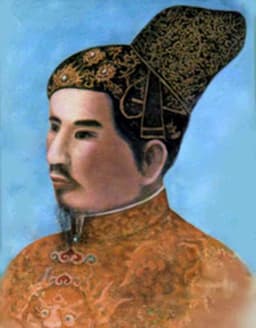
Gia Long
Emperor · Modern
65.4Total
Basic Information
Born
1861
1762
Died
1948
1820
Era
Modern
Modern
Nationality
Bulgaria
Vietnam
Occupation
Emperor
Emperor
Civilization
Western
Eastern
Score Comparison
Military (10%)
20.0
78.0
Political (20%)
62.7
70.3
Influence (20%)
55.7
61.0
Legacy (20%)
44.2
54.0
Leadership (15%)
68.0
78.0
Strategy (15%)
60.0
66.3
TOTAL
52.6
65.4
Ferdinand I of Bulgaria — Complete Timeline
1908 AD
Proclamation of Bulgarian IndependencePolitical Action
Ferdinand I proclaimed Bulgaria's full independence from the Ottoman Empire, declaring himself Tsar. This ended Ottoman suzerainty and established Bulgaria as a sovereign kingdom.
IndependenceOttoman EmpireSovereignty
Impact: nationalconstructive
1912 AD
First Balkan WarWar◆ Major
Ferdinand I led Bulgaria into the First Balkan War against the Ottoman Empire. Bulgaria achieved major victories, capturing Adrianople and much of Thrace, significantly expanding its territory.
Balkan WarsTerritorial ExpansionThrace
Impact: regional
1913 AD
Second Balkan WarWar◆ Major
Ferdinand I ordered an attack on former allies Serbia and Greece, triggering the Second Balkan War. Bulgaria was defeated by a coalition including Romania and the Ottoman Empire, losing most of its gains.
Balkan WarsDefeatTerritorial Loss
Impact: regionaldestructive
1918 AD
Abdication after WWIPolitical Action◆ Major
After Bulgaria's defeat in World War I, Ferdinand I abdicated in favor of his son Boris III. He went into exile, ending his reign amid national crisis and territorial losses.
AbdicationWorld War IExile
Impact: nationaltragic
Gia Long — Complete Timeline
1787 AD
Treaty of Versailles with FrancePolitical Action◆ Major
Nguyen Anh signed the Treaty of Versailles with King Louis XVI, securing French military and financial support in exchange for trade concessions and the cession of Da Nang and Poulo Condore. This treaty marked the beginning of French involvement in Vietnam.
French ColonialismTreatyNguyen Dynasty
Impact: regional
1788 AD
Capture of SaigonWar◆ Major
Nguyen Anh (later Gia Long) captured Saigon from the Tay Son forces with the help of French military advisors. This victory established his base of power in the Mekong Delta region.
Tay Son WarNguyen DynastyFrench Support
Impact: regional
1801 AD
Battle of Thien MuWar◆ Major
Nguyen Anh's forces, supported by French-built ships and artillery, defeated the Tay Son navy at Thien Mu. This naval victory allowed him to capture Hue, the Tay Son capital.
Tay Son WarNaval BattleFrench Support
Impact: national
1802 AD
Founding of the Nguyen DynastyPolitical Action
Nguyen Anh ascended the throne as Emperor Gia Long, founding the Nguyen dynasty. He unified Vietnam from the Red River Delta to the Mekong Delta, establishing the country's modern borders.
Nguyen DynastyUnificationVietnamese History
Impact: regionalconstructive
1804 AD
Construction of the Hue CitadelCultural◆ Major
Emperor Gia Long ordered the construction of the Hue Citadel, a massive fortified palace complex modeled on the Forbidden City in Beijing. The citadel served as the imperial capital of the Nguyen dynasty until 1945.
ArchitectureHueImperial Capital
Impact: nationalconstructive
Expert Analysis
Origins
Ferdinand I of Bulgaria was born on February 26, 1861, in Vienna, Austria, into the German princely House of Saxe-Coburg and Gotha. His father was Prince August of Saxe-Coburg and Gotha, and his mother was Princess Clémentine of Orléans, daughter of King Louis-Philippe of France. Ferdinand was educated in Vienna and at the Theresian Military Academy, but he had a keen interest in natural sciences and art. He was elected Prince of Bulgaria in 1887 after the abdication of Prince Alexander Battenberg, largely due to Russian opposition to other candidates.
Gia Long, born Nguyễn Phúc Ánh on February 8, 1762, in Huế, Vietnam, was a member of the Nguyễn lords who ruled southern Vietnam. His family was overthrown by the Tây Sơn rebellion in 1777, forcing him to flee. He spent years in exile in Siam (Thailand) and later in French colonies. His background was rooted in the Confucian mandarin system, but he was pragmatic in seeking foreign assistance.
Rise to Power
Ferdinand I's rise to power was marked by political maneuvering. He was elected Prince of Bulgaria on July 7, 1887, after the Great Powers failed to agree on a candidate. He faced initial opposition from Russia, which considered him a puppet of Austria-Hungary. Ferdinand consolidated power by navigating between the major European powers. On September 22, 1908, he proclaimed Bulgaria's full independence from the Ottoman Empire and declared himself Tsar, a turning point that boosted his domestic standing.
Gia Long's rise was a long military struggle. After the Tây Sơn rebellion, he fled to the island of Pulo Panjang and later to Siam. He returned in 1780 with Siamese support but was defeated. In 1787, he signed the Treaty of Versailles with France, securing French military aid in exchange for trade concessions and territory. With French-built ships, artillery, and advisors, he captured Saigon in 1789 and gradually defeated the Tây Sơn. He finally unified Vietnam by 1802, founding the Nguyễn dynasty and taking the reign name Gia Long.
Leadership & Governance
Ferdinand I governed Bulgaria as an autocrat. He centralized the state, modernized the army, and pursued an aggressive foreign policy aimed at territorial expansion. He aligned with the Central Powers before World War I, seeking to fulfill Bulgarian ambitions in Macedonia. Domestically, he suppressed political opposition and relied on a small elite. His governance score is 68.0, reflecting his ability to maintain power but with limited institutional development.
Gia Long established a centralized Confucian state. He modeled his administration on the Qing dynasty, with a bureaucracy based on civil service exams. He promoted agriculture, built roads and canals, and constructed the Huế Citadel, a symbol of his authority. He also maintained a policy of isolationism, limiting foreign influence despite French assistance. His leadership score is 78.0, indicating effective governance that unified a fragmented territory.
Triumph & Tragedy
Ferdinand I's greatest triumph was the proclamation of independence in 1908, which ended Ottoman suzerainty and elevated Bulgaria to a tsardom. In the First Balkan War (1912–1913), Bulgaria achieved major victories, capturing Adrianople and much of Thrace. However, his greatest failure came in the Second Balkan War (1913), when he ordered an attack on former allies Serbia and Greece, leading to defeat and loss of territory. Bulgaria's entry into World War I on the side of the Central Powers (1915) resulted in national disaster, with defeat, territorial losses, and economic collapse. He was forced to abdicate on October 3, 1918, in favor of his son Boris III.
Gia Long's triumph was the unification of Vietnam after centuries of division. He captured Saigon, Huế, and Hanoi, establishing the Nguyễn dynasty that lasted until 1945. His military success was aided by French technology and advisors. However, his tragedy was the heavy reliance on French support, which came with concessions that later facilitated French colonization. The Treaty of Versailles gave France exclusive trade rights and the port of Tourane (Da Nang), weakening Vietnamese sovereignty. His legacy is thus mixed: unification at the cost of foreign entanglement.
Character & Destiny
Ferdinand I was ambitious, cunning, and impatient. He sought to make Bulgaria a major Balkan power but overreached. His decision to attack former allies in 1913 and to enter World War I reflected a gambler's mentality. He was often called "Foxy Ferdinand" for his diplomatic maneuvering, but his strategic miscalculations led to his downfall. His military score of 20.0 reflects poor strategic judgment, while his political score of 62.7 indicates some skill but ultimate failure.
Gia Long was patient, pragmatic, and ruthless. He spent 25 years in exile and war, carefully building alliances and using French support without becoming a puppet. He was a capable commander (military score 78.0) and administrator (political score 70.3). His destiny was to fulfill his ancestors' ambition of reunifying Vietnam, but his reliance on France sowed seeds of future colonialism.
Legacy
Ferdinand I's legacy is mixed. He is remembered as the tsar who won independence but lost two wars. Bulgaria lost the Second Balkan War and World War I, leading to national trauma. His dynasty continued until 1946, but his personal legacy is tarnished by the disasters he caused. He scored 44.2 in legacy, reflecting limited enduring positive impact.
Gia Long founded the Nguyễn dynasty, which ruled Vietnam for 143 years. He unified the country and established a stable administration. However, his concessions to France facilitated French colonization in 1858, leading to decades of colonial rule. He is honored as a unifier but criticized for opening the door to foreign domination. His legacy score is 54.0, indicating a more significant but still contested impact.
Conclusion
Comparing Ferdinand I and Gia Long, Gia Long had a greater impact due to his successful unification of Vietnam and the founding of a long-lasting dynasty. His total score of 65.4 versus Ferdinand's 52.6 reflects his superior military (78.0 vs 20.0), political (70.3 vs 62.7), and leadership (78.0 vs 68.0) capabilities. While Ferdinand achieved independence, his strategic failures led to national setbacks. Gia Long's unification created a unified Vietnamese state, even if it later fell to colonialism. Thus, Gia Long's impact was more profound and lasting.
Rankings
🥇
Gia LongLeader
Mil: 78.0Pol: 70.3Inf: 61.0
65.4
🥈
Ferdinand I of Bulgaria
Mil: 20.0Pol: 62.7Inf: 55.7
52.6
+12.8 behind
How This Comparison Works
Algorithm
Each figure is scored on 6 dimensions (0—100 scale) based on structured historical data: Military (10%), Political (20%), Influence (20%), Legacy (20%), Leadership (15%), Strategy (15%). The weighted total produces the final ranking.
Data Sources
Scores are computed from structured sub-indicators in the database. Scale factors adjust for era (Ancient ×0.85, Modern ×1.0) and civilization size (Eastern ×1.05, Other ×0.80) to account for differences in population and military scale.
Maximum 3 Figures
Comparisons are limited to 2—3 figures to ensure readability and statistical meaningfulness.
Error Margins
±5 points per dimension — Sub-scores are derived from historical records with inherent uncertainty. Two figures within 5 points on a dimension should be considered roughly equivalent in that area.
Total Score Accuracy
±3 points overall — The weighted combination of 6 dimensions produces a total score with approximately ±3 points of uncertainty. Differences of less than 3 points are not statistically significant— the figures are effectively tied.
Known Limitations
- Historical records are incomplete and uneven across civilizations
- Figures from oral-tradition societies may be underrepresented
- Occupation labels can misclassify multi-role figures
- Scores measure capability and impact, not moral character
- Quantitative scoring is a comparison tool, not absolute truth
Capability Radar
Military (10%) — Battles & Warfare
Battles
45
75
Win Rate
40
80
Expansion
40
80
Political (20%) — Governance & Reform
Reform
50
75
Diplomacy
60
70
Economy
45
65
Influence (20%) — Cultural & Global Reach
Cultural
35
55
Global
40
40
Legacy (20%) — Historical Impact
Historical
45
60
Longevity
30
55
Leadership (15%) — Power & Stability
Tenure
75
70
Stability
30
60
Strategy (15%) — Tactics & Innovation
Strategy
50
85
Tactics
35
70
Reform
55
75
Similar Comparisons
Comments & Discussion
No comments yet. Be the first to share your thoughts!