Loading...
George Washington vs Zhao Kuangyin
George Washington leads by 5.3 pts · 2 figures compared
…
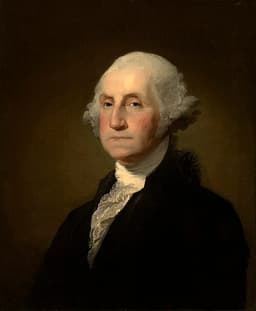
George Washington
Politician · Modern
76.8Total
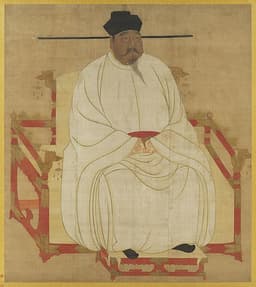
Zhao Kuangyin
Emperor · Medieval
71.5Total
Basic Information
Born
1732
927
Died
1799
976
Era
Modern
Medieval
Nationality
United States
China
Occupation
Politician
Emperor
Civilization
Western
Eastern
Score Comparison
Military (10%)
75.0
78.0
Political (20%)
82.0
84.0
Influence (20%)
75.0
68.0
Legacy (20%)
80.0
65.0
Leadership (15%)
85.0
74.0
Strategy (15%)
55.0
68.0
TOTAL
76.8
71.5
George Washington — Complete Timeline
1775 AD
Appointed Commander-in-Chief of the Continental ArmyOther◆ Major
The Second Continental Congress appointed Washington as commander-in-chief of the Continental Army on June 15, 1775. He accepted the position without pay, taking command of the forces besieging Boston at the start of the American Revolutionary War.
American RevolutionMilitary Leadership
Impact: national
1776 AD
Crossed the Delaware RiverOther◆ Major
On the night of December 25-26, 1776, Washington led 2,400 troops across the ice-choked Delaware River. The surprise attack on Hessian forces at Trenton resulted in a decisive American victory, capturing nearly 1,000 prisoners and reviving Patriot morale after a series of defeats.
American RevolutionBattleTurning Point
Impact: nationalconstructive
1787 AD
Presided over the Constitutional ConventionPolitical Action◆ Major
Washington served as president of the Constitutional Convention in Philadelphia from May to September 1787. His presence lent legitimacy to the proceedings, and he formally signed the final draft of the U.S. Constitution, though he contributed little to the debates.
ConstitutionFounding Father
Impact: national
1789 AD
Inaugurated as First President of the United StatesPolitical Action◆ Major
Washington was unanimously elected by the Electoral College and inaugurated on April 30, 1789, at Federal Hall in New York City. He established numerous executive branch precedents, including the cabinet system, the inaugural address, and the title 'Mr. President'.
PresidencyFounding Father
Impact: national
1793 AD
Issued the Proclamation of NeutralityOther◆ Major
Washington issued the Proclamation of Neutrality on April 22, 1793, declaring the United States neutral in the conflict between France and Great Britain. This decision established the precedent of American isolationism and avoided entanglement in European wars.
Foreign PolicyNeutrality
Impact: national
1796 AD
Delivered the Farewell AddressOther◆ Major
Washington published his Farewell Address on September 19, 1796, announcing his decision not to seek a third term. The address warned against political factionalism, permanent foreign alliances, and the influence of the military in government, shaping American political culture.
PresidencyLegacy
Impact: national
Zhao Kuangyin — Complete Timeline
960 AD
Founded Song dynastyPolitical Action
Zhao Kuangyin, a general of Later Zhou, was proclaimed emperor by his troops at Chenqiao. He established the Song dynasty, ending the Five Dynasties period and beginning a new era of Chinese history.
Song dynastyFoundingChenqiao
Impact: globalconstructive
961 AD
Removed military power from generalsPolitical Action◆ Major
Zhao Kuangyin invited senior generals to a banquet and persuaded them to retire peacefully. This 'removal of military power over wine' prevented military coups and centralized control.
Song dynastyMilitary reformCentralization
Impact: nationalconstructive
963 AD
Unified southern ChinaWar◆ Major
Zhao Kuangyin launched campaigns to conquer the southern kingdoms, including Jingnan, Later Shu, and Southern Tang. By his death, most of China was reunified under Song rule.
Song unificationConquestSouthern kingdoms
Impact: national
Expert Analysis
Zhao Kuangyin vs George Washington
# The Founder’s Dilemma: Washington and Zhao Kuangyin
In the winter of 1783, George Washington stood before the Continental Congress in Annapolis and resigned his commission as commander-in-chief of the American army. It was a moment so extraordinary that King George III reportedly remarked that if Washington truly gave up power, he would be “the greatest man in the world.” Across the ocean and seven centuries earlier, another general faced a similar choice—but made an almost opposite decision. In 960, Zhao Kuangyin, a military commander of the Later Zhou dynasty, allowed his troops to drape a yellow imperial robe over his shoulders, accepting the throne that his soldiers demanded he take. One man voluntarily surrendered power; the other reluctantly seized it. Why did these two founders, both shaped by war and charged with building new orders, walk such different paths?
Origins
George Washington was born into Virginia’s planter aristocracy in 1732, a world of tobacco fields, enslaved labor, and British colonial administration. His formal education was modest—he never attended university—but he learned surveying, land speculation, and the careful management of reputation. The American frontier taught him endurance; the British military taught him hierarchy. Washington’s Virginia was a society of laws written in London, and he internalized the ideal that legitimate authority derived from consent, not force.
Zhao Kuangyin emerged from a very different world. Born in 927, he grew up in the chaos of the Five Dynasties and Ten Kingdoms period, when China had fractured into competing states and generals routinely overthrew emperors. His father was a military officer, and Zhao himself joined the army as a young man, witnessing firsthand how power changed hands at the point of a spear. In this world, loyalty was fragile, and survival demanded pragmatism. Zhao learned that order came not from law but from the shrewd management of armed men.
Rise to Power
Washington’s ascent was slow and deliberate. He gained fame as a young officer during the French and Indian War, where his bravery at the Battle of the Monongahela became legend—two horses shot from under him, four bullet holes in his coat. But he also learned hard lessons about overreach, suffering a humiliating surrender at Fort Necessity in 1754. These failures tempered him. When the Continental Congress appointed him commander of the revolutionary army in 1775, he was chosen not for brilliance but for steadiness: a man who could hold an army together through eight years of hardship.
Zhao Kuangyin’s rise was swifter and more volatile. By 959, he was a trusted general of the Later Zhou emperor, commanding the elite palace guard. When the young emperor died suddenly, leaving a child on the throne, the court was vulnerable. In January 960, as Zhao marched his army north to defend against an alleged invasion, his troops halted at Chenqiao and proclaimed him emperor. The historical record suggests Zhao was surprised—perhaps genuinely, perhaps performatively—but he accepted. Unlike Washington, who fought a war to preserve a fledgling republic, Zhao inherited a military machine and simply redirected it.
Leadership & Governance
Washington’s leadership was defined by restraint. As president, he could have become a monarch—many Americans expected it—but he refused titles like “His Highness,” insisted on being called “Mr. President,” and established the two-term tradition that held for 150 years. He saw his role as setting precedents: the cabinet system, the inaugural address, the peaceful transfer of power. His Farewell Address warned against foreign entanglements and factionalism, a political last will that shaped American foreign policy for generations. Yet Washington’s limits were real. He owned slaves, and despite private misgivings, he never used his moral authority to push for abolition during his lifetime.
Zhao Kuangyin’s genius was different. Having seized power through military acumen, he understood that the same sword that gave him the throne could take it away. In 961, he invited his most powerful generals to a banquet, plied them with wine, and then—according to the famous account—lamented that he could not sleep at night fearing their ambition. The generals, understanding the unspoken threat, offered to resign their commands. Zhao accepted their resignations and gave them generous estates. This “removal of military power at a banquet” became legendary: a peaceful, bloodless consolidation that prevented the cycles of coup and counter-coup that had plagued China. Zhao then reorganized the Song military to ensure no general could match his authority, centralizing command under the throne.
Triumph & Tragedy
Washington’s greatest triumph was not a single battle but a transformation of character into symbol. At Yorktown in 1781, he cornered the British army and forced its surrender, effectively ending the Revolutionary War. But his true victory came later: when Congress could not pay the army, some officers urged Washington to march on Philadelphia and seize control. He refused, calming his men with a simple gesture—fumbling for his reading glasses, he said, “I have grown gray in your service, and now find myself growing blind.” The coup never happened. The tragedy of Washington’s life was the contradiction he could not resolve: he built a republic dedicated to liberty while personally profiting from human bondage.
Zhao Kuangyin’s triumph was unification. Between 963 and 976, he conquered the southern kingdoms of Jingnan, Later Shu, and Southern Tang, bringing most of China under Song rule for the first time in decades. He did so with remarkable restraint, often accepting surrender rather than slaughtering cities. His tragedy was that his solution to military instability—weakening the generals—left the Song dynasty vulnerable to external threats. The very system he created to prevent internal coups made it difficult to defend against the Khitan Liao dynasty in the north. Within a century, the Song would be forced to pay tribute to its enemies, and eventually, the dynasty would fall to Mongol invaders.
Character & Destiny
Washington was a man of immense self-control, almost to the point of coldness. He kept a careful distance from others, cultivated an image of dignity, and made decisions slowly, consulting widely. His personality suited a revolutionary who needed to appear above faction, a leader who could embody the nation rather than any party. Zhao Kuangyin was warmer, more pragmatic, and more willing to bend. He once said, “A wise man adapts himself to circumstances, as water shapes itself to the vessel.” His flexibility allowed him to pacify rivals with gifts rather than blood, but it also meant he built a system that prioritized stability over strength.
Legacy
Washington’s legacy is the American presidency itself. Every president who has peacefully handed over power stands on his example. He is remembered as the “Father of His Country,” a figure carved into marble, whose myth often obscures the real man. Zhao Kuangyin is remembered as the founder of the Song dynasty, a golden age of Chinese culture, commerce, and innovation. His decision to subordinate the military to civilian rule shaped Chinese governance for centuries, though it also planted the seeds of future vulnerability.
Conclusion
The contrast between Washington and Zhao Kuangyin is not a simple story of East versus West, or republic versus empire. It is a story of how two men, facing the same fundamental problem—how to secure power after war—chose opposite solutions because of the worlds they inherited. Washington could surrender command because he believed in a system of laws that would protect him. Zhao could not, because he knew that in his world, the only law was strength. One built a republic; the other built a dynasty. Both were founders, but they founded different kinds of order, each suited to its time and place. Their stories remind us that leadership is never abstract—it is always a response to the particular dangers and possibilities of an age.
Rankings
🥇
George WashingtonLeader
Mil: 75.0Pol: 82.0Inf: 75.0
76.8
🥈
Zhao Kuangyin
Mil: 78.0Pol: 84.0Inf: 68.0
71.5
+5.3 behind
How This Comparison Works
Algorithm
Each figure is scored on 6 dimensions (0—100 scale) based on structured historical data: Military (10%), Political (20%), Influence (20%), Legacy (20%), Leadership (15%), Strategy (15%). The weighted total produces the final ranking.
Data Sources
Scores are computed from structured sub-indicators in the database. Scale factors adjust for era (Ancient ×0.85, Modern ×1.0) and civilization size (Eastern ×1.05, Other ×0.80) to account for differences in population and military scale.
Maximum 3 Figures
Comparisons are limited to 2—3 figures to ensure readability and statistical meaningfulness.
Error Margins
±5 points per dimension — Sub-scores are derived from historical records with inherent uncertainty. Two figures within 5 points on a dimension should be considered roughly equivalent in that area.
Total Score Accuracy
±3 points overall — The weighted combination of 6 dimensions produces a total score with approximately ±3 points of uncertainty. Differences of less than 3 points are not statistically significant— the figures are effectively tied.
Known Limitations
- Historical records are incomplete and uneven across civilizations
- Figures from oral-tradition societies may be underrepresented
- Occupation labels can misclassify multi-role figures
- Scores measure capability and impact, not moral character
- Quantitative scoring is a comparison tool, not absolute truth
Capability Radar
Military (10%) — Battles & Warfare
Battles
75
75
Win Rate
70
85
Expansion
60
75
Political (20%) — Governance & Reform
Reform
90
90
Diplomacy
85
85
Economy
65
80
Influence (20%) — Cultural & Global Reach
Cultural
85
70
Global
85
60
Legacy (20%) — Historical Impact
Historical
95
80
Longevity
90
75
Leadership (15%) — Power & Stability
Tenure
70
65
Stability
85
85
Strategy (15%) — Tactics & Innovation
Strategy
80
80
Tactics
65
70
Reform
85
90
Similar Comparisons
Comments & Discussion
No comments yet. Be the first to share your thoughts!