Loading...
Charles de Gaulle vs George Washington
George Washington leads by 8.6 pts · 2 figures compared
…
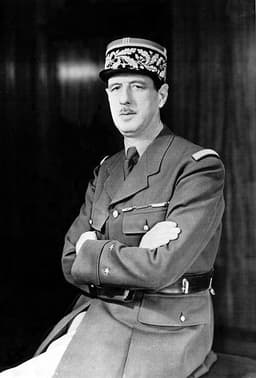
Charles de Gaulle
Politician · Modern
68.2Total
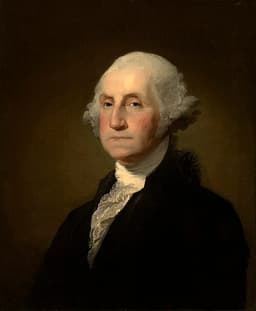
George Washington
Politician · Modern
76.8Total
Basic Information
Born
1890
1732
Died
1970
1799
Era
Modern
Modern
Nationality
France
United States
Occupation
Politician
Politician
Civilization
Western
Western
Score Comparison
Military (10%)
55.0
75.0
Political (20%)
75.0
82.0
Influence (20%)
65.0
75.0
Legacy (20%)
68.0
80.0
Leadership (15%)
78.0
85.0
Strategy (15%)
65.0
55.0
TOTAL
68.2
76.8
Charles de Gaulle — Complete Timeline
1940 AD
Appeal of 18 June 1940Political Action
From London, de Gaulle broadcast a radio appeal urging French resistance against Nazi occupation. He called on French soldiers and citizens to continue the fight, founding the Free French Forces and becoming the symbol of French defiance.
World War IIResistanceLeadership
Impact: nationalconstructive
1958 AD
Founding of the Fifth RepublicPolitical Action
De Gaulle returned to power during the Algerian crisis and oversaw the drafting of a new constitution. The Fifth Republic established a strong executive presidency, replacing the unstable parliamentary system of the Fourth Republic.
ConstitutionGovernment ReformPolitical System
Impact: nationalconstructive
1962 AD
End of the Algerian WarPolitical Action◆ Major
De Gaulle negotiated the
DecolonizationPeace TreatyAlgeria
Impact: regionalconstructive
1968 AD
May 1968 CrisisPolitical Action◆ Major
Mass student protests and general strikes paralyzed France, challenging de Gaulle's government. De Gaulle briefly fled to Germany, then returned to dissolve the National Assembly and call elections, which his party won, but his authority was weakened.
ProtestPolitical CrisisSocial Unrest
Impact: nationaldestructive
1969 AD
Resignation as PresidentPolitical Action
De Gaulle resigned after losing a referendum on regional reform and Senate restructuring. The defeat marked the end of his political career, as he withdrew from public life and died the following year.
ResignationPolitical DefeatReferendum
Impact: nationaltragic
George Washington — Complete Timeline
1775 AD
Appointed Commander-in-Chief of the Continental ArmyOther◆ Major
The Second Continental Congress appointed Washington as commander-in-chief of the Continental Army on June 15, 1775. He accepted the position without pay, taking command of the forces besieging Boston at the start of the American Revolutionary War.
American RevolutionMilitary Leadership
Impact: national
1776 AD
Crossed the Delaware RiverOther◆ Major
On the night of December 25-26, 1776, Washington led 2,400 troops across the ice-choked Delaware River. The surprise attack on Hessian forces at Trenton resulted in a decisive American victory, capturing nearly 1,000 prisoners and reviving Patriot morale after a series of defeats.
American RevolutionBattleTurning Point
Impact: nationalconstructive
1787 AD
Presided over the Constitutional ConventionPolitical Action◆ Major
Washington served as president of the Constitutional Convention in Philadelphia from May to September 1787. His presence lent legitimacy to the proceedings, and he formally signed the final draft of the U.S. Constitution, though he contributed little to the debates.
ConstitutionFounding Father
Impact: national
1789 AD
Inaugurated as First President of the United StatesPolitical Action◆ Major
Washington was unanimously elected by the Electoral College and inaugurated on April 30, 1789, at Federal Hall in New York City. He established numerous executive branch precedents, including the cabinet system, the inaugural address, and the title 'Mr. President'.
PresidencyFounding Father
Impact: national
1793 AD
Issued the Proclamation of NeutralityOther◆ Major
Washington issued the Proclamation of Neutrality on April 22, 1793, declaring the United States neutral in the conflict between France and Great Britain. This decision established the precedent of American isolationism and avoided entanglement in European wars.
Foreign PolicyNeutrality
Impact: national
1796 AD
Delivered the Farewell AddressOther◆ Major
Washington published his Farewell Address on September 19, 1796, announcing his decision not to seek a third term. The address warned against political factionalism, permanent foreign alliances, and the influence of the military in government, shaping American political culture.
PresidencyLegacy
Impact: national
Expert Analysis
Charles de Gaulle vs George Washington
# The General and the Gentleman: Washington and de Gaulle
On a bitter December night in 1776, George Washington stood on the bank of the Delaware River, watching his ragged army cross through ice-choked waters. He was about to risk everything on a desperate gamble. Nearly two centuries later, in June 1940, another soldier—a towering Frenchman with a nose like a promontory—stepped before a BBC microphone in London. His country had fallen, his government had surrendered, and he was a brigadier general with no army. Yet he spoke as if he commanded a nation. Both men were outsiders in their own way, but they shared a conviction that history had chosen them. Why did one become the father of a republic and the other the savior of a republic? The answer lies not just in their achievements, but in the chasm between the worlds they inhabited.
Origins
Washington was born into the Virginia gentry in 1732, a world of tobacco plantations, enslaved labor, and colonial deference to the British Crown. His formal education was sparse—he never attended university—but he learned surveying, land speculation, and the brutal realities of frontier warfare. The American colonies were a restless, expanding society, where a man could reinvent himself through ambition and land. De Gaulle arrived into a very different France in 1890, a nation still smarting from the humiliation of the Franco-Prussian War. His father was a professor of philosophy and literature, and the household breathed a Catholicism and monarchism that looked backward to a lost greatness. De Gaulle was steeped in the French military tradition, educated at Saint-Cyr, and destined for an officer's life. Washington's America was a blank slate; de Gaulle's France was a palimpsest of glory and defeat.
Rise to Power
Washington's path was forged by failure as much as success. His early military career was a disaster: he blundered into the French and Indian War, lost a fort at Fort Necessity, and was blamed for a massacre at the Monongahela. But he learned. By the time the Continental Congress needed a commander-in-chief in 1775, Washington was the only man who could unite the fractious colonies—a Virginian to lead New Englanders, a slaveholder to lead abolitionists. He took command of an army that was starving, unpaid, and ill-equipped, and he held it together through sheer presence. De Gaulle's rise was even more improbable. In 1940, he was a tank commander, a military intellectual who had written books about armored warfare that the French high command ignored. When France fell, he fled to London, a man without a country, and declared that he represented the true France. His Appeal of June 18 was barely heard at the time, but it became the founding myth of Free France. Washington had an army, however ragtag; de Gaulle had only his voice.
Leadership & Governance
Both men were masters of political symbolism, but their styles could not have been more different. Washington governed by restraint. As president, he deliberately avoided the trappings of monarchy, refusing titles like "His Highness," insisting on "Mr. President." He established the cabinet system, the two-term precedent, and the principle of civilian control of the military. His greatest political act was walking away—twice, first from command of the army in 1783, then from the presidency in 1797. De Gaulle governed by assertion. He believed in a strong executive, a president who stood above parties and factions. When he founded the Fifth Republic in 1958, he wrote a constitution that concentrated power in the presidency—a system that endures in France today. He was not afraid to be called "the man of June 18" or to invoke the mystical unity of the French nation. Washington's republic was a delicate experiment in liberty; de Gaulle's republic was a restoration of national honor.
Triumph & Tragedy
Washington's triumph was the Revolution itself—not just the victory at Yorktown in 1781, but the survival of the Continental Army through eight years of privation. His tragedy was the failure to end slavery, a contradiction he recognized but could not resolve. He freed his own slaves in his will, but he left the institution intact. De Gaulle's triumph was the end of the Algerian War in 1962, a decision that cost him the loyalty of the French army and the far right, but saved France from a civil war. His tragedy came in May 1968, when student protests and general strikes paralyzed France. De Gaulle, the man who had faced Hitler, fled to Baden-Baden to consult with the French general in Germany—a moment of weakness that shattered his aura of invincibility. He resigned the next year, after losing a referendum on regional reform, and died in 1970, a figure of immense stature but diminished influence.
Character & Destiny
Washington was a man of studied self-control. He had a volcanic temper but suppressed it; he was ambitious but cloaked it in duty. His greatness lay in his willingness to subordinate his ego to the republic. De Gaulle was a man of towering pride. He once said, "France cannot be France without greatness," and he meant it about himself as well. His character was both his strength and his weakness: it gave him the courage to defy the world in 1940, but it also made him unable to adapt to the social upheavals of 1968. Washington's destiny was to create a nation; de Gaulle's was to restore one. One built a house from raw timber; the other rebuilt a cathedral from ruins.
Legacy
Washington is the American Cincinnatus, the farmer who left his plow to save his country and then returned to it. His legacy is the peaceful transfer of power, the idea that no man is indispensable to the republic. De Gaulle is the eternal rebel, the man who said no to defeat and no to surrender. His legacy is the Fifth Republic, a nuclear-armed France, and a national identity that still wrestles with his vision of grandeur. Both men were flawed, both were necessary, and both understood that leadership is not about popularity but about the courage to stand alone in the dark.
Conclusion
In the end, what separates Washington from de Gaulle is not their scores—both were rated highly in leadership, both struggled with strategy—but the eras they inhabited. Washington lived in a world that was being invented; de Gaulle lived in one that was being destroyed and rebuilt. One founded a nation on a blank map; the other redeemed a nation from a catastrophic defeat. Both succeeded because they understood that history does not ask for perfect men—it asks for men who are willing to act. Washington stepped into the boat on the Delaware; de Gaulle stepped to the microphone in London. The rest is the story of how two generals became the fathers of their countries, each in his own way, each for his own time.
Rankings
🥇
George WashingtonLeader
Mil: 75.0Pol: 82.0Inf: 75.0
76.8
🥈
Charles de Gaulle
Mil: 55.0Pol: 75.0Inf: 65.0
68.2
+8.6 behind
How This Comparison Works
Algorithm
Each figure is scored on 6 dimensions (0—100 scale) based on structured historical data: Military (10%), Political (20%), Influence (20%), Legacy (20%), Leadership (15%), Strategy (15%). The weighted total produces the final ranking.
Data Sources
Scores are computed from structured sub-indicators in the database. Scale factors adjust for era (Ancient ×0.85, Modern ×1.0) and civilization size (Eastern ×1.05, Other ×0.80) to account for differences in population and military scale.
Maximum 3 Figures
Comparisons are limited to 2—3 figures to ensure readability and statistical meaningfulness.
Error Margins
±5 points per dimension — Sub-scores are derived from historical records with inherent uncertainty. Two figures within 5 points on a dimension should be considered roughly equivalent in that area.
Total Score Accuracy
±3 points overall — The weighted combination of 6 dimensions produces a total score with approximately ±3 points of uncertainty. Differences of less than 3 points are not statistically significant— the figures are effectively tied.
Known Limitations
- Historical records are incomplete and uneven across civilizations
- Figures from oral-tradition societies may be underrepresented
- Occupation labels can misclassify multi-role figures
- Scores measure capability and impact, not moral character
- Quantitative scoring is a comparison tool, not absolute truth
Capability Radar
Military (10%) — Battles & Warfare
Battles
60
75
Win Rate
55
70
Expansion
20
60
Political (20%) — Governance & Reform
Reform
95
90
Diplomacy
90
85
Economy
70
65
Influence (20%) — Cultural & Global Reach
Cultural
70
85
Global
80
85
Legacy (20%) — Historical Impact
Historical
85
95
Longevity
75
90
Leadership (15%) — Power & Stability
Tenure
85
70
Stability
75
85
Strategy (15%) — Tactics & Innovation
Strategy
85
80
Tactics
70
65
Reform
80
85
Similar Comparisons
Comments & Discussion
冰河突击手6/16/2026
华盛顿那晚渡德拉瓦河时,他的军队像幽灵,胜利像赌局。德高乐1940年6月18日在BBC讲话时,他像一尊雕像,孤独而高大。一个靠雪地靴和火药打天下,一个靠麦克风和固执建国家。华盛顿创造了国家,德高乐拯救了灵魂。但华盛顿是务实者——他赢了战争,主动退休,像农夫放下锄头。德高乐是幻想家——他输了法国,却让法国假装赢得未来。
数据铁匠6/16/2026
比军事实力?华盛顿打英军时,殖民地人口只有250万,军队从没超过2万人。德高乐呢?1940年法国有3000万人口,但军队6周就垮了。华盛顿赢在组织和运气,德高乐赢在精神胜利。数据不撒谎:华盛顿的胜利靠持久战的现实,德高乐的救赎靠符号战的幻觉。一个领导物质革命,一个领导精神革命。你说谁更硬?
Historian6966/16/2026
Washington was a practical gentleman farmer who stumbled into greatness; de Gaulle was a theatrical philosopher-king who planned his. De Gaulle didn't just save France—he *invented* it in London with a radio script and a will of iron. Washington had armies, allies, and a continent. De Gaulle had a single microphone and a shattered army. Yet Washington's genius was knowing when to step down; de Gaulle's was knowing when to never step aside.
Historian6886/16/2026
Let's talk about slavery. Washington owned 300+ people at Mount Vernon; de Gaulle never did. America's founding idol built a republic on half-freedom while sipping Madeira with Jefferson. De Gaulle? He granted Algerian independence despite his own generals' coup, and gave women the vote in 1944. The saintly General of the 1770s was a pragmatic enslaver; the theatrical General of the 1940s was a progressive autocrat. Both legends, but only one's hands are clean.
Chronicler74816/16/2026
Cincinnatus vs. Charlemagne. Washington resigned his commission in 1783, setting the ultimate republican precedent—power willingly surrendered. De Gaulle resigned in 1946 and again in 1969, but only when he damn well felt like it. Washington modeled his restraint on Roman virtue; de Gaulle modeled his grandeur on French destiny. The Virginian gave up power twice; the Parisian kept writing memoirs long after leaving. One is celebrated for leaving the stage; the other for owning it.