Loading...
George Washington vs Kublai Khan
George Washington leads by 2.5 pts · 2 figures compared
…
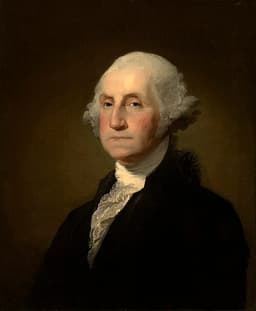
George Washington
Politician · Modern
76.8Total
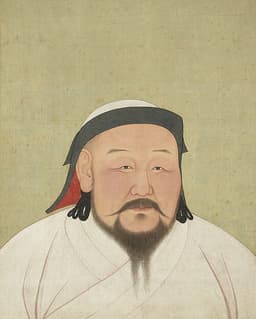
Kublai Khan
Emperor · Medieval
74.3Total
Basic Information
Born
1732
1215
Died
1799
1294
Era
Modern
Medieval
Nationality
United States
Mongolia
Occupation
Politician
Emperor
Civilization
Western
Eastern
Score Comparison
Military (10%)
75.0
77.5
Political (20%)
82.0
79.2
Influence (20%)
75.0
75.0
Legacy (20%)
80.0
70.0
Leadership (15%)
85.0
72.0
Strategy (15%)
55.0
76.0
TOTAL
76.8
74.3
George Washington — Complete Timeline
1775 AD
Appointed Commander-in-Chief of the Continental ArmyOther◆ Major
The Second Continental Congress appointed Washington as commander-in-chief of the Continental Army on June 15, 1775. He accepted the position without pay, taking command of the forces besieging Boston at the start of the American Revolutionary War.
American RevolutionMilitary Leadership
Impact: national
1776 AD
Crossed the Delaware RiverOther◆ Major
On the night of December 25-26, 1776, Washington led 2,400 troops across the ice-choked Delaware River. The surprise attack on Hessian forces at Trenton resulted in a decisive American victory, capturing nearly 1,000 prisoners and reviving Patriot morale after a series of defeats.
American RevolutionBattleTurning Point
Impact: nationalconstructive
1787 AD
Presided over the Constitutional ConventionPolitical Action◆ Major
Washington served as president of the Constitutional Convention in Philadelphia from May to September 1787. His presence lent legitimacy to the proceedings, and he formally signed the final draft of the U.S. Constitution, though he contributed little to the debates.
ConstitutionFounding Father
Impact: national
1789 AD
Inaugurated as First President of the United StatesPolitical Action◆ Major
Washington was unanimously elected by the Electoral College and inaugurated on April 30, 1789, at Federal Hall in New York City. He established numerous executive branch precedents, including the cabinet system, the inaugural address, and the title 'Mr. President'.
PresidencyFounding Father
Impact: national
1793 AD
Issued the Proclamation of NeutralityOther◆ Major
Washington issued the Proclamation of Neutrality on April 22, 1793, declaring the United States neutral in the conflict between France and Great Britain. This decision established the precedent of American isolationism and avoided entanglement in European wars.
Foreign PolicyNeutrality
Impact: national
1796 AD
Delivered the Farewell AddressOther◆ Major
Washington published his Farewell Address on September 19, 1796, announcing his decision not to seek a third term. The address warned against political factionalism, permanent foreign alliances, and the influence of the military in government, shaping American political culture.
PresidencyLegacy
Impact: national
Kublai Khan — Complete Timeline
1260 AD
Adoption of Tibetan Buddhism as State ReligionCultural◆ Major
Kublai Khan appointed the Tibetan lama Drog
Tibetan BuddhismReligionMongol-Tibet Relations
Impact: regional
1271 AD
Proclamation of the Yuan DynastyPolitical Action◆ Major
Kublai Khan officially proclaimed the Yuan dynasty, adopting a Chinese-style dynastic name. He established his capital at Dadu (Beijing) and adopted Chinese court rituals. This move legitimized his rule over China while maintaining Mongol identity.
Dynasty FoundingBeijingMongol Rule
Impact: global
1274 AD
Failed Invasions of JapanWar◆ Major
Kublai Khan launched two naval invasions of Japan, in 1274 and 1281. Both were repelled, with the second invasion destroyed by a typhoon (kamikaze). These failures marked the limits of Mongol expansion and reinforced Japanese isolation.
Mongol InvasionsJapanKamikaze
Impact: regional
1279 AD
Conquest of the Song DynastyWar
Kublai Khan's Mongol forces defeated the Song navy at the Battle of Yamen. The last Song emperor drowned, ending the Song dynasty. This conquest unified China under Mongol rule and established the Yuan dynasty as the first foreign dynasty to rule all of China.
Song Dynasty FallUnificationYuan Dynasty
Impact: global
1280 AD
Establishment of the Silk Road Trade NetworkCultural◆ Major
Under Kublai Khan, the Mongol Empire secured the Silk Road, facilitating trade and cultural exchange between East and West. Marco Polo visited his court. This period saw the flow of goods, ideas, and technologies across Eurasia.
Silk RoadTradeCultural Exchange
Impact: globalconstructive
Expert Analysis
Kublai Khan vs George Washington: Historical Comparison
Kublai Khan, the Mongol emperor who completed the conquest of China and founded the Yuan dynasty, and George Washington, the American general and first president who led the revolution and established the U.S. republic, represent vastly different eras, cultures, and forms of leadership—yet both shaped world history through military conquest and political foundation-building.
Dimension Analysis
**Military: Kublai Khan 88 / George Washington 70**
Kublai Khan commanded massive, multi-ethnic armies that conquered the Song Dynasty and extended Mongol rule across Asia, while Washington’s military achievements were more defensive and strategic—holding the Continental Army together against a superior British force, but with fewer decisive victories.
**Political: Kublai Khan 78 / George Washington 80**
Washington’s political genius lay in voluntarily relinquishing power after two terms, establishing democratic norms and a peaceful transfer of authority; Kublai Khan skillfully integrated Chinese administrative systems and Mongol rule, but relied on autocratic control and hereditary succession.
**Influence: Kublai Khan 78 / George Washington 72**
Kublai Khan’s influence spanned Eurasia, facilitating trade (the Silk Road) and cultural exchange, while Washington’s influence was more concentrated—shaping American republican ideals and inspiring global democratic movements, but with less immediate global reach.
**Legacy: Kublai Khan 75 / George Washington 78**
Washington is universally revered as the “Father of His Country,” with his precedent of civilian control over the military enduring for over two centuries; Kublai Khan’s legacy is mixed—praised for unifying China but criticized for Mongol brutality and eventual dynastic decline.
**Leadership: Kublai Khan 82 / George Washington 78**
Kublai Khan demonstrated visionary leadership in managing a vast, diverse empire and patronizing arts and religion; Washington’s leadership was more understated—unifying fractious colonies, enduring hardship, and modeling restraint that built trust in republican governance.
Verdict
Kublai Khan leads overall due to his superior military conquests and broader geopolitical influence, though Washington’s political and legacy scores edge ahead in democratic institution-building.
FAQ
Q: Who ranks higher? A: Kublai Khan ranks higher overall (80 vs 74), driven by his military dominance and strategic scope, though Washington surpasses him in political skill and lasting democratic legacy.
Rankings
🥇
George WashingtonLeader
Mil: 75.0Pol: 82.0Inf: 75.0
76.8
🥈
Kublai Khan
Mil: 77.5Pol: 79.2Inf: 75.0
74.3
+2.5 behind
How This Comparison Works
Algorithm
Each figure is scored on 6 dimensions (0—100 scale) based on structured historical data: Military (10%), Political (20%), Influence (20%), Legacy (20%), Leadership (15%), Strategy (15%). The weighted total produces the final ranking.
Data Sources
Scores are computed from structured sub-indicators in the database. Scale factors adjust for era (Ancient ×0.85, Modern ×1.0) and civilization size (Eastern ×1.05, Other ×0.80) to account for differences in population and military scale.
Maximum 3 Figures
Comparisons are limited to 2—3 figures to ensure readability and statistical meaningfulness.
Error Margins
±5 points per dimension — Sub-scores are derived from historical records with inherent uncertainty. Two figures within 5 points on a dimension should be considered roughly equivalent in that area.
Total Score Accuracy
±3 points overall — The weighted combination of 6 dimensions produces a total score with approximately ±3 points of uncertainty. Differences of less than 3 points are not statistically significant— the figures are effectively tied.
Known Limitations
- Historical records are incomplete and uneven across civilizations
- Figures from oral-tradition societies may be underrepresented
- Occupation labels can misclassify multi-role figures
- Scores measure capability and impact, not moral character
- Quantitative scoring is a comparison tool, not absolute truth
Capability Radar
Military (10%) — Battles & Warfare
Battles
75
95
Win Rate
70
90
Expansion
60
95
Political (20%) — Governance & Reform
Reform
90
88
Diplomacy
85
85
Economy
65
90
Influence (20%) — Cultural & Global Reach
Cultural
85
85
Global
85
85
Legacy (20%) — Historical Impact
Historical
95
90
Longevity
90
80
Leadership (15%) — Power & Stability
Tenure
70
90
Stability
85
80
Strategy (15%) — Tactics & Innovation
Strategy
80
92
Tactics
65
85
Reform
85
88
Similar Comparisons
Comments & Discussion
SharpScroll906/16/2026
把忽必烈和华盛顿放在一起比,本身就很有意思。华盛顿是‘国父’,忽必烈在中文语境里是‘元世祖’,都是开国之君。但西方评价体系明显偏重华盛顿的政治遗产,比如和平交接权力。可你们要知道,忽必烈在至元八年(1271年)改国号为大元时,就采纳了汉人谋士刘秉忠的建议,建立了一套儒法并用的官僚体系,这在中国历史上是划时代的。他还在大都(今北京)建都,奠定了此后600多年中国的首都格局。华盛顿固然伟大,但他的影响力基本局限于大西洋沿岸;忽必烈却让丝绸之路重新畅通,马可·波罗都来朝觐。说华盛顿政治分80、忽必烈78,我觉得是没考虑到忽必烈整合多民族帝国的难度——那可比管十三个州难多了。
Chronicler39046/16/2026
这个评分体系有问题。忽必烈军事88,政治78,总分79.6;华盛顿军事70,政治80,总分74.5。但如果你算一下,忽必烈的政治分被低估了。他建立元朝时,不仅保留了蒙古的怯薛制度,还吸收了汉法的三省六部制,设立行省管理地方,这比华盛顿仅仅建立一个联邦政府复杂得多。华盛顿的政治创新在于权力交接,但忽必烈面对的是如何统治一个文化迥异、人口远超蒙古的汉地。如果按管理难度加权,忽必烈的政治分至少应该85。还有,忽必烈的军事成就里,襄樊之战打了六年,用了回回炮才破城,这效率其实不高,88分给高了。建议重新校准权重。