Loading...
Charles de Gaulle vs Zhao Kuangyin
Zhao Kuangyin leads by 3.3 pts · 2 figures compared
…
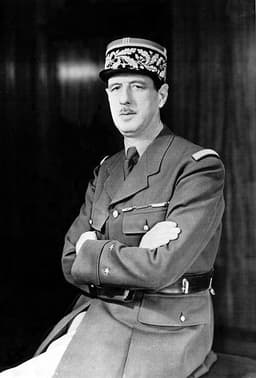
Charles de Gaulle
Politician · Modern
68.2Total
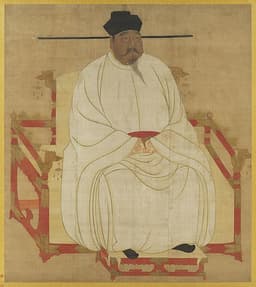
Zhao Kuangyin
Emperor · Medieval
71.5Total
Basic Information
Born
1890
927
Died
1970
976
Era
Modern
Medieval
Nationality
France
China
Occupation
Politician
Emperor
Civilization
Western
Eastern
Score Comparison
Military (10%)
55.0
78.0
Political (20%)
75.0
84.0
Influence (20%)
65.0
68.0
Legacy (20%)
68.0
65.0
Leadership (15%)
78.0
74.0
Strategy (15%)
65.0
68.0
TOTAL
68.2
71.5
Charles de Gaulle — Complete Timeline
1940 AD
Appeal of 18 June 1940Political Action
From London, de Gaulle broadcast a radio appeal urging French resistance against Nazi occupation. He called on French soldiers and citizens to continue the fight, founding the Free French Forces and becoming the symbol of French defiance.
World War IIResistanceLeadership
Impact: nationalconstructive
1958 AD
Founding of the Fifth RepublicPolitical Action
De Gaulle returned to power during the Algerian crisis and oversaw the drafting of a new constitution. The Fifth Republic established a strong executive presidency, replacing the unstable parliamentary system of the Fourth Republic.
ConstitutionGovernment ReformPolitical System
Impact: nationalconstructive
1962 AD
End of the Algerian WarPolitical Action◆ Major
De Gaulle negotiated the
DecolonizationPeace TreatyAlgeria
Impact: regionalconstructive
1968 AD
May 1968 CrisisPolitical Action◆ Major
Mass student protests and general strikes paralyzed France, challenging de Gaulle's government. De Gaulle briefly fled to Germany, then returned to dissolve the National Assembly and call elections, which his party won, but his authority was weakened.
ProtestPolitical CrisisSocial Unrest
Impact: nationaldestructive
1969 AD
Resignation as PresidentPolitical Action
De Gaulle resigned after losing a referendum on regional reform and Senate restructuring. The defeat marked the end of his political career, as he withdrew from public life and died the following year.
ResignationPolitical DefeatReferendum
Impact: nationaltragic
Zhao Kuangyin — Complete Timeline
960 AD
Founded Song dynastyPolitical Action
Zhao Kuangyin, a general of Later Zhou, was proclaimed emperor by his troops at Chenqiao. He established the Song dynasty, ending the Five Dynasties period and beginning a new era of Chinese history.
Song dynastyFoundingChenqiao
Impact: globalconstructive
961 AD
Removed military power from generalsPolitical Action◆ Major
Zhao Kuangyin invited senior generals to a banquet and persuaded them to retire peacefully. This 'removal of military power over wine' prevented military coups and centralized control.
Song dynastyMilitary reformCentralization
Impact: nationalconstructive
963 AD
Unified southern ChinaWar◆ Major
Zhao Kuangyin launched campaigns to conquer the southern kingdoms, including Jingnan, Later Shu, and Southern Tang. By his death, most of China was reunified under Song rule.
Song unificationConquestSouthern kingdoms
Impact: national
Expert Analysis
Charles de Gaulle vs Zhao Kuangyin
# The General and the Emperor: De Gaulle and Zhao Kuangyin
In the autumn of 1969, a tall, stooped Frenchman walked out of the Élysée Palace for the last time, his resignation a quiet end to a decade of towering rule. Exactly one thousand and nine years earlier, in the spring of 960, a Chinese general named Zhao Kuangyin was proclaimed emperor by his troops at Chenqiao, a moment that would launch the Song dynasty. One left power in defeat; the other seized it in triumph. Yet both men were defined by a single, consuming question: how does a leader tame the military forces that brought him to power?
Origins
Charles de Gaulle was born in 1890 into a devoutly Catholic, patriotic family in Lille. His father taught philosophy and history, instilling in young Charles a sense of France’s grandeur and a belief that destiny called him to serve. The Franco-Prussian War, which ended in French humiliation, haunted his childhood. De Gaulle grew up in the shadow of defeat, and the memory never left him.
Zhao Kuangyin was born in 927, during the Five Dynasties and Ten Kingdoms period—a chaotic era when generals routinely overthrew emperors. His father was a military commander, and Zhao entered the army young. In a world where loyalty was fleeting and power changed hands at swordpoint, he learned that a general’s ambition was the most dangerous force in the realm. Both men grew up in eras of collapse, but de Gaulle saw France’s fall as a betrayal of eternal greatness; Zhao saw China’s fragmentation as a practical problem to be solved.
Rise to Power
De Gaulle’s path was improbable. In 1940, as a little-known brigadier general, he fled to London after France surrendered to Germany. On June 18, he broadcast a radio appeal urging French resistance—a voice from nowhere, speaking for a nation that had fallen silent. He had no army, no territory, no legitimacy. Yet he insisted that France was not defeated, that the flame of resistance must not die. This was not a coup; it was an act of will.
Zhao’s rise was the opposite: a classic military coup, but executed with exquisite restraint. In 960, his troops mutinied, draping a yellow imperial robe over his shoulders. He accepted, but immediately set conditions: no harm to the child emperor or the capital’s citizens. Unlike de Gaulle, who built power from exile and moral authority, Zhao built it from a soldier’s mutiny and practical necessity.
Leadership & Governance
Their ruling styles could not have differed more. De Gaulle governed with an almost mystical vision of France. He founded the Fifth Republic in 1958, drafting a constitution that concentrated power in the presidency—a system designed for himself. He believed in a “certain idea of France,” and his leadership was aloof, theatrical, and inflexible. He ended the Algerian War in 1962 through the Évian Accords, a decision that infuriated the very generals who had brought him back to power. He was willing to sacrifice his own supporters for what he saw as France’s true interests.
Zhao, by contrast, governed through persuasion and subtle manipulation. His most famous act came in 961, when he invited his senior generals to a banquet, drank with them, and then calmly explained that they should retire to comfortable estates rather than risk their lives in endless coups. The generals agreed. This “removal of military power” was bloodless, a masterpiece of political psychology. Where de Gaulle imposed his will through constitutional authority, Zhao dissolved threats through personal charm and strategic generosity.
Triumph & Tragedy
De Gaulle’s greatest triumph was the survival of France as a sovereign, independent power after World War II. His greatest tragedy was the May 1968 crisis, when student protests and a general strike paralyzed the nation. De Gaulle briefly fled to Germany, disoriented, before returning to call new elections. He won, but the magic was broken. A year later, he lost a referendum on minor reforms and resigned. A man who had saved France twice could not stomach a small defeat.
Zhao’s triumph was unification: by 963, he had conquered the southern kingdoms of Jingnan, Later Shu, and Southern Tang, bringing China under Song rule. His tragedy was that he never completed the task. He died in 976, leaving the northern territories unconquered. Worse, his policy of weakening the military left the Song vulnerable to invasion from the north—a flaw that would haunt the dynasty for centuries.
Character & Destiny
De Gaulle was a man of immense pride and isolation. He once said, “The graveyards are full of indispensable men.” Yet he acted as if he were indispensable. His character was forged in defiance: defying Hitler, defying the Allies, defying his own countrymen. This stubbornness saved France in 1940 but destroyed him in 1969.
Zhao was a man of calculation and self-awareness. He knew that the same soldiers who made him emperor could unmake him. So he disarmed them with wine and kindness. He understood that power, once seized, must be disguised. His character was not heroic but pragmatic—a quality that made him a great founder but perhaps a lesser legend.
Legacy
De Gaulle left France a stable republic, a nuclear power, and a permanent seat on the UN Security Council. His shadow still falls over French politics; every president since has lived in his constitutional design. He is remembered as the man who said no to Hitler and no to his own generals.
Zhao left China a unified empire, a civil service system that prized scholars over soldiers, and a dynasty that would last three centuries. But he also left a military weakness that would cost the Song dearly. He is remembered as the emperor who took power without bloodshed and ruled without tyranny.
Conclusion
One man built his power on a radio broadcast from exile; the other on a yellow robe forced upon him by mutineers. De Gaulle’s tragedy was that he could not bend; Zhao’s tragedy was that he bent too far. Both understood that the military is the sword that can cut both ways. De Gaulle faced it down; Zhao disarmed it. In the end, the French general died in obscurity, a defeated hero. The Chinese emperor died in power, a successful pragmatist. History has been kinder to the man who failed—perhaps because he failed for a grand idea, while the other succeeded for a quiet peace.
Rankings
🥇
Zhao KuangyinLeader
Mil: 78.0Pol: 84.0Inf: 68.0
71.5
🥈
Charles de Gaulle
Mil: 55.0Pol: 75.0Inf: 65.0
68.2
+3.3 behind
How This Comparison Works
Algorithm
Each figure is scored on 6 dimensions (0—100 scale) based on structured historical data: Military (10%), Political (20%), Influence (20%), Legacy (20%), Leadership (15%), Strategy (15%). The weighted total produces the final ranking.
Data Sources
Scores are computed from structured sub-indicators in the database. Scale factors adjust for era (Ancient ×0.85, Modern ×1.0) and civilization size (Eastern ×1.05, Other ×0.80) to account for differences in population and military scale.
Maximum 3 Figures
Comparisons are limited to 2—3 figures to ensure readability and statistical meaningfulness.
Error Margins
±5 points per dimension — Sub-scores are derived from historical records with inherent uncertainty. Two figures within 5 points on a dimension should be considered roughly equivalent in that area.
Total Score Accuracy
±3 points overall — The weighted combination of 6 dimensions produces a total score with approximately ±3 points of uncertainty. Differences of less than 3 points are not statistically significant— the figures are effectively tied.
Known Limitations
- Historical records are incomplete and uneven across civilizations
- Figures from oral-tradition societies may be underrepresented
- Occupation labels can misclassify multi-role figures
- Scores measure capability and impact, not moral character
- Quantitative scoring is a comparison tool, not absolute truth
Capability Radar
Military (10%) — Battles & Warfare
Battles
60
75
Win Rate
55
85
Expansion
20
75
Political (20%) — Governance & Reform
Reform
95
90
Diplomacy
90
85
Economy
70
80
Influence (20%) — Cultural & Global Reach
Cultural
70
70
Global
80
60
Legacy (20%) — Historical Impact
Historical
85
80
Longevity
75
75
Leadership (15%) — Power & Stability
Tenure
85
65
Stability
75
85
Strategy (15%) — Tactics & Innovation
Strategy
85
80
Tactics
70
70
Reform
80
90
Similar Comparisons
Comments & Discussion
龙袍灰烬6/16/2026
赵匡胤才是真正懂权力的人。杯酒释兵权,多干净利落?不像戴高乐那套,带着自由法国流亡政府到处喊"法国没败",连英国人都笑他是"降落伞将军"。赵匡胤从乱世里杀出来,知道军头太多迟早出事,一张酒桌摆平藩镇武将。戴高乐呢?1968年五月风暴被学生逼下台,连军队都不愿为他站台。高下立判。
Cartesian Hoplite6/16/2026
As a classics scholar, I see both men wrestling with Plato's old problem: how do you make warriors obey laws? De Gaulle tried constitutional engineering—the Fifth Republic's strong presidency was his big brain move. But Zhao Kuangyin's solution was more elegant: civil exam system over military merit. He demoted his own generals and elevated scholars, replacing sword logic with bureaucratic rank. De Gaulle couldn't even control his own parliament half the time. Zhao locked down three hundred year
毛子炸鸡6/16/2026
数据不说话,咱看看硬指标。赵匡胤在位16年,杯酒释兵权、从中央到地方搞军制改革,宋朝延续319年,年均对外战争少于五代三倍。戴高乐呢?1958年上台,1969年灰溜溜辞职——11年。他收编了阿尔及利亚的将军叛乱,却压不住巴黎街头的学生。就算算"伟大法兰西"GDP增速,也没比第四共和国快多少。一个靠文官系统吃三百年,一个靠个人魅力熬十一年,谁更靠谱?数学不撒谎。
Generalissimo's Ghost6/16/2026
Let's stop fetishizing Zhao as the "nice general." He staged a coup! The Chenqiao mutiny was a textbook military takeover—his soldiers literally draped him in a yellow robe. But he was smart enough to rewrite history as a reluctant emperor. De Gaulle at least played by democratic rules: resigned when he lost a referendum, didn't put his rivals in permanent bureaucratic exile. Zhao "pacified" the southern kingdoms with mass executions and then canonized himself as a sage ruler. I'll take a flawed
Historian1276/16/2026
De Gaulle's whole "je suis la France" act is just Napoleonic cosplay with better tailoring. He rode a tank into Paris in '44 like a rock star, but let's be real—he was a PR genius who turned France's military collapse into a personal legend. Zhao Kuangyin actually understood power: you don't scream about glory, you calmly take the throne from your own soldiers with a cup of wine, then spend twenty years quietly neutering every general who could threaten you. That's real strategic thinking, not a