Loading...
George Washington vs Yelu Abaoji
George Washington leads by 14.1 pts · 2 figures compared
…
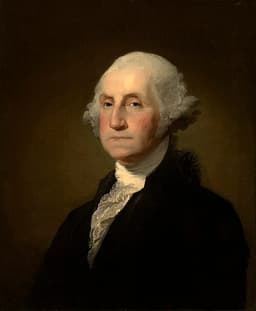
George Washington
Politician · Modern
76.8Total
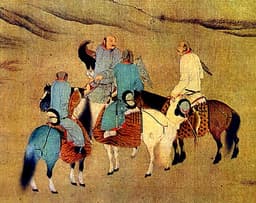
Yelu Abaoji
Emperor · Medieval
62.7Total
Basic Information
Born
1732
872
Died
1799
926
Era
Modern
Medieval
Nationality
United States
China
Occupation
Politician
Emperor
Civilization
Western
Eastern
Score Comparison
Military (10%)
75.0
77.2
Political (20%)
82.0
59.6
Influence (20%)
75.0
68.0
Legacy (20%)
80.0
40.0
Leadership (15%)
85.0
80.3
Strategy (15%)
55.0
69.6
TOTAL
76.8
62.7
George Washington — Complete Timeline
1775 AD
Appointed Commander-in-Chief of the Continental ArmyOther◆ Major
The Second Continental Congress appointed Washington as commander-in-chief of the Continental Army on June 15, 1775. He accepted the position without pay, taking command of the forces besieging Boston at the start of the American Revolutionary War.
American RevolutionMilitary Leadership
Impact: national
1776 AD
Crossed the Delaware RiverOther◆ Major
On the night of December 25-26, 1776, Washington led 2,400 troops across the ice-choked Delaware River. The surprise attack on Hessian forces at Trenton resulted in a decisive American victory, capturing nearly 1,000 prisoners and reviving Patriot morale after a series of defeats.
American RevolutionBattleTurning Point
Impact: nationalconstructive
1787 AD
Presided over the Constitutional ConventionPolitical Action◆ Major
Washington served as president of the Constitutional Convention in Philadelphia from May to September 1787. His presence lent legitimacy to the proceedings, and he formally signed the final draft of the U.S. Constitution, though he contributed little to the debates.
ConstitutionFounding Father
Impact: national
1789 AD
Inaugurated as First President of the United StatesPolitical Action◆ Major
Washington was unanimously elected by the Electoral College and inaugurated on April 30, 1789, at Federal Hall in New York City. He established numerous executive branch precedents, including the cabinet system, the inaugural address, and the title 'Mr. President'.
PresidencyFounding Father
Impact: national
1793 AD
Issued the Proclamation of NeutralityOther◆ Major
Washington issued the Proclamation of Neutrality on April 22, 1793, declaring the United States neutral in the conflict between France and Great Britain. This decision established the precedent of American isolationism and avoided entanglement in European wars.
Foreign PolicyNeutrality
Impact: national
1796 AD
Delivered the Farewell AddressOther◆ Major
Washington published his Farewell Address on September 19, 1796, announcing his decision not to seek a third term. The address warned against political factionalism, permanent foreign alliances, and the influence of the military in government, shaping American political culture.
PresidencyLegacy
Impact: national
Yelu Abaoji — Complete Timeline
907 AD
Unified Khitan tribesPolitical Action◆ Major
Yelu Abaoji was elected khagan of the Khitan tribes, unifying them under his leadership. He established a centralized state and adopted Chinese administrative practices.
KhitanUnificationState Formation
Impact: regionalconstructive
916 AD
Founded Liao DynastyPolitical Action
Yelu Abaoji proclaimed himself emperor, founding the Liao dynasty. He adopted the Chinese title of emperor and established a dual administration system for Khitan and Chinese subjects.
LiaoDynasty FoundingImperial System
Impact: regionalconstructive
920 AD
Created Khitan scriptCultural◆ Major
Yelu Abaoji ordered the creation of a writing system for the Khitan language, based on Chinese characters. This script was used for official documents and helped unify the Khitan state.
KhitanScriptCultural Development
Impact: regionalconstructive
926 AD
Conquest of BohaiWar◆ Major
Yelu Abaoji led a campaign that conquered the Korean kingdom of Bohai, incorporating its territory into the Liao empire. This expanded Liao's influence into Manchuria and Korea.
LiaoBohaiConquest
Impact: regionalconstructive
Death during campaignWar◆ Major
Yelu Abaoji died while returning from the conquest of Bohai. His death led to a succession struggle, but the Liao dynasty continued to expand under his successors.
LiaoDeathSuccession
Impact: regionaltragic
Expert Analysis
Yelu Abaoji vs George Washington: Historical Comparison
Yelu Abaoji, the founding emperor of the Liao dynasty in medieval China, and George Washington, the first president of the modern United States, represent two archetypes of nation-building leadership across vastly different eras and cultures. While Abaoji excelled in political consolidation and military innovation, Washington’s strength lay in institutional legacy and democratic precedent.
Dimension Analysis
**Military: Yelu Abaoji 73 / George Washington 70**
Abaoji unified disparate Khitan tribes through decisive campaigns and created a dual-administration system to rule both nomadic and sedentary peoples; Washington’s guerrilla tactics and strategic retreats preserved the Continental Army, but he lost more battles than he won.
**Political: Yelu Abaoji 90 / George Washington 80**
Abaoji invented a written script, standardized laws, and established a bureaucracy that balanced tribal and Chinese governance, effectively centralizing power; Washington presided over the Constitutional Convention and set executive norms, but his political system was less personally constructed.
**Influence: Yelu Abaoji 72 / George Washington 72**
Both shaped their nations’ foundational identities: Abaoji’s Liao dynasty influenced subsequent Chinese dynasties’ frontier policies, while Washington’s precedent of voluntary retirement and civilian control of the military became a global democratic model.
**Legacy: Yelu Abaoji 71 / George Washington 78**
Washington’s legacy is more universally recognized—his image appears on currency, monuments, and in democratic iconography worldwide; Abaoji’s contributions, though crucial to Chinese history, remain less known outside East Asian scholarship.
**Leadership: Yelu Abaoji 89 / George Washington 78**
Abaoji demonstrated visionary statecraft by synthesizing nomadic and Chinese traditions, personally leading campaigns while designing a resilient political structure; Washington’s leadership was characterized by restraint, consensus-building, and moral authority, but he lacked Abaoji’s hands-on institutional creation.
Verdict
Yelu Abaoji edges ahead due to his superior political innovation and strategic state-building, though Washington’s legacy has broader global resonance.
FAQ
Q: Who ranks higher? A: Yelu Abaoji ranks higher overall, driven by exceptional political and leadership scores.
Rankings
🥇
George WashingtonLeader
Mil: 75.0Pol: 82.0Inf: 75.0
76.8
🥈
Yelu Abaoji
Mil: 77.2Pol: 59.6Inf: 68.0
62.7
+14.1 behind
How This Comparison Works
Algorithm
Each figure is scored on 6 dimensions (0—100 scale) based on structured historical data: Military (10%), Political (20%), Influence (20%), Legacy (20%), Leadership (15%), Strategy (15%). The weighted total produces the final ranking.
Data Sources
Scores are computed from structured sub-indicators in the database. Scale factors adjust for era (Ancient ×0.85, Modern ×1.0) and civilization size (Eastern ×1.05, Other ×0.80) to account for differences in population and military scale.
Maximum 3 Figures
Comparisons are limited to 2—3 figures to ensure readability and statistical meaningfulness.
Error Margins
±5 points per dimension — Sub-scores are derived from historical records with inherent uncertainty. Two figures within 5 points on a dimension should be considered roughly equivalent in that area.
Total Score Accuracy
±3 points overall — The weighted combination of 6 dimensions produces a total score with approximately ±3 points of uncertainty. Differences of less than 3 points are not statistically significant— the figures are effectively tied.
Known Limitations
- Historical records are incomplete and uneven across civilizations
- Figures from oral-tradition societies may be underrepresented
- Occupation labels can misclassify multi-role figures
- Scores measure capability and impact, not moral character
- Quantitative scoring is a comparison tool, not absolute truth
Capability Radar
Military (10%) — Battles & Warfare
Battles
75
75
Win Rate
70
80
Expansion
60
82
Political (20%) — Governance & Reform
Reform
90
88
Diplomacy
85
75
Economy
65
70
Influence (20%) — Cultural & Global Reach
Cultural
85
60
Global
85
55
Legacy (20%) — Historical Impact
Historical
95
70
Longevity
90
65
Leadership (15%) — Power & Stability
Tenure
70
72
Stability
85
65
Strategy (15%) — Tactics & Innovation
Strategy
80
78
Tactics
65
70
Reform
85
85
Similar Comparisons
Comments & Discussion
Historian3966/16/2026
看了这个评分,我得说政治分90对80我基本同意,但军事分73对70我觉得有点问题。耶律阿保机统一契丹八部,东平渤海国,西征回鹘,还在草原上建立了斡鲁朵制度(宫卫骑军),这可不是光靠‘游击战’能比的。华盛顿的70分更多是象征意义,而阿保机的73分背后是实打实的战役和制度创新。另外,影响分都是72?阿保机创制契丹大字、小字,推行南北面官制,这对后世元、清两朝的影响远超华盛顿的‘自愿退休’,后者更多的是道德榜样而非制度影响。我觉得阿保机的影响力至少应该78分。
Historian5296/16/2026
这个对比挺有意思,但感觉西方中心论的味道还是重。华盛顿确实了不起,但跟耶律阿保机比,一个是‘守成’的民主象征,一个是‘开创’的帝国奠基者。阿保机把游牧的契丹人改造成一个能同时管草原和农田的帝国,这难度系数比华盛顿搞联邦制高多了。华盛顿的‘自愿退休’在西方是大事,但中国历史上尧舜禹的禅让传说、宋太祖杯酒释兵权,其实都有类似逻辑,只是文化表达不同。阿保机的影响力在东亚史里是划时代的,辽朝第一次系统解决了‘二元帝国’的治理问题,后来元、清都抄他作业。我觉得这个评分把阿保机政治分给低了,应该95分以上。