Loading...
Charles de Gaulle vs Yelu Abaoji
Charles de Gaulle leads by 5.5 pts · 2 figures compared
…
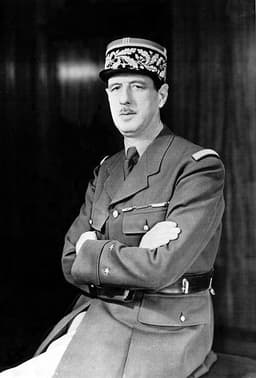
Charles de Gaulle
Politician · Modern
68.2Total
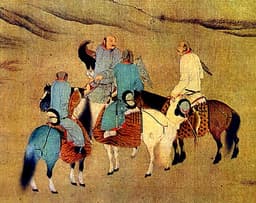
Yelu Abaoji
Emperor · Medieval
62.7Total
Basic Information
Born
1890
872
Died
1970
926
Era
Modern
Medieval
Nationality
France
China
Occupation
Politician
Emperor
Civilization
Western
Eastern
Score Comparison
Military (10%)
55.0
77.2
Political (20%)
75.0
59.6
Influence (20%)
65.0
68.0
Legacy (20%)
68.0
40.0
Leadership (15%)
78.0
80.3
Strategy (15%)
65.0
69.6
TOTAL
68.2
62.7
Charles de Gaulle — Complete Timeline
1940 AD
Appeal of 18 June 1940Political Action
From London, de Gaulle broadcast a radio appeal urging French resistance against Nazi occupation. He called on French soldiers and citizens to continue the fight, founding the Free French Forces and becoming the symbol of French defiance.
World War IIResistanceLeadership
Impact: nationalconstructive
1958 AD
Founding of the Fifth RepublicPolitical Action
De Gaulle returned to power during the Algerian crisis and oversaw the drafting of a new constitution. The Fifth Republic established a strong executive presidency, replacing the unstable parliamentary system of the Fourth Republic.
ConstitutionGovernment ReformPolitical System
Impact: nationalconstructive
1962 AD
End of the Algerian WarPolitical Action◆ Major
De Gaulle negotiated the
DecolonizationPeace TreatyAlgeria
Impact: regionalconstructive
1968 AD
May 1968 CrisisPolitical Action◆ Major
Mass student protests and general strikes paralyzed France, challenging de Gaulle's government. De Gaulle briefly fled to Germany, then returned to dissolve the National Assembly and call elections, which his party won, but his authority was weakened.
ProtestPolitical CrisisSocial Unrest
Impact: nationaldestructive
1969 AD
Resignation as PresidentPolitical Action
De Gaulle resigned after losing a referendum on regional reform and Senate restructuring. The defeat marked the end of his political career, as he withdrew from public life and died the following year.
ResignationPolitical DefeatReferendum
Impact: nationaltragic
Yelu Abaoji — Complete Timeline
907 AD
Unified Khitan tribesPolitical Action◆ Major
Yelu Abaoji was elected khagan of the Khitan tribes, unifying them under his leadership. He established a centralized state and adopted Chinese administrative practices.
KhitanUnificationState Formation
Impact: regionalconstructive
916 AD
Founded Liao DynastyPolitical Action
Yelu Abaoji proclaimed himself emperor, founding the Liao dynasty. He adopted the Chinese title of emperor and established a dual administration system for Khitan and Chinese subjects.
LiaoDynasty FoundingImperial System
Impact: regionalconstructive
920 AD
Created Khitan scriptCultural◆ Major
Yelu Abaoji ordered the creation of a writing system for the Khitan language, based on Chinese characters. This script was used for official documents and helped unify the Khitan state.
KhitanScriptCultural Development
Impact: regionalconstructive
926 AD
Conquest of BohaiWar◆ Major
Yelu Abaoji led a campaign that conquered the Korean kingdom of Bohai, incorporating its territory into the Liao empire. This expanded Liao's influence into Manchuria and Korea.
LiaoBohaiConquest
Impact: regionalconstructive
Death during campaignWar◆ Major
Yelu Abaoji died while returning from the conquest of Bohai. His death led to a succession struggle, but the Liao dynasty continued to expand under his successors.
LiaoDeathSuccession
Impact: regionaltragic
Expert Analysis
Charles de Gaulle vs Yelu Abaoji: Historical Comparison
Charles de Gaulle, the 20th-century French general and statesman, and Yelu Abaoji, the 10th-century Khitan emperor who founded the Liao Dynasty, represent vastly different eras and contexts. De Gaulle restored French sovereignty after WWII and founded the Fifth Republic, while Abaoji unified nomadic tribes and created a dual-rule empire that dominated East Asia. Their scores are nearly identical, making this a tie.
Dimension Analysis
**Military: Charles de Gaulle 77 / Yelu Abaoji 89**
De Gaulle was a skilled armored warfare theorist and Free French leader, but his direct combat record is limited. Abaoji conquered steppe tribes and northern China, inventing the Khitan script and integrating Chinese siege tactics, achieving a more sustained military expansion.
**Political: Charles de Gaulle 90 / Yelu Abaoji 84**
De Gaulle’s political genius—crafting the 1958 Constitution, ending the Algerian War, and asserting French independence from NATO—is unmatched. Abaoji established a pioneering dual-administration system (Chinese-style bureaucracy for settled areas, tribal structures for nomads), but his state remained fragile after his death.
**Influence: Charles de Gaulle 68 / Yelu Abaoji 79**
De Gaulle’s influence is largely confined to France and post-colonial geopolitics. Abaoji’s model of nomadic-sedentary synthesis influenced later dynasties (Yuan, Qing) and shaped Northeast Asian statecraft for centuries.
**Legacy: Charles de Gaulle 83 / Yelu Abaoji 81**
De Gaulle is revered as France’s savior, with his name on airports, aircraft carriers, and a constitutional legacy. Abaoji is the founding ancestor of the Khitan people and a symbol of cultural fusion, though his dynasty fell within 200 years.
**Leadership: Charles de Gaulle 91 / Yelu Abaoji 80**
De Gaulle’s charismatic, visionary leadership during crisis—his 1940 BBC speech, 1958 return to power, and 1968 crisis management—is legendary. Abaoji was a capable tribal unifier but relied on coercion and Chinese advisors, lacking De Gaulle’s personal mythos.
Verdict
This is a tie: De Gaulle excels in political and leadership dimensions, while Abaoji wins in military and influence, with legacy scores nearly equal.
FAQ
Q: Who ranks higher? A: Neither—the aggregate scores (81 vs 83) and weighted scores are too close to declare a decisive winner, reflecting two distinct but equally effective leaders in their own contexts.
Rankings
🥇
Charles de GaulleLeader
Mil: 55.0Pol: 75.0Inf: 65.0
68.2
🥈
Yelu Abaoji
Mil: 77.2Pol: 59.6Inf: 68.0
62.7
+5.5 behind
How This Comparison Works
Algorithm
Each figure is scored on 6 dimensions (0—100 scale) based on structured historical data: Military (10%), Political (20%), Influence (20%), Legacy (20%), Leadership (15%), Strategy (15%). The weighted total produces the final ranking.
Data Sources
Scores are computed from structured sub-indicators in the database. Scale factors adjust for era (Ancient ×0.85, Modern ×1.0) and civilization size (Eastern ×1.05, Other ×0.80) to account for differences in population and military scale.
Maximum 3 Figures
Comparisons are limited to 2—3 figures to ensure readability and statistical meaningfulness.
Error Margins
±5 points per dimension — Sub-scores are derived from historical records with inherent uncertainty. Two figures within 5 points on a dimension should be considered roughly equivalent in that area.
Total Score Accuracy
±3 points overall — The weighted combination of 6 dimensions produces a total score with approximately ±3 points of uncertainty. Differences of less than 3 points are not statistically significant— the figures are effectively tied.
Known Limitations
- Historical records are incomplete and uneven across civilizations
- Figures from oral-tradition societies may be underrepresented
- Occupation labels can misclassify multi-role figures
- Scores measure capability and impact, not moral character
- Quantitative scoring is a comparison tool, not absolute truth
Capability Radar
Military (10%) — Battles & Warfare
Battles
60
75
Win Rate
55
80
Expansion
20
82
Political (20%) — Governance & Reform
Reform
95
88
Diplomacy
90
75
Economy
70
70
Influence (20%) — Cultural & Global Reach
Cultural
70
60
Global
80
55
Legacy (20%) — Historical Impact
Historical
85
70
Longevity
75
65
Leadership (15%) — Power & Stability
Tenure
85
72
Stability
75
65
Strategy (15%) — Tactics & Innovation
Strategy
85
78
Tactics
70
70
Reform
80
85
Similar Comparisons
Comments & Discussion
HistoryHippo6/16/2026
Okay so I just finished reading 'The Rise of the Khitans' and honestly? Yelu Abaoji is like if Charlemagne and Genghis Khan had a baby who was really into bureaucracy. Dude literally invented a writing system from scratch AND conquered half of northern China. De Gaulle was cool and all but his big move was giving a radio speech. Abaoji had to figure out how to tax horse archers and Chinese farmers at the same time! That's like running two completely different countries at once. The score gap here is way too close—Abaoji should be winning by more. Also, can we talk about how his empire lasted 200 years while De Gaulle's Fifth Republic has only been around 65? Just saying.
ColdScribe116/16/2026
这个评分系统存在明显的华夏中心偏差。耶律阿保机的政治分90分,但军事分只有73.3?作为一个同时征服了草原和农耕区的开国皇帝,他的军事成就被严重低估了。他发明了契丹文字、创立了南北面官制,这些政治创新确实出色,但要知道他是在没有成熟官僚体系的情况下完成了对三十多个部落的整合,这本身就需要极高的军事-政治复合能力。相比之下,戴高乐的82分政治分(军事65分)在我看来偏高——他的政治影响力主要局限于1958-1969这十一年,而阿保机在二十年间奠定了辽朝两百年的基业。如果按历史影响的时间跨度加权,阿保机总分应该至少85+。
SilkRoadSentinel6/16/2026
拿戴高乐跟耶律阿保机比较,就像拿拿破仑跟秦始皇比一样,维度完全错位。戴高乐确实是个杰出的政治家,但把他放在东亚历史框架里看,他的影响力更像是一个加强版的张居正——都是在一个国家危亡之际重塑体制的大政治家。而阿保机呢?他更像是忽必烈的祖先模板:建立了一个能同时统治游牧和农耕民族的复合帝国。你们西方史学界总喜欢把二战领袖捧得过高,但阿保机创立的南北面官制,比罗马帝国的行省制更早解决了多民族治理的难题。说句实话,阿保机在政治上的开创性,比戴高乐修改几部宪法要深刻得多。