Loading...
George Washington vs Suleiman the Magnificent
George Washington leads by 3.6 pts · 2 figures compared
…
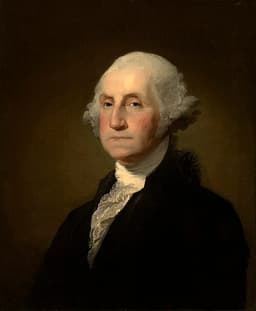
George Washington
Politician · Modern
76.8Total
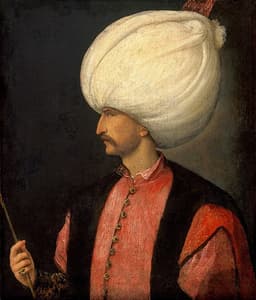
Suleiman the Magnificent
Emperor · Medieval
73.2Total
Basic Information
Born
1732
1494
Died
1799
1566
Era
Modern
Medieval
Nationality
United States
Ottoman Empire
Occupation
Politician
Emperor
Civilization
Western
Middle Eastern
Score Comparison
Military (10%)
75.0
85.0
Political (20%)
82.0
78.0
Influence (20%)
75.0
72.0
Legacy (20%)
80.0
68.0
Leadership (15%)
85.0
72.0
Strategy (15%)
55.0
72.0
TOTAL
76.8
73.2
George Washington — Complete Timeline
1775 AD
Appointed Commander-in-Chief of the Continental ArmyOther◆ Major
The Second Continental Congress appointed Washington as commander-in-chief of the Continental Army on June 15, 1775. He accepted the position without pay, taking command of the forces besieging Boston at the start of the American Revolutionary War.
American RevolutionMilitary Leadership
Impact: national
1776 AD
Crossed the Delaware RiverOther◆ Major
On the night of December 25-26, 1776, Washington led 2,400 troops across the ice-choked Delaware River. The surprise attack on Hessian forces at Trenton resulted in a decisive American victory, capturing nearly 1,000 prisoners and reviving Patriot morale after a series of defeats.
American RevolutionBattleTurning Point
Impact: nationalconstructive
1787 AD
Presided over the Constitutional ConventionPolitical Action◆ Major
Washington served as president of the Constitutional Convention in Philadelphia from May to September 1787. His presence lent legitimacy to the proceedings, and he formally signed the final draft of the U.S. Constitution, though he contributed little to the debates.
ConstitutionFounding Father
Impact: national
1789 AD
Inaugurated as First President of the United StatesPolitical Action◆ Major
Washington was unanimously elected by the Electoral College and inaugurated on April 30, 1789, at Federal Hall in New York City. He established numerous executive branch precedents, including the cabinet system, the inaugural address, and the title 'Mr. President'.
PresidencyFounding Father
Impact: national
1793 AD
Issued the Proclamation of NeutralityOther◆ Major
Washington issued the Proclamation of Neutrality on April 22, 1793, declaring the United States neutral in the conflict between France and Great Britain. This decision established the precedent of American isolationism and avoided entanglement in European wars.
Foreign PolicyNeutrality
Impact: national
1796 AD
Delivered the Farewell AddressOther◆ Major
Washington published his Farewell Address on September 19, 1796, announcing his decision not to seek a third term. The address warned against political factionalism, permanent foreign alliances, and the influence of the military in government, shaping American political culture.
PresidencyLegacy
Impact: national
Suleiman the Magnificent — Complete Timeline
1522 AD
Siege of RhodesWar◆ Major
Suleiman personally led a massive Ottoman campaign against the Knights Hospitaller on Rhodes. After a six-month siege, the knights surrendered and were allowed to leave. This victory secured Ottoman control over the eastern Mediterranean.
SiegeMediterraneanKnights Hospitaller
Impact: regional
1526 AD
Battle of MohácsWar
Suleiman's Ottoman army defeated the Hungarian forces of King Louis II at Moh
BattleHungaryOttoman expansion
Impact: regional
1529 AD
Siege of ViennaWar◆ Major
Suleiman besieged Vienna, the Habsburg capital, with a large army. The siege failed due to supply issues, disease, and strong defenses. This defeat halted Ottoman expansion into central Europe and marked the empire's furthest advance westward.
SiegeViennaDefeat
Impact: regional
1530 AD
Codification of Ottoman lawReform◆ Major
Suleiman oversaw the compilation and standardization of Ottoman legal codes, known as Kanun. These laws regulated criminal justice, land tenure, and taxation, creating a unified legal system that balanced sharia with secular law. He earned the title 'Kanuni' (the Lawgiver).
Legal reformKanunOttoman Empire
Impact: nationalconstructive
1536 AD
Execution of Ibrahim PashaPolitical Action◆ Major
Suleiman ordered the execution of his grand vizier and close friend Ibrahim Pasha, who had served for 13 years. The reasons remain debated, but likely involved Ibrahim's growing power and conflicts with Suleiman's wife, Hurrem Sultan. This event demonstrated the absolute power of the sultan.
ExecutionCourt politicsPower
Impact: nationaltragic
Expert Analysis
George Washington vs Suleiman the Magnificent
# The Reluctant Founder and the Magnificent Sultan
In the summer of 1787, as delegates in Philadelphia sweated through debates over a new constitution, George Washington sat silently at the front of the hall, his presence alone commanding respect. Across the Atlantic and three centuries earlier, Suleiman the Magnificent rode into Budapest at the head of an army that had just annihilated the Hungarian kingdom at Mohács. One man built a republic by restraining power; the other expanded an empire by wielding it absolutely. Both shaped the modern world, yet they moved in opposite directions—one toward democracy, the other toward autocracy. Why?
Origins
George Washington was born in 1732 into Virginia’s planter aristocracy, a world of tobacco fields and enslaved labor. His father died when he was eleven, leaving him without the formal education of his wealthier peers. What he learned came from surveying wilderness, managing a plantation, and absorbing the Enlightenment ideas drifting across the Atlantic—that men could govern themselves without kings.
Suleiman was born in 1494 in Trabzon, the son of Sultan Selim I, a conqueror who doubled the Ottoman Empire’s size. From childhood, Suleiman was groomed for absolute rule: trained in Islamic law, military strategy, and the art of court politics. He became sultan at twenty-six, inheriting a war machine and a bureaucracy ready to serve his will.
Their eras shaped them. Washington came of age when British colonists began questioning imperial authority. Suleiman rose when the Ottoman Empire was the most formidable power between Vienna and Baghdad, where a strong sultan meant survival. One era demanded liberty; the other demanded dominion.
Rise to Power
Washington’s path was accidental. In 1754, as a young colonel in the French and Indian War, he helped trigger a global conflict by firing on French troops at the Battle of Jumonville Glen—a blunder that taught him caution. He returned to Virginia, married Martha Custis, and became a wealthy planter. When revolution came in 1775, the Continental Congress chose him to lead the army largely because he was from Virginia, a compromise candidate to unite the colonies. He accepted reluctantly, writing that he did not think himself equal to the command.
Suleiman’s rise was hereditary and seamless. Upon his father’s death in 1520, he became sultan without opposition. His first major campaign came in 1521, when he captured Belgrade, the gateway to Central Europe. By 1522, he personally led the siege of Rhodes, a six-month campaign that crushed the Knights Hospitaller and opened the eastern Mediterranean. For Suleiman, conquest was inheritance; for Washington, command was duty.
Leadership & Governance
Washington led the Continental Army through eight years of war with a style that was patient, stoic, and deeply political. He lost more battles than he won—New York, Brandywine, Germantown—but kept his army intact. At Valley Forge in the winter of 1777–1778, he stayed with his starving men, refusing better quarters. His greatest military achievement was not a victory but a retreat: crossing the Delaware on Christmas night 1776 to surprise Hessian forces at Trenton, reviving a dying revolution.
As president from 1789 to 1797, Washington established norms that became constitutional law: a cabinet of advisors, a two-term limit, and neutrality in foreign wars. He crushed the Whiskey Rebellion in 1794 to prove federal authority, then pardoned the rebels to show mercy. He understood that how he wielded power would set precedents for centuries.
Suleiman governed as a lawgiver and conqueror. In 1530, he codified Ottoman law—the Kanun—standardizing criminal, land, and tax codes across a vast, multi-ethnic empire. He balanced Islamic sharia with secular sultanic decrees, creating a legal system that endured for centuries. Militarily, he was relentless: the Battle of Mohács in 1526 destroyed Hungary as an independent kingdom, and his siege of Vienna in 1529—though it failed—terrified Europe. His navy dominated the Mediterranean until the defeat at Lepanto in 1571, which occurred after his death but reflected the limits of his expansion.
Yet his governance had a dark side. In 1536, he ordered the execution of his grand vizier and closest friend, Ibrahim Pasha, who had served him for thirteen years. The reasons remain murky—perhaps Ibrahim’s growing power, perhaps court intrigues. The execution showed that even the Magnificent Sultan could not tolerate rivals, even those he loved.
Triumph & Tragedy
Washington’s greatest triumph was surrendering power. In 1783, after winning the Revolutionary War, he resigned his commission to Congress, astonishing King George III, who said, “If he does that, he will be the greatest man in the world.” When offered a crown, he refused. When his presidency ended in 1797, he retired to Mount Vernon, dying two years later in 1799. His tragedy was personal: he never had biological children, and his stepchildren predeceased him. He also failed to confront slavery, which he called a “slowly-fading evil” but never fully abolished.
Suleiman’s triumph was the empire itself. By his death in 1566 during the siege of Szigetvár, the Ottoman Empire stretched from Budapest to Baghdad, from Crimea to the Nile. He had transformed Istanbul into a cultural capital, commissioning the Suleymaniye Mosque and patronizing poets and architects. His tragedy was the succession crisis he created. Executing his son Mustafa in 1553 on suspicion of rebellion, he left the throne to Selim II, a weak ruler whose incompetence began the empire’s long decline.
Character & Destiny
Washington was a man who controlled himself with iron discipline. He suppressed his temper, hid his ambition, and cultivated an image of disinterested virtue. He wrote constantly about his “character” and how posterity would judge him. This self-awareness made him cautious, deliberate, and sometimes cold.
Suleiman was a man of grand gestures and terrible contradictions. He wrote poetry under the pen name “Muhibbi” (the Lover), yet ordered the murder of his sons. He was called “the Lawgiver” by his own people and “the Magnificent” by Europeans who feared him. His personality reflected the empire itself: brilliant, ruthless, and ultimately unsustainable.
Legacy
Washington left a system designed to outlast any individual. His refusal to become king, his two-term precedent, and his Farewell Address warning against “entangling alliances” shaped American politics for two centuries. His legacy score of 78.0 reflects his foundational role, though it is complicated by his slaveholding.
Suleiman left a golden age that became a memory. The Ottoman Empire continued for three more centuries, but never again reached his heights. His legal reforms endured, but his military overreach and succession failures planted seeds of decay. His legacy score of 66.7 reflects this mixed inheritance: magnificent in achievement, tragic in consequence.
Conclusion
Washington and Suleiman represent two faces of power: one who built a republic by limiting himself, another who built an empire by expanding it. Washington’s total score of 74.5 and Suleiman’s 75.1 are nearly identical, yet their paths diverged completely. The difference was not ability but context. Washington’s America needed a leader who would step aside; Suleiman’s empire needed a sultan who would dominate. Both answered their eras’ demands, but only one created a system that could survive without him. In the end, the greatest legacy is not what you conquer, but what you leave behind.
Rankings
🥇
George WashingtonLeader
Mil: 75.0Pol: 82.0Inf: 75.0
76.8
🥈
Suleiman the Magnificent
Mil: 85.0Pol: 78.0Inf: 72.0
73.2
+3.6 behind
How This Comparison Works
Algorithm
Each figure is scored on 6 dimensions (0—100 scale) based on structured historical data: Military (10%), Political (20%), Influence (20%), Legacy (20%), Leadership (15%), Strategy (15%). The weighted total produces the final ranking.
Data Sources
Scores are computed from structured sub-indicators in the database. Scale factors adjust for era (Ancient ×0.85, Modern ×1.0) and civilization size (Eastern ×1.05, Other ×0.80) to account for differences in population and military scale.
Maximum 3 Figures
Comparisons are limited to 2—3 figures to ensure readability and statistical meaningfulness.
Error Margins
±5 points per dimension — Sub-scores are derived from historical records with inherent uncertainty. Two figures within 5 points on a dimension should be considered roughly equivalent in that area.
Total Score Accuracy
±3 points overall — The weighted combination of 6 dimensions produces a total score with approximately ±3 points of uncertainty. Differences of less than 3 points are not statistically significant— the figures are effectively tied.
Known Limitations
- Historical records are incomplete and uneven across civilizations
- Figures from oral-tradition societies may be underrepresented
- Occupation labels can misclassify multi-role figures
- Scores measure capability and impact, not moral character
- Quantitative scoring is a comparison tool, not absolute truth
Capability Radar
Military (10%) — Battles & Warfare
Battles
75
95
Win Rate
70
90
Expansion
60
95
Political (20%) — Governance & Reform
Reform
90
90
Diplomacy
85
88
Economy
65
85
Influence (20%) — Cultural & Global Reach
Cultural
85
90
Global
85
88
Legacy (20%) — Historical Impact
Historical
95
92
Longevity
90
85
Leadership (15%) — Power & Stability
Tenure
70
95
Stability
85
85
Strategy (15%) — Tactics & Innovation
Strategy
80
92
Tactics
65
85
Reform
85
80
Similar Comparisons
Comments & Discussion
No comments yet. Be the first to share your thoughts!