Loading...
George Washington vs Pachacuti
George Washington leads by 7.4 pts · 2 figures compared
…
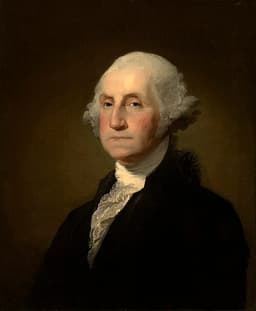
George Washington
Politician · Modern
76.8Total
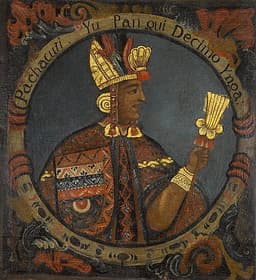
Pachacuti
Emperor · Medieval
69.4Total
Basic Information
Born
1732
1418
Died
1799
1472
Era
Modern
Medieval
Nationality
United States
Inca Empire
Occupation
Politician
Emperor
Civilization
Western
Other
Score Comparison
Military (10%)
75.0
78.5
Political (20%)
82.0
58.1
Influence (20%)
75.0
65.0
Legacy (20%)
80.0
72.0
Leadership (15%)
85.0
78.0
Strategy (15%)
55.0
69.2
TOTAL
76.8
69.4
George Washington — Complete Timeline
1775 AD
Appointed Commander-in-Chief of the Continental ArmyOther◆ Major
The Second Continental Congress appointed Washington as commander-in-chief of the Continental Army on June 15, 1775. He accepted the position without pay, taking command of the forces besieging Boston at the start of the American Revolutionary War.
American RevolutionMilitary Leadership
Impact: national
1776 AD
Crossed the Delaware RiverOther◆ Major
On the night of December 25-26, 1776, Washington led 2,400 troops across the ice-choked Delaware River. The surprise attack on Hessian forces at Trenton resulted in a decisive American victory, capturing nearly 1,000 prisoners and reviving Patriot morale after a series of defeats.
American RevolutionBattleTurning Point
Impact: nationalconstructive
1787 AD
Presided over the Constitutional ConventionPolitical Action◆ Major
Washington served as president of the Constitutional Convention in Philadelphia from May to September 1787. His presence lent legitimacy to the proceedings, and he formally signed the final draft of the U.S. Constitution, though he contributed little to the debates.
ConstitutionFounding Father
Impact: national
1789 AD
Inaugurated as First President of the United StatesPolitical Action◆ Major
Washington was unanimously elected by the Electoral College and inaugurated on April 30, 1789, at Federal Hall in New York City. He established numerous executive branch precedents, including the cabinet system, the inaugural address, and the title 'Mr. President'.
PresidencyFounding Father
Impact: national
1793 AD
Issued the Proclamation of NeutralityOther◆ Major
Washington issued the Proclamation of Neutrality on April 22, 1793, declaring the United States neutral in the conflict between France and Great Britain. This decision established the precedent of American isolationism and avoided entanglement in European wars.
Foreign PolicyNeutrality
Impact: national
1796 AD
Delivered the Farewell AddressOther◆ Major
Washington published his Farewell Address on September 19, 1796, announcing his decision not to seek a third term. The address warned against political factionalism, permanent foreign alliances, and the influence of the military in government, shaping American political culture.
PresidencyLegacy
Impact: national
Pachacuti — Complete Timeline
1438 AD
Conquest of the Chanka KingdomWar
Pachacuti led the Inca army to defeat the Chanka, a powerful rival, in a decisive battle near Cusco. This victory secured his position as Sapa Inca and initiated a period of rapid expansion, transforming the Inca from a small kingdom into a vast empire.
ConquestInca ExpansionChanka
Impact: regional
1440 AD
Reconstruction of CuscoCultural◆ Major
Pachacuti rebuilt Cusco as the imperial capital, designing it in the shape of a puma and constructing massive stone structures like Sacsayhuam
Urban PlanningArchitectureInca Empire
Impact: regionalconstructive
1450 AD
Initiation of Machu Picchu's ConstructionCultural◆ Major
Pachacuti ordered the construction of Machu Picchu, a royal estate and ceremonial site high in the Andes. The complex featured sophisticated dry-stone masonry and terraced agriculture, serving as a symbol of Inca engineering and a retreat for the emperor.
ArchitectureRoyal EstateInca Engineering
Impact: regionalconstructive
Expert Analysis
Pachacuti vs George Washington
The Founder and the Rebuilder
On a winter morning in 1789, a tall Virginian in a plain brown suit stood before a crowd in New York City, his hand on a Bible, his voice barely audible as he recited the presidential oath. He was acutely aware that every gesture, every word, would set a precedent for a nation that existed only on paper. Half a world away and three centuries earlier, another ruler stood atop a mountain in the Andes, surveying a city of stone that his architects had carved from the living rock. He wore a fringe of gold, and his word was law for millions. One man built a republic by restraining power; the other built an empire by wielding it absolutely. George Washington and Pachacuti Inca Yupanqui both forged civilizations from chaos, yet their paths diverged as sharply as the Atlantic separates their continents. Why did one become the father of democracy and the other the architect of a divine monarchy? The answer lies not just in their choices, but in the worlds they inherited.
Origins
Born in 1732 into Virginia’s landed gentry, Washington grew up in a world shaped by Enlightenment ideas and British common law. His formal education was modest—he never attended college—but he absorbed the values of self-governance from the colonial assemblies and the cautious pragmatism of a surveyor’s life. The American frontier taught him to measure land and men with equal precision. Pachacuti, born in 1418, entered a very different world. The Inca were a small kingdom in the highlands of Peru, surrounded by hostile neighbors like the Chanka. As a young prince, he was trained not in law or philosophy but in war and ritual. The cosmos, for the Inca, was a living force; the Sapa Inca was not merely a king but a son of the sun god Inti. Washington’s universe was rational and contractual; Pachacuti’s was sacred and cyclical.
Rise to Power
Washington’s ascent was gradual and reluctant. He first gained notice as a young officer in the French and Indian War, where his bravery at the Battle of the Monongahela (1755) earned him a reputation, but also taught him the horrors of imperial conflict. He returned to Virginia, became a planter, and entered politics as a delegate to the Continental Congress. When war erupted in 1775, he was chosen to lead the Continental Army not because he sought power, but because he was seen as a unifying figure—a Southerner who could bind the colonies together. His greatest turning point came not on a battlefield but in 1783, when he resigned his commission before Congress, rejecting the chance to become a military dictator. That single act stunned Europe and cemented his moral authority.
Pachacuti’s rise was sudden and violent. In 1438, the Chanka Kingdom launched a massive assault on Cusco. The reigning Sapa Inca, Viracocha, fled with his chosen heir, leaving the city defenseless. Pachacuti, then a younger son, rallied the remaining warriors and led a desperate counterattack. Against all odds, he crushed the Chanka. The victory was so total that he was hailed as a savior. He then forced his father into exile and claimed the throne. Where Washington earned power through patience and consensus, Pachacuti seized it through courage and ruthlessness. For the Inca, hesitation was a sign of weakness; for Washington, it was a sign of wisdom.
Leadership & Governance
Washington’s leadership style was defined by restraint. As president, he deliberately avoided the trappings of monarchy—no crown, no scepter, no grand palace. He established a cabinet, sought the advice of men like Hamilton and Jefferson, and stepped down after two terms, setting a precedent that would last for over a century. His military strategy was defensive and attritional; he knew he could not defeat the British in a single battle, so he preserved his army and waited for their will to crumble. His political genius lay in his ability to hold together a fractious coalition of states, slaveholders, and idealists. He did not impose a vision; he embodied one.
Pachacuti governed on an entirely different scale. After securing Cusco, he launched a series of conquests that expanded the Inca domain from a small kingdom into an empire stretching from modern Colombia to Chile. He was a military innovator, using roads, storehouses, and relay runners to coordinate armies across vast distances. His strategy was aggressive and systematic: he would offer enemies the chance to submit peacefully, then annihilate those who resisted. But he was more than a conqueror. He rebuilt Cusco in the shape of a puma, a sacred animal, and initiated the construction of Machu Picchu around 1450 as a royal estate and ceremonial center. He also imposed a centralized bureaucracy, a single language (Quechua), and a system of labor taxation (mit’a) that bound the empire together. Where Washington governed by persuasion, Pachacuti governed by organization and awe.
Triumph & Tragedy
Washington’s greatest triumph was not a battle but a transition. In 1783, after the Treaty of Paris ended the Revolutionary War, he could have made himself king. Instead, he went home to Mount Vernon. His greatest tragedy was his failure to confront the contradiction of slavery. He owned hundreds of slaves, and while he privately expressed unease, he never used his immense moral authority to push for abolition. His will freed his own slaves, but only after his death—a quiet act that could not undo a lifetime of silence.
Pachacuti’s triumph was the creation of an empire that seemed to defy geography. He turned a small highland kingdom into a civilization that built roads through mountains, terraced every hillside, and fed millions. But his tragedy was the fragility of his system. The Inca Empire was utterly dependent on the absolute authority of the Sapa Inca. When the Spanish arrived decades later, they exploited this centralization, capturing the emperor and paralyzing the state. Pachacuti’s very success—his creation of a divine monarchy—became the empire’s fatal weakness.
Character & Destiny
Washington’s character was shaped by a deep awareness of his own flaws. He was ambitious but terrified of being seen as ambitious. He was proud but cultivated an image of modesty. He wrote letters obsessively, measuring every word. His destiny was to become a symbol—not of conquest, but of self-denial. He understood that the republic’s survival depended on leaders who would not overstay their welcome.
Pachacuti’s character was shaped by a conviction of divine purpose. He believed he was chosen by the sun to bring order to the world. He was ruthless when necessary, but also a builder and a planner. His destiny was to create a system so efficient and so rigid that it could not adapt. He left behind roads, terraces, and a mountain citadel that still inspires wonder. But he also left a legacy of absolute power that could not survive its own collapse.
Legacy
Washington is remembered as the “Father of His Country.” His face is on the dollar bill and the quarter, his name on the capital city. But his deepest legacy is invisible: the peaceful transfer of power, the rule of law, the idea that no one is above the republic. He gave democracy a template that has outlasted empires.
Pachacuti is remembered as the “Earthshaker,” the man who made the Inca Empire. His legacy is etched in stone—the walls of Sacsayhuamán, the terraces of Pisac, the silent majesty of Machu Picchu. But his empire vanished within a generation of the Spanish arrival. What endures is the reminder that even the most magnificent human creations are fragile.
Conclusion
Standing at the edge of history, Washington and Pachacuti represent two poles of human ambition. One built a nation by stepping back; the other built an empire by reaching out. One trusted in institutions; the other trusted in himself. In the end, both left worlds transformed—but only one left a system that could survive its founder. Perhaps that is the deepest lesson: the greatest leaders are not those who build the highest walls, but those who teach others to build without them.
Rankings
🥇
George WashingtonLeader
Mil: 75.0Pol: 82.0Inf: 75.0
76.8
🥈
Pachacuti
Mil: 78.5Pol: 58.1Inf: 65.0
69.4
+7.4 behind
How This Comparison Works
Algorithm
Each figure is scored on 6 dimensions (0—100 scale) based on structured historical data: Military (10%), Political (20%), Influence (20%), Legacy (20%), Leadership (15%), Strategy (15%). The weighted total produces the final ranking.
Data Sources
Scores are computed from structured sub-indicators in the database. Scale factors adjust for era (Ancient ×0.85, Modern ×1.0) and civilization size (Eastern ×1.05, Other ×0.80) to account for differences in population and military scale.
Maximum 3 Figures
Comparisons are limited to 2—3 figures to ensure readability and statistical meaningfulness.
Error Margins
±5 points per dimension — Sub-scores are derived from historical records with inherent uncertainty. Two figures within 5 points on a dimension should be considered roughly equivalent in that area.
Total Score Accuracy
±3 points overall — The weighted combination of 6 dimensions produces a total score with approximately ±3 points of uncertainty. Differences of less than 3 points are not statistically significant— the figures are effectively tied.
Known Limitations
- Historical records are incomplete and uneven across civilizations
- Figures from oral-tradition societies may be underrepresented
- Occupation labels can misclassify multi-role figures
- Scores measure capability and impact, not moral character
- Quantitative scoring is a comparison tool, not absolute truth
Capability Radar
Military (10%) — Battles & Warfare
Battles
75
85
Win Rate
70
90
Expansion
60
90
Political (20%) — Governance & Reform
Reform
90
92
Diplomacy
85
75
Economy
65
80
Influence (20%) — Cultural & Global Reach
Cultural
85
85
Global
85
65
Legacy (20%) — Historical Impact
Historical
95
80
Longevity
90
70
Leadership (15%) — Power & Stability
Tenure
70
85
Stability
85
82
Strategy (15%) — Tactics & Innovation
Strategy
80
88
Tactics
65
80
Reform
85
85
Similar Comparisons
Comments & Discussion
No comments yet. Be the first to share your thoughts!