Loading...
Geng Yan vs Zhang He
Zhang He leads by 3.2 pts · 2 figures compared
…
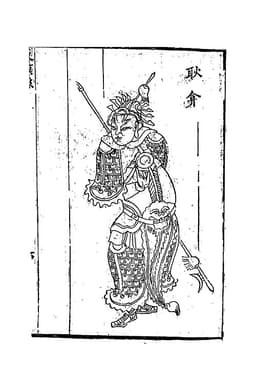
Geng Yan
General · Ancient
46.2Total
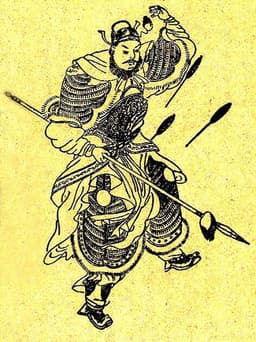
Zhang He
General · Ancient
49.4Total
Basic Information
Born
-5
167
Died
58
231
Era
Ancient
Ancient
Nationality
China
China
Occupation
General
General
Civilization
Eastern
Eastern
Score Comparison
Military (10%)
80.0
67.3
Political (20%)
30.7
27.9
Influence (20%)
48.6
50.2
Legacy (20%)
41.7
45.8
Leadership (15%)
36.9
57.6
Strategy (15%)
55.0
58.0
TOTAL
46.2
49.4
Geng Yan — Complete Timeline
26 AD
Appointed General of the VanguardPolitical Action
Geng Yan was appointed General of the Vanguard, a key military post under Emperor Guangwu. He led elite forces in numerous campaigns, earning a reputation as one of the most effective commanders of the Eastern Han restoration.
AppointmentMilitary CommandEastern Han
Impact: nationalconstructive
29 AD
Conquest of QiWar◆ Major
Geng Yan led the Eastern Han campaign to conquer the kingdom of Qi (modern Shandong). He defeated the local ruler Zhang Bu, bringing the wealthy and strategic Qi region under Eastern Han control. This conquest was crucial for the dynasty's consolidation.
ConquestQiEastern Han
Impact: regional
Battle of LinziWar◆ Major
Geng Yan captured the city of Linzi, the capital of Qi, after a decisive battle. He used strategic maneuvers to outflank Zhang Bu's forces. The victory broke Qi's resistance and led to the submission of the entire region.
BattleSiegeQi
Impact: regional
Zhang He — Complete Timeline
200 AD
Battle of GuanduWar◆ Major
Zhang He served under Yuan Shao at Guandu. After Yuan Shao's defeat, he defected to Cao Cao, bringing valuable intelligence.
Three KingdomsBattleDefection
Impact: national
211 AD
Campaign against Ma ChaoWar◆ Major
Zhang He fought in the campaign against Ma Chao in the northwest. He helped secure Wei control over the region.
Three KingdomsCampaignMa Chao
Impact: regionalconstructive
228 AD
Battle of JietingWar
Zhang He led the Wei army against Shu at Jieting. He defeated Ma Su's forces, forcing Zhuge Liang's First Northern Campaign to retreat.
Three KingdomsBattleMa Su
Impact: nationalconstructive
231 AD
Battle of MumenWar◆ Major
Zhang He pursued Zhuge Liang's retreating army at Mumen. He was ambushed by Shu crossbowmen and killed, a major loss for Wei.
Three KingdomsDeathAmbush
Impact: nationaltragic
Expert Analysis
Origins
Geng Yan was born in 3 AD in a military family in modern Shaanxi. His father Geng Kuang served as a general under the Xin dynasty, but the family later aligned with Liu Xiu, the future Emperor Guangwu. Geng Yan grew up amidst the chaos of the Xin dynasty's collapse and the subsequent civil wars. He was trained in military tactics from a young age and joined Liu Xiu's forces in 23 AD at age 20, quickly proving his competence.
Zhang He was born around 155 AD in Hejian Commandery (modern Hebei). Little is known of his early life, but he rose through the ranks under the Han dynasty's declining central authority. He initially served as a minor officer under Han Fu, the governor of Ji Province, and later under Yuan Shao. Zhang He was known for his tactical acumen and adaptability, traits that would define his career across multiple warlords.
Rise to Power
Geng Yan's rise began in 24 AD when he was appointed as a Major under Liu Xiu. His first major achievement came in 27 AD during the campaign against the Chimei rebels, where he led a successful raid. However, his defining moment was the conquest of Qi (modern Shandong) from 29 to 30 AD. Tasked with subduing the kingdom of Qi ruled by Zhang Bu, Geng Yan used a combination of swift marches and psychological warfare. At the Battle of Linzi in 29 AD, he captured the capital by feigning retreat and then launching a surprise counterattack, defeating Zhang Bu's main army. He then pursued Zhang Bu across the peninsula, finally forcing his surrender in 30 AD. This victory secured the eastern flank for Emperor Guangwu and earned Geng Yan the title General of the Vanguard.
Zhang He's rise was more gradual and marked by strategic defections. He first gained prominence under Yuan Shao during the Battle of Guandu in 200 AD. Initially, Zhang He advocated for a direct assault on Cao Cao's camp, but Yuan Shao rejected the plan. After Yuan Shao's defeat, Zhang He defected to Cao Cao, bringing valuable intelligence about Yuan's forces. Cao Cao appointed him as a Major General, and Zhang He participated in campaigns against Yuan Tan and the Wuhuan tribes. His breakthrough came in 228 AD at the Battle of Jieting, where he defeated the Shu general Ma Su, forcing Zhuge Liang's First Northern Campaign to retreat. This victory made him a key commander in Wei's western defenses.
Leadership & Governance
Geng Yan's leadership style was aggressive and decisive. He favored speed and surprise, often leading from the front. At the Battle of Linzi, he personally led the flanking maneuver that broke Zhang Bu's lines. His governance approach in conquered territories emphasized integration; after subduing Qi, he implemented policies to stabilize the region, such as reducing taxes and appointing local officials. However, his political score of 30.7 reflects limited involvement in court politics. He remained primarily a military commander, not a statesman.
Zhang He was a more cautious and methodical leader, scoring 57.6 in leadership. He emphasized discipline and logistics, often positioning his troops defensively. At Jieting, he recognized the vulnerability of Ma Su's hilltop encampment and exploited it by cutting off water supplies. Politically, Zhang He navigated the treacherous Wei court under Cao Pi and Cao Rui, but his score of 27.9 indicates similar detachment from governance. He focused on military duties, rarely engaging in factional struggles.
Triumph & Tragedy
Geng Yan's greatest triumph was the conquest of Qi, which added a wealthy province to the Eastern Han and demonstrated his strategic skill. His military score of 80.0 reflects this success. However, his greatest failure came later in his career. In 48 AD, during a campaign against the Xiongnu, he was ordered to halt by the court but disobeyed, leading to a costly defeat. This insubordination tarnished his reputation and led to his removal from command. He died in 58 AD, largely forgotten by the central government.
Zhang He's triumph was the victory at Jieting, which thwarted Zhuge Liang's ambitions and solidified Wei's western frontier. His military score of 67.3 acknowledges his competence but not brilliance. His tragedy was his death at the Battle of Mumen in 231 AD. Pursuing Zhuge Liang's retreating army, he fell into an ambush by Shu crossbowmen and was killed. This loss was a blow to Wei's military leadership, as he was one of their most experienced generals.
Character & Destiny
Geng Yan was bold and impulsive, traits that served him in conquest but led to his downfall. His decision to attack the Xiongnu against orders reflected a belief in his own judgment over the emperor's. Historical assessments note his bravery but criticize his lack of political acumen. His character shaped his fate: a brilliant commander who could not adapt to peacetime constraints.
Zhang He was cautious and calculating, which kept him alive through decades of war. He knew when to retreat and when to strike. However, his caution may have contributed to his death—he was reportedly hesitant to pursue Zhuge Liang but was pressured by his superior Sima Yi. His character made him a reliable but not innovative general.
Legacy
Geng Yan's legacy is tied to the consolidation of the Eastern Han. His conquest of Qi provided resources and stability for the new dynasty. However, his later disobedience limited his historical standing. He is remembered in Chinese history as a capable but flawed general. His influence score of 48.6 reflects moderate impact.
Zhang He's legacy is more enduring in popular culture, largely due to the Romance of the Three Kingdoms, where he is a recurring antagonist. His defeat at Jieting is often highlighted. In historical terms, he contributed to Wei's defense against Shu, but his death at Mumen is seen as a tactical error. His influence score of 50.2 edges out Geng Yan.
Conclusion
While Zhang He has a higher total score (49.4 vs 46.2) and greater cultural visibility, Geng Yan's military achievements were more significant. Geng Yan's conquest of Qi was a decisive campaign that expanded the Eastern Han's territory and secured its eastern borders. Zhang He's victories, though important, were defensive and did not alter the strategic balance as dramatically. Geng Yan's military score of 80.0 far exceeds Zhang He's 67.3, and his conquest had lasting territorial impact. Therefore, Geng Yan had a greater impact on Chinese history, despite his later failures. Zhang He was a competent general, but Geng Yan's achievements were more consequential.
Rankings
🥇
Zhang HeLeader
Mil: 67.3Pol: 27.9Inf: 50.2
49.4
🥈
Geng Yan
Mil: 80.0Pol: 30.7Inf: 48.6
46.2
+3.2 behind
How This Comparison Works
Algorithm
Each figure is scored on 6 dimensions (0—100 scale) based on structured historical data: Military (10%), Political (20%), Influence (20%), Legacy (20%), Leadership (15%), Strategy (15%). The weighted total produces the final ranking.
Data Sources
Scores are computed from structured sub-indicators in the database. Scale factors adjust for era (Ancient ×0.85, Modern ×1.0) and civilization size (Eastern ×1.05, Other ×0.80) to account for differences in population and military scale.
Maximum 3 Figures
Comparisons are limited to 2—3 figures to ensure readability and statistical meaningfulness.
Error Margins
±5 points per dimension — Sub-scores are derived from historical records with inherent uncertainty. Two figures within 5 points on a dimension should be considered roughly equivalent in that area.
Total Score Accuracy
±3 points overall — The weighted combination of 6 dimensions produces a total score with approximately ±3 points of uncertainty. Differences of less than 3 points are not statistically significant— the figures are effectively tied.
Known Limitations
- Historical records are incomplete and uneven across civilizations
- Figures from oral-tradition societies may be underrepresented
- Occupation labels can misclassify multi-role figures
- Scores measure capability and impact, not moral character
- Quantitative scoring is a comparison tool, not absolute truth
Capability Radar
Military (10%) — Battles & Warfare
Battles
65
65
Win Rate
70
60
Expansion
55
40
Political (20%) — Governance & Reform
Reform
20
20
Diplomacy
35
40
Economy
25
30
Influence (20%) — Cultural & Global Reach
Cultural
30
30
Global
20
20
Legacy (20%) — Historical Impact
Historical
35
45
Longevity
25
40
Leadership (15%) — Power & Stability
Tenure
40
55
Stability
30
45
Strategy (15%) — Tactics & Innovation
Strategy
65
65
Tactics
60
70
Reform
30
30
Similar Comparisons
Comments & Discussion
No comments yet. Be the first to share your thoughts!