Loading...
Gaston de Foix vs Skanderbeg
Skanderbeg leads by 10.0 pts · 2 figures compared
…

Gaston de Foix
General · Medieval
52.7Total
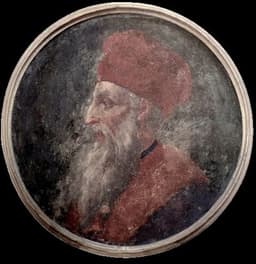
Skanderbeg
General · Medieval
62.7Total
Basic Information
Born
1489
1405
Died
1512
1468
Era
Medieval
Medieval
Nationality
France
Albania
Occupation
General
General
Civilization
Western
Western
Score Comparison
Military (10%)
82.0
80.0
Political (20%)
32.2
61.3
Influence (20%)
62.0
56.7
Legacy (20%)
50.0
52.0
Leadership (15%)
33.5
72.0
Strategy (15%)
66.3
75.0
TOTAL
52.7
62.7
Gaston de Foix — Complete Timeline
1511 AD
Appointed Commander of the French Army in ItalyPolitical Action◆ Major
Gaston de Foix was appointed commander of French forces in Italy at age 22 by King Louis XII. He was given the task of defending French gains in the War of the League of Cambrai. His appointment reflected his noble lineage and military reputation.
AppointmentItalian WarsCommand
Impact: regional
1512 AD
Battle of RavennaWar
Gaston de Foix led the French army to a decisive victory over the Holy League at Ravenna. He used innovative artillery tactics to break the Spanish infantry. The battle was one of the bloodiest of the Italian Wars, with over 10,000 casualties.
BattleItalian WarsVictory
Impact: regional
Killed in Action at RavennaWar◆ Major
During the Battle of Ravenna, Gaston de Foix was killed while leading a cavalry charge against Spanish forces. His death at age 23 deprived France of its most talented young commander. The victory at Ravenna was thus rendered strategically hollow.
DeathBattleItalian Wars
Impact: regionaltragic
Skanderbeg — Complete Timeline
1444 AD
Battle of TorviollWar
Skanderbeg led a small Albanian force against a larger Ottoman army under Ali Pasha at Torvioll. The Albanian victory marked the beginning of Skanderbeg's rebellion against Ottoman rule and established his reputation as a military commander.
RebellionOttoman EmpireAlbania
Impact: regional
League of LezhëPolitical Action◆ Major
Skanderbeg convened a council of Albanian noblemen at Lezh
AllianceAlbanian UnityVenice
Impact: regionalconstructive
1450 AD
Siege of Krujë (First)War◆ Major
Sultan Murad II personally led a large Ottoman army to besiege the fortress of Kruj
SiegeKrujëMurad II
Impact: regional
1457 AD
Battle of AlbulenaWar◆ Major
Skanderbeg defeated a large Ottoman army commanded by Isak Bey and Hamza Kastrioti at Albulena. The victory crushed an Ottoman attempt to invade Albania and resulted in the capture of Hamza, Skanderbeg's nephew who had defected to the Ottomans.
BattleHamza KastriotiOttoman Defeat
Impact: regional
1466 AD
Siege of Krujë (Second)War
Sultan Mehmed II led a massive Ottoman army to besiege Kruj
SiegeMehmed IIPapal States
Impact: regional
1468 AD
Death at LezhëOther◆ Major
Skanderbeg died of natural causes in Lezh
DeathOttoman ConquestNational Hero
Impact: regionaltragic
Expert Analysis
Origins
Gaston de Foix was born in 1489 into the powerful House of Foix in southern France. His father was John, Count of Étampes, and his mother was Marie of Orléans, making him a nephew of King Louis XII. Raised in the French court, he received a military education befitting his noble status. At age 22, he was appointed commander of French forces in Italy, a position that reflected his family's influence and his own precocious talent.
Skanderbeg, born Gjergj Kastrioti in 1405, came from a noble Albanian family in the region of Dibra. His father, Gjon Kastrioti, was a prince who held lands between Lezhë and Prizren. As a child, Skanderbeg was taken hostage by the Ottoman Sultan Murad II and educated at the Ottoman court in Edirne. There he converted to Islam, received military training, and was given the name Iskander (after Alexander the Great). He rose to become an Ottoman general, but in 1443 he abandoned the Ottoman army and returned to Albania, reconverting to Christianity and leading a rebellion.
Rise to Power
Gaston de Foix's rise was swift. In 1511, King Louis XII appointed him lieutenant-general of the French army in Italy, tasked with defending French holdings in the War of the League of Cambrai. At just 22, he commanded experienced troops against the Holy League. His first major action was the relief of Bologna in January 1512, where he forced the Spanish-Papal army to withdraw. He then captured Brescia in February 1512, sacking the city after a brutal assault. His rapid victories earned him the nickname "Thunderbolt of Italy" (Folgor d'Italia).
Skanderbeg's rise began with his defection from the Ottomans in 1443. After capturing the fortress of Krujë using a forged letter from the Sultan, he raised the Albanian banner and called for a united front. In 1444, he convened the League of Lezhë, uniting Albanian noble families against the Ottomans. His first major victory came at the Battle of Torvioll in 1444, where he defeated a larger Ottoman army under Ali Pasha. This victory solidified his leadership and rallied Albanian resistance.
Leadership & Governance
Gaston de Foix led by example, often charging into battle personally. His leadership style was aggressive and direct, favoring decisive engagements. At Ravenna, he positioned his artillery effectively and coordinated infantry and cavalry attacks. However, his political acumen was limited—scoring 32.2 in political skills—and he focused narrowly on military objectives without securing long-term support from local Italian allies. He governed French-occupied territories with little attention to diplomacy, relying on force to maintain order.
Skanderbeg, with a political score of 61.3, was a skilled diplomat and unifier. He maintained the League of Lezhë through personal authority and negotiation, balancing the interests of Albanian nobles. He established a centralized command structure and used guerrilla tactics to counter Ottoman numerical superiority. His governance of Krujë included fortifying defenses and stockpiling supplies for sieges. He also sought support from European powers, including the Papacy and the Kingdom of Naples, which provided limited but crucial aid.
Triumph & Tragedy
Gaston de Foix's greatest triumph was the Battle of Ravenna in April 1512. He commanded a French army of about 23,000 against a Spanish-Papal force of 16,000. Using superior artillery, he broke the enemy lines and captured the Spanish commander, Ramón de Cardona. The victory was complete, securing French control of northern Italy. However, his greatest tragedy occurred during the same battle: while pursuing fleeing troops, he was surrounded and killed by Spanish soldiers. His death at age 23 deprived France of its most promising commander, and the French position in Italy soon collapsed. His military score of 82.0 reflects his tactical brilliance but his leadership score of 33.5 highlights his reckless courage.
Skanderbeg's triumphs include the First Siege of Krujë in 1450, where he held out against Sultan Murad II's army of 100,000 for five months until the Ottomans withdrew. His victory at the Battle of Albulena in 1457 crushed an Ottoman invasion force, capturing the enemy commanders. His leadership score of 72.0 reflects his ability to inspire and organize resistance. However, his tragedy was that despite 25 years of victories, he could not permanently expel the Ottomans. After his death in 1468 from natural causes (likely malaria), Albanian resistance collapsed, and within a decade the country was fully conquered. His legacy score of 52.0 is tempered by this ultimate failure.
Character & Destiny
Gaston de Foix was bold to the point of recklessness. His decision to lead a cavalry charge at Ravenna, despite warnings, cost him his life. Contemporary chroniclers noted his impatience and desire for glory. His character—aggressive, confident, and short-sighted—shaped his destiny: a brief, brilliant career ending in premature death. Historians assess him as a tactical genius but a poor strategist, unable to see beyond the next battle.
Skanderbeg was cautious and calculating, a master of guerrilla warfare. He avoided pitched battles unless he had a clear advantage, using terrain and fortifications to wear down Ottoman forces. His decision to unite Albanian nobles under the League of Lezhë showed political foresight. However, his refusal to accept Ottoman suzerainty and his reliance on external aid sometimes left him isolated. His character—determined, diplomatic, and resilient—allowed him to resist for decades but also doomed his cause after his death, as no successor could maintain the coalition.
Legacy
Gaston de Foix's legacy is tied to the Battle of Ravenna, a textbook example of early modern artillery tactics. His innovative use of field guns influenced military thinking for decades. However, his death meant his methods were not fully developed, and he left no institutional legacy. He is remembered primarily as a brilliant but tragic figure, a "what if" of history. His influence score of 62.0 is moderate, limited by his short career.
Skanderbeg's legacy is immense in Albania and the Balkans. He is revered as the national hero who defended Christian Europe from the Ottomans. His resistance delayed Ottoman expansion into Italy and gave hope to other Balkan peoples. The League of Lezhë is seen as a precursor to Albanian national unity. His military strategies, especially his use of fortifications and mobile warfare, were studied by later commanders. His influence score of 56.7 and legacy score of 52.0 reflect his enduring symbolic importance, though his practical impact was limited by the eventual Ottoman conquest.
Conclusion
Skanderbeg had greater overall impact. His total score of 62.7 versus Gaston de Foix's 52.7 reflects a longer, more sustained career with broader political and strategic dimensions. While de Foix scored higher in military tactics (82.0 vs 80.0), Skanderbeg excelled in leadership (72.0 vs 33.5) and strategy (75.0 vs 66.3), which are critical for lasting influence. De Foix's achievements were spectacular but fleeting—his death at Ravenna ended French dominance in Italy within months. Skanderbeg's 25-year resistance, though ultimately unsuccessful, shaped Albanian identity and delayed Ottoman expansion at a critical time. In the long view of history, Skanderbeg's impact is more profound and enduring.
Rankings
🥇
SkanderbegLeader
Mil: 80.0Pol: 61.3Inf: 56.7
62.7
🥈
Gaston de Foix
Mil: 82.0Pol: 32.2Inf: 62.0
52.7
+10.0 behind
How This Comparison Works
Algorithm
Each figure is scored on 6 dimensions (0—100 scale) based on structured historical data: Military (10%), Political (20%), Influence (20%), Legacy (20%), Leadership (15%), Strategy (15%). The weighted total produces the final ranking.
Data Sources
Scores are computed from structured sub-indicators in the database. Scale factors adjust for era (Ancient ×0.85, Modern ×1.0) and civilization size (Eastern ×1.05, Other ×0.80) to account for differences in population and military scale.
Maximum 3 Figures
Comparisons are limited to 2—3 figures to ensure readability and statistical meaningfulness.
Error Margins
±5 points per dimension — Sub-scores are derived from historical records with inherent uncertainty. Two figures within 5 points on a dimension should be considered roughly equivalent in that area.
Total Score Accuracy
±3 points overall — The weighted combination of 6 dimensions produces a total score with approximately ±3 points of uncertainty. Differences of less than 3 points are not statistically significant— the figures are effectively tied.
Known Limitations
- Historical records are incomplete and uneven across civilizations
- Figures from oral-tradition societies may be underrepresented
- Occupation labels can misclassify multi-role figures
- Scores measure capability and impact, not moral character
- Quantitative scoring is a comparison tool, not absolute truth
Capability Radar
Military (10%) — Battles & Warfare
Battles
75
75
Win Rate
80
85
Expansion
60
40
Political (20%) — Governance & Reform
Reform
10
50
Diplomacy
30
70
Economy
10
40
Influence (20%) — Cultural & Global Reach
Cultural
40
70
Global
30
55
Legacy (20%) — Historical Impact
Historical
55
75
Longevity
30
70
Leadership (15%) — Power & Stability
Tenure
15
65
Stability
10
55
Strategy (15%) — Tactics & Innovation
Strategy
70
75
Tactics
85
80
Reform
20
60
Similar Comparisons
Comments & Discussion
No comments yet. Be the first to share your thoughts!