Loading...
Gaius Flaminius vs Zhou Yafu
Zhou Yafu leads by 0.1 pts · 2 figures compared
…
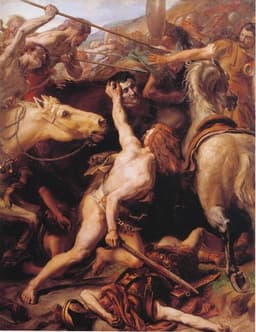
Gaius Flaminius
General · Ancient
52.9Total

Zhou Yafu
General · Ancient
53.0Total
Basic Information
Born
-265
-199
Died
-217
-143
Era
Ancient
Ancient
Nationality
Roman Republic
China
Occupation
General
General
Civilization
Western
Eastern
Score Comparison
Military (10%)
70.0
67.3
Political (20%)
45.1
35.0
Influence (20%)
55.7
53.3
Legacy (20%)
49.2
46.7
Leadership (15%)
47.3
68.0
Strategy (15%)
58.0
58.0
TOTAL
52.9
53.0
Gaius Flaminius — Complete Timeline
232 BC
Elected Consul and Passed the Lex Flaminia AgrariaReform◆ Major
As tribune of the plebs, Flaminius passed a land reform law (Lex Flaminia Agraria) that distributed public land (ager publicus) to poor Roman citizens, despite strong opposition from the Senate. The law aimed to boost the population of small farmers and military recruits.
Roman RepublicLand ReformPopulism
Impact: nationalconstructive
220 BC
Built the Via FlaminiaOther◆ Major
As censor, Flaminius oversaw the construction of the Via Flaminia, a major Roman road connecting Rome to Ariminum (Rimini) in northern Italy. The road facilitated military movement and trade, becoming a key artery of the Roman road network.
InfrastructureRoman RoadsVia Flaminia
Impact: regionalconstructive
217 BC
Defeated and Killed at the Battle of Lake TrasimeneWar
Flaminius, as consul, led a Roman army into an ambush by Hannibal at Lake Trasimene. The Carthaginian forces trapped and annihilated the Roman army in a narrow defile. Flaminius was killed in the battle, and the defeat was one of Rome's worst disasters.
Second Punic WarHannibalAmbush
Impact: regionaltragic
Zhou Yafu — Complete Timeline
154 BC
Suppressed the Rebellion of the Seven StatesWar◆ Major
As Grand Commandant, Zhou Yafu led Han forces to crush the Rebellion of the Seven States, a revolt by regional kings against Emperor Jing. His strategy of cutting supply lines forced the rebels to surrender, strengthening central authority.
RebellionHan DynastyCentralization
Impact: national
143 BC
Starved to death in prisonOther◆ Major
After being falsely accused of plotting rebellion, Zhou Yafu was imprisoned. He went on a hunger strike and died in prison, a victim of court intrigue despite his earlier military successes.
ImprisonmentDeathInjustice
Impact: nationaltragic
Expert Analysis
Origins
Gaius Flaminius (c. 270–217 BCE) was born into a plebeian family in the Roman Republic. Little is known of his early life, but he rose through the tribunician ladder, advocating for popular reforms. His father may have been a farmer, giving him insight into the struggles of the poor. Flaminius was elected tribune of the plebs in 232 BCE, where he passed the Lex Flaminia Agraria, distributing public land (ager publicus) to landless citizens, defying the Senate.
Zhou Yafu (c. 199–143 BCE) was born into a military family during the early Han dynasty. His father, Zhou Bo, was a famed general who helped found the Han. Zhou Yafu inherited his father's title and military acumen. He served as a commander in the Han army, gaining experience in border defense against the Xiongnu. His early career was marked by strict discipline and strategic thinking.
Rise to Power
Flaminius's rise came through popular politics. As tribune in 232 BCE, he passed the agrarian law despite senatorial opposition, earning him the enmity of the aristocracy but support from the masses. He was elected consul for the first time in 223 BCE, leading campaigns against the Gallic Insubres in northern Italy, securing a triumph. He was elected censor in 220 BCE, where he built the Via Flaminia, a major road from Rome to Ariminum, enhancing Roman military mobility.
Zhou Yafu rose through military merit. He was appointed Grand Commandant (Taiwei) under Emperor Jing of Han. His defining moment came in 154 BCE during the Rebellion of the Seven States, when regional kings revolted against central authority. Emperor Jing entrusted Zhou with the imperial army. Zhou employed a strategy of patience: he avoided direct confrontation, blockaded rebel supply lines, and waited for them to weaken, ultimately crushing the rebellion without a decisive battle.
Leadership & Governance
Flaminius's leadership was populist and direct. He championed the poor against the Senate, but his governance was marked by impatience and disregard for traditional procedures. As consul in 217 BCE, he ignored religious omens and senatorial advice, leading his army into a trap at Lake Trasimene. His military leadership scored 70.0, but his political score of 45.1 reflects his inability to build consensus. He governed by force of personality rather than collaboration.
Zhou Yafu's leadership was disciplined and strategic. He scored 68.0 in leadership, emphasizing order and patience. During the rebellion, he refused to engage rebels on their terms, even when Emperor Jing urged action. He maintained strict control over his troops, forbidding plunder. However, his political score of 35.0 indicates his failure to navigate court intrigue. He was blunt and unyielding, making enemies among officials and even the emperor's brother.
Triumph & Tragedy
Flaminius's greatest triumph was the Lex Flaminia Agraria, which redistributed land to thousands of poor citizens, alleviating economic inequality. The Via Flaminia improved Roman infrastructure and military logistics. His tragedy was his death at Lake Trasimene in 217 BCE, where Hannibal ambushed and destroyed his army of about 30,000 men. Flaminius himself was killed, and his defeat left Rome vulnerable. His impatience and refusal to scout led to disaster.
Zhou Yafu's triumph was suppressing the Rebellion of the Seven States, preserving Han unity and central power. His strategy of attrition avoided a costly pitched battle. His tragedy was his fall from grace. After the rebellion, he was falsely accused of plotting rebellion by political rivals. Imprisoned, he went on a hunger strike and starved to death in 143 BCE. His death was a result of his inability to compromise and his perceived arrogance.
Character & Destiny
Flaminius was a populist firebrand, energetic but reckless. He believed in direct action and despised aristocratic obstruction. His character led him to ignore warnings—both from the Senate and from omens—which directly caused his doom. Historians like Polybius criticize his lack of discipline. His destiny was sealed by his own hubris.
Zhou Yafu was a stern, principled general. He valued discipline and strategy above all. His refusal to ingratiate himself with the court led to his downfall. Sima Qian, in the Records of the Grand Historian, portrays him as a tragic figure whose integrity made him vulnerable to slander. His destiny was shaped by his inability to play political games.
Legacy
Flaminius's legacy is mixed. The Via Flaminia remained a vital road for centuries. His agrarian reforms set a precedent for later land distributions, but his military defeat became a cautionary tale. He is remembered as a symbol of plebeian ambition and its dangers. His legacy score is 49.2.
Zhou Yafu's legacy is that of a loyal general who saved the Han dynasty. His suppression of the rebellion reinforced central authority. He is honored in Chinese history as a model of military virtue. His legacy score is 46.7, slightly lower than Flaminius's due to his less visible long-term impact.
Conclusion
While both generals scored nearly identically overall (52.9 vs 53.0), Zhou Yafu had a greater impact on his civilization. His victory preserved the Han dynasty, which shaped Chinese history for centuries. Flaminius's reforms were significant but his defeat at Trasimene was a temporary setback for Rome. Zhou's strategic patience (strategy score 58.0) surpassed Flaminius's tactical recklessness (strategy score 58.0, but with a fatal flaw). Zhou Yafu's total score of 53.0 edges out Flaminius's 52.9, and his actions had more enduring consequences for state stability. Therefore, Zhou Yafu is the more impactful figure.
Rankings
🥇
Zhou YafuLeader
Mil: 67.3Pol: 35.0Inf: 53.3
53.0
🥈
Gaius Flaminius
Mil: 70.0Pol: 45.1Inf: 55.7
52.9
+0.1 behind
How This Comparison Works
Algorithm
Each figure is scored on 6 dimensions (0—100 scale) based on structured historical data: Military (10%), Political (20%), Influence (20%), Legacy (20%), Leadership (15%), Strategy (15%). The weighted total produces the final ranking.
Data Sources
Scores are computed from structured sub-indicators in the database. Scale factors adjust for era (Ancient ×0.85, Modern ×1.0) and civilization size (Eastern ×1.05, Other ×0.80) to account for differences in population and military scale.
Maximum 3 Figures
Comparisons are limited to 2—3 figures to ensure readability and statistical meaningfulness.
Error Margins
±5 points per dimension — Sub-scores are derived from historical records with inherent uncertainty. Two figures within 5 points on a dimension should be considered roughly equivalent in that area.
Total Score Accuracy
±3 points overall — The weighted combination of 6 dimensions produces a total score with approximately ±3 points of uncertainty. Differences of less than 3 points are not statistically significant— the figures are effectively tied.
Known Limitations
- Historical records are incomplete and uneven across civilizations
- Figures from oral-tradition societies may be underrepresented
- Occupation labels can misclassify multi-role figures
- Scores measure capability and impact, not moral character
- Quantitative scoring is a comparison tool, not absolute truth
Capability Radar
Military (10%) — Battles & Warfare
Battles
45
65
Win Rate
40
70
Expansion
50
30
Political (20%) — Governance & Reform
Reform
70
10
Diplomacy
40
30
Economy
60
10
Influence (20%) — Cultural & Global Reach
Cultural
45
40
Global
40
30
Legacy (20%) — Historical Impact
Historical
55
50
Longevity
50
40
Leadership (15%) — Power & Stability
Tenure
55
55
Stability
30
60
Strategy (15%) — Tactics & Innovation
Strategy
50
70
Tactics
55
75
Reform
60
20
Similar Comparisons
Comments & Discussion
No comments yet. Be the first to share your thoughts!