Loading...
Zhou Yafu vs Zhou Yu
Zhou Yu leads by 3.2 pts · 2 figures compared
…

Zhou Yafu
General · Ancient
53.0Total
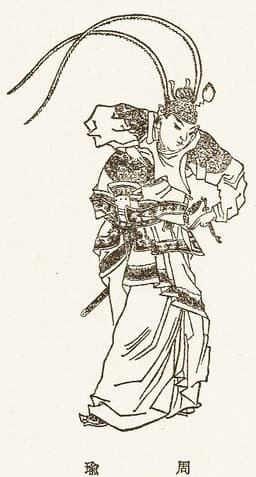
Zhou Yu
General · Ancient
56.2Total
Basic Information
Born
-199
175
Died
-143
210
Era
Ancient
Ancient
Nationality
China
China
Occupation
General
General
Civilization
Eastern
Eastern
Score Comparison
Military (10%)
67.3
76.0
Political (20%)
35.0
35.1
Influence (20%)
53.3
61.0
Legacy (20%)
46.7
52.0
Leadership (15%)
68.0
54.2
Strategy (15%)
58.0
70.0
TOTAL
53.0
56.2
Zhou Yafu — Complete Timeline
154 BC
Suppressed the Rebellion of the Seven StatesWar◆ Major
As Grand Commandant, Zhou Yafu led Han forces to crush the Rebellion of the Seven States, a revolt by regional kings against Emperor Jing. His strategy of cutting supply lines forced the rebels to surrender, strengthening central authority.
RebellionHan DynastyCentralization
Impact: national
143 BC
Starved to death in prisonOther◆ Major
After being falsely accused of plotting rebellion, Zhou Yafu was imprisoned. He went on a hunger strike and died in prison, a victim of court intrigue despite his earlier military successes.
ImprisonmentDeathInjustice
Impact: nationaltragic
Zhou Yu — Complete Timeline
208 AD
Battle of Red CliffsWar
Zhou Yu, as commander of Sun Quan's forces, allied with Liu Bei to confront Cao Cao's northern fleet on the Yangtze River. Using fire ships, Zhou Yu's smaller navy destroyed Cao Cao's larger fleet, preventing a southern conquest and securing the Three Kingdoms division.
Three KingdomsNaval battleAlliance
Impact: regional
209 AD
Siege of JianglingWar◆ Major
After Red Cliffs, Zhou Yu led Sun Quan's forces in a year-long siege against Cao Cao's garrison at Jiangling. Zhou Yu was wounded by an arrow during the campaign. The eventual capture of Jiangling expanded Sun Quan's territory into Jing Province.
Three KingdomsSiegeTerritorial expansion
Impact: regional
210 AD
Death of Zhou YuOther◆ Major
Zhou Yu died at age 36 in Yueyang while preparing a campaign against Liu Bei's ally Liu Zhang. His death removed a key strategist from Sun Quan's court and allowed Liu Bei to consolidate control over Jing Province.
Three KingdomsDeathPower shift
Impact: regionaltragic
Expert Analysis
Origins
**Zhou Yafu** (born c. 199 BC) was the son of Zhou Bo, a famed general who helped Liu Bang found the Han dynasty. Growing up in a military household, Zhou Yafu inherited his father's martial tradition. He rose through the ranks during the early Western Han, serving under Emperor Wen, who recognized his strict discipline. His formative experience came when Emperor Wen visited his camp and found Zhou Yafu's troops fully armed and vigilant, unlike other commanders. This impressed the emperor, who said, "Truly, this is a general who knows how to command."
**Zhou Yu** (born 175 AD) hailed from a prominent family in Lujiang Commandery. His father Zhou Yi was a governor, and his grandfather Zhou Jing served as a high official. Zhou Yu was known for his handsome appearance and exceptional musical talent. He befriended Sun Ce at a young age, and they became sworn brothers. In 191, Zhou Yu helped Sun Ce conquer the Jiangdong region, establishing the foundation for the future Kingdom of Wu. His early military experience came from leading troops against local warlords.
Rise to Power
Zhou Yafu's rise accelerated under Emperor Jing. In 154 BC, seven regional kings rebelled against the central government, launching the Rebellion of the Seven States. Emperor Jing appointed Zhou Yafu as Grand Commandant, tasking him with suppressing the revolt. Zhou Yafu's strategy was to avoid direct confrontation with the main rebel forces and instead cut their supply lines. He focused on besieging the rebel stronghold of Changyi, forcing the rebels to retreat. Within three months, the rebellion was crushed. This victory made Zhou Yafu the most powerful general in Han China.
Zhou Yu's rise came during the collapse of the Eastern Han. In 200, Sun Ce died, and Zhou Yu became the chief military advisor to Sun Quan. He consolidated control over Jiangdong and expanded territory. His defining moment arrived in 208 when Cao Cao, having unified northern China, marched south with a massive army. Zhou Yu, commanding Sun Quan's forces, formed an alliance with Liu Bei. At the Battle of Red Cliffs, Zhou Yu used fire ships to destroy Cao Cao's fleet, forcing the northern army to retreat. This victory secured the balance of power that led to the Three Kingdoms.
Leadership & Governance
Zhou Yafu was a strict disciplinarian. He enforced rigid military protocols and punished even minor infractions. His leadership style was effective in battle but alienated him from court officials. He opposed Emperor Jing's decision to reinstate the kings' sons and criticized the emperor's choice of heir. Politically, he scored 35.0, reflecting his inability to navigate court intrigue. His governance approach was authoritarian, focusing on central authority.
Zhou Yu was more diplomatic. He fostered alliances and maintained loyalty among his officers. After Red Cliffs, he governed the captured territory of Jiangling, implementing policies to stabilize the region. His political score (35.1) was similarly low, as he also faced court rivalries, particularly with Lu Su and Zhuge Liang. However, Zhou Yu was known for his musicality and cultural refinement, which helped him build rapport with scholars and officials.
Triumph & Tragedy
Zhou Yafu's greatest triumph was the suppression of the Seven States rebellion. His strategy of cutting supply lines and avoiding pitched battles was masterful. However, his greatest failure was his inflexibility at court. After the rebellion, he became increasingly arrogant. He opposed Emperor Jing's policies, leading to his false accusation of treason. He was imprisoned and starved himself to death in 143 BC. His military score of 67.3 reflects his tactical skill, but his total score of 53.0 was dragged down by his political naivety.
Zhou Yu's triumph was the Red Cliffs victory, where he scored 76.0 in military. He also successfully besieged Jiangling in 209, though he was wounded by an arrow. His tragedy was his early death at age 36 in 210, while preparing a campaign against Liu Zhang. Some accounts suggest his death was hastened by his jealousy of Zhuge Liang, but historical evidence is scant. His legacy score of 52.0 and total of 56.2 reflect his shorter career but greater strategic impact.
Character & Destiny
Zhou Yafu was proud and uncompromising. His character led him to disregard political realities. He believed that his military success entitled him to speak bluntly to the emperor. This hubris sealed his fate. Historical assessments note that he was a brilliant field commander but a poor courtier. His destiny was shaped by his inability to adapt to peacetime politics.
Zhou Yu was ambitious but more pragmatic. He was known for his calm demeanor and strategic foresight. However, his rivalry with Zhuge Liang and Liu Bei exposed his pride. According to the 'Romance of the Three Kingdoms,' he was easily provoked, though historical records suggest he was more level-headed. His early death left his ambitions unfulfilled.
Legacy
Zhou Yafu is remembered as a model of military discipline in Chinese history. His tactics influenced later generals. However, his story serves as a cautionary tale about the dangers of political inflexibility. He scored 46.7 in legacy.
Zhou Yu's legacy is far more enduring. He is celebrated as a brilliant strategist, especially in naval warfare. The Red Cliffs battle is immortalized in literature and opera. His influence score of 61.0 reflects his cultural impact. He is often depicted as the archetypal handsome and talented general.
Conclusion
Zhou Yu had greater overall impact. Despite a shorter career, his Red Cliffs victory permanently altered China's political landscape, enabling the Three Kingdoms era. Zhou Yafu's victory, while significant, only maintained an existing dynasty. Zhou Yu's total score of 56.2 edges out Zhou Yafu's 53.0. His military score of 76.0 versus 67.3 and strategy score of 70.0 versus 58.0 demonstrate superior tactical innovation. While both were skilled commanders, Zhou Yu's legacy endures in popular culture and strategic studies, making him the more influential figure.
Rankings
🥇
Zhou YuLeader
Mil: 76.0Pol: 35.1Inf: 61.0
56.2
🥈
Zhou Yafu
Mil: 67.3Pol: 35.0Inf: 53.3
53.0
+3.2 behind
How This Comparison Works
Algorithm
Each figure is scored on 6 dimensions (0—100 scale) based on structured historical data: Military (10%), Political (20%), Influence (20%), Legacy (20%), Leadership (15%), Strategy (15%). The weighted total produces the final ranking.
Data Sources
Scores are computed from structured sub-indicators in the database. Scale factors adjust for era (Ancient ×0.85, Modern ×1.0) and civilization size (Eastern ×1.05, Other ×0.80) to account for differences in population and military scale.
Maximum 3 Figures
Comparisons are limited to 2—3 figures to ensure readability and statistical meaningfulness.
Error Margins
±5 points per dimension — Sub-scores are derived from historical records with inherent uncertainty. Two figures within 5 points on a dimension should be considered roughly equivalent in that area.
Total Score Accuracy
±3 points overall — The weighted combination of 6 dimensions produces a total score with approximately ±3 points of uncertainty. Differences of less than 3 points are not statistically significant— the figures are effectively tied.
Known Limitations
- Historical records are incomplete and uneven across civilizations
- Figures from oral-tradition societies may be underrepresented
- Occupation labels can misclassify multi-role figures
- Scores measure capability and impact, not moral character
- Quantitative scoring is a comparison tool, not absolute truth
Capability Radar
Military (10%) — Battles & Warfare
Battles
65
75
Win Rate
70
70
Expansion
30
55
Political (20%) — Governance & Reform
Reform
10
30
Diplomacy
30
65
Economy
10
40
Influence (20%) — Cultural & Global Reach
Cultural
40
70
Global
30
55
Legacy (20%) — Historical Impact
Historical
50
75
Longevity
40
70
Leadership (15%) — Power & Stability
Tenure
55
45
Stability
60
50
Strategy (15%) — Tactics & Innovation
Strategy
70
80
Tactics
75
85
Reform
20
40
Similar Comparisons
Comments & Discussion
No comments yet. Be the first to share your thoughts!