Loading...
Gaius Flaminius vs Lysander
Lysander leads by 10.5 pts · 2 figures compared
…
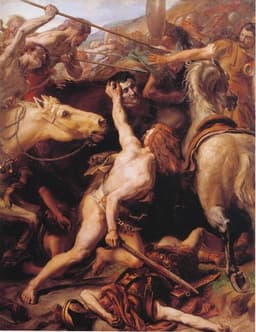
Gaius Flaminius
General · Ancient
52.9Total

Lysander
General · Ancient
63.4Total
Basic Information
Born
-265
-454
Died
-217
-395
Era
Ancient
Ancient
Nationality
Roman Republic
Greece
Occupation
General
General
Civilization
Western
Western
Score Comparison
Military (10%)
70.0
75.0
Political (20%)
45.1
68.0
Influence (20%)
55.7
62.0
Legacy (20%)
49.2
52.0
Leadership (15%)
47.3
61.1
Strategy (15%)
58.0
80.6
TOTAL
52.9
63.4
Gaius Flaminius — Complete Timeline
232 BC
Elected Consul and Passed the Lex Flaminia AgrariaReform◆ Major
As tribune of the plebs, Flaminius passed a land reform law (Lex Flaminia Agraria) that distributed public land (ager publicus) to poor Roman citizens, despite strong opposition from the Senate. The law aimed to boost the population of small farmers and military recruits.
Roman RepublicLand ReformPopulism
Impact: nationalconstructive
220 BC
Built the Via FlaminiaOther◆ Major
As censor, Flaminius oversaw the construction of the Via Flaminia, a major Roman road connecting Rome to Ariminum (Rimini) in northern Italy. The road facilitated military movement and trade, becoming a key artery of the Roman road network.
InfrastructureRoman RoadsVia Flaminia
Impact: regionalconstructive
217 BC
Defeated and Killed at the Battle of Lake TrasimeneWar
Flaminius, as consul, led a Roman army into an ambush by Hannibal at Lake Trasimene. The Carthaginian forces trapped and annihilated the Roman army in a narrow defile. Flaminius was killed in the battle, and the defeat was one of Rome's worst disasters.
Second Punic WarHannibalAmbush
Impact: regionaltragic
Lysander — Complete Timeline
405 BC
Battle of AegospotamiWar
Lysander, commanding the Spartan fleet, decisively defeated the Athenian navy at Aegospotami in the Hellespont. He captured nearly the entire Athenian fleet and executed thousands of Athenian prisoners, effectively ending Athenian naval power and the Peloponnesian War.
Peloponnesian WarNaval BattleSparta
Impact: regionaldestructive
404 BC
Siege of Athens and End of the Peloponnesian WarWar
After Aegospotami, Lysander blockaded Athens by sea and forced its surrender. He imposed harsh terms: the destruction of the Long Walls, the surrender of the fleet, and the installation of the pro-Spartan oligarchy of the Thirty Tyrants, ending the Peloponnesian War.
Peloponnesian WarSiegeAthens Surrender
Impact: regionaldestructive
Installation of the Thirty TyrantsPolitical Action◆ Major
Lysander oversaw the establishment of the Thirty Tyrants, a pro-Spartan oligarchic regime in Athens. This government executed political opponents and confiscated property, leading to widespread terror until its overthrow in 403 BC.
OligarchySpartan HegemonyAthens
Impact: nationaldestructive
Lysander's DecarchiesPolitical Action◆ Major
Lysander established pro-Spartan oligarchic governments (decarchies) in many former Athenian subject cities across the Aegean and Asia Minor. These regimes were loyal to Sparta and Lysander personally, extending Spartan influence but also creating resentment.
Spartan EmpireOligarchyAegean
Impact: regional
Expert Analysis
Origins
Gaius Flaminius (c. 270–217 BCE) was born into a plebeian family in the Roman Republic. Little is known of his early life, but he rose through the political ranks as a novus homo (new man). His background was shaped by the class struggles between patricians and plebeians, which influenced his later land reforms. Flaminius likely served in the First Punic War, gaining military experience.
Lysander (c. 454–395 BCE) was born in Sparta, possibly of low birth, as his mother was a helot according to some accounts. He was a mothax—a non-citizen raised in the Spartan agoge system—which gave him ambition to prove himself. He rose through the Spartan navy, a rare path for a Spartan, as land warfare was traditionally preferred. His early career included service in the Peloponnesian War, where he gained recognition for his tactical skills.
Rise to Power
Flaminius first gained prominence as tribune of the plebs in 232 BCE, when he passed the Lex Flaminia Agraria. This law distributed ager publicus (public land) in the Ager Gallicus to poor citizens, bypassing the Senate's authority. This made him popular with the masses but enemies among the aristocracy. He was elected consul in 223 BCE, despite senatorial opposition, and campaigned against the Insubres in Gaul, winning a triumph. He later served as censor in 220 BCE, building the Via Flaminia, a road to Ariminum that improved Roman control over northern Italy. His political power came from popular support, not the traditional senatorial network.
Lysander rose to power through the Spartan navy. In 407 BCE, he was appointed navarch (admiral) of the Spartan fleet, with support from the ephors and Prince Cyrus of Persia, who provided funding. His first major success was at the Battle of Notium in 406 BCE, where he defeated an Athenian squadron. However, after his term ended, the Spartans lost the Battle of Arginusae. Lysander returned to influence by leveraging his Persian connections. In 405 BCE, he was given command again, technically as a vice-admiral under a titular commander, but he held real authority. His decisive victory at Aegospotami in 405 BCE ended the Peloponnesian War, making him the most powerful man in Greece.
Leadership & Governance
Flaminius's leadership style was populist and direct. He bypassed the Senate to pass land reforms, appealing directly to the assemblies. As a general, he was aggressive and sought decisive battle. In 217 BCE, as consul again, he marched to intercept Hannibal without waiting for his co-consul, relying on speed. His governance focused on infrastructure (Via Flaminia) and social reform (land distribution), but he lacked patience for political maneuvering. His score for Leadership is 47.3, reflecting his tactical impulsiveness.
Lysander was a strategic and ruthless leader. He centralized command, built alliances with Persia, and used deception (e.g., feigning retreat at Aegospotami). After victory, he imposed Spartan hegemony through decarchies—oligarchic councils of ten loyalists—in former Athenian allies. He supported the Thirty Tyrants in Athens, executing political opponents. His Leadership score of 61.1 reflects his effectiveness, but his governance was authoritarian and short-lived, as the decarchies were soon dismantled by Spartan kings. His Political score of 68.0 shows his skill in manipulating power structures.
Triumph & Tragedy
Flaminius's greatest success was the Via Flaminia, which remained a key Roman artery for centuries. His land reforms also helped alleviate social tensions. However, his greatest failure was at Lake Trasimene in 217 BCE, where he led his army into an ambush by Hannibal. The Romans suffered 15,000 killed, including Flaminius himself, and the disaster opened Italy to Hannibal's ravages. His aggressive tactics without reconnaissance proved fatal.
Lysander's triumph was the Battle of Aegospotami, where he captured 170 Athenian ships and executed thousands of prisoners. This victory ended the Peloponnesian War and made Sparta the dominant power. His tragedy came afterward: his harsh policies bred resentment, and his power led to conflict with Spartan kings. In 395 BCE, he was killed in battle at Haliartus while trying to restore his influence. His legacy of tyranny was quickly reversed.
Character & Destiny
Flaminius was stubborn and overconfident. He ignored warnings about Hannibal's tactics and refused to consult the Senate. His character—a self-made man who trusted the people—led him to underestimate his enemies. Historical assessments (e.g., Polybius, Livy) criticize his recklessness but acknowledge his reforms. His destiny was to be a martyr for Roman populism.
Lysander was ambitious, cunning, and unscrupulous. He cultivated a cult of personality, even accepting divine honors in some Greek cities. His character drove him to seek power beyond the norms of Spartan society, which caused his downfall. Xenophon and Plutarch portray him as a brilliant but dangerous figure. His destiny was to be the architect of Spartan empire, but also its corruptor.
Legacy
Flaminius's Via Flaminia remained a major road, and his land reform set a precedent for later populist tribunes like the Gracchi. However, his military failure became a cautionary tale. His Legacy score of 49.2 reflects limited long-term impact.
Lysander's legacy is more significant. He destroyed Athenian democracy (temporarily) and established Spartan hegemony, but his methods discredited Spartan rule. The decarchies and Thirty Tyrants became symbols of oppression. His strategy of using Persian money to build a navy changed Greek warfare. His Legacy score of 52.0 is modest because his achievements were reversed within a generation.
Conclusion
Lysander had greater impact, scoring 63.4 total versus Flaminius's 52.9. His military score of 75.0 and strategy of 80.6 dwarf Flaminius's 70.0 and 58.0. Lysander decisively shaped the end of the Peloponnesian War, altering the course of Greek history, while Flaminius's contributions were more local to Rome. Despite his flaws, Lysander's actions had lasting geopolitical consequences, whereas Flaminius's reforms were temporary and his defeat a footnote in Hannibal's campaign. Therefore, Lysander is the more significant historical figure.
Rankings
🥇
LysanderLeader
Mil: 75.0Pol: 68.0Inf: 62.0
63.4
🥈
Gaius Flaminius
Mil: 70.0Pol: 45.1Inf: 55.7
52.9
+10.5 behind
How This Comparison Works
Algorithm
Each figure is scored on 6 dimensions (0—100 scale) based on structured historical data: Military (10%), Political (20%), Influence (20%), Legacy (20%), Leadership (15%), Strategy (15%). The weighted total produces the final ranking.
Data Sources
Scores are computed from structured sub-indicators in the database. Scale factors adjust for era (Ancient ×0.85, Modern ×1.0) and civilization size (Eastern ×1.05, Other ×0.80) to account for differences in population and military scale.
Maximum 3 Figures
Comparisons are limited to 2—3 figures to ensure readability and statistical meaningfulness.
Error Margins
±5 points per dimension — Sub-scores are derived from historical records with inherent uncertainty. Two figures within 5 points on a dimension should be considered roughly equivalent in that area.
Total Score Accuracy
±3 points overall — The weighted combination of 6 dimensions produces a total score with approximately ±3 points of uncertainty. Differences of less than 3 points are not statistically significant— the figures are effectively tied.
Known Limitations
- Historical records are incomplete and uneven across civilizations
- Figures from oral-tradition societies may be underrepresented
- Occupation labels can misclassify multi-role figures
- Scores measure capability and impact, not moral character
- Quantitative scoring is a comparison tool, not absolute truth
Capability Radar
Military (10%) — Battles & Warfare
Battles
45
75
Win Rate
40
80
Expansion
50
70
Political (20%) — Governance & Reform
Reform
70
55
Diplomacy
40
80
Economy
60
60
Influence (20%) — Cultural & Global Reach
Cultural
45
60
Global
40
60
Legacy (20%) — Historical Impact
Historical
55
75
Longevity
50
65
Leadership (15%) — Power & Stability
Tenure
55
65
Stability
30
40
Strategy (15%) — Tactics & Innovation
Strategy
50
90
Tactics
55
85
Reform
60
60
Similar Comparisons
Comments & Discussion
No comments yet. Be the first to share your thoughts!