Loading...
Han Xin vs Zhou Yafu
Han Xin leads by 7.4 pts · 2 figures compared
…
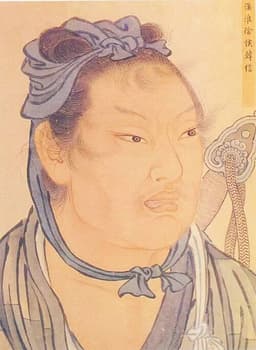
Han Xin
General · Ancient
60.4Total

Zhou Yafu
General · Ancient
53.0Total
Basic Information
Born
-230
-199
Died
-196
-143
Era
Ancient
Ancient
Nationality
China
China
Occupation
General
General
Civilization
Eastern
Eastern
Score Comparison
Military (10%)
88.0
67.3
Political (20%)
25.0
35.0
Influence (20%)
65.0
53.3
Legacy (20%)
70.8
46.7
Leadership (15%)
33.5
68.0
Strategy (15%)
88.6
58.0
TOTAL
60.4
53.0
Han Xin — Complete Timeline
205 BC
Battle of JingxingWar◆ Major
Han Xin led a Han army through the narrow Jingxing Pass, facing a larger Zhao force. He used a stratagem of placing his troops with their backs to a river, forcing them to fight without retreat. The Han won decisively, capturing the Zhao king.
Military StrategyZhao CampaignDecisive Victory
Impact: regional
204 BC
Battle of Wei RiverWar◆ Major
Han Xin defeated the Qi army at the Wei River. He used a feigned retreat to lure the Qi forces across the river, then attacked them while they were crossing. This victory secured the Qi state for Han and eliminated a major rival.
Qi CampaignMilitary TacticsRiver Battle
Impact: regional
203 BC
Appointment as King of QiPolitical Action
After his victories, Liu Bang appointed Han Xin as King of Qi, granting him control over the conquered territory. This elevated Han Xin from general to a regional ruler, but also created tensions with Liu Bang, who feared his growing power.
AppointmentFeudal TitlePower Dynamics
Impact: regional
201 BC
Demotion and ArrestPolitical Action◆ Major
Emperor Gaozu, suspecting Han Xin of rebellion, tricked him into attending a meeting and arrested him. Han Xin was demoted from king to marquis and placed under house arrest in Chang'an. This reflected the emperor's fear of powerful generals.
Political PurgeHouse ArrestImperial Suspicion
Impact: nationaltragic
196 BC
Execution of Han XinPolitical Action◆ Major
Han Xin was executed on charges of plotting rebellion with Chen Xi. He was killed in the palace by Empress L
ExecutionPolitical ViolenceLü Zhi
Impact: nationaltragic
Zhou Yafu — Complete Timeline
154 BC
Suppressed the Rebellion of the Seven StatesWar◆ Major
As Grand Commandant, Zhou Yafu led Han forces to crush the Rebellion of the Seven States, a revolt by regional kings against Emperor Jing. His strategy of cutting supply lines forced the rebels to surrender, strengthening central authority.
RebellionHan DynastyCentralization
Impact: national
143 BC
Starved to death in prisonOther◆ Major
After being falsely accused of plotting rebellion, Zhou Yafu was imprisoned. He went on a hunger strike and died in prison, a victim of court intrigue despite his earlier military successes.
ImprisonmentDeathInjustice
Impact: nationaltragic
Expert Analysis
Origins
Han Xin (c. 230–196 BCE) was born into poverty in the late Warring States period. Orphaned early, he lived humbly, often relying on charity. Legend holds that he endured the humiliation of crawling between a bully's legs to avoid a fight, showing his strategic patience. He later studied military tactics and sought service under various rebel leaders, but found no recognition until he met Liu Bang.
Zhou Yafu (d. 143 BCE) was born into an aristocratic family; his father Zhou Bo was a founding general of the Han dynasty. Zhou Yafu inherited a marquisate and served as a commander in the imperial guard. His privileged upbringing contrasted sharply with Han Xin's humble origins, but both rose to prominence through military skill.
Rise to Power
Han Xin's rise began when he joined Liu Bang's forces. He was initially overlooked, but after a chance conversation with the chancellor Xiao He, he was promoted to general. In 206 BCE, Han Xin led the campaign against the Three Qins, conquering the Guanzhong region. His pivotal moment came at the Battle of Jingxing (205 BCE), where he defeated a larger Zhao army by placing his troops with their backs to a river—a tactic that forced them to fight desperately. This victory established him as a premier strategist. He later conquered the kingdoms of Wei, Dai, Zhao, and Qi, culminating in his appointment as King of Qi in 203 BCE after the Battle of Wei River.
Zhou Yafu's rise came during the Rebellion of the Seven States (154 BCE). Emperor Jing appointed him Grand Commandant to suppress the revolt. Zhou Yafu proposed a strategy of avoiding direct confrontation with the main rebel force (Wu and Chu) and instead cutting their supply lines. He besieged the rebels in Changyi, refusing to engage until they were weakened. His patience led to the rebellion's collapse within three months, earning him the title of Chancellor.
Leadership & Governance
Han Xin's leadership was characterized by tactical innovation and boldness. He scored 88.6 in strategy, reflecting his ability to win against numerically superior foes. At the Battle of Wei River, he used a feigned retreat to lure Qi forces across the river, then attacked while they were crossing. However, his political acumen was weak (scoring 25.0). He failed to secure the trust of Liu Bang, often acting independently. For instance, when he requested to be made King of Qi, Liu Bang reluctantly agreed, but this sowed suspicion.
Zhou Yafu's leadership scored 68.0, reflecting his disciplined and methodical approach. He was strict with his troops and emphasized logistics. During the rebellion, he ignored the emperor's orders to rescue a besieged city, sticking to his plan of attrition. His political score was 35.0, slightly higher than Han Xin's, but still low. He offended court officials by his arrogance and refused to adapt to court politics.
Triumph & Tragedy
Han Xin's triumphs were monumental: he conquered most of the rival kingdoms for Liu Bang, enabling the Han unification. His strategies are studied millennia later. His tragedy was his downfall: accused of plotting rebellion, he was demoted from king to marquis, and later executed by Empress Lü Zhi in 196 BCE. His military score of 88.0 reflects his unmatched tactical genius, but his legacy is marred by his political naivety.
Zhou Yafu's triumph was crushing the Rebellion of the Seven States, preserving the Han central authority. He demonstrated strategic patience and logistical mastery. His tragedy mirrored Han Xin's: falsely accused of rebellion, he was imprisoned and starved to death. His political naivety and bluntness led to his isolation. His military score of 67.3 is respectable but lower than Han Xin's.
Character & Destiny
Han Xin was patient and calculating in battle but proud and politically inept. He once boasted of his military skill, which alienated Liu Bang. His decision to request kingship showed his lack of understanding of Liu Bang's paranoia. His destiny was shaped by his inability to navigate court intrigue, culminating in his execution.
Zhou Yafu was rigid and principled. He refused to compromise his military judgment even under political pressure. This strength in war became a liability in peace. His character led to his downfall when he offended Emperor Jing and the empress. Both generals were victims of their own success, becoming threats to the throne.
Legacy
Han Xin's legacy is immense. He is revered as one of China's greatest military strategists, often compared to Sun Tzu. His tactics are taught in military academies. His score of 70.8 in legacy reflects his enduring influence. He is remembered as a tragic hero, a symbol of talent destroyed by suspicion.
Zhou Yafu's legacy is more contained. He is remembered as the savior of the Han dynasty during the Seven States rebellion. His strategic approach influenced later campaigns. However, his legacy score of 46.7 is lower, as his achievements were less transformative. He is a cautionary tale of a loyal general brought down by court intrigue.
Conclusion
Han Xin had a greater impact than Zhou Yafu. His military innovations and conquests fundamentally shaped the Han dynasty's rise, while Zhou Yafu's role, though crucial, was as a stabilizer within an established empire. Han Xin's total score of 60.4 exceeds Zhou Yafu's 53.0, with the gap of 7.4 points driven by superior strategy (88.6 vs 58.0) and legacy (70.8 vs 46.7). Zhou Yafu was an excellent commander, but Han Xin was a transformative genius who changed warfare. In the annals of history, Han Xin stands as a titan of strategy, while Zhou Yafu remains a capable but less influential figure.
Rankings
🥇
Han XinLeader
Mil: 88.0Pol: 25.0Inf: 65.0
60.4
🥈
Zhou Yafu
Mil: 67.3Pol: 35.0Inf: 53.3
53.0
+7.4 behind
How This Comparison Works
Algorithm
Each figure is scored on 6 dimensions (0—100 scale) based on structured historical data: Military (10%), Political (20%), Influence (20%), Legacy (20%), Leadership (15%), Strategy (15%). The weighted total produces the final ranking.
Data Sources
Scores are computed from structured sub-indicators in the database. Scale factors adjust for era (Ancient ×0.85, Modern ×1.0) and civilization size (Eastern ×1.05, Other ×0.80) to account for differences in population and military scale.
Maximum 3 Figures
Comparisons are limited to 2—3 figures to ensure readability and statistical meaningfulness.
Error Margins
±5 points per dimension — Sub-scores are derived from historical records with inherent uncertainty. Two figures within 5 points on a dimension should be considered roughly equivalent in that area.
Total Score Accuracy
±3 points overall — The weighted combination of 6 dimensions produces a total score with approximately ±3 points of uncertainty. Differences of less than 3 points are not statistically significant— the figures are effectively tied.
Known Limitations
- Historical records are incomplete and uneven across civilizations
- Figures from oral-tradition societies may be underrepresented
- Occupation labels can misclassify multi-role figures
- Scores measure capability and impact, not moral character
- Quantitative scoring is a comparison tool, not absolute truth
Capability Radar
Military (10%) — Battles & Warfare
Battles
95
65
Win Rate
95
70
Expansion
90
30
Political (20%) — Governance & Reform
Reform
30
10
Diplomacy
50
30
Economy
20
10
Influence (20%) — Cultural & Global Reach
Cultural
85
40
Global
80
30
Legacy (20%) — Historical Impact
Historical
90
50
Longevity
88
40
Leadership (15%) — Power & Stability
Tenure
40
55
Stability
25
60
Strategy (15%) — Tactics & Innovation
Strategy
97
70
Tactics
98
75
Reform
85
20
Similar Comparisons
Comments & Discussion
No comments yet. Be the first to share your thoughts!