Loading...
Gaius Flaminius vs Hasdrubal Barca
Gaius Flaminius leads by 4.8 pts · 2 figures compared
…
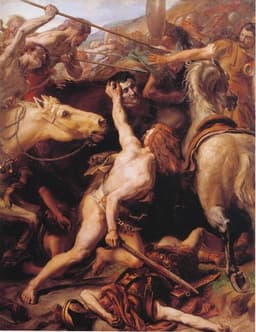
Gaius Flaminius
General · Ancient
52.9Total
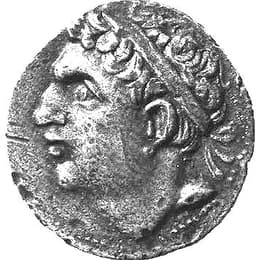
Hasdrubal Barca
General · Ancient
48.1Total
Basic Information
Born
-265
-245
Died
-217
-207
Era
Ancient
Ancient
Nationality
Roman Republic
Carthage
Occupation
General
General
Civilization
Western
Middle Eastern
Score Comparison
Military (10%)
70.0
74.0
Political (20%)
45.1
25.0
Influence (20%)
55.7
53.3
Legacy (20%)
49.2
45.8
Leadership (15%)
47.3
40.4
Strategy (15%)
58.0
61.3
TOTAL
52.9
48.1
Gaius Flaminius — Complete Timeline
232 BC
Elected Consul and Passed the Lex Flaminia AgrariaReform◆ Major
As tribune of the plebs, Flaminius passed a land reform law (Lex Flaminia Agraria) that distributed public land (ager publicus) to poor Roman citizens, despite strong opposition from the Senate. The law aimed to boost the population of small farmers and military recruits.
Roman RepublicLand ReformPopulism
Impact: nationalconstructive
220 BC
Built the Via FlaminiaOther◆ Major
As censor, Flaminius oversaw the construction of the Via Flaminia, a major Roman road connecting Rome to Ariminum (Rimini) in northern Italy. The road facilitated military movement and trade, becoming a key artery of the Roman road network.
InfrastructureRoman RoadsVia Flaminia
Impact: regionalconstructive
217 BC
Defeated and Killed at the Battle of Lake TrasimeneWar
Flaminius, as consul, led a Roman army into an ambush by Hannibal at Lake Trasimene. The Carthaginian forces trapped and annihilated the Roman army in a narrow defile. Flaminius was killed in the battle, and the defeat was one of Rome's worst disasters.
Second Punic WarHannibalAmbush
Impact: regionaltragic
Hasdrubal Barca — Complete Timeline
218 BC
Commanded Carthaginian Forces in SpainWar◆ Major
Hasdrubal Barca was left in command of Carthaginian forces in Spain while Hannibal invaded Italy. He defended Carthaginian territories against Roman attacks, including a victory at the Battle of the Ebro River in 217 BC.
Second Punic WarSpainMilitary Command
Impact: regional
208 BC
Defeated at the Battle of BaeculaWar◆ Major
Hasdrubal Barca was defeated by Scipio Africanus at the Battle of Baecula in Spain. Despite the loss, he managed to escape with a significant portion of his army and decided to march to Italy to reinforce Hannibal.
Second Punic WarBattleSpain
Impact: regionaltragic
207 BC
Killed at the Battle of the MetaurusWar
Hasdrubal Barca was defeated and killed at the Battle of the Metaurus in Italy while attempting to join forces with Hannibal. His head was thrown into Hannibal's camp as a sign of defeat, ending the Carthaginian threat to Italy.
Second Punic WarBattleDeath
Impact: regionaltragic
Expert Analysis
Origins
Gaius Flaminius was born around 270 BCE into a plebeian family in Rome. His early life is poorly documented, but he rose through the Roman political system as a novus homo (new man), lacking the aristocratic pedigree of the patrician class. His career was driven by popular reform, notably as tribune of the plebs in 232 BCE, where he championed land redistribution. Flaminius' background as a populist reformer shaped his later military command decisions, often disregarding senatorial advice.
Hasdrubal Barca, born around 245 BCE, was the second son of Hamilcar Barca, the Carthaginian general who expanded Carthaginian influence in Spain. He grew up in a military household alongside his older brother Hannibal and younger brother Mago. The Barcid family was deeply committed to the war against Rome, and Hasdrubal was groomed for command from a young age. His early experiences included serving under Hamilcar and later under Hannibal during the conquest of Spain.
Rise to Power
Flaminius first gained prominence as tribune of the plebs in 232 BCE, when he passed the Lex Flaminia Agraria, distributing ager publicus (public land) in Picenum to poor citizens. This law bypassed the Senate, earning him the enmity of the aristocracy but solidifying his base among the plebs. He was elected consul in 223 BCE and again in 217 BCE, the latter during the Second Punic War. His military rise was tied to his political career; he commanded Roman armies against the Gauls in northern Italy, winning a victory at the Battle of Telamon in 225 BCE as a military tribune.
Hasdrubal's rise came through his family's dominance in Spain. After Hamilcar's death in 228 BCE, Hasdrubal the Fair (his brother-in-law) took command, and Hasdrubal Barca served under him. When Hannibal assumed command in 221 BCE, Hasdrubal was left as his deputy. In 218 BCE, as Hannibal invaded Italy, Hasdrubal was given command of Carthaginian forces in Spain, tasked with holding the territory and sending reinforcements. He successfully defended Carthaginian interests against Roman attacks until Scipio Africanus arrived in 210 BCE.
Leadership & Governance
Flaminius' leadership style was aggressive and direct, mirroring his political approach. As consul in 217 BCE, he ignored omens and senatorial advice to delay battle against Hannibal. He pursued the Carthaginian army recklessly, leading to his army being ambushed at Lake Trasimene. His governance as censor in 220 BCE included building the Via Flaminia, a road connecting Rome to Ariminum, which improved military logistics and trade. However, his land reform, while popular, alienated the Senate and created political instability. His military leadership scored 70.0, reflecting his aggressive tactics but lack of strategic caution.
Hasdrubal's leadership was more cautious and strategic, scoring 40.4 in leadership but 61.3 in strategy. In Spain, he fought a defensive war, avoiding pitched battles until necessary. He was defeated at Baecula in 208 BCE by Scipio Africanus but managed to extricate his army and march to Italy to join Hannibal. His governance in Spain involved maintaining Carthaginian control over Iberian tribes through diplomacy and military presence. Unlike Flaminius, he was not a political figure but a military commander loyal to his brother.
Triumph & Tragedy
Flaminius' greatest success was the Via Flaminia, a road that facilitated Roman expansion in northern Italy. His land reform also provided land to thousands of poor citizens, addressing social inequality. However, his tragedy was his death at Lake Trasimene in June 217 BCE, where he led 30,000 Romans into an ambush; nearly his entire army was killed or captured. The defeat was one of Rome's worst, and Flaminius himself was slain. His failure to heed reconnaissance reports and his impulsive command cost Rome dearly.
Hasdrubal's triumph was his successful retreat from Spain after Baecula, preserving an army to reinforce Hannibal. He also held Carthaginian Spain for years against Roman pressure. His tragedy came at the Metaurus River in 207 BCE, where he was defeated and killed by Roman forces under Gaius Claudius Nero and Marcus Livius Salinator. His head was thrown into Hannibal's camp, a symbolic blow that ended any hope of Carthaginian victory in Italy. Hasdrubal's military score of 74.0 reflects his competence, but his failure to coordinate with Hannibal proved fatal.
Character & Destiny
Flaminius was a populist and a man of action, but his character was marked by arrogance and disdain for tradition. He ignored religious omens and senatorial authority, which contributed to his downfall. His destiny was shaped by his overconfidence; he believed he could defeat Hannibal through sheer aggression. Historical assessments, such as Polybius, criticize his lack of caution, while noting his popularity among the people.
Hasdrubal was more reserved and competent, but his destiny was tied to his brother's campaign. He was a capable general but lacked the strategic genius of Hannibal. His decision to march to Italy was sound, but he failed to avoid Roman interception. His character showed loyalty and perseverance, but his inability to match Roman generals like Scipio and Nero led to his death.
Legacy
Flaminius' legacy is mixed. The Via Flaminia remained a key road for centuries, and his land reform set a precedent for populist politics in Rome. However, his military failure at Trasimene became a lesson in the dangers of impetuous command. He scored 49.2 in legacy, reflecting his lasting infrastructure but tainted reputation.
Hasdrubal's legacy is overshadowed by Hannibal's. He is remembered as a competent commander who failed in his mission. His defeat at Metaurus is considered a turning point in the Second Punic War, ending Carthaginian hopes in Italy. He scored 45.8 in legacy, as his impact was largely negative for Carthage.
Conclusion
Gaius Flaminius had a greater overall impact than Hasdrubal Barca, as reflected in his total score of 52.9 versus 48.1. Flaminius' Via Flaminia and land reform had lasting effects on Roman infrastructure and society, while Hasdrubal's contributions were primarily military and ultimately unsuccessful. Although Hasdrubal was a better strategist (61.3 vs 58.0), Flaminius' political influence (45.1 vs 25.0) and leadership (47.3 vs 40.4) gave him a broader legacy. Flaminius' death, while a disaster, shaped Roman military reforms, whereas Hasdrubal's death merely sealed Carthage's fate. Therefore, Flaminius holds a slightly higher position in historical significance.
Rankings
🥇
Gaius FlaminiusLeader
Mil: 70.0Pol: 45.1Inf: 55.7
52.9
🥈
Hasdrubal Barca
Mil: 74.0Pol: 25.0Inf: 53.3
48.1
+4.8 behind
How This Comparison Works
Algorithm
Each figure is scored on 6 dimensions (0—100 scale) based on structured historical data: Military (10%), Political (20%), Influence (20%), Legacy (20%), Leadership (15%), Strategy (15%). The weighted total produces the final ranking.
Data Sources
Scores are computed from structured sub-indicators in the database. Scale factors adjust for era (Ancient ×0.85, Modern ×1.0) and civilization size (Eastern ×1.05, Other ×0.80) to account for differences in population and military scale.
Maximum 3 Figures
Comparisons are limited to 2—3 figures to ensure readability and statistical meaningfulness.
Error Margins
±5 points per dimension — Sub-scores are derived from historical records with inherent uncertainty. Two figures within 5 points on a dimension should be considered roughly equivalent in that area.
Total Score Accuracy
±3 points overall — The weighted combination of 6 dimensions produces a total score with approximately ±3 points of uncertainty. Differences of less than 3 points are not statistically significant— the figures are effectively tied.
Known Limitations
- Historical records are incomplete and uneven across civilizations
- Figures from oral-tradition societies may be underrepresented
- Occupation labels can misclassify multi-role figures
- Scores measure capability and impact, not moral character
- Quantitative scoring is a comparison tool, not absolute truth
Capability Radar
Military (10%) — Battles & Warfare
Battles
45
70
Win Rate
40
65
Expansion
50
60
Political (20%) — Governance & Reform
Reform
70
20
Diplomacy
40
50
Economy
60
30
Influence (20%) — Cultural & Global Reach
Cultural
45
30
Global
40
30
Legacy (20%) — Historical Impact
Historical
55
45
Longevity
50
30
Leadership (15%) — Power & Stability
Tenure
55
40
Stability
30
35
Strategy (15%) — Tactics & Innovation
Strategy
50
70
Tactics
55
75
Reform
60
30
Similar Comparisons
Comments & Discussion
No comments yet. Be the first to share your thoughts!