Loading...
Fukushima Masanori vs Nguyen Cao Ky
Fukushima Masanori leads by 8.4 pts · 2 figures compared
…
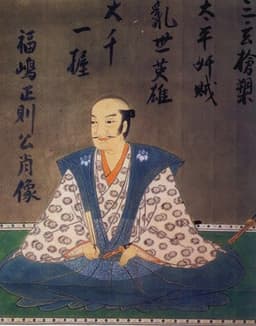
Fukushima Masanori
General · Modern
57.4Total
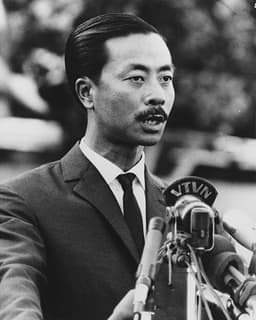
Nguyen Cao Ky
General · Modern
49.0Total
Basic Information
Born
1561
1930
Died
1624
—
Era
Modern
Modern
Nationality
Japan
Vietnam
Occupation
General
General
Civilization
Eastern
Eastern
Score Comparison
Military (10%)
60.0
45.0
Political (20%)
68.0
39.4
Influence (20%)
53.3
50.2
Legacy (20%)
45.0
40.0
Leadership (15%)
71.0
67.0
Strategy (15%)
60.0
60.0
TOTAL
57.4
49.0
Fukushima Masanori — Complete Timeline
1590 AD
Siege of OdawaraWar◆ Major
Fukushima Masanori participated in Toyotomi Hideyoshi's siege of Odawara Castle against the Hojo clan. The siege ended with Hojo surrender, consolidating Hideyoshi's control over Japan.
OdawaraSiegeHideyoshi
Impact: national
1600 AD
Battle of SekigaharaWar
Fukushima Masanori commanded a division on the Eastern Army side under Tokugawa Ieyasu at Sekigahara. His forces played a key role in the victory, leading to his appointment as daimyo of Hiroshima Domain.
SekigaharaBattleTokugawa
Impact: nationalconstructive
1619 AD
Loss of Hiroshima DomainPolitical Action◆ Major
Fukushima Masanori was stripped of his Hiroshima Domain by the Tokugawa shogunate for alleged misrule and unauthorized castle repairs. He was exiled to a smaller domain, ending his political influence.
ExileTokugawaDomain Loss
Impact: nationaltragic
Nguyen Cao Ky — Complete Timeline
1963 AD
Commander of South Vietnamese Air ForcePolitical Action◆ Major
Nguyen Cao Ky was appointed commander of the Republic of Vietnam Air Force. He led the air force during the Buddhist crisis and participated in the coup that overthrew President Ngo Dinh Diem.
Air ForceCoupDiem
Impact: national
1965 AD
Appointed Prime MinisterPolitical Action◆ Major
Nguyen Cao Ky became Prime Minister of South Vietnam, leading a military junta. His government intensified the war against the Viet Cong and North Vietnam, with strong US support.
Prime MinisterMilitary juntaVietnam War
Impact: national
1967 AD
Conflict with President ThieuPolitical Action
Nguyen Cao Ky ran for president but lost to Nguyen Van Thieu, becoming vice president. The two leaders had a tense relationship, with Ky later accusing Thieu of corruption and mismanagement of the war.
ElectionThieuRivalry
Impact: nationaldestructive
1975 AD
Exile after fall of SaigonPolitical Action◆ Major
Nguyen Cao Ky fled South Vietnam as Saigon fell to North Vietnamese forces. He settled in the United States, where he became a critic of the communist government and later returned to Vietnam for visits.
ExileFall of SaigonVietnam War
Impact: nationaltragic
Expert Analysis
Origins
Fukushima Masanori was born in 1561 in Owari Province, Japan, into a samurai family serving the Oda clan. His father, Fukushima Masanobu, was a retainer of Oda Nobunaga. Masanori began his military career under Toyotomi Hideyoshi, participating in campaigns such as the Siege of Odawara in 1590. He was known for his martial prowess and loyalty.
Nguyen Cao Ky was born on September 8, 1930, in Son Tay, French Indochina (now Vietnam). His father was a minor civil servant. Ky attended the French-run Lycée in Hanoi and later joined the Vietnamese National Army. He trained as a pilot in France and the United States, becoming a skilled aviator. His early career was shaped by the First Indochina War against French colonial forces.
Rise to Power
Fukushima Masanori rose to prominence under Toyotomi Hideyoshi after the unification of Japan. He distinguished himself at the Battle of Shizugatake in 1583, earning the title of one of the "Seven Spears of Shizugatake." His military service continued through the Korean campaigns of the 1590s. After Hideyoshi's death, he sided with Tokugawa Ieyasu against Ishida Mitsunari. At the Battle of Sekigahara in 1600, Fukushima commanded a division on the Eastern Army side, playing a crucial role in the victory. As a reward, he was granted the Hiroshima Domain (490,000 koku), one of the largest domains in western Japan.
Nguyen Cao Ky rose as a military officer in the Republic of Vietnam Air Force. In 1963, he supported the coup that overthrew President Ngo Dinh Diem. By 1965, he was appointed commander of the air force. In June 1965, he became Prime Minister of South Vietnam at age 34, leading a military junta. His rise was marked by his flamboyant style and authoritarian methods, but he lacked a broad political base.
Leadership & Governance
Fukushima Masanori governed the Hiroshima Domain with a focus on military preparedness. However, his administration was criticized for misrule and unauthorized castle repairs. The Tokugawa shogunate used these infractions to strip him of his domain in 1619, exiling him to Kawanakajima. His leadership score of 71.0 reflects his effectiveness as a military commander but limited political acumen.
Nguyen Cao Ky's leadership was marked by his tenure as Prime Minister from 1965 to 1967. He intensified the war effort against the Viet Cong and North Vietnam, supporting U.S. escalation. He also implemented social reforms, such as land redistribution. However, his regime was plagued by corruption and political infighting. His political score of 39.4 indicates his struggles with governance and coalition-building.
Triumph & Tragedy
Fukushima Masanori's greatest triumph was his role at Sekigahara, which secured Tokugawa supremacy. His tragedy came with the loss of his domain due to political missteps. His military score of 60.0 and strategy score of 60.0 show competence but not brilliance.
Nguyen Cao Ky's triumph was his rise to prime minister and his efforts to combat communism. However, his tragedy was the fall of Saigon in 1975, forcing him into exile. His military score of 45.0 reflects the limitations of the South Vietnamese forces.
Character & Destiny
Fukushima Masanori was a loyal samurai who valued martial honor. His decision to side with Tokugawa Ieyasu proved fateful, but his inability to navigate the politics of the shogunate led to his downfall. Historians note his straightforward nature.
Nguyen Cao Ky was charismatic and decisive but also authoritarian and inconsistent. His rivalry with President Nguyen Van Thieu weakened his political position. His character contributed to both his rapid rise and eventual exile.
Legacy
Fukushima Masanori is remembered as a capable commander and a cautionary tale of a daimyo who lost his domain. His influence score of 53.3 and legacy score of 45.0 reflect a limited but notable impact on Japanese history.
Nguyen Cao Ky's legacy is tied to the Vietnam War. He is seen as a controversial figure who fought for a losing cause. His influence score of 50.2 and legacy score of 40.0 indicate a modest historical footprint.
Conclusion
Comparing the two, Fukushima Masanori had a greater impact on his nation's trajectory. His participation at Sekigahara helped establish the Tokugawa shogunate, which shaped Japan for 250 years. In contrast, Ky's leadership failed to prevent the communist victory in Vietnam. With a total score of 57.4 to Ky's 49.0, Fukushima Masanori emerges as the more consequential leader.
Rankings
🥇
Fukushima MasanoriLeader
Mil: 60.0Pol: 68.0Inf: 53.3
57.4
🥈
Nguyen Cao Ky
Mil: 45.0Pol: 39.4Inf: 50.2
49.0
+8.4 behind
How This Comparison Works
Algorithm
Each figure is scored on 6 dimensions (0—100 scale) based on structured historical data: Military (10%), Political (20%), Influence (20%), Legacy (20%), Leadership (15%), Strategy (15%). The weighted total produces the final ranking.
Data Sources
Scores are computed from structured sub-indicators in the database. Scale factors adjust for era (Ancient ×0.85, Modern ×1.0) and civilization size (Eastern ×1.05, Other ×0.80) to account for differences in population and military scale.
Maximum 3 Figures
Comparisons are limited to 2—3 figures to ensure readability and statistical meaningfulness.
Error Margins
±5 points per dimension — Sub-scores are derived from historical records with inherent uncertainty. Two figures within 5 points on a dimension should be considered roughly equivalent in that area.
Total Score Accuracy
±3 points overall — The weighted combination of 6 dimensions produces a total score with approximately ±3 points of uncertainty. Differences of less than 3 points are not statistically significant— the figures are effectively tied.
Known Limitations
- Historical records are incomplete and uneven across civilizations
- Figures from oral-tradition societies may be underrepresented
- Occupation labels can misclassify multi-role figures
- Scores measure capability and impact, not moral character
- Quantitative scoring is a comparison tool, not absolute truth
Capability Radar
Military (10%) — Battles & Warfare
Battles
55
30
Win Rate
60
35
Expansion
45
10
Political (20%) — Governance & Reform
Reform
30
20
Diplomacy
50
25
Economy
40
15
Influence (20%) — Cultural & Global Reach
Cultural
30
15
Global
20
15
Legacy (20%) — Historical Impact
Historical
35
20
Longevity
25
10
Leadership (15%) — Power & Stability
Tenure
45
40
Stability
45
10
Strategy (15%) — Tactics & Innovation
Strategy
55
30
Tactics
50
40
Reform
30
25
Similar Comparisons
Comments & Discussion
No comments yet. Be the first to share your thoughts!