Loading...
Fukushima Masanori vs He Long
He Long leads by 2.6 pts · 2 figures compared
…
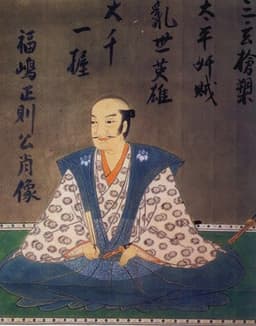
Fukushima Masanori
General · Modern
57.4Total
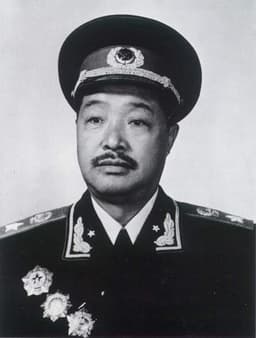
He Long
General · Modern
60.0Total
Basic Information
Born
1561
1896
Died
1624
1969
Era
Modern
Modern
Nationality
Japan
China
Occupation
General
General
Civilization
Eastern
Eastern
Score Comparison
Military (10%)
60.0
67.5
Political (20%)
68.0
68.0
Influence (20%)
53.3
57.2
Legacy (20%)
45.0
52.0
Leadership (15%)
71.0
72.0
Strategy (15%)
60.0
50.0
TOTAL
57.4
60.0
Fukushima Masanori — Complete Timeline
1590 AD
Siege of OdawaraWar◆ Major
Fukushima Masanori participated in Toyotomi Hideyoshi's siege of Odawara Castle against the Hojo clan. The siege ended with Hojo surrender, consolidating Hideyoshi's control over Japan.
OdawaraSiegeHideyoshi
Impact: national
1600 AD
Battle of SekigaharaWar
Fukushima Masanori commanded a division on the Eastern Army side under Tokugawa Ieyasu at Sekigahara. His forces played a key role in the victory, leading to his appointment as daimyo of Hiroshima Domain.
SekigaharaBattleTokugawa
Impact: nationalconstructive
1619 AD
Loss of Hiroshima DomainPolitical Action◆ Major
Fukushima Masanori was stripped of his Hiroshima Domain by the Tokugawa shogunate for alleged misrule and unauthorized castle repairs. He was exiled to a smaller domain, ending his political influence.
ExileTokugawaDomain Loss
Impact: nationaltragic
He Long — Complete Timeline
1927 AD
Led the Nanchang UprisingWar
He Long led the Nanchang Uprising, the first major armed conflict between the Chinese Communist Party and the Nationalists. Although the uprising failed, it is celebrated as the founding moment of the People's Liberation Army.
Chinese Civil WarUprisingPLA Founding
Impact: nationaldestructive
1937 AD
Commander of the 120th Division in the Second Sino-Japanese WarWar◆ Major
He Long commanded the 120th Division of the Eighth Route Army, operating in the Shanxi-Chahar-Hebei border region. He led guerrilla campaigns against Japanese forces and expanded Communist-controlled territory.
Second Sino-Japanese WarGuerrilla Warfare
Impact: regional
1955 AD
Appointed Marshal of the People's Liberation ArmyPolitical Action◆ Major
He Long was appointed as one of the ten marshals of the People's Liberation Army. This honor recognized his contributions to the Communist victory and his role in the Nanchang Uprising.
Military HonorPLA
Impact: nationalconstructive
1969 AD
Purged and Died in Prison during the Cultural RevolutionPolitical Action◆ Major
He Long was purged by Mao Zedong during the Cultural Revolution, accused of being a 'counter-revolutionary.' He was imprisoned and died in custody in 1969, later being posthumously rehabilitated in 1982.
Cultural RevolutionPolitical PurgeDeath
Impact: nationaltragic
Expert Analysis
Origins
Fukushima Masanori was born in 1561 in Owari Province, Japan, into a samurai family. His father was a retainer of the Oda clan. He served under Toyotomi Hideyoshi from a young age, participating in campaigns such as the Siege of Odawara (1590) and the Korean invasions (1592-1598). He Long was born in 1896 in Sangzhi, Hunan, China, into a poor peasant family. His father was a farmer. He joined the Chinese Nationalist Party (KMT) early but later defected to the Communist Party. He participated in the Northern Expedition (1926-1928) before leading the Nanchang Uprising in 1927.
Rise to Power
Fukushima Masanori rose to prominence through military service under Toyotomi Hideyoshi. After Hideyoshi's death, he sided with Tokugawa Ieyasu against Ishida Mitsunari. At the Battle of Sekigahara (1600), he commanded a division of 6,000 men on the Eastern Army side and played a key role in the victory. As a reward, Tokugawa Ieyasu granted him the Hiroshima Domain (510,000 koku), making him a major daimyo. He Long rose through the ranks of the KMT army, becoming a division commander. In 1927, he led the Nanchang Uprising, the first armed revolt of the Chinese Communist Party. Although unsuccessful, it marked the birth of the Red Army. He later joined Mao Zedong in Jiangxi and participated in the Long March (1934-1935).
Leadership & Governance
Fukushima Masanori governed the Hiroshima Domain with a focus on military preparedness. However, he was known for misrule—he allegedly neglected administration and engaged in unauthorized castle repairs. The Tokugawa shogunate stripped him of his domain in 1619, exiling him to Kawanakajima. His leadership score of 71.0 reflects his military competence but poor governance. He Long commanded the 120th Division in the Second Sino-Japanese War (1937-1945), leading guerrilla campaigns in Shanxi. After the Communist victory in 1949, he became a Marshal of the People's Liberation Army (1955), scoring 72.0 in leadership. He served as Vice Premier and oversaw sports, but his political influence waned as Mao consolidated power.
Triumph & Tragedy
Fukushima Masanori's greatest success was his performance at Sekigahara, which brought him wealth and status. His greatest failure was the loss of his domain due to alleged misconduct, ending his career in exile. He died in 1624. He Long's triumphs include leading the Nanchang Uprising, commanding the 120th Division, and becoming a Marshal. His tragedy came during the Cultural Revolution: he was purged by Mao, accused of being a 'counter-revolutionary', imprisoned, and died in custody in 1969. His legacy score of 52.0 reflects this tragic end.
Character & Destiny
Fukushima Masanori was a loyal samurai who chose the winning side at Sekigahara but lacked the administrative skills to maintain his domain. His character—brave but imprudent—led to his downfall. He Long was a charismatic leader who inspired loyalty. His decision to join the Communists and lead the Nanchang Uprising set his destiny. However, his independent spirit and ties to old comrades made him a target during Mao's purges. He Long scored 68.0 in political ability, but his lack of strategic maneuvering (50.0) in the political arena left him vulnerable.
Legacy
Fukushima Masanori is remembered primarily as a Sekigahara participant. His domain loss serves as a cautionary tale of misgovernance. He is not widely celebrated in Japan. He Long is honored in China as a founding marshal and revolutionary hero. His role in the Nanchang Uprising is commemorated, and his military contributions are recognized. However, his purge during the Cultural Revolution remains a dark chapter. His total score of 60.0 slightly edges Fukushima's 57.4, but his legacy is more complex.
Conclusion
He Long had greater overall impact due to his role in founding the People's Liberation Army and his lasting influence in Chinese history. His military score of 67.5 and leadership of 72.0 surpass Fukushima's 60.0 and 71.0. While Fukushima was a competent general, his historical significance is limited to a single battle. He Long shaped modern China's military and political landscape, even if his end was tragic. The 2.6-point score gap reflects this disparity.
Rankings
🥇
He LongLeader
Mil: 67.5Pol: 68.0Inf: 57.2
60.0
🥈
Fukushima Masanori
Mil: 60.0Pol: 68.0Inf: 53.3
57.4
+2.6 behind
How This Comparison Works
Algorithm
Each figure is scored on 6 dimensions (0—100 scale) based on structured historical data: Military (10%), Political (20%), Influence (20%), Legacy (20%), Leadership (15%), Strategy (15%). The weighted total produces the final ranking.
Data Sources
Scores are computed from structured sub-indicators in the database. Scale factors adjust for era (Ancient ×0.85, Modern ×1.0) and civilization size (Eastern ×1.05, Other ×0.80) to account for differences in population and military scale.
Maximum 3 Figures
Comparisons are limited to 2—3 figures to ensure readability and statistical meaningfulness.
Error Margins
±5 points per dimension — Sub-scores are derived from historical records with inherent uncertainty. Two figures within 5 points on a dimension should be considered roughly equivalent in that area.
Total Score Accuracy
±3 points overall — The weighted combination of 6 dimensions produces a total score with approximately ±3 points of uncertainty. Differences of less than 3 points are not statistically significant— the figures are effectively tied.
Known Limitations
- Historical records are incomplete and uneven across civilizations
- Figures from oral-tradition societies may be underrepresented
- Occupation labels can misclassify multi-role figures
- Scores measure capability and impact, not moral character
- Quantitative scoring is a comparison tool, not absolute truth
Capability Radar
Military (10%) — Battles & Warfare
Battles
55
65
Win Rate
60
60
Expansion
45
55
Political (20%) — Governance & Reform
Reform
30
45
Diplomacy
50
50
Economy
40
40
Influence (20%) — Cultural & Global Reach
Cultural
30
40
Global
20
35
Legacy (20%) — Historical Impact
Historical
35
55
Longevity
25
45
Leadership (15%) — Power & Stability
Tenure
45
55
Stability
45
45
Strategy (15%) — Tactics & Innovation
Strategy
55
60
Tactics
50
55
Reform
30
50
Similar Comparisons
Comments & Discussion
No comments yet. Be the first to share your thoughts!