Loading...
Fukushima Masanori vs Pancho Villa
Fukushima Masanori leads by 5.5 pts · 2 figures compared
…
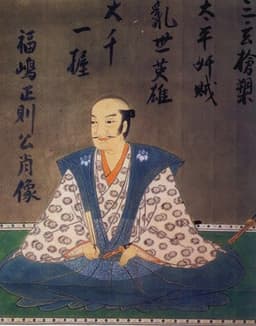
Fukushima Masanori
General · Modern
57.4Total
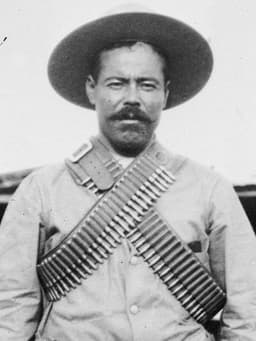
Pancho Villa
General · Modern
51.9Total
Basic Information
Born
1561
1878
Died
1624
1923
Era
Modern
Modern
Nationality
Japan
Mexico
Occupation
General
General
Civilization
Eastern
Western
Score Comparison
Military (10%)
60.0
70.0
Political (20%)
68.0
35.1
Influence (20%)
53.3
55.0
Legacy (20%)
45.0
54.0
Leadership (15%)
71.0
47.3
Strategy (15%)
60.0
52.5
TOTAL
57.4
51.9
Fukushima Masanori — Complete Timeline
1590 AD
Siege of OdawaraWar◆ Major
Fukushima Masanori participated in Toyotomi Hideyoshi's siege of Odawara Castle against the Hojo clan. The siege ended with Hojo surrender, consolidating Hideyoshi's control over Japan.
OdawaraSiegeHideyoshi
Impact: national
1600 AD
Battle of SekigaharaWar
Fukushima Masanori commanded a division on the Eastern Army side under Tokugawa Ieyasu at Sekigahara. His forces played a key role in the victory, leading to his appointment as daimyo of Hiroshima Domain.
SekigaharaBattleTokugawa
Impact: nationalconstructive
1619 AD
Loss of Hiroshima DomainPolitical Action◆ Major
Fukushima Masanori was stripped of his Hiroshima Domain by the Tokugawa shogunate for alleged misrule and unauthorized castle repairs. He was exiled to a smaller domain, ending his political influence.
ExileTokugawaDomain Loss
Impact: nationaltragic
Pancho Villa — Complete Timeline
1911 AD
Battle of Ciudad JuarezWar◆ Major
Villa's forces, under Madero's command, captured Ciudad Juarez, a key border city. The victory forced Porfirio Diaz to resign and sign the Treaty of Ciudad Juarez, ending the first phase of the revolution.
BattleRevolutionDiaz Resignation
Impact: national
1913 AD
Division of the North CommandWar◆ Major
After Victoriano Huerta's coup, Villa formed the Division of the North, a powerful military force. He led it to victories at Torreon and Zacatecas, becoming a dominant revolutionary general.
Military CommandRevolutionary ArmyVictories
Impact: regional
1914 AD
Battle of ZacatecasWar
Villa's Division of the North decisively defeated Huerta's federal forces at Zacatecas. The victory broke Huerta's military power and led to his resignation, but also caused a rift with Carranza.
BattleHuerta DefeatRevolutionary Victory
Impact: national
1916 AD
Columbus RaidWar◆ Major
Villa's forces attacked Columbus, New Mexico, killing 18 Americans. The raid prompted U.S. President Wilson to send a punitive expedition under General Pershing into Mexico, which failed to capture Villa.
Cross-Border RaidUS InterventionPunitive Expedition
Impact: regionaldestructive
1923 AD
Assassination of Pancho VillaPolitical Action◆ Major
Villa was assassinated by gunmen while driving in Parral, Chihuahua. The attack was likely ordered by political rivals, ending his post-revolutionary influence and securing the government's control.
AssassinationPolitical ViolenceEnd of Era
Impact: nationaltragic
Expert Analysis
Origins
Fukushima Masanori (1561–1624) was born into a samurai family in Owari Province. His father, Fukushima Masanobu, served the Oda clan. Masanori began his career under Toyotomi Hideyoshi, participating in the Siege of Odawara (1590) against the Hojo clan, which consolidated Hideyoshi's control over Japan. He rose through ranks due to his military prowess, becoming a daimyo with domains in Kiyosu and later Hiroshima.
Pancho Villa (1878–1923), born Doroteo Arango Arámbula in Durango, Mexico, grew up in poverty. After his father died, he worked as a sharecropper. He turned to banditry after killing a hacienda owner who assaulted his sister. Villa joined the Mexican Revolution in 1910, aligning with Francisco I. Madero against Porfirio Díaz.
Rise to Power
Fukushima Masanori's rise was tied to his service under Toyotomi Hideyoshi. He fought in the Imjin War in Korea (1592–1598), commanding Japanese forces. At the Battle of Sekigahara (1600), he commanded a division on the Eastern Army side under Tokugawa Ieyasu. His forces played a key role in the victory, leading to the establishment of the Tokugawa shogunate. As a reward, he was granted Hiroshima Domain, worth 498,000 koku, making him one of the most powerful daimyo.
Pancho Villa rose to prominence as a military leader in the Mexican Revolution. In 1911, his forces captured Ciudad Juárez, forcing Díaz to resign. After Victoriano Huerta's coup in 1913, Villa formed the Division of the North, a powerful military force. He won key victories at Torreón (1913) and Zacatecas (1914), breaking Huerta's power. Villa's military scores 70.0, reflecting his tactical acumen, while his political score is 35.1 due to his inability to navigate post-revolutionary politics.
Leadership & Governance
Fukushima Masanori governed his domain with a focus on military readiness and infrastructure. However, his governance was criticized for alleged misrule and unauthorized castle repairs. In 1619, the Tokugawa shogunate stripped him of his Hiroshima Domain and exiled him to Kawanakajima in Shinano Province. His leadership score is 71.0, but his political score of 68.0 indicates some competence, though ultimately insufficient to maintain his position.
Pancho Villa was a charismatic leader who inspired loyalty among his troops. He implemented agrarian reforms in territories he controlled, distributing land to peasants. However, his governance was inconsistent; he lacked administrative experience and often resorted to violence. His leadership score of 47.3 reflects his strengths in motivating troops but weaknesses in long-term governance.
Triumph & Tragedy
Fukushima Masanori's greatest triumph was his role at Sekigahara, where he helped secure Tokugawa Ieyasu's victory. His military score of 60.0 and strategy score of 60.0 indicate solid performance. His tragedy was the loss of his domain due to political miscalculations and alleged mismanagement. He died in exile in 1624.
Pancho Villa's greatest triumph was the Battle of Zacatecas (1914), where his Division of the North decisively defeated Huerta's forces, leading to Huerta's resignation. His tragedy includes the Columbus Raid (1916), where his forces attacked New Mexico, killing 18 Americans. This prompted a U.S. punitive expedition that failed to capture him but weakened his army. Villa was assassinated in 1923, his legacy tarnished by banditry.
Character & Destiny
Fukushima Masanori was a loyal samurai who valued martial honor. His decision to side with Tokugawa Ieyasu at Sekigahara was pragmatic, but his later actions—unauthorized castle repairs and alleged misrule—suggest a lack of political foresight. His character shaped his fate: his military competence earned him rewards, but his inability to adapt to the Tokugawa's centralizing policies led to his downfall.
Pancho Villa was impulsive and charismatic. His bandit background influenced his tactics, often relying on daring raids. He was a natural guerrilla leader but struggled with strategic planning and political alliances. His character led to his rise as a revolutionary hero but also to his isolation and eventual assassination.
Legacy
Fukushima Masanori is remembered as a capable general of the Sengoku period, but his legacy is overshadowed by the Tokugawa shogunate's consolidation. He scored 45.0 in legacy, reflecting limited long-term impact. His descendants held minor positions, but his name is not widely known outside Japan.
Pancho Villa's legacy is more significant, with a score of 54.0. He remains a symbol of Mexican resistance against oppression and U.S. intervention. His tactics influenced guerrilla warfare, and he is celebrated in folklore, films, and songs. However, his legacy is mixed due to his violent methods.
Conclusion
Pancho Villa had greater impact than Fukushima Masanori. Despite a lower total score (51.9 vs. 57.4), Villa's influence on Mexican history and global perception of revolutionaries is profound. His military actions directly altered Mexico's political landscape, and his legacy persists in popular culture. Fukushima Masanori, while a competent samurai, was a cog in the Tokugawa machine; his fall from power underscores his limited agency. Villa's story embodies the tumultuous spirit of the Mexican Revolution, leaving a lasting mark on history.
Rankings
🥇
Fukushima MasanoriLeader
Mil: 60.0Pol: 68.0Inf: 53.3
57.4
🥈
Pancho Villa
Mil: 70.0Pol: 35.1Inf: 55.0
51.9
+5.5 behind
How This Comparison Works
Algorithm
Each figure is scored on 6 dimensions (0—100 scale) based on structured historical data: Military (10%), Political (20%), Influence (20%), Legacy (20%), Leadership (15%), Strategy (15%). The weighted total produces the final ranking.
Data Sources
Scores are computed from structured sub-indicators in the database. Scale factors adjust for era (Ancient ×0.85, Modern ×1.0) and civilization size (Eastern ×1.05, Other ×0.80) to account for differences in population and military scale.
Maximum 3 Figures
Comparisons are limited to 2—3 figures to ensure readability and statistical meaningfulness.
Error Margins
±5 points per dimension — Sub-scores are derived from historical records with inherent uncertainty. Two figures within 5 points on a dimension should be considered roughly equivalent in that area.
Total Score Accuracy
±3 points overall — The weighted combination of 6 dimensions produces a total score with approximately ±3 points of uncertainty. Differences of less than 3 points are not statistically significant— the figures are effectively tied.
Known Limitations
- Historical records are incomplete and uneven across civilizations
- Figures from oral-tradition societies may be underrepresented
- Occupation labels can misclassify multi-role figures
- Scores measure capability and impact, not moral character
- Quantitative scoring is a comparison tool, not absolute truth
Capability Radar
Military (10%) — Battles & Warfare
Battles
55
65
Win Rate
60
60
Expansion
45
40
Political (20%) — Governance & Reform
Reform
30
20
Diplomacy
50
25
Economy
40
15
Influence (20%) — Cultural & Global Reach
Cultural
30
55
Global
20
50
Legacy (20%) — Historical Impact
Historical
35
60
Longevity
25
45
Leadership (15%) — Power & Stability
Tenure
45
35
Stability
45
10
Strategy (15%) — Tactics & Innovation
Strategy
55
55
Tactics
50
70
Reform
30
30
Similar Comparisons
Comments & Discussion
No comments yet. Be the first to share your thoughts!