Loading...
He Long vs Togo Heihachiro
Togo Heihachiro leads by 10.2 pts · 2 figures compared
…
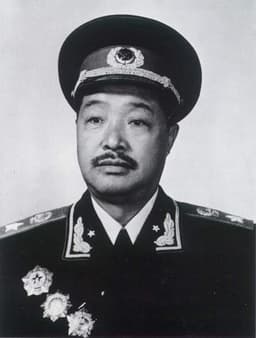
He Long
General · Modern
60.0Total

Togo Heihachiro
General · Modern
70.2Total
Basic Information
Born
1896
1848
Died
1969
1934
Era
Modern
Modern
Nationality
China
Japan
Occupation
General
General
Civilization
Eastern
Eastern
Score Comparison
Military (10%)
67.5
78.0
Political (20%)
68.0
61.3
Influence (20%)
57.2
75.0
Legacy (20%)
52.0
68.0
Leadership (15%)
72.0
71.0
Strategy (15%)
50.0
68.0
TOTAL
60.0
70.2
He Long — Complete Timeline
1927 AD
Led the Nanchang UprisingWar
He Long led the Nanchang Uprising, the first major armed conflict between the Chinese Communist Party and the Nationalists. Although the uprising failed, it is celebrated as the founding moment of the People's Liberation Army.
Chinese Civil WarUprisingPLA Founding
Impact: nationaldestructive
1937 AD
Commander of the 120th Division in the Second Sino-Japanese WarWar◆ Major
He Long commanded the 120th Division of the Eighth Route Army, operating in the Shanxi-Chahar-Hebei border region. He led guerrilla campaigns against Japanese forces and expanded Communist-controlled territory.
Second Sino-Japanese WarGuerrilla Warfare
Impact: regional
1955 AD
Appointed Marshal of the People's Liberation ArmyPolitical Action◆ Major
He Long was appointed as one of the ten marshals of the People's Liberation Army. This honor recognized his contributions to the Communist victory and his role in the Nanchang Uprising.
Military HonorPLA
Impact: nationalconstructive
1969 AD
Purged and Died in Prison during the Cultural RevolutionPolitical Action◆ Major
He Long was purged by Mao Zedong during the Cultural Revolution, accused of being a 'counter-revolutionary.' He was imprisoned and died in custody in 1969, later being posthumously rehabilitated in 1982.
Cultural RevolutionPolitical PurgeDeath
Impact: nationaltragic
Togo Heihachiro — Complete Timeline
1904 AD
Battle of the Yellow SeaWar◆ Major
Togo engaged the Russian Pacific Squadron attempting to break out of Port Arthur. The battle was indecisive, but Togo's blockade prevented the Russian fleet from interfering with Japanese land operations.
Russo-Japanese WarNaval BattleBlockade
Impact: regional
Siege of Port Arthur (Naval blockade)War◆ Major
Togo implemented a close blockade of Port Arthur, the Russian naval base in Manchuria. He conducted several bombardments and attempted to block the harbor entrance, bottling up the Russian fleet for months.
Russo-Japanese WarSiegeNaval Blockade
Impact: regional
1905 AD
Battle of TsushimaWar
Admiral Togo commanded the Japanese Combined Fleet against the Russian Baltic Fleet in the Tsushima Strait. He destroyed or captured nearly the entire Russian fleet in a single day, securing Japan's victory in the Russo-Japanese War.
Russo-Japanese WarNaval BattleDecisive Victory
Impact: global
1906 AD
Appointment as Chief of the Naval General StaffPolitical Action◆ Major
After the Russo-Japanese War, Togo was appointed Chief of the Naval General Staff, the highest position in the Imperial Japanese Navy. He oversaw naval policy and modernization until his retirement in 1913.
Naval CommandPost-WarLeadership
Impact: national
Expert Analysis
Origins
He Long was born on March 22, 1896, in Sangzhi County, Hunan Province, China, into a poor peasant family. He had little formal education and began working as a horse groomer and later as a bandit leader, which gave him early experience in guerrilla warfare. In 1916, he joined the Chinese revolutionary movement led by Sun Yat-sen, gradually rising through the ranks of the Nationalist Revolutionary Army. His early life was marked by a lack of military training but abundant practical combat experience.
Togo Heihachiro was born on January 27, 1848, in Kajiyacho, Satsuma Domain (now Kagoshima), Japan, into a samurai family. He studied naval science at the Naval Academy in England from 1871 to 1878, absorbing Western naval tactics and technology. His samurai background instilled discipline and a warrior ethos, while his education provided theoretical knowledge. Togo's early career included service in the Boshin War and the First Sino-Japanese War, where he gained command experience.
Rise to Power
He Long's rise began when he led the Nanchang Uprising on August 1, 1927, the first major armed conflict between the Chinese Communist Party (CCP) and the Nationalists. Although the uprising failed militarily, it established the CCP's military wing. He Long joined the CCP shortly after and became a key commander in the Red Army. During the Long March (1934-1935), he commanded the Second Front Red Army, surviving Nationalist encirclements. In the Second Sino-Japanese War (1937-1945), he led the 120th Division of the Eighth Route Army, conducting guerrilla campaigns against Japanese forces. His ability to mobilize peasants and adapt to guerrilla warfare solidified his position. After the Chinese Civil War, he was appointed a Marshal of the People's Liberation Army in 1955, ranking among the top ten.
Togo Heihachiro rose to prominence through his victory at the Battle of Tsushima on May 27-28, 1905, where he commanded the Japanese Combined Fleet against the Russian Baltic Fleet. He destroyed or captured 34 of 38 Russian ships, losing only three torpedo boats. This decisive victory made him a national hero. Earlier, he had served as a captain during the First Sino-Japanese War (1894-1895) and commanded the naval blockade during the Siege of Port Arthur (1904-1905). His appointment as Commander-in-Chief of the Combined Fleet in 1904 was a turning point. After the war, he became Chief of the Naval General Staff in 1906, the highest naval position in Japan.
Leadership & Governance
He Long's leadership style was charismatic and populist. He emphasized close ties with soldiers and peasants, often sharing their hardships. He relied on guerrilla tactics and mobility, avoiding set-piece battles against superior forces. As a political commissar, he integrated political indoctrination with military training. However, his governance approach was limited by his subordinate role within the CCP hierarchy. He lacked formal strategic education, which contributed to his score of 50.0 in strategy. His military score of 67.5 reflects his effectiveness in guerrilla warfare but limited conventional command.
Togo Heihachiro was a disciplined, methodical commander who adhered to naval doctrine. He emphasized training, gunnery, and fleet maneuvers. His leadership at Tsushima demonstrated tactical innovation, such as the 'crossing the T' maneuver, which maximized his broadside firepower. He maintained high morale through strict discipline and personal example. As Chief of Naval General Staff, he focused on naval expansion and modernization. His strategic score of 68.0 and military score of 78.0 reflect his mastery of naval warfare and ability to execute complex operations.
Triumph & Tragedy
He Long's greatest success was his role in the Communist victory in the Chinese Civil War. He built and commanded effective guerrilla forces that wore down Nationalist troops. His 120th Division contributed to the Second Sino-Japanese War effort. His greatest failure was his inability to adapt to the political intrigues of the CCP. During the Cultural Revolution, he was purged by Mao Zedong, accused of being a 'counter-revolutionary,' and died in prison in 1969. His later years were tragic, as his loyalty was rewarded with persecution. His influence score of 57.2 reflects his diminished posthumous recognition.
Togo's triumph was the annihilation of the Russian Baltic Fleet at Tsushima, which ended the Russo-Japanese War and established Japan as a naval power. His blockade of Port Arthur was also effective. His tragedy was the indecisive Battle of the Yellow Sea in 1904, where he failed to destroy the Russian Pacific Squadron, allowing it to retreat. However, this did not diminish his overall reputation. His legacy score of 68.0 reflects his enduring status as a naval icon in Japan.
Character & Destiny
He Long was courageous and resilient, but politically naive. He trusted Mao Zedong despite growing paranoia within the party. His bandit background made him a natural leader of irregulars, but he lacked the sophistication to navigate the CCP's internal power struggles. His destiny was shaped by the turbulent politics of Maoist China, where military heroes were often purged to consolidate power.
Togo was stoic, reserved, and deeply loyal to the Emperor. His samurai upbringing emphasized honor and duty. He was known as 'the Nelson of the East' for his tactical brilliance. His destiny was to become a symbol of Japanese naval supremacy. He died in 1934, before World War II, and thus avoided the post-war disgrace that befell other Japanese leaders.
Legacy
He Long's legacy is mixed. He is officially rehabilitated in China today as a revolutionary martyr, but his contributions are overshadowed by figures like Mao and Zhou Enlai. His military tactics influenced guerrilla warfare, but his political downfall limited his historical stature. His legacy score of 52.0 reflects this ambiguity.
Togo's legacy is stronger. He is revered in Japan as a national hero, and his tactics are studied in naval academies. The Battle of Tsushima is a classic example of decisive naval engagement. His influence score of 75.0 and legacy score of 68.0 indicate his lasting impact on naval warfare and Japanese identity.
Conclusion
Togo Heihachiro had a greater impact than He Long. Togo's victory at Tsushima altered the global balance of power, establishing Japan as a major naval force and influencing the course of the 20th century. He Long's guerrilla warfare contributed to the CCP's victory, but his role was one among many, and his political failure diminished his long-term influence. With a total score of 70.2 against He Long's 60.0, Togo's military and strategic achievements are more enduring and globally recognized.
Rankings
🥇
Togo HeihachiroLeader
Mil: 78.0Pol: 61.3Inf: 75.0
70.2
🥈
He Long
Mil: 67.5Pol: 68.0Inf: 57.2
60.0
+10.2 behind
How This Comparison Works
Algorithm
Each figure is scored on 6 dimensions (0—100 scale) based on structured historical data: Military (10%), Political (20%), Influence (20%), Legacy (20%), Leadership (15%), Strategy (15%). The weighted total produces the final ranking.
Data Sources
Scores are computed from structured sub-indicators in the database. Scale factors adjust for era (Ancient ×0.85, Modern ×1.0) and civilization size (Eastern ×1.05, Other ×0.80) to account for differences in population and military scale.
Maximum 3 Figures
Comparisons are limited to 2—3 figures to ensure readability and statistical meaningfulness.
Error Margins
±5 points per dimension — Sub-scores are derived from historical records with inherent uncertainty. Two figures within 5 points on a dimension should be considered roughly equivalent in that area.
Total Score Accuracy
±3 points overall — The weighted combination of 6 dimensions produces a total score with approximately ±3 points of uncertainty. Differences of less than 3 points are not statistically significant— the figures are effectively tied.
Known Limitations
- Historical records are incomplete and uneven across civilizations
- Figures from oral-tradition societies may be underrepresented
- Occupation labels can misclassify multi-role figures
- Scores measure capability and impact, not moral character
- Quantitative scoring is a comparison tool, not absolute truth
Capability Radar
Military (10%) — Battles & Warfare
Battles
65
75
Win Rate
60
95
Expansion
55
55
Political (20%) — Governance & Reform
Reform
45
30
Diplomacy
50
65
Economy
40
20
Influence (20%) — Cultural & Global Reach
Cultural
40
60
Global
35
70
Legacy (20%) — Historical Impact
Historical
55
75
Longevity
45
65
Leadership (15%) — Power & Stability
Tenure
55
40
Stability
45
50
Strategy (15%) — Tactics & Innovation
Strategy
60
88
Tactics
55
92
Reform
50
60
Similar Comparisons
Comments & Discussion
No comments yet. Be the first to share your thoughts!