Loading...
He Long vs Napoleon Bonaparte
Napoleon Bonaparte leads by 10.9 pts · 2 figures compared
…
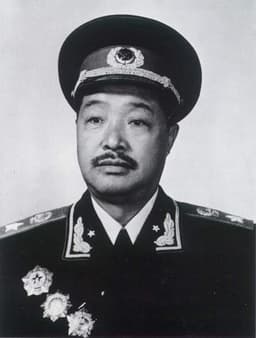
He Long
General · Modern
60.0Total

Napoleon Bonaparte
General · Modern
70.9Total
Basic Information
Born
1896
1769
Died
1969
1821
Era
Modern
Modern
Nationality
China
France
Occupation
General
General
Civilization
Eastern
Western
Score Comparison
Military (10%)
67.5
94.0
Political (20%)
68.0
72.0
Influence (20%)
57.2
40.0
Legacy (20%)
52.0
80.0
Leadership (15%)
72.0
78.0
Strategy (15%)
50.0
90.0
TOTAL
60.0
70.9
He Long — Complete Timeline
1927 AD
Led the Nanchang UprisingWar
He Long led the Nanchang Uprising, the first major armed conflict between the Chinese Communist Party and the Nationalists. Although the uprising failed, it is celebrated as the founding moment of the People's Liberation Army.
Chinese Civil WarUprisingPLA Founding
Impact: nationaldestructive
1937 AD
Commander of the 120th Division in the Second Sino-Japanese WarWar◆ Major
He Long commanded the 120th Division of the Eighth Route Army, operating in the Shanxi-Chahar-Hebei border region. He led guerrilla campaigns against Japanese forces and expanded Communist-controlled territory.
Second Sino-Japanese WarGuerrilla Warfare
Impact: regional
1955 AD
Appointed Marshal of the People's Liberation ArmyPolitical Action◆ Major
He Long was appointed as one of the ten marshals of the People's Liberation Army. This honor recognized his contributions to the Communist victory and his role in the Nanchang Uprising.
Military HonorPLA
Impact: nationalconstructive
1969 AD
Purged and Died in Prison during the Cultural RevolutionPolitical Action◆ Major
He Long was purged by Mao Zedong during the Cultural Revolution, accused of being a 'counter-revolutionary.' He was imprisoned and died in custody in 1969, later being posthumously rehabilitated in 1982.
Cultural RevolutionPolitical PurgeDeath
Impact: nationaltragic
Napoleon Bonaparte — Complete Timeline
1799 AD
Coup of 18 BrumaireOther◆ Major
Napoleon Bonaparte, with support from his brother Lucien and key political figures, overthrew the Directory in a bloodless coup. He established the Consulate with himself as First Consul, effectively becoming the ruler of France. This event ended the French Revolution's most unstable period.
French RevolutionCoupRise to Power
Impact: regional
1804 AD
Promulgation of the Napoleonic CodeOther◆ Major
Napoleon enacted the Civil Code of the French, known as the Napoleonic Code, a comprehensive set of laws that replaced the fragmented feudal legal systems. The code established legal equality, protected property rights, and secularized law. It became the basis for legal systems in many European and world countries.
Legal ReformNapoleonic CodeCivil Law
Impact: globalconstructive
1805 AD
Battle of AusterlitzWar◆ Major
Napoleon's Grande Arm
Napoleonic WarsBattleDecisive Victory
Impact: global
1812 AD
Invasion of RussiaWar◆ Major
Napoleon led the Grande Arm
Napoleonic WarsInvasionDisaster
Impact: globaldestructive
1815 AD
Battle of WaterlooWar◆ Major
Napoleon's French army was defeated by the combined forces of the Duke of Wellington's Anglo-Allied army and Gebhard Leberecht von Bl
Napoleonic WarsBattleFinal Defeat
Impact: globaldestructive
Expert Analysis
he-long-vs-napoleon-bonaparte
# The Conqueror and the Revolutionary: Two Paths to Power and Ruin
On a June evening in 1815, Napoleon Bonaparte stood on a muddy ridge near Waterloo, watching his Imperial Guard march into certain death. Thirty-seven years later, on the other side of the world, a young man named He Long—armed with nothing but a kitchen knife and a burning hatred for injustice—killed a local bully and fled into the mountains of Hunan. One was the master of Europe; the other would become a founding father of Communist China. Their lives could not have seemed more different, yet both were consumed by the same fire: the drive to remake the world through war and will. What separates a Napoleon from a He Long is not ambition, but the soil in which that ambition took root.
Origins
Napoleon Bonaparte was born in 1769 on the island of Corsica, a Mediterranean backwater that had just become French. His family was minor nobility, poor enough to feel the sting of poverty but connected enough to send him to military school in mainland France. There, the young Corsican was mocked for his accent and small stature. He read voraciously—history, geography, military theory—and emerged with a cold, mathematical mind and a burning need to prove himself. His era was the French Revolution, a time when old hierarchies crumbled and a man of talent could rise faster than ever before in European history.
He Long, born in 1896 in rural Hunan, came from a world of rice paddies and warlord violence. His family were peasant farmers, scraping survival from thin soil. Unlike Napoleon, He Long received almost no formal education. What he learned, he learned on the streets and in the mountains, where bandits and secret societies offered the only real power. The Qing Dynasty was collapsing, foreign powers carved up China, and warlords ruled through fear. Young He Long joined the revolutionary brotherhoods that promised to restore Chinese dignity—not through books or laws, but through blood and loyalty.
The difference in their origins is not merely one of geography. Napoleon grew up in a world where the state was collapsing into opportunity; He Long grew up in a world where the state had already collapsed into chaos. One saw a ladder to climb; the other saw a void to fill.
Rise to Power
Napoleon’s ascent was a masterpiece of timing and audacity. In 1793, at age 24, he used artillery to drive British forces from the port of Toulon, earning a generalship. By 1796, he commanded the Army of Italy, where his lightning campaigns humiliated the Austrian Empire. Each victory was a political weapon: he sent captured flags to Paris, wrote his own propaganda bulletins, and cultivated an image as the Revolution’s savior. In 1799, he overthrew the government in a coup and made himself First Consul. By 1804, he crowned himself Emperor. The entire journey took eleven years.
He Long’s rise followed a different logic. In 1916, at age 20, he led a band of peasants to seize rifles from a local garrison, beginning a career as a guerrilla leader. For a decade, he switched allegiances between warlords, always seeking a cause larger than himself. In 1927, he found it: the Chinese Communist Party. That year, he led the Nanchang Uprising, the first armed clash between the Communists and the Nationalists. It failed militarily, but it made him a party legend. He Long brought to the Communists something they desperately needed: peasant armies that would follow him into hell.
Where Napoleon rose by conquering states, He Long rose by building trust. Napoleon’s power came from victory on the battlefield; He Long’s came from the loyalty of men who had nothing else.
Leadership & Governance
As Emperor, Napoleon was a whirlwind of reform. His Napoleonic Code standardized French law, abolished feudal privileges, and established meritocracy in theory if not always in practice. He built roads, schools, and a centralized bureaucracy. He also created a new aristocracy from his generals and married into the old royal houses of Europe. His military genius was undeniable: he won sixty battles, outmaneuvered every coalition against him, and redefined warfare through speed, concentration, and the decisive battle.
But Napoleon governed as he conquered—alone. He trusted no one, centralized all power in himself, and treated other nations as resources to be exploited. His Continental System, designed to starve Britain economically, instead starved his own allies. He placed his brothers on thrones across Europe, creating resentment that would eventually fuel rebellion.
He Long’s leadership was the opposite. As commander of the 120th Division during the Second Sino-Japanese War, he operated in the rugged Shanxi-Chahar-Hebei border region. He did not seek decisive battles; he waged guerrilla war, living among peasants, sharing their food, and building base areas that could sustain the Communist movement. His political score of 85.9 reflects his genius for organization and persuasion. He understood that in China, power came not from capturing cities but from controlling villages.
Yet He Long’s military score of 69.4 and strategy score of 58.6 reveal his limits. He was not a grand strategist like Napoleon. He was a master of small war—ambushes, raids, and retreats. His campaigns lacked the sweeping brilliance of Austerlitz or Jena. But they did not need to be brilliant; they needed to be sustainable.
Triumph & Tragedy
Napoleon’s triumph was 1805, when he crushed the Austrian and Russian armies at Austerlitz, a battle so perfect it became a textbook example of military genius. His tragedy was 1812, when he invaded Russia with 600,000 men and returned with fewer than 100,000. The disaster broke his aura of invincibility. By 1814, his enemies occupied Paris. He abdicated, returned for a hundred days, and met final defeat at Waterloo in 1815. He died in exile on Saint Helena, alone and bitter.
He Long’s triumph came after the Communist victory in 1949. In 1955, he was appointed one of ten marshals of the People’s Liberation Army, a recognition of his role in building the Red Army from nothing. His tragedy was the Cultural Revolution. In 1969, Mao Zedong purged him as a "counter-revolutionary." He was imprisoned, starved, and tortured. He died in prison, his body broken, his name erased from history books. He was 73.
Napoleon’s fall came from overreach; He Long’s came from being devoured by the very revolution he helped create.
Character & Destiny
Napoleon was a man of calculation. He once said, "In politics, stupidity is not a handicap." He believed that will could bend reality. He was ruthless, brilliant, and ultimately self-destructive—his need for glory outran his capacity to consolidate power.
He Long was a man of loyalty. He said, "I will follow the Party even if it leads me to the execution ground." He believed in collective struggle, not personal glory. He was brave, generous, and ultimately naive—he trusted the system that destroyed him.
Their scores tell the story: Napoleon’s military rating of 94.0 dwarfs He Long’s 69.4, but He Long’s political rating of 85.9 exceeds Napoleon’s 75.0. Napoleon was the better general; He Long was the better politician. But both were destroyed by the very forces they sought to master.
Legacy
Napoleon’s legacy is written in law codes, national boundaries, and military doctrine. He reshaped Europe and inspired nationalism across the continent. His name means ambition, genius, and ruin. He Long’s legacy is more fragile. Rehabilitated after Mao’s death, he is remembered as a founding father of the People’s Liberation Army, a symbol of peasant loyalty to the Communist cause. But his story is also a warning—a reminder that revolutions often consume their own.
One conquered half a continent and lost it all. The other helped conquer a nation and was destroyed by it. The difference between Napoleon and He Long is not ability; it is the nature of the world each tried to remake. Napoleon’s world was a chessboard; He Long’s was a furnace.
Conclusion
Stand on the ridge at Waterloo today, and you see a peaceful Belgian farmland. Walk through the mountains of Hunan, and you hear stories of bandit-heroes and martyrs. Napoleon and He Long never met, never fought, never even knew of each other. Yet their lives are mirrors reflecting the same truth: that history rewards audacity and punishes overreach, that the same fire that lights a revolution can burn its creators. They were both men of their times—and their times were merciless.
Rankings
🥇
Napoleon BonaparteLeader
Mil: 94.0Pol: 72.0Inf: 40.0
70.9
🥈
He Long
Mil: 67.5Pol: 68.0Inf: 57.2
60.0
+10.9 behind
How This Comparison Works
Algorithm
Each figure is scored on 6 dimensions (0—100 scale) based on structured historical data: Military (10%), Political (20%), Influence (20%), Legacy (20%), Leadership (15%), Strategy (15%). The weighted total produces the final ranking.
Data Sources
Scores are computed from structured sub-indicators in the database. Scale factors adjust for era (Ancient ×0.85, Modern ×1.0) and civilization size (Eastern ×1.05, Other ×0.80) to account for differences in population and military scale.
Maximum 3 Figures
Comparisons are limited to 2—3 figures to ensure readability and statistical meaningfulness.
Error Margins
±5 points per dimension — Sub-scores are derived from historical records with inherent uncertainty. Two figures within 5 points on a dimension should be considered roughly equivalent in that area.
Total Score Accuracy
±3 points overall — The weighted combination of 6 dimensions produces a total score with approximately ±3 points of uncertainty. Differences of less than 3 points are not statistically significant— the figures are effectively tied.
Known Limitations
- Historical records are incomplete and uneven across civilizations
- Figures from oral-tradition societies may be underrepresented
- Occupation labels can misclassify multi-role figures
- Scores measure capability and impact, not moral character
- Quantitative scoring is a comparison tool, not absolute truth
Capability Radar
Military (10%) — Battles & Warfare
Battles
65
95
Win Rate
60
90
Expansion
55
95
Political (20%) — Governance & Reform
Reform
45
95
Diplomacy
50
80
Economy
40
85
Influence (20%) — Cultural & Global Reach
Cultural
40
85
Global
35
90
Legacy (20%) — Historical Impact
Historical
55
95
Longevity
45
90
Leadership (15%) — Power & Stability
Tenure
55
85
Stability
45
70
Strategy (15%) — Tactics & Innovation
Strategy
60
95
Tactics
55
98
Reform
50
92
Similar Comparisons
Comments & Discussion
No comments yet. Be the first to share your thoughts!