Loading...
Fruzhin vs Peter III of Aragon
Peter III of Aragon leads by 17.6 pts · 2 figures compared
…
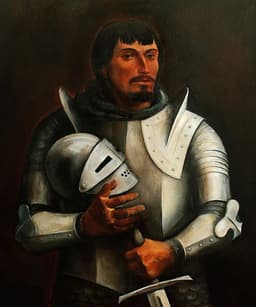
Fruzhin
Emperor · Medieval
41.8Total
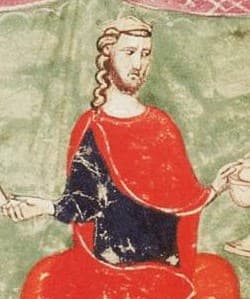
Peter III of Aragon
Emperor · Medieval
59.4Total
Basic Information
Born
1380
1239
Died
1460
1285
Era
Medieval
Medieval
Nationality
Bulgaria
Aragon
Occupation
Emperor
Emperor
Civilization
Western
Western
Score Comparison
Military (10%)
50.0
61.7
Political (20%)
29.3
68.0
Influence (20%)
49.4
57.2
Legacy (20%)
39.2
49.2
Leadership (15%)
39.0
65.0
Strategy (15%)
43.7
66.3
TOTAL
41.8
59.4
Fruzhin — Complete Timeline
1404 AD
Leadership of the Uprising of Konstantin and FruzhinWar◆ Major
Fruzhin, son of Tsar Ivan Shishman, led an anti-Ottoman uprising in Bulgaria along with his cousin Konstantin. The rebellion aimed to restore the Bulgarian Empire but was ultimately suppressed by the Ottomans.
UprisingOttoman WarsBulgarian Resistance
Impact: regionaltragic
1408 AD
Exile and service in the Kingdom of HungaryPolitical Action
After the failure of the uprising, Fruzhin fled to the Kingdom of Hungary, where he served as a military commander. He participated in campaigns against the Ottoman Empire, seeking to liberate Bulgaria.
ExileHungaryAnti-Ottoman Resistance
Impact: regional
1444 AD
Participation in the Crusade of Varna (1444)War◆ Major
Fruzhin joined the Crusade of Varna, a combined Christian effort to drive the Ottomans from the Balkans. The crusade ended in defeat at the Battle of Varna, where Fruzhin's hopes for Bulgarian liberation were dashed.
CrusadeOttoman WarsBulgarian Resistance
Impact: regionaltragic
Peter III of Aragon — Complete Timeline
1282 AD
Conquest of Sicily after the Sicilian VespersWar◆ Major
Following the Sicilian Vespers rebellion against Angevin rule, Peter III invaded Sicily and was crowned king in Palermo. This conquest established Aragonese rule in Sicily and triggered a long conflict with the Angevin dynasty and the Papacy.
ConquestSicilyAragon
Impact: regionalconstructive
Conquest of the Kingdom of SicilyWar◆ Major
Peter III landed at Trapani and quickly conquered the island of Sicily, defeating the Angevin forces of Charles I. He was crowned King of Sicily in Palermo, establishing the Aragonese Sicilian dynasty.
ConquestSicilyAragon
Impact: regionalconstructive
1283 AD
Excommunication by Pope Martin IVPolitical Action◆ Major
Pope Martin IV excommunicated Peter III for invading Sicily, a papal fief, and declared a crusade against him. The excommunication isolated Aragon diplomatically and led to a French invasion of Catalonia.
ExcommunicationPapacyConflict
Impact: regionaldestructive
1285 AD
Defense against the French CrusadeWar◆ Major
Peter III successfully defended the Crown of Aragon against a French crusade led by Philip III of France. The French army was defeated at the Battle of the Col de Panissars and forced to retreat, securing Aragonese independence.
WarDefenseAragon
Impact: regionalconstructive
Expert Analysis
Origins
Fruzhin was born in the late 14th century as the son of Tsar Ivan Shishman of Bulgaria. His early life was shaped by the Ottoman conquest of Bulgaria, which culminated in the fall of Tarnovo in 1393 and the execution of his father. Fruzhin and his cousin Konstantin escaped to the Kingdom of Hungary, where they sought refuge and support for anti-Ottoman activities. Fruzhin's formative years were spent in exile, surrounded by the remnants of Bulgarian nobility and the Hungarian court.
Peter III of Aragon was born around 1239 in Valencia, the eldest son of King James I of Aragon and his second wife, Violant of Hungary. He inherited a powerful Mediterranean kingdom with a strong naval tradition. Peter was educated in chivalry and statecraft, and he participated in his father's campaigns, including the conquest of the Kingdom of Valencia. His early experience in military and governance prepared him for his later expansionist policies.
Rise to Power
Fruzhin rose to prominence as a leader of the Uprising of Konstantin and Fruzhin in 1404. Along with his cousin Konstantin, he mobilized Bulgarian and Christian forces to challenge Ottoman rule in the Balkans. The rebellion initially gained ground, exploiting Ottoman weakness after the Battle of Ankara in 1402. However, the Ottomans regrouped and crushed the uprising by 1413. Fruzhin's subsequent role as a commander in Hungarian service, including participation in the Crusade of Varna in 1444, kept him active in anti-Ottoman efforts, but he never regained a throne.
Peter III became king of Aragon in 1276 upon his father's death. He immediately sought to expand Aragonese influence in the Mediterranean. The opportunity came in 1282 with the Sicilian Vespers, a rebellion against Charles I of Anjou. Peter invaded Sicily, claiming the throne through his wife, Constance of Hohenstaufen. He was crowned in Palermo in September 1282, establishing Aragonese rule on the island. His rise was swift and decisive, backed by military force and dynastic claims.
Leadership & Governance
Fruzhin's leadership was constrained by his exile status. He relied on Hungarian support and led coalition forces, but his authority was limited. His governance style was that of a claimant king, unable to implement lasting reforms due to lack of territory. In contrast, Peter III governed the Crown of Aragon and the newly acquired Kingdom of Sicily with a firm hand. He reformed the administration, strengthened the navy, and promoted trade. Peter's excommunication by Pope Martin IV in 1283 for invading a papal fief isolated him diplomatically, but he maintained control through military prowess and alliances. His leadership score of 65.0 reflects his effectiveness, while Fruzhin's 39.0 indicates his limited impact.
Triumph & Tragedy
Fruzhin's greatest triumph was leading the 1404 uprising, which briefly threatened Ottoman control in the Balkans. However, the rebellion failed, and Fruzhin spent his later years in exile, dying in obscurity around 1460. His tragedy was his inability to restore Bulgarian independence despite decades of effort. Peter III's triumph was the conquest of Sicily and the successful defense against the French Crusade, where he crushed Philip III's army at the Battle of the Col de Panissars in 1285. His tragedy was the prolonged conflict with the Papacy and the Angevin dynasty, which drained resources and led to ongoing wars. Peter died in 1285, leaving a legacy of expansion but also a contested kingdom.
Character & Destiny
Fruzhin was a persistent but ultimately unsuccessful leader, scoring 39.0 in leadership and 43.7 in strategy. His character was defined by resilience and loyalty to a lost cause. Peter III was ambitious and calculating, with a strategy score of 66.3 and a political score of 68.0. He took risks, such as invading Sicily despite papal opposition, and his decisiveness shaped his destiny as a successful conqueror. Historians view Peter as a capable monarch who expanded Aragonese power, while Fruzhin is remembered as a symbol of Bulgarian resistance.
Legacy
Fruzhin's legacy is primarily symbolic: he is remembered as a national hero in Bulgaria, representing the struggle against Ottoman rule. However, his practical impact was limited, with an influence score of 49.4 and a legacy score of 39.2. Peter III's legacy is more tangible: he established the Aragonese dynasty in Sicily, which lasted for centuries, and his actions contributed to the War of the Sicilian Vespers, a major European conflict. His influence score of 57.2 and legacy score of 49.2 reflect his enduring impact on Mediterranean politics.
Conclusion
Peter III of Aragon had a greater impact than Fruzhin, with a total score of 59.4 compared to Fruzhin's 41.8. Peter's conquests reshaped the political map of the Mediterranean and established a lasting dynasty, while Fruzhin's rebellion, though significant, failed to achieve its goals. Peter's higher scores in military (61.7 vs 50.0), political (68.0 vs 29.3), and leadership (65.0 vs 39.0) underscore his superior effectiveness. Fruzhin's legacy is more symbolic than substantive, whereas Peter's actions had concrete and enduring consequences. Therefore, Peter III of Aragon stands as the more consequential historical figure.
Rankings
🥇
Peter III of AragonLeader
Mil: 61.7Pol: 68.0Inf: 57.2
59.4
🥈
Fruzhin
Mil: 50.0Pol: 29.3Inf: 49.4
41.8
+17.6 behind
How This Comparison Works
Algorithm
Each figure is scored on 6 dimensions (0—100 scale) based on structured historical data: Military (10%), Political (20%), Influence (20%), Legacy (20%), Leadership (15%), Strategy (15%). The weighted total produces the final ranking.
Data Sources
Scores are computed from structured sub-indicators in the database. Scale factors adjust for era (Ancient ×0.85, Modern ×1.0) and civilization size (Eastern ×1.05, Other ×0.80) to account for differences in population and military scale.
Maximum 3 Figures
Comparisons are limited to 2—3 figures to ensure readability and statistical meaningfulness.
Error Margins
±5 points per dimension — Sub-scores are derived from historical records with inherent uncertainty. Two figures within 5 points on a dimension should be considered roughly equivalent in that area.
Total Score Accuracy
±3 points overall — The weighted combination of 6 dimensions produces a total score with approximately ±3 points of uncertainty. Differences of less than 3 points are not statistically significant— the figures are effectively tied.
Known Limitations
- Historical records are incomplete and uneven across civilizations
- Figures from oral-tradition societies may be underrepresented
- Occupation labels can misclassify multi-role figures
- Scores measure capability and impact, not moral character
- Quantitative scoring is a comparison tool, not absolute truth
Capability Radar
Military (10%) — Battles & Warfare
Battles
20
65
Win Rate
15
70
Expansion
10
70
Political (20%) — Governance & Reform
Reform
10
50
Diplomacy
20
65
Economy
10
50
Influence (20%) — Cultural & Global Reach
Cultural
15
40
Global
10
45
Legacy (20%) — Historical Impact
Historical
20
55
Longevity
15
40
Leadership (15%) — Power & Stability
Tenure
15
55
Stability
10
45
Strategy (15%) — Tactics & Innovation
Strategy
20
75
Tactics
25
60
Reform
10
40
Similar Comparisons
Comments & Discussion
No comments yet. Be the first to share your thoughts!