Loading...
Alexander III of Scotland vs Fruzhin
Alexander III of Scotland leads by 13.6 pts · 2 figures compared
…
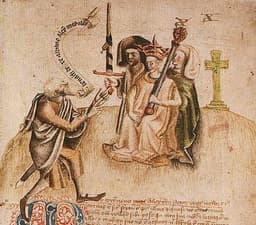
Alexander III of Scotland
Emperor · Medieval
55.4Total
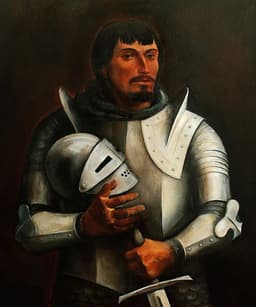
Fruzhin
Emperor · Medieval
41.8Total
Basic Information
Born
1241
1380
Died
1286
1460
Era
Medieval
Medieval
Nationality
Scotland
Bulgaria
Occupation
Emperor
Emperor
Civilization
Western
Western
Score Comparison
Military (10%)
50.0
50.0
Political (20%)
68.0
29.3
Influence (20%)
54.1
49.4
Legacy (20%)
49.2
39.2
Leadership (15%)
72.0
39.0
Strategy (15%)
35.7
43.7
TOTAL
55.4
41.8
Alexander III of Scotland — Complete Timeline
1251 AD
Marriage to Margaret of EnglandPolitical Action
Alexander III married Margaret, daughter of Henry III of England, at York Minster. The marriage was intended to secure peace between Scotland and England, but it also gave English kings a claim to interfere in Scottish affairs.
MarriageDiplomacyAnglo-Scottish Relations
Impact: national
1263 AD
Battle of LargsWar◆ Major
Alexander III's forces repelled a Norwegian invasion led by King Haakon IV at Largs in Ayrshire. The battle was indecisive but marked the end of Norwegian attempts to control the Hebrides and the Isle of Man.
BattleNorwegian InvasionHebrides
Impact: regionalconstructive
1266 AD
Treaty of PerthPolitical Action
Alexander III signed the Treaty of Perth with Norway, purchasing the Hebrides and the Isle of Man for 4,000 marks plus an annual payment of 100 marks. This extended Scottish sovereignty over the Western Isles.
TreatyTerritorial ExpansionHebrides
Impact: regionalconstructive
1286 AD
Death of Alexander IIIOther
Alexander III died after falling from his horse while riding from Edinburgh to Kinghorn in Fife during a storm. His death left no surviving legitimate children, triggering a succession crisis that led to the Wars of Scottish Independence.
DeathSuccession CrisisWars of Independence
Impact: nationaltragic
Fruzhin — Complete Timeline
1404 AD
Leadership of the Uprising of Konstantin and FruzhinWar◆ Major
Fruzhin, son of Tsar Ivan Shishman, led an anti-Ottoman uprising in Bulgaria along with his cousin Konstantin. The rebellion aimed to restore the Bulgarian Empire but was ultimately suppressed by the Ottomans.
UprisingOttoman WarsBulgarian Resistance
Impact: regionaltragic
1408 AD
Exile and service in the Kingdom of HungaryPolitical Action
After the failure of the uprising, Fruzhin fled to the Kingdom of Hungary, where he served as a military commander. He participated in campaigns against the Ottoman Empire, seeking to liberate Bulgaria.
ExileHungaryAnti-Ottoman Resistance
Impact: regional
1444 AD
Participation in the Crusade of Varna (1444)War◆ Major
Fruzhin joined the Crusade of Varna, a combined Christian effort to drive the Ottomans from the Balkans. The crusade ended in defeat at the Battle of Varna, where Fruzhin's hopes for Bulgarian liberation were dashed.
CrusadeOttoman WarsBulgarian Resistance
Impact: regionaltragic
Expert Analysis
Origins
Alexander III of Scotland was born in 1241, the son of King Alexander II and Marie de Coucy. He became king at age seven, inheriting a realm that had been consolidated by his father. His early reign was dominated by a regency council led by Walter Comyn, Earl of Menteith. Alexander's education was typical for a medieval monarch, focusing on chivalry, governance, and military skills. He married Margaret of England in 1251 at age ten, a union meant to secure peace between Scotland and England.
Fruzhin was born around 1380, the son of Tsar Ivan Shishman of Bulgaria, who ruled during the decline of the Second Bulgarian Empire under Ottoman pressure. Fruzhin's early life was shaped by the Ottoman conquest of Bulgaria in 1393-1396. He fled to exile, likely spending his youth in the Kingdom of Hungary or Wallachia, where he was trained in military arts. Unlike Alexander, Fruzhin grew up without a stable kingdom, his identity forged in resistance against Ottoman domination.
Rise to Power
Alexander III's rise was predetermined by birth, but he asserted control after his father's death. His coronation at Scone in 1249 at age seven placed him under regents. In 1262, he began a campaign to assert Scottish sovereignty over the Hebrides and Isle of Man, then under Norwegian rule. The climax came in 1263 with the Battle of Largs, where a Scottish force repelled King Haakon IV's invasion. Though indecisive militarily, it led to the Treaty of Perth in 1266, where Norway ceded the islands for 4,000 marks and an annual payment of 100 marks. This was Alexander's greatest political achievement, expanding Scotland's territory without prolonged war.
Fruzhin's rise was that of a rebel prince. After the Ottoman conquest, he emerged as a leader of Bulgarian resistance. In 1404, alongside his cousin Konstantin, he led the Uprising of Konstantin and Fruzhin, seeking to restore the Bulgarian Tsardom. The uprising gained initial support in the northwestern regions, but lacked foreign backing and was crushed by Ottoman forces by 1408. Fruzhin then fled to Hungary, where he served King Sigismund as a military commander. He participated in the Crusade of Varna in 1444, a pan-European effort to expel the Ottomans, which ended in disaster at the Battle of Varna.
Leadership & Governance
Alexander III's leadership was characterized by diplomatic skill and firm governance. He maintained peace with England, despite tensions, and strengthened royal authority. He reformed the administration, centralizing power and curbing the influence of the nobility. His reign saw the consolidation of Scotland's borders and the integration of the Hebrides, which were governed through appointed sheriffs. Alexander scored 72.0 in leadership, reflecting his ability to rule effectively during a period of relative stability. His political score of 68.0 indicates his success in diplomacy and statecraft.
Fruzhin's leadership was that of a military commander in exile, with limited governance experience. His political score of 29.3 reflects the difficulty of leading a rebellion from outside his homeland. He lacked the resources and institutional support that Alexander enjoyed. Fruzhin's strategy score of 43.7 suggests tactical competence but insufficient strategic vision to succeed against the Ottoman Empire. He was a figurehead for Bulgarian resistance, but his leadership was constrained by the power of Hungary and other Christian states.
Triumph & Tragedy
Alexander III's greatest triumph was the Treaty of Perth, which secured the Hebrides and the Isle of Man for Scotland, ending centuries of Norse influence. This expanded Scotland's territory and enhanced its prestige. He also maintained peace with England, avoiding costly wars. However, his tragedy was personal and dynastic. His sons David (died 1281) and Alexander (died 1284) predeceased him, and his wife Margaret died in 1275. His second marriage to Yolande de Dreux produced no surviving heir. When Alexander died in 1286 after falling from his horse during a storm, he left no legitimate children, triggering a succession crisis that led to the Wars of Scottish Independence.
Fruzhin's triumph was his role in keeping Bulgarian national identity alive during Ottoman rule. His uprising, though failed, demonstrated resistance. His participation in the Crusade of Varna showed his commitment to the anti-Ottoman cause. The tragedy was the failure of both the uprising and the crusade. After Varna, Fruzhin continued in Hungarian service but never regained Bulgaria. He died in obscurity around 1460. His legacy is that of a symbol of resistance, but his actual impact on Bulgarian independence was minimal.
Character & Destiny
Alexander III was pragmatic and cautious, focused on stability and expansion through diplomacy. His character is reflected in his avoidance of major military conflicts (military score 50.0) and his emphasis on treaties. He was a competent administrator but not a warrior king. His destiny was shaped by the tragic deaths of his heirs, which undid his life's work. The succession crisis was a direct result of his failure to secure a living male heir, despite two marriages. Historians view him as a capable monarch whose achievements were overshadowed by the subsequent chaos.
Fruzhin was determined and resilient, persisting in resistance despite repeated failures. His character reflects the desperation of a prince without a kingdom. He was willing to serve foreign powers to further his cause, but this also made him dependent on others. His destiny was to be a perennial rebel, never achieving his goal. The historical assessment is that he was a tragic figure, a symbol of Bulgarian resistance but ultimately ineffective.
Legacy
Alexander III's legacy is mixed. He secured Scotland's western borders and the Hebrides, which remain part of Scotland today. However, his death without an heir led to the Wars of Scottish Independence, which reshaped Scottish history. His reign is remembered as a golden age of peace and prosperity, but also as a prelude to conflict. His legacy score of 49.2 reflects this ambiguity. The Treaty of Perth was a lasting achievement, but the succession crisis overshadowed it.
Fruzhin's legacy is primarily symbolic. He is remembered in Bulgarian national history as a hero of resistance against the Ottomans. His uprising is commemorated, but it had little tangible impact. His legacy score of 39.2 is low because he did not achieve his objectives. He is more a figure of folklore than a shaper of history.
Conclusion
Alexander III had a greater impact than Fruzhin, as measured by his total score of 55.4 versus Fruzhin's 41.8. Alexander's achievements in expanding Scotland's territory and maintaining stability were concrete and lasting. Fruzhin, despite his noble efforts, failed to restore Bulgarian independence and his influence was limited to symbolic resistance. Alexander's reign shaped Scotland's borders and set the stage for its future, while Fruzhin's uprising was a footnote in Ottoman history. Therefore, Alexander III is the more significant historical figure.
Rankings
🥇
Alexander III of ScotlandLeader
Mil: 50.0Pol: 68.0Inf: 54.1
55.4
🥈
Fruzhin
Mil: 50.0Pol: 29.3Inf: 49.4
41.8
+13.6 behind
How This Comparison Works
Algorithm
Each figure is scored on 6 dimensions (0—100 scale) based on structured historical data: Military (10%), Political (20%), Influence (20%), Legacy (20%), Leadership (15%), Strategy (15%). The weighted total produces the final ranking.
Data Sources
Scores are computed from structured sub-indicators in the database. Scale factors adjust for era (Ancient ×0.85, Modern ×1.0) and civilization size (Eastern ×1.05, Other ×0.80) to account for differences in population and military scale.
Maximum 3 Figures
Comparisons are limited to 2—3 figures to ensure readability and statistical meaningfulness.
Error Margins
±5 points per dimension — Sub-scores are derived from historical records with inherent uncertainty. Two figures within 5 points on a dimension should be considered roughly equivalent in that area.
Total Score Accuracy
±3 points overall — The weighted combination of 6 dimensions produces a total score with approximately ±3 points of uncertainty. Differences of less than 3 points are not statistically significant— the figures are effectively tied.
Known Limitations
- Historical records are incomplete and uneven across civilizations
- Figures from oral-tradition societies may be underrepresented
- Occupation labels can misclassify multi-role figures
- Scores measure capability and impact, not moral character
- Quantitative scoring is a comparison tool, not absolute truth
Capability Radar
Military (10%) — Battles & Warfare
Battles
20
20
Win Rate
25
15
Expansion
15
10
Political (20%) — Governance & Reform
Reform
55
10
Diplomacy
65
20
Economy
60
10
Influence (20%) — Cultural & Global Reach
Cultural
30
15
Global
25
10
Legacy (20%) — Historical Impact
Historical
55
20
Longevity
40
15
Leadership (15%) — Power & Stability
Tenure
60
15
Stability
70
10
Strategy (15%) — Tactics & Innovation
Strategy
20
20
Tactics
15
25
Reform
10
10
Similar Comparisons
Comments & Discussion
No comments yet. Be the first to share your thoughts!