Loading...
Cuauhtemoc vs Fruzhin
Cuauhtemoc leads by 7.2 pts · 2 figures compared
…
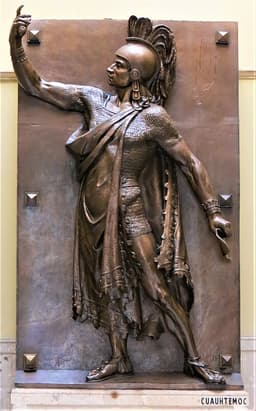
Cuauhtemoc
Emperor · Medieval
49.0Total
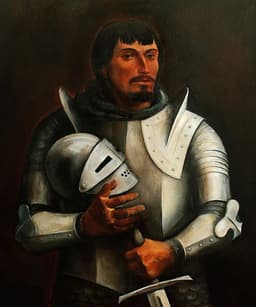
Fruzhin
Emperor · Medieval
41.8Total
Basic Information
Born
1497
1380
Died
1525
1460
Era
Medieval
Medieval
Nationality
Aztec Empire
Bulgaria
Occupation
Emperor
Emperor
Civilization
Other
Western
Score Comparison
Military (10%)
46.7
50.0
Political (20%)
30.7
29.3
Influence (20%)
56.7
49.4
Legacy (20%)
58.0
39.2
Leadership (15%)
33.6
39.0
Strategy (15%)
60.0
43.7
TOTAL
49.0
41.8
Cuauhtemoc — Complete Timeline
1440 AD
Expanded the Aztec Empire through Military CampaignsWar◆ Major
Moctezuma I launched a series of military campaigns that extended Aztec control into the Gulf Coast, Oaxaca, and Guerrero regions. He conquered cities such as Cuetlaxtlan and Coixtlahuaca, incorporating them into the tribute system.
Aztec ExpansionMilitary ConquestTribute System
Impact: regional
1450 AD
Implemented the Flower Wars (Xochiyaoyotl)War◆ Major
Moctezuma I institutionalized the Flower Wars, ritualized conflicts with Tlaxcala and other city-states. These battles were designed to capture prisoners for religious sacrifice rather than territorial conquest, reinforcing Aztec religious practices.
Ritual WarfareHuman SacrificeAztec Religion
Impact: regionaldestructive
Constructed the Aqueduct of ChapultepecCultural
Moctezuma I commissioned the construction of a stone aqueduct from Chapultepec springs to Tenochtitlan, providing fresh water to the island city. This engineering project improved public health and supported the city's growing population.
InfrastructureWater SupplyUrban Development
constructive
Fruzhin — Complete Timeline
1404 AD
Leadership of the Uprising of Konstantin and FruzhinWar◆ Major
Fruzhin, son of Tsar Ivan Shishman, led an anti-Ottoman uprising in Bulgaria along with his cousin Konstantin. The rebellion aimed to restore the Bulgarian Empire but was ultimately suppressed by the Ottomans.
UprisingOttoman WarsBulgarian Resistance
Impact: regionaltragic
1408 AD
Exile and service in the Kingdom of HungaryPolitical Action
After the failure of the uprising, Fruzhin fled to the Kingdom of Hungary, where he served as a military commander. He participated in campaigns against the Ottoman Empire, seeking to liberate Bulgaria.
ExileHungaryAnti-Ottoman Resistance
Impact: regional
1444 AD
Participation in the Crusade of Varna (1444)War◆ Major
Fruzhin joined the Crusade of Varna, a combined Christian effort to drive the Ottomans from the Balkans. The crusade ended in defeat at the Battle of Varna, where Fruzhin's hopes for Bulgarian liberation were dashed.
CrusadeOttoman WarsBulgarian Resistance
Impact: regionaltragic
Expert Analysis
Origins
Cuauhtemoc (c. 1502–1525) was born into the Aztec nobility, likely in Tenochtitlan. He was a nephew of Moctezuma II and married to Tecuichpo, Moctezuma's daughter. Little is known of his early life, but he was trained as a warrior and held the title of tlacateccatl (military commander). He rose to prominence during the Spanish siege of Tenochtitlan.
Fruzhin (c. 1380–1460) was a Bulgarian prince, son of Tsar Ivan Shishman of the Second Bulgarian Empire. After the Ottoman conquest of Bulgaria in 1393, he fled to the Kingdom of Hungary. He was educated in the Hungarian court and became a military commander in service of the Hungarian king.
Rise to Power
Cuauhtemoc became emperor in 1520 after the death of Cuitláhuac from smallpox. His predecessor had driven the Spaniards from Tenochtitlan during the Noche Triste (June 30, 1520). Cuauhtemoc inherited a city ravaged by disease and under siege. He organized the defense, mobilizing warriors and building barricades. His military score of 46.7 reflects his tactical efforts, but his political score of 30.7 shows his limited ability to forge alliances.
Fruzhin's rise came through rebellion. In 1404, he and his cousin Konstantin led the Uprising of Konstantin and Fruzhin in northwestern Bulgaria. They briefly liberated parts of the region, but the uprising was crushed by the Ottomans by 1413. Fruzhin then served in the Hungarian army, participating in campaigns against the Ottomans. His political score of 29.3 indicates similar difficulties in building a sustained coalition.
Leadership & Governance
Cuauhtemoc's leadership during the siege was characterized by fierce resistance. He commanded from a canoe, directing troops across the causeways. His strategy score of 60.0 is higher than Fruzhin's 43.7, reflecting his tactical use of the lake and city defenses. However, he failed to secure support from neighboring city-states, many of whom allied with the Spanish. After his capture, he was tortured (his feet burned) to reveal hidden gold, but he remained defiant.
Fruzhin's leadership was more diplomatic. He spent years in exile, lobbying European monarchs for a crusade. He joined the Crusade of Varna in 1444, which ended in defeat at the Battle of Varna. His military score of 50.0 is slightly higher than Cuauhtemoc's 46.7, but his strategy score is lower. He lacked the resources to mount a sustained campaign.
Triumph & Tragedy
Cuauhtemoc's triumph was his defense of Tenochtitlan for 80 days against a superior Spanish force with indigenous allies. He delayed the inevitable and inflicted heavy casualties. His tragedy was the fall of the Aztec Empire and his own execution by hanging in 1525 on Cortés's orders during an expedition to Honduras. His legacy score of 58.0 reflects his symbol of resistance.
Fruzhin's triumph was leading the first major anti-Ottoman uprising in Bulgaria, inspiring later rebellions. His tragedy was the failure of the uprising and the subsequent consolidation of Ottoman rule for centuries. He died in exile in Hungary around 1460. His legacy score of 39.2 is lower, as his efforts did not lead to immediate liberation.
Character & Destiny
Cuauhtemoc is remembered for his courage and stoicism under torture. His name means "One Who Descends Like an Eagle," fitting his role as a defender. His destiny was sealed by the technological and epidemiological advantages of the Spanish. His leadership score of 33.6 reflects his limited ability to inspire broader coalitions.
Fruzhin was a persistent rebel who spent his life fighting for Bulgarian independence. He adapted to exile, serving in foreign armies. His character was marked by resilience, but he lacked the military strength to challenge the Ottomans directly. His leadership score of 39.0 is slightly higher than Cuauhtemoc's.
Legacy
Cuauhtemoc is a national symbol in Mexico, honored with statues and currency. His resistance is celebrated as a stand against colonialism. The Aztec Empire fell, but his name endures. His influence score of 56.7 reflects his cultural impact.
Fruzhin is less well-known, but he is a figure in Bulgarian national revival. His uprising is seen as a precursor to the Liberation of Bulgaria in 1878. His influence score of 49.4 is lower, partly because his efforts were overshadowed by later events.
Conclusion
Cuauhtemoc had a greater impact than Fruzhin, with a total score of 49.0 versus 41.8. His defense of Tenochtitlan against overwhelming odds made him a symbol of resistance that resonates globally. Fruzhin's uprising, while significant, was smaller in scale and impact. Cuauhtemoc's legacy endures in modern Mexico, while Fruzhin remains a niche historical figure. The 7.2-point gap reflects Cuauhtemoc's higher influence and strategic achievements, despite his ultimate defeat.
Rankings
🥇
CuauhtemocLeader
Mil: 46.7Pol: 30.7Inf: 56.7
49.0
🥈
Fruzhin
Mil: 50.0Pol: 29.3Inf: 49.4
41.8
+7.2 behind
How This Comparison Works
Algorithm
Each figure is scored on 6 dimensions (0—100 scale) based on structured historical data: Military (10%), Political (20%), Influence (20%), Legacy (20%), Leadership (15%), Strategy (15%). The weighted total produces the final ranking.
Data Sources
Scores are computed from structured sub-indicators in the database. Scale factors adjust for era (Ancient ×0.85, Modern ×1.0) and civilization size (Eastern ×1.05, Other ×0.80) to account for differences in population and military scale.
Maximum 3 Figures
Comparisons are limited to 2—3 figures to ensure readability and statistical meaningfulness.
Error Margins
±5 points per dimension — Sub-scores are derived from historical records with inherent uncertainty. Two figures within 5 points on a dimension should be considered roughly equivalent in that area.
Total Score Accuracy
±3 points overall — The weighted combination of 6 dimensions produces a total score with approximately ±3 points of uncertainty. Differences of less than 3 points are not statistically significant— the figures are effectively tied.
Known Limitations
- Historical records are incomplete and uneven across civilizations
- Figures from oral-tradition societies may be underrepresented
- Occupation labels can misclassify multi-role figures
- Scores measure capability and impact, not moral character
- Quantitative scoring is a comparison tool, not absolute truth
Capability Radar
Military (10%) — Battles & Warfare
Battles
55
20
Win Rate
30
15
Expansion
10
10
Political (20%) — Governance & Reform
Reform
10
10
Diplomacy
15
20
Economy
10
10
Influence (20%) — Cultural & Global Reach
Cultural
60
15
Global
55
10
Legacy (20%) — Historical Impact
Historical
65
20
Longevity
60
15
Leadership (15%) — Power & Stability
Tenure
20
15
Stability
10
10
Strategy (15%) — Tactics & Innovation
Strategy
55
20
Tactics
60
25
Reform
10
10
Similar Comparisons
Comments & Discussion
No comments yet. Be the first to share your thoughts!