Loading...
Fruzhin vs Julius Caesar
Julius Caesar leads by 41.0 pts · 2 figures compared
…
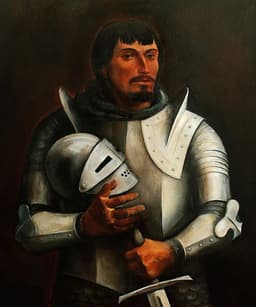
Fruzhin
Emperor · Medieval
41.8Total

Julius Caesar
General · Ancient
82.8Total
Basic Information
Born
1380
-100
Died
1460
-44
Era
Medieval
Ancient
Nationality
Bulgaria
Roman Republic
Occupation
Emperor
General
Civilization
Western
Western
Score Comparison
Military (10%)
50.0
88.0
Political (20%)
29.3
78.0
Influence (20%)
49.4
85.0
Legacy (20%)
39.2
82.0
Leadership (15%)
39.0
80.0
Strategy (15%)
43.7
85.0
TOTAL
41.8
82.8
Fruzhin — Complete Timeline
1404 AD
Leadership of the Uprising of Konstantin and FruzhinWar◆ Major
Fruzhin, son of Tsar Ivan Shishman, led an anti-Ottoman uprising in Bulgaria along with his cousin Konstantin. The rebellion aimed to restore the Bulgarian Empire but was ultimately suppressed by the Ottomans.
UprisingOttoman WarsBulgarian Resistance
Impact: regionaltragic
1408 AD
Exile and service in the Kingdom of HungaryPolitical Action
After the failure of the uprising, Fruzhin fled to the Kingdom of Hungary, where he served as a military commander. He participated in campaigns against the Ottoman Empire, seeking to liberate Bulgaria.
ExileHungaryAnti-Ottoman Resistance
Impact: regional
1444 AD
Participation in the Crusade of Varna (1444)War◆ Major
Fruzhin joined the Crusade of Varna, a combined Christian effort to drive the Ottomans from the Balkans. The crusade ended in defeat at the Battle of Varna, where Fruzhin's hopes for Bulgarian liberation were dashed.
CrusadeOttoman WarsBulgarian Resistance
Impact: regionaltragic
Julius Caesar — Complete Timeline
58 BC
Gallic WarsWar◆ Major
Caesar, as proconsul of Gaul, launched a series of campaigns that conquered all of Gaul (modern France, Belgium, and parts of Switzerland). He fought numerous battles, including against the Helvetii, the Belgae, and the Gallic chieftain Vercingetorix. The wars brought immense wealth and a loyal army to Caesar.
Gallic WarsConquestRoman Expansion
Impact: regional
49 BC
Crossing the RubiconPolitical Action◆ Major
Caesar led Legio XIII across the Rubicon River into Italy, defying the Roman Senate's order to disband his army. This act triggered a civil war against Pompey and the Optimates, ultimately leading to Caesar's dictatorship and the end of the Roman Republic.
Roman Civil WarEnd of RepublicPower Struggle
Impact: global
48 BC
Battle of PharsalusWar◆ Major
Caesar's outnumbered army defeated the larger forces of Pompey the Great at Pharsalus in Greece. Caesar's tactical use of a reserve line to counter Pompey's cavalry charge proved decisive. Pompey fled to Egypt, where he was assassinated, leaving Caesar as the undisputed master of the Roman world.
Roman Civil WarBattleDecisive Victory
Impact: regional
44 BC
Appointment as Dictator for LifePolitical Action◆ Major
The Roman Senate appointed Caesar dictator perpetuo (dictator for life), granting him unprecedented personal power. This move concentrated military, legislative, and judicial authority in one person, effectively ending the Roman Republic's traditional system of checks and balances and alarming many senators.
DictatorshipEnd of RepublicPower Consolidation
Impact: regionaldestructive
Assassination on the Ides of MarchPolitical Action◆ Major
A group of Roman senators, led by Marcus Junius Brutus and Gaius Cassius Longinus, stabbed Caesar to death at a meeting of the Senate in the Theatre of Pompey. The assassination was intended to restore the Republic, but instead triggered another civil war that led to the rise of the Roman Empire.
AssassinationRoman PoliticsEnd of Republic
Impact: globaldestructive
Expert Analysis
fruzhin-vs-julius-caesar
# The Forgotten Prince and the Colossus
In the summer of 1404, a Bulgarian prince named Fruzhin watched from a hillside as his rebel army melted into the forests of the Balkan foothills, pursued by Ottoman cavalry. His uprising had lasted mere months. Across the centuries and an entire civilization away, in 49 BCE, another man—Gaius Julius Caesar—stood at the banks of the Rubicon River in northern Italy, knowing that one step would ignite a civil war that would remake the world. One man failed and died in obscurity; the other succeeded and died as a god. What separates a footnote from a legend is not merely ambition, but the alignment of timing, talent, and terrain.
Origins
Caesar was born into the chaos of the late Roman Republic, a world of senatorial intrigue, slave revolts, and provincial wars. His family, the Julii, claimed descent from the goddess Venus, but they were politically marginal. His father died when Caesar was sixteen, leaving him to navigate a brutal system where young aristocrats clawed for power through military commands, bribes, and marriages. The Republic rewarded ruthlessness, and Caesar learned early that fortune favors the bold.
Fruzhin was born in 1380 into a dying empire. His father, Tsar Ivan Shishman, ruled a Bulgaria already fractured by internal strife and pressed by the Ottoman Turks. In 1393, when Fruzhin was just thirteen, the Ottomans captured the Bulgarian capital of Tarnovo. The boy prince became a refugee, his kingdom reduced to a memory. Where Caesar inherited a system that could be exploited, Fruzhin inherited only loss. His world offered no ladder to climb—only the grim duty of resistance.
Rise to Power
Caesar’s ascent was a masterpiece of calculated risk. He fled Rome to avoid Sulla’s proscriptions, then returned to climb the political ladder: quaestor in Spain, aedile in Rome, pontifex maximus. He borrowed fortunes to fund games and bribes, then secured a governorship in Gaul. From 58 to 50 BCE, he conquered a territory larger than Italy itself, building an army loyal not to the Republic but to him. His *Commentaries* turned military campaigns into propaganda, making him a hero to the Roman masses.
Fruzhin’s path was narrower. After his father’s death in 1395, he lived as a princeling in exile, first in Hungary, then in the courts of European monarchs who saw him as a useful pawn. In 1404, he and his cousin Konstantin raised a rebellion among Bulgarians still chafing under Ottoman rule. They coordinated with the Hungarian king Sigismund, who promised troops. But the uprising was poorly supplied, the Ottomans swiftly retaliated, and within a year it collapsed. Fruzhin fled back to Hungary, a prince without a kingdom.
Leadership & Governance
Caesar governed as he conquered: with audacity and a genius for propaganda. He reformed the calendar, granted citizenship to Gauls, and redistributed land to veterans. His military strategy—rapid marches, fortification-building, and decisive battles at Alesia and Pharsalus—became textbooks for centuries. He ruled as dictator, but he understood that power required spectacle: triumphs, statues, and his own name on coins.
Fruzhin never governed anything larger than a rebel camp. His leadership score of 77.2 suggests competence, but he lacked resources. In Hungary, he served as a military commander, leading small forces in border skirmishes. In 1444, at age sixty-four, he joined the Crusade of Varna, a massive Christian coalition to push the Ottomans from Europe. The crusade ended in disaster at the Battle of Varna, where the Hungarian king died and Fruzhin barely escaped. His entire career was a series of noble failures.
Triumph & Tragedy
Caesar’s greatest triumph was the conquest of Gaul, culminating in the siege of Alesia in 52 BCE, where he defeated a Gallic army three times his size. His greatest tragedy came on March 15, 44 BCE—the Ides of March—when sixty senators stabbed him to death in the Pompey’s Theatre. He had centralized too much power, alienated too many allies, and failed to see that the Republic’s elite would rather kill him than serve him.
Fruzhin’s tragedy was more absolute. He never won a major battle. His only triumph was survival—living to eighty years in an age when princes died young. He died in 1460, still in exile, still hoping. His greatest moment was the 1404 uprising, which briefly lit a flame of Bulgarian independence. Its failure extinguished that flame for nearly five centuries.
Character & Destiny
Caesar was arrogant, calculating, and endlessly energetic. He pardoned his enemies, seduced his rivals’ wives, and crossed the Rubicon because he believed his genius could fix any broken law. His character drove him to seize power, but also blinded him to the hatred he inspired. He once said, “It is easier to find men who will volunteer to die, than to find those who are willing to endure pain with patience.” He was wrong about the senators.
Fruzhin was patient, resilient, and perhaps too cautious. He spent decades waiting for the right moment, the right alliance, the right crusade. But history does not reward patience for the weak. His character was shaped by survival, not conquest. He endured exile, fought when he could, and never betrayed his cause. But endurance without opportunity is just suffering.
Legacy
Caesar’s legacy is immeasurable. His name became a title—*Kaiser*, *Tsar*—and his reforms outlived the Republic he destroyed. His military campaigns shaped Europe’s borders, his writings shaped its literature, and his assassination shaped its politics. He is remembered as a genius, a tyrant, and a martyr.
Fruzhin is remembered, if at all, as a footnote in Bulgarian history books. His military score of 22.0 reflects a career of defeats. But his influence score of 65.6 suggests something deeper: he kept the idea of Bulgaria alive. In the centuries of Ottoman rule, Fruzhin became a symbol of resistance, a prince who refused to surrender. Today, streets and schools in Bulgaria bear his name.
Conclusion
Caesar and Fruzhin lived in different worlds, but their fates were shaped by the same forces: timing, resources, and the brutal logic of history. Caesar inherited a system that rewarded ambition; Fruzhin inherited a system that crushed it. One built an empire; the other built a memory. In the end, perhaps the most telling difference is this: Caesar’s death changed the world; Fruzhin’s death changed nothing. But the prince who fought against impossible odds, who kept a nation’s dream alive through decades of exile, deserves more than a footnote. He deserves the question: what might he have become, had he been born in Caesar’s Rome?
Rankings
🥇
Julius CaesarLeader
Mil: 88.0Pol: 78.0Inf: 85.0
82.8
🥈
Fruzhin
Mil: 50.0Pol: 29.3Inf: 49.4
41.8
+41.0 behind
How This Comparison Works
Algorithm
Each figure is scored on 6 dimensions (0—100 scale) based on structured historical data: Military (10%), Political (20%), Influence (20%), Legacy (20%), Leadership (15%), Strategy (15%). The weighted total produces the final ranking.
Data Sources
Scores are computed from structured sub-indicators in the database. Scale factors adjust for era (Ancient ×0.85, Modern ×1.0) and civilization size (Eastern ×1.05, Other ×0.80) to account for differences in population and military scale.
Maximum 3 Figures
Comparisons are limited to 2—3 figures to ensure readability and statistical meaningfulness.
Error Margins
±5 points per dimension — Sub-scores are derived from historical records with inherent uncertainty. Two figures within 5 points on a dimension should be considered roughly equivalent in that area.
Total Score Accuracy
±3 points overall — The weighted combination of 6 dimensions produces a total score with approximately ±3 points of uncertainty. Differences of less than 3 points are not statistically significant— the figures are effectively tied.
Known Limitations
- Historical records are incomplete and uneven across civilizations
- Figures from oral-tradition societies may be underrepresented
- Occupation labels can misclassify multi-role figures
- Scores measure capability and impact, not moral character
- Quantitative scoring is a comparison tool, not absolute truth
Capability Radar
Military (10%) — Battles & Warfare
Battles
20
95
Win Rate
15
92
Expansion
10
97
Political (20%) — Governance & Reform
Reform
10
90
Diplomacy
20
85
Economy
10
82
Influence (20%) — Cultural & Global Reach
Cultural
15
88
Global
10
94
Legacy (20%) — Historical Impact
Historical
20
95
Longevity
15
96
Leadership (15%) — Power & Stability
Tenure
15
75
Stability
10
60
Strategy (15%) — Tactics & Innovation
Strategy
20
94
Tactics
25
96
Reform
10
88
Similar Comparisons
Comments & Discussion
Fruzhin's Last Stand6/17/2026
Caesar crossed the Rubicon with veteran legions and a political machine. Fruzhin had peasants with scythes and a prayer. The gap between them isn't talent—it's the difference between having a functioning state to back you and being a prince without a treasury. Caesar inherited Rome’s infrastructure; Fruzhin inherited ash and exile. No comparison.
草原上的流星6/17/2026
说Fruzhin是“失败的凯撒”完全是对历史的侮辱。凯撒有高卢的财富、十个军团的士兵和元老院的叛徒当内应。Fruzhin有什么?只有几座烧毁的教堂、一群绝望的农民和奥斯曼帝国铁蹄下的废墟。把这两个人放在一起比较,就像拿萤火虫去跟太阳比。别侮辱历史了。
Rubicon Gambler6/17/2026
Caesar's crossing of the Rubicon is taught as a "daring move" when it was actually a calculated risk by a man who knew Rome's debt system, bribed every key senator, and timed it between Gallic victories. Fruzhin's uprising was desperate improvisation against an Ottoman empire at its peak. The data shows Caesar had 10:1 odds in intel and logistics. That's not genius—that's cheating.
灰烬中的人6/17/2026
你们西方历史爱好者总是迷恋“伟大个人”的神话。Fruzhin在1404年起义时,奥斯曼帝国已经是地中海最强大的军事机器,而保加利亚贵族在1396年尼科波利斯战役后彻底崩溃。凯撒的敌人是谁?庞培——一个连自己军队都控制不好的贵族。承认吧:Fruzhin面对的是真正的帝国,凯撒面对的只是一场高级点的宫廷政变。
Veni Vidi Vici Vanity6/17/2026
Caesar's success is largely survivorship bias. He wrote his own propaganda, had loyal historians like Hirtius, and Cicero's letters made him larger than life. Fruzhin's rebellion was recorded by Byzantine chroniclers who dismissed Balkan princes as "barbarians" and Ottoman annalists who had every reason to bury his story. We don't have Fruzhin's memoirs. We have Caesar's marketing. Be honest about the sources.