Loading...
Frederick III vs Harsha
Harsha leads by 17.7 pts · 2 figures compared
…
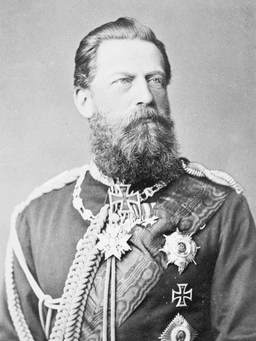
Frederick III
Emperor · Medieval
43.3Total
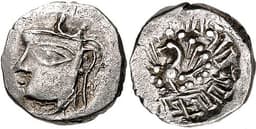
Harsha
Emperor · Medieval
61.0Total
Basic Information
Born
1415
590
Died
1493
647
Era
Medieval
Medieval
Nationality
Holy Roman Empire
India
Occupation
Emperor
Emperor
Civilization
Western
Indian
Score Comparison
Military (10%)
21.2
61.7
Political (20%)
37.9
45.0
Influence (20%)
50.2
68.0
Legacy (20%)
45.0
58.0
Leadership (15%)
53.2
66.0
Strategy (15%)
36.8
66.3
TOTAL
43.3
61.0
Frederick III — Complete Timeline
1450 AD
AEIOU MottoCultural
Frederick III adopted the motto AEIOU, which he used extensively on buildings and documents. The meaning of the acronym is uncertain, but it is often interpreted as 'Austriae est imperare orbi universo' (It is Austria's destiny to rule the world). This motto reflected Frederick's long-term vision for Habsburg dominance.
MottoHabsburg PropagandaSymbolism
Impact: regional
1452 AD
Coronation as Holy Roman EmperorPolitical Action◆ Major
Frederick III was crowned Holy Roman Emperor by Pope Nicholas V in Rome, the last emperor to be crowned in the city. His coronation reaffirmed the traditional alliance between the Empire and the Papacy. Frederick's long reign (53 years) was the longest of any Holy Roman Emperor.
CoronationImperial AuthorityPapacy
Impact: globalconstructive
1463 AD
Treaty of Wiener NeustadtPolitical Action
Frederick III signed the Treaty of Wiener Neustadt with his brother Albert VI, ending a conflict over the Habsburg inheritance. The treaty divided the Habsburg lands, with Frederick retaining control of Austria and Albert receiving parts of Further Austria. This agreement temporarily stabilized the internal Habsburg situation.
Habsburg DynastyTreatyTerritorial Division
constructive
1477 AD
Marriage of Maximilian IPolitical Action
Frederick III arranged the marriage of his son Maximilian I to Mary of Burgundy, heiress of the Burgundian state. This marriage brought the wealthy Burgundian territories, including the Netherlands, into the Habsburg orbit. It was a cornerstone of Habsburg power and led to centuries of conflict with France.
Marriage AllianceBurgundian InheritanceHabsburg Power
Impact: globalconstructive
1485 AD
Siege of Vienna (1485)War◆ Major
Frederick III was besieged in Vienna by the forces of Matthias Corvinus, King of Hungary. After a prolonged siege, Frederick was forced to flee the city, which fell to Corvinus. Frederick spent the next years in exile in Graz, unable to reclaim his capital until Corvinus's death in 1490.
SiegeHungarian InvasionExile
Impact: regionaltragic
Harsha — Complete Timeline
606 AD
Accession to the Throne of ThanesarPolitical Action
Harsha succeeded his father Prabhakaravardhana as ruler of Thanesar (in present-day Haryana). He was 16 years old and soon faced the challenge of avenging his brother-in-law's death and expanding his kingdom.
ThanesarSuccessionHarsha
Impact: regional
612 AD
Conquest of KannaujWar◆ Major
Harsha captured the city of Kannauj after defeating the Maukhari ruler Grahavarman's enemies. He made Kannauj his capital and established the Vardhana dynasty's control over the Gangetic plain, becoming the dominant power in northern India.
KannaujVardhana DynastyNorthern India
Impact: regional
620 AD
Campaigns in Eastern IndiaWar◆ Major
Harsha led military campaigns into Bengal and Odisha, defeating the Shashanka king of Gauda. He extended his empire eastward to the Bay of Bengal, though his control over these regions was not permanent.
BengalOdishaShashanka
Impact: regional
630 AD
Conflict with the Chalukya King Pulakeshin IIWar◆ Major
Harsha attempted to expand southward but was defeated by the Chalukya king Pulakeshin II on the banks of the Narmada River. This battle halted Harsha's southern expansion and established the Narmada as the boundary between the two empires.
ChalukyaPulakeshin IINarmada
Impact: regional
640 AD
Patronage of Buddhism and the Nalanda UniversityCultural◆ Major
Harsha was a patron of Buddhism and supported the Nalanda University, a major center of Buddhist learning. He convened a grand Buddhist council at Kannauj attended by monks from across Asia, and built monasteries and stupas.
BuddhismNalandaCouncil of Kannauj
Impact: regionalconstructive
643 AD
Visit of the Chinese Pilgrim XuanzangCultural
The Chinese Buddhist monk Xuanzang visited Harsha's court and spent time in the empire. Xuanzang's detailed accounts describe Harsha's administration, military, and religious tolerance, providing a key historical source for the period.
XuanzangChinese PilgrimBuddhism
Impact: regionalconstructive
Expert Analysis
Origins
Frederick III (1415–1493) was born into the Habsburg dynasty, rulers of the Holy Roman Empire. His father was Duke Ernest of Austria, and his mother was Cymburgis of Masovia. Frederick received a typical princely education, focusing on governance and diplomacy rather than military training. He grew up in the shadow of the empire's fragmentation, with multiple rival princes and external threats. His early years were marked by family conflicts over inheritance, which shaped his cautious and patient approach. He adopted the mysterious motto AEIOU (often interpreted as 'Austriae est imperare orbi universo' – 'All the world is subject to Austria'), reflecting his long-term vision for Habsburg expansion.
Harsha (c. 590–647 CE) was born into the Pushyabhuti dynasty in Thanesar (modern Haryana, India). His father, Prabhakaravardhana, was a local ruler, and his brother Rajyavardhana was the heir. Harsha was educated in statecraft, military strategy, and literature, with a particular interest in Buddhism. The family faced constant threats from the Gupta and Maukhari kingdoms. At age 16, Harsha ascended the throne after his father's death and soon had to avenge his brother's murder, which forged his resolve. His early life was steeped in the political turmoil of northern India, where multiple kingdoms vied for supremacy.
Rise to Power
Frederick III's rise was gradual and diplomatic. He was elected King of the Romans in 1440 and crowned Holy Roman Emperor in 1452, the last emperor to be crowned in Rome by the Pope. His reign was defined by the motto AEIOU and a strategy of strategic marriages. The turning point was the marriage of his son Maximilian I to Mary of Burgundy in 1477, which brought the wealthy Burgundian lands into Habsburg hands. This marriage laid the foundation for the Habsburg empire's later dominance. However, Frederick faced numerous setbacks, including the Siege of Vienna in 1485, where he was forced to flee. His political score of 37.9 reflects his mixed success in consolidating power.
Harsha's rise was more militaristic. After his brother Rajyavardhana was murdered by the Gupta king Shashanka, Harsha vowed revenge and began a campaign of conquest. He captured Kannauj in 606 CE, making it his capital, and established the Vardhana dynasty. He then expanded into eastern India, defeating Shashanka and extending his empire to the Bay of Bengal. His military score of 61.7 is significantly higher than Frederick's 21.2, reflecting his aggressive expansion. However, his southward advance was halted by the Chalukya king Pulakeshin II in a battle on the Narmada River around 630 CE, which defined the limits of his empire.
Leadership & Governance
Frederick III's leadership was characterized by patience and a focus on long-term dynastic goals. He delegated much of the day-to-day governance to his son Maximilian and other advisors. He maintained the imperial structure but often failed to assert authority over powerful princes. His governance score of 53.2 reflects a cautious approach that preserved the Habsburg holdings but yielded few reforms. In contrast, Harsha was an active administrator who personally oversaw his empire. He was known for his justice and patronage of Buddhism, supporting Nalanda University and convening a grand Buddhist council at Kannauj in 643 CE. His leadership score of 66.0 indicates a more hands-on and effective governance style.
Triumph & Tragedy
Frederick's greatest triumph was the marriage of Maximilian to Mary of Burgundy, which secured the Burgundian inheritance and elevated the Habsburgs to European power. He also successfully maintained the imperial title despite internal strife. His greatest tragedy was the Siege of Vienna in 1485, where he lost the city to Matthias Corvinus and was humiliated. His legacy score of 45.0 reflects mixed long-term impact.
Harsha's triumphs include the unification of most of northern India under his rule and his patronage of culture and religion. He is remembered for his support of Nalanda and the Buddhist council. His tragedy was his inability to conquer the Deccan, as his defeat by Pulakeshin II limited his empire's expansion. He died without a clear heir, leading to the rapid disintegration of his empire. His legacy score of 58.0 reflects his enduring cultural influence.
Character & Destiny
Frederick was cautious, patient, and secretive, as reflected in his AEIOU motto. He avoided direct conflict and relied on diplomacy and marriage alliances. This character allowed the Habsburgs to survive but also led to military defeats. Harsha was ambitious, energetic, and religiously tolerant. He was a capable military leader but also a patron of learning. His character drove him to expand his empire, but his defeat in the south showed strategic overreach. Historical assessments often see Frederick as a placeholder emperor, while Harsha is viewed as a dynamic ruler.
Legacy
Frederick's legacy is the foundation of the Habsburg empire through the Burgundian marriage. His motto AEIOU became a symbol of Habsburg ambition. However, his immediate impact was limited, and his empire faced challenges. Harsha's legacy is more cultural: his patronage of Nalanda and Buddhism influenced Indian history. He is also remembered through the biography 'Harshacharita' by Bana. His political impact was short-lived as his empire collapsed after his death.
Conclusion
Harsha had a greater impact than Frederick III. With a total score of 61.0 compared to Frederick's 43.3, Harsha excelled in military (61.7 vs 21.2), influence (68.0 vs 50.2), and leadership (66.0 vs 53.2). While Frederick's dynastic strategy shaped European history, Harsha's cultural contributions and unification of northern India were more immediate and influential in their region. The score gap of 17.7 points underscores Harsha's superiority as a ruler.
Rankings
🥇
HarshaLeader
Mil: 61.7Pol: 45.0Inf: 68.0
61.0
🥈
Frederick III
Mil: 21.2Pol: 37.9Inf: 50.2
43.3
+17.7 behind
How This Comparison Works
Algorithm
Each figure is scored on 6 dimensions (0—100 scale) based on structured historical data: Military (10%), Political (20%), Influence (20%), Legacy (20%), Leadership (15%), Strategy (15%). The weighted total produces the final ranking.
Data Sources
Scores are computed from structured sub-indicators in the database. Scale factors adjust for era (Ancient ×0.85, Modern ×1.0) and civilization size (Eastern ×1.05, Other ×0.80) to account for differences in population and military scale.
Maximum 3 Figures
Comparisons are limited to 2—3 figures to ensure readability and statistical meaningfulness.
Error Margins
±5 points per dimension — Sub-scores are derived from historical records with inherent uncertainty. Two figures within 5 points on a dimension should be considered roughly equivalent in that area.
Total Score Accuracy
±3 points overall — The weighted combination of 6 dimensions produces a total score with approximately ±3 points of uncertainty. Differences of less than 3 points are not statistically significant— the figures are effectively tied.
Known Limitations
- Historical records are incomplete and uneven across civilizations
- Figures from oral-tradition societies may be underrepresented
- Occupation labels can misclassify multi-role figures
- Scores measure capability and impact, not moral character
- Quantitative scoring is a comparison tool, not absolute truth
Capability Radar
Military (10%) — Battles & Warfare
Battles
10
65
Win Rate
10
70
Expansion
10
70
Political (20%) — Governance & Reform
Reform
30
60
Diplomacy
40
70
Economy
30
65
Influence (20%) — Cultural & Global Reach
Cultural
20
65
Global
20
50
Legacy (20%) — Historical Impact
Historical
40
60
Longevity
30
55
Leadership (15%) — Power & Stability
Tenure
80
75
Stability
40
60
Strategy (15%) — Tactics & Innovation
Strategy
10
65
Tactics
10
60
Reform
10
50
Similar Comparisons
Comments & Discussion
No comments yet. Be the first to share your thoughts!