Loading...
Charles de Gaulle vs Harsha
Charles de Gaulle leads by 7.2 pts · 2 figures compared
…
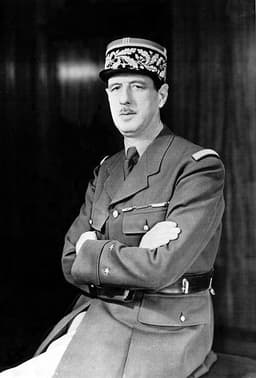
Charles de Gaulle
Politician · Modern
68.2Total
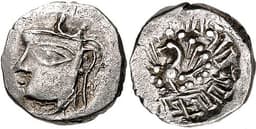
Harsha
Emperor · Medieval
61.0Total
Basic Information
Born
1890
590
Died
1970
647
Era
Modern
Medieval
Nationality
France
India
Occupation
Politician
Emperor
Civilization
Western
Indian
Score Comparison
Military (10%)
55.0
61.7
Political (20%)
75.0
45.0
Influence (20%)
65.0
68.0
Legacy (20%)
68.0
58.0
Leadership (15%)
78.0
66.0
Strategy (15%)
65.0
66.3
TOTAL
68.2
61.0
Charles de Gaulle — Complete Timeline
1940 AD
Appeal of 18 June 1940Political Action
From London, de Gaulle broadcast a radio appeal urging French resistance against Nazi occupation. He called on French soldiers and citizens to continue the fight, founding the Free French Forces and becoming the symbol of French defiance.
World War IIResistanceLeadership
Impact: nationalconstructive
1958 AD
Founding of the Fifth RepublicPolitical Action
De Gaulle returned to power during the Algerian crisis and oversaw the drafting of a new constitution. The Fifth Republic established a strong executive presidency, replacing the unstable parliamentary system of the Fourth Republic.
ConstitutionGovernment ReformPolitical System
Impact: nationalconstructive
1962 AD
End of the Algerian WarPolitical Action◆ Major
De Gaulle negotiated the
DecolonizationPeace TreatyAlgeria
Impact: regionalconstructive
1968 AD
May 1968 CrisisPolitical Action◆ Major
Mass student protests and general strikes paralyzed France, challenging de Gaulle's government. De Gaulle briefly fled to Germany, then returned to dissolve the National Assembly and call elections, which his party won, but his authority was weakened.
ProtestPolitical CrisisSocial Unrest
Impact: nationaldestructive
1969 AD
Resignation as PresidentPolitical Action
De Gaulle resigned after losing a referendum on regional reform and Senate restructuring. The defeat marked the end of his political career, as he withdrew from public life and died the following year.
ResignationPolitical DefeatReferendum
Impact: nationaltragic
Harsha — Complete Timeline
606 AD
Accession to the Throne of ThanesarPolitical Action
Harsha succeeded his father Prabhakaravardhana as ruler of Thanesar (in present-day Haryana). He was 16 years old and soon faced the challenge of avenging his brother-in-law's death and expanding his kingdom.
ThanesarSuccessionHarsha
Impact: regional
612 AD
Conquest of KannaujWar◆ Major
Harsha captured the city of Kannauj after defeating the Maukhari ruler Grahavarman's enemies. He made Kannauj his capital and established the Vardhana dynasty's control over the Gangetic plain, becoming the dominant power in northern India.
KannaujVardhana DynastyNorthern India
Impact: regional
620 AD
Campaigns in Eastern IndiaWar◆ Major
Harsha led military campaigns into Bengal and Odisha, defeating the Shashanka king of Gauda. He extended his empire eastward to the Bay of Bengal, though his control over these regions was not permanent.
BengalOdishaShashanka
Impact: regional
630 AD
Conflict with the Chalukya King Pulakeshin IIWar◆ Major
Harsha attempted to expand southward but was defeated by the Chalukya king Pulakeshin II on the banks of the Narmada River. This battle halted Harsha's southern expansion and established the Narmada as the boundary between the two empires.
ChalukyaPulakeshin IINarmada
Impact: regional
640 AD
Patronage of Buddhism and the Nalanda UniversityCultural◆ Major
Harsha was a patron of Buddhism and supported the Nalanda University, a major center of Buddhist learning. He convened a grand Buddhist council at Kannauj attended by monks from across Asia, and built monasteries and stupas.
BuddhismNalandaCouncil of Kannauj
Impact: regionalconstructive
643 AD
Visit of the Chinese Pilgrim XuanzangCultural
The Chinese Buddhist monk Xuanzang visited Harsha's court and spent time in the empire. Xuanzang's detailed accounts describe Harsha's administration, military, and religious tolerance, providing a key historical source for the period.
XuanzangChinese PilgrimBuddhism
Impact: regionalconstructive
Expert Analysis
Charles de Gaulle vs Harsha
# The Lonely Throne
In the summer of 1940, a towering French general stood before a BBC microphone in London, his voice crackling across the English Channel to a stunned nation that had just surrendered. In the winter of 643, a Chinese monk named Xuanzang sat in a vast pavilion in Kannauj, watching an Indian emperor distribute his entire treasury to the poor. Both scenes are moments of supreme moral authority, yet they belong to utterly different worlds. Charles de Gaulle and Emperor Harsha never met, never could have met, but their lives pose the same haunting question: What does it mean to lead a civilization at the edge of collapse?
Origins
Charles de Gaulle was born in 1890 in Lille, into a devoutly Catholic, patriotic family that believed France was eternal. His father taught him that defeat was temporary, that glory was a duty. He grew up reading philosophy, dreaming of military command, and nursing a quiet certainty that he was destined for something great. The France of his youth was still smarting from the Franco-Prussian War, a wound that never healed.
Harsha was born in 590, a prince of the Pushyabhuti dynasty in Thanesar, in what is now Haryana. His world was one of warring kingdoms—the Gupta Empire had crumbled, and northern India was a patchwork of rival states. His father and brother were murdered in quick succession, leaving a sixteen-year-old boy to inherit not just a throne, but a blood feud. Where de Gaulle had the luxury of waiting, Harsha had no choice but to act.
The difference in their origins is not merely one of geography. De Gaulle was formed by the idea of a nation—a modern, centralized state with a clear identity. Harsha was formed by the idea of a dynasty—a personal, familial claim to power that had to be constantly renewed by conquest and alliance.
Rise to Power
De Gaulle’s rise was a slow, grinding ascent through the ranks of the French military, punctuated by brilliant but unheeded warnings about tank warfare. His true arrival came in 1940, when France fell in six weeks. He was a relatively obscure brigadier general when he flew to London, but he carried with him something more powerful than an army: the moral claim to speak for France. The Appeal of 18 June 1940 was not a military operation; it was an act of political creation. He declared that the war was not over, that France still existed, and that he was its voice.
Harsha’s rise was faster and bloodier. At sixteen, he was not a refugee in a foreign capital; he was a king in a camp, surrounded by enemies. He spent his first years consolidating Thanesar, then marched on Kannauj in 612 to avenge his brother-in-law’s death. He captured the city and made it his capital, a symbolic center of northern Indian power. Where de Gaulle built legitimacy from exile, Harsha built it from conquest.
The key difference is that de Gaulle rose by saying no to a fait accompli, while Harsha rose by saying yes to a war of succession. De Gaulle’s path was political and rhetorical; Harsha’s was military and dynastic.
Leadership & Governance
As president of the Fifth Republic, founded in 1958, de Gaulle governed with a cold, calculating distance. He believed in a strong executive, a France that stood independent of both American and Soviet blocs. He ended the Algerian War in 1962 through the Évian Accords, a decision that horrified his own military supporters but saved France from a protracted colonial bloodbath. He was not a reformer in the progressive sense; he was a restorer. He wanted to give France back its grandeur.
Harsha ruled differently. He was a patron of Buddhism and literature, convening a great Buddhist council at Kannauj in 640 and showering gifts on the Nalanda University. Xuanzang described him as a ruler who personally distributed alms until his treasury was empty, then borrowed to give more. But Harsha was also a warrior—he campaigned into Bengal and Odisha, defeating the Shashanka king of Gauda, and pushed eastward with relentless energy. His governance was personal: he traveled constantly, heard petitions in person, and ruled through a network of loyal feudatories.
Where de Gaulle governed through institutions—a constitution, a bureaucracy, a nuclear deterrent—Harsha governed through presence. De Gaulle’s power was abstract and constitutional; Harsha’s was tangible and ceremonial. Both were effective, but in radically different contexts.
Triumph & Tragedy
De Gaulle’s greatest moment was also his most paradoxical: the 1968 May Crisis. Student protests and general strikes paralyzed France. The old general, then seventy-seven, fled briefly to Germany, seeming to lose his nerve. But he returned, dissolved the National Assembly, and called new elections. He won a landslide. It was a triumph of political instinct over mass upheaval. Yet the victory was hollow—the protests had exposed a generational chasm he could not bridge. A year later, he lost a referendum on regional reform and resigned. He died in 1970, a hero who had outlived his era.
Harsha’s tragedy was subtler. He never suffered a dramatic fall. He ruled for forty-one years, from 606 to 647, and died in power. But his empire did not survive him. His son died before him, and the throne passed to a usurper. Within a generation, northern India was again fragmented. Harsha’s glory was personal, not institutional. He built no lasting state.
Both men faced the same problem: how to make greatness outlast the great. De Gaulle built the Fifth Republic, which endures. Harsha built a memory, preserved in Xuanzang’s writings and Buddhist chronicles. One created a machine; the other left a legend.
Character & Destiny
De Gaulle was aloof, arrogant, and lonely. He once said, “A leader is always alone.” He trusted no one completely, kept his distance from crowds, and believed that authority required mystery. This made him formidable but brittle. He could inspire loyalty from afar but could not connect with the students of 1968.
Harsha was described by Xuanzang as generous, devout, and tireless. He held a great assembly every five years, giving away everything. But he was also a warrior who crushed his enemies without mercy. His personality was a fusion of the ascetic and the king, the scholar and the soldier.
De Gaulle’s destiny was to be the last great statesman of a European power. Harsha’s was to be the last great emperor of classical India. Both were endings, not beginnings.
Legacy
De Gaulle is remembered as the father of modern France, the man who gave it a stable constitution and restored its pride. His name is on airports, aircraft carriers, and streets. But he is also a symbol of a certain kind of stubborn nationalism, admired and resented in equal measure.
Harsha is remembered in India as a model of righteous kingship, a patron of learning and religion. The reign of Harsha is a standard against which later rulers are measured. But he is not a household name outside South Asia. His legacy is academic, not political.
The difference is that de Gaulle’s legacy is institutional—the Fifth Republic is still his creation. Harsha’s legacy is cultural—the memory of a golden age that never returned.
Conclusion
Standing at the end of their lives, both men might have felt the same quiet satisfaction and the same quiet sorrow. De Gaulle saw France survive, but not as he had imagined. Harsha saw his empire flourish, but not outlast him. In the end, what separates them is not their greatness, but the shape of the world they left behind. One built a state; the other built a story. Both, in their way, were necessary.
Rankings
🥇
Charles de GaulleLeader
Mil: 55.0Pol: 75.0Inf: 65.0
68.2
🥈
Harsha
Mil: 61.7Pol: 45.0Inf: 68.0
61.0
+7.2 behind
How This Comparison Works
Algorithm
Each figure is scored on 6 dimensions (0—100 scale) based on structured historical data: Military (10%), Political (20%), Influence (20%), Legacy (20%), Leadership (15%), Strategy (15%). The weighted total produces the final ranking.
Data Sources
Scores are computed from structured sub-indicators in the database. Scale factors adjust for era (Ancient ×0.85, Modern ×1.0) and civilization size (Eastern ×1.05, Other ×0.80) to account for differences in population and military scale.
Maximum 3 Figures
Comparisons are limited to 2—3 figures to ensure readability and statistical meaningfulness.
Error Margins
±5 points per dimension — Sub-scores are derived from historical records with inherent uncertainty. Two figures within 5 points on a dimension should be considered roughly equivalent in that area.
Total Score Accuracy
±3 points overall — The weighted combination of 6 dimensions produces a total score with approximately ±3 points of uncertainty. Differences of less than 3 points are not statistically significant— the figures are effectively tied.
Known Limitations
- Historical records are incomplete and uneven across civilizations
- Figures from oral-tradition societies may be underrepresented
- Occupation labels can misclassify multi-role figures
- Scores measure capability and impact, not moral character
- Quantitative scoring is a comparison tool, not absolute truth
Capability Radar
Military (10%) — Battles & Warfare
Battles
60
65
Win Rate
55
70
Expansion
20
70
Political (20%) — Governance & Reform
Reform
95
60
Diplomacy
90
70
Economy
70
65
Influence (20%) — Cultural & Global Reach
Cultural
70
65
Global
80
50
Legacy (20%) — Historical Impact
Historical
85
60
Longevity
75
55
Leadership (15%) — Power & Stability
Tenure
85
75
Stability
75
60
Strategy (15%) — Tactics & Innovation
Strategy
85
65
Tactics
70
60
Reform
80
50
Similar Comparisons
Comments & Discussion
No comments yet. Be the first to share your thoughts!