Loading...
Harsha vs Kublai Khan
Kublai Khan leads by 13.3 pts · 2 figures compared
…
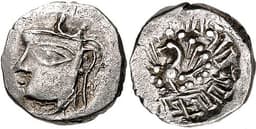
Harsha
Emperor · Medieval
61.0Total
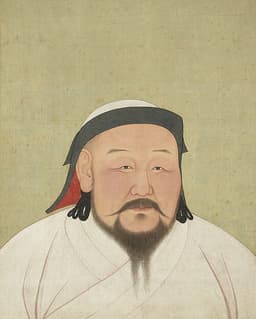
Kublai Khan
Emperor · Medieval
74.3Total
Basic Information
Born
590
1215
Died
647
1294
Era
Medieval
Medieval
Nationality
India
Mongolia
Occupation
Emperor
Emperor
Civilization
Indian
Eastern
Score Comparison
Military (10%)
61.7
77.5
Political (20%)
45.0
79.2
Influence (20%)
68.0
75.0
Legacy (20%)
58.0
70.0
Leadership (15%)
66.0
72.0
Strategy (15%)
66.3
76.0
TOTAL
61.0
74.3
Harsha — Complete Timeline
606 AD
Accession to the Throne of ThanesarPolitical Action
Harsha succeeded his father Prabhakaravardhana as ruler of Thanesar (in present-day Haryana). He was 16 years old and soon faced the challenge of avenging his brother-in-law's death and expanding his kingdom.
ThanesarSuccessionHarsha
Impact: regional
612 AD
Conquest of KannaujWar◆ Major
Harsha captured the city of Kannauj after defeating the Maukhari ruler Grahavarman's enemies. He made Kannauj his capital and established the Vardhana dynasty's control over the Gangetic plain, becoming the dominant power in northern India.
KannaujVardhana DynastyNorthern India
Impact: regional
620 AD
Campaigns in Eastern IndiaWar◆ Major
Harsha led military campaigns into Bengal and Odisha, defeating the Shashanka king of Gauda. He extended his empire eastward to the Bay of Bengal, though his control over these regions was not permanent.
BengalOdishaShashanka
Impact: regional
630 AD
Conflict with the Chalukya King Pulakeshin IIWar◆ Major
Harsha attempted to expand southward but was defeated by the Chalukya king Pulakeshin II on the banks of the Narmada River. This battle halted Harsha's southern expansion and established the Narmada as the boundary between the two empires.
ChalukyaPulakeshin IINarmada
Impact: regional
640 AD
Patronage of Buddhism and the Nalanda UniversityCultural◆ Major
Harsha was a patron of Buddhism and supported the Nalanda University, a major center of Buddhist learning. He convened a grand Buddhist council at Kannauj attended by monks from across Asia, and built monasteries and stupas.
BuddhismNalandaCouncil of Kannauj
Impact: regionalconstructive
643 AD
Visit of the Chinese Pilgrim XuanzangCultural
The Chinese Buddhist monk Xuanzang visited Harsha's court and spent time in the empire. Xuanzang's detailed accounts describe Harsha's administration, military, and religious tolerance, providing a key historical source for the period.
XuanzangChinese PilgrimBuddhism
Impact: regionalconstructive
Kublai Khan — Complete Timeline
1260 AD
Adoption of Tibetan Buddhism as State ReligionCultural◆ Major
Kublai Khan appointed the Tibetan lama Drog
Tibetan BuddhismReligionMongol-Tibet Relations
Impact: regional
1271 AD
Proclamation of the Yuan DynastyPolitical Action◆ Major
Kublai Khan officially proclaimed the Yuan dynasty, adopting a Chinese-style dynastic name. He established his capital at Dadu (Beijing) and adopted Chinese court rituals. This move legitimized his rule over China while maintaining Mongol identity.
Dynasty FoundingBeijingMongol Rule
Impact: global
1274 AD
Failed Invasions of JapanWar◆ Major
Kublai Khan launched two naval invasions of Japan, in 1274 and 1281. Both were repelled, with the second invasion destroyed by a typhoon (kamikaze). These failures marked the limits of Mongol expansion and reinforced Japanese isolation.
Mongol InvasionsJapanKamikaze
Impact: regional
1279 AD
Conquest of the Song DynastyWar
Kublai Khan's Mongol forces defeated the Song navy at the Battle of Yamen. The last Song emperor drowned, ending the Song dynasty. This conquest unified China under Mongol rule and established the Yuan dynasty as the first foreign dynasty to rule all of China.
Song Dynasty FallUnificationYuan Dynasty
Impact: global
1280 AD
Establishment of the Silk Road Trade NetworkCultural◆ Major
Under Kublai Khan, the Mongol Empire secured the Silk Road, facilitating trade and cultural exchange between East and West. Marco Polo visited his court. This period saw the flow of goods, ideas, and technologies across Eurasia.
Silk RoadTradeCultural Exchange
Impact: globalconstructive
Expert Analysis
Kublai Khan vs Harsha
# The Emperor and the Unifier: Kublai Khan and Harsha Across the Medieval World
Imagine, for a moment, two thrones: one in the frigid steppes of Mongolia, where a grandson of Genghis Khan commands the largest land empire in history; another in the sun-baked plains of northern India, where a sixteen-year-old boy ascends to power after his father’s sudden death. Both men would be called emperors. Both would shape the destinies of millions. But Kublai Khan and Harsha—separated by six centuries, two civilizations, and radically different visions of power—represent two distinct paths to greatness. One conquered continents; the other built a kingdom of the mind. What drove them, and why did their legacies diverge so sharply?
Origins
Kublai Khan was born in 1215 into the Mongol ruling family, a world of horsemen, felt tents, and endless warfare. His grandfather, Genghis Khan, had forged an empire from the blood of enemies. Kublai grew up in a culture that valued martial prowess above all, but he also absorbed the sophisticated influences of Chinese civilization through his mother, a Nestorian Christian princess. This dual inheritance—the Mongol love of conquest and the Chinese reverence for order—shaped his entire life.
Harsha, born in 590, came from a very different world. He was a prince of the Pushyabhuti dynasty in Thanesar, a small kingdom in what is now Haryana. His family ruled a patchwork of warring states, and his father, Prabhakaravardhana, had fought to consolidate power. Harsha’s India was a land of fractured kingdoms, where Buddhism and Hinduism coexisted uneasily, and where the memory of the Gupta Empire’s golden age lingered like a fading dream. He was educated in the classics, trained in warfare, and steeped in the religious pluralism of his time.
Rise to Power
Kublai’s rise was neither easy nor inevitable. He was not the eldest son, and his brother Möngke became Great Khan first. Kublai spent years governing the Mongol territories in northern China, learning to administer a settled population. When Möngke died in 1259, Kublai fought a bitter civil war against his younger brother Ariq Böke for the title of Great Khan. He won, but the empire was already fracturing. His path to power was a story of ruthless ambition, strategic patience, and a willingness to adapt to Chinese methods.
Harsha’s accession in 606 was sudden and tragic. His father was assassinated, and his brother-in-law, the Maukhari king Grahavarman, was killed by a rival ruler. Harsha, just sixteen, took the throne of Thanesar and immediately faced a crisis. He did not start a civil war; he forged alliances. He married the widowed queen of Kannauj, thus uniting two kingdoms. His rise was less a conquest than a consolidation—a young man stepping into chaos and imposing order through marriage, diplomacy, and swift military action.
Leadership & Governance
Kublai Khan was a builder of empires. In 1271, he proclaimed the Yuan Dynasty, adopting a Chinese-style dynastic name and establishing his capital at what is now Beijing. He created a dual administration: Mongols and Central Asians held military power, while Chinese officials managed the bureaucracy. He reformed the tax system, built roads and canals, and supported the Silk Road trade network, which by 1280 connected East Asia to the Middle East and Europe. But his rule was also harsh—he imposed a strict social hierarchy, with Mongols at the top and Chinese at the bottom, and he drained the treasury with endless wars.
Harsha ruled differently. He was a patron of Buddhism, but he also supported Hindu temples and Jain monasteries. In 640, he convened a grand religious assembly at Kannauj, where he hosted monks of all traditions. He supported Nalanda University, the greatest center of Buddhist learning in the world, and welcomed the Chinese pilgrim Xuanzang in 643, whose writings provide our most vivid account of Harsha’s court. Harsha was a hands-on ruler—he traveled constantly, inspected his provinces, and personally heard petitions. His governance was personal, itinerant, and deeply religious.
Triumph & Tragedy
Kublai’s greatest triumph was the conquest of the Song Dynasty in 1279. At the Battle of Yamen, his forces destroyed the Song navy, and the last Song emperor drowned, ending three centuries of Southern Song rule. For the first time in centuries, China was united under one ruler. But Kublai’s greatest tragedy came from overreach. He launched two massive naval invasions of Japan, in 1274 and 1281. Both failed catastrophically—the second invasion was destroyed by a typhoon, the famous *kamikaze* or “divine wind.” These failures exposed the limits of Mongol power and haunted Kublai’s later years.
Harsha’s triumph was his unification of northern India. By 612, he had captured Kannauj and made it his capital. He campaigned into Bengal and Odisha, defeating the king of Gauda in 620. But his tragedy came at the Narmada River in 630, when he attempted to expand southward. The Chalukya king Pulakeshin II defeated him decisively, halting his ambitions. Harsha never again tried to cross the Narmada. His empire remained a northern one, bounded by geography and the limits of his military power.
Character & Destiny
Kublai Khan was a pragmatist with a grand vision. He adopted Tibetan Buddhism as the state religion in 1260, appointing the lama Drogön Chögyal Phagpa as his imperial preceptor—not out of deep faith, but to bind Tibet to his empire. He was curious about other cultures: he welcomed Marco Polo to his court, and he experimented with paper money and postal systems. But he was also stubborn, unable to accept the failure of his Japanese invasions, and increasingly isolated in his later years, turning to alcohol and food.
Harsha was a man of balance. He was a warrior who preferred peace, a king who wrote plays (three survive, including *Ratnavali*), and a Buddhist who honored all gods. Xuanzang described him as generous, humble, and tireless. But his character also had a tragic flaw: he was too trusting. He had no heir, and after his death in 647, his empire collapsed almost immediately, torn apart by his ministers and rivals.
Legacy
Kublai Khan left a mixed legacy. He united China, fostered trade, and connected East and West. The Yuan Dynasty lasted only a century, but it reshaped Chinese history. In Mongolia, he is remembered as a great khan; in China, as a foreign conqueror who nevertheless ruled wisely. His failed invasions of Japan became part of Japanese national myth. His legacy is one of power, ambition, and the limits of conquest.
Harsha left a quieter but enduring legacy. He is remembered not for an empire that lasted, but for a moment of cultural flowering. Nalanda University flourished under his patronage. Xuanzang’s writings preserved his memory for centuries. In India, he is a symbol of enlightened kingship—a ruler who valued learning, religion, and justice over mere conquest. His empire vanished, but his ideals survived.
Conclusion
Two emperors, two worlds. Kublai Khan built an empire that stretched from the Pacific to the Caspian, but his greatest achievements were fragile, dependent on force and fear. Harsha built a kingdom that barely outlived him, but his greatest achievements—the patronage of learning, the embrace of pluralism, the vision of a just ruler—outlasted his dynasty. Perhaps the deepest difference between them is this: Kublai conquered the world, but the world did not change him; Harsha did not conquer the world, but he changed the world around him. In the end, it is not the size of an empire that matters, but the quality of the civilization it leaves behind.
Rankings
🥇
Kublai KhanLeader
Mil: 77.5Pol: 79.2Inf: 75.0
74.3
🥈
Harsha
Mil: 61.7Pol: 45.0Inf: 68.0
61.0
+13.3 behind
How This Comparison Works
Algorithm
Each figure is scored on 6 dimensions (0—100 scale) based on structured historical data: Military (10%), Political (20%), Influence (20%), Legacy (20%), Leadership (15%), Strategy (15%). The weighted total produces the final ranking.
Data Sources
Scores are computed from structured sub-indicators in the database. Scale factors adjust for era (Ancient ×0.85, Modern ×1.0) and civilization size (Eastern ×1.05, Other ×0.80) to account for differences in population and military scale.
Maximum 3 Figures
Comparisons are limited to 2—3 figures to ensure readability and statistical meaningfulness.
Error Margins
±5 points per dimension — Sub-scores are derived from historical records with inherent uncertainty. Two figures within 5 points on a dimension should be considered roughly equivalent in that area.
Total Score Accuracy
±3 points overall — The weighted combination of 6 dimensions produces a total score with approximately ±3 points of uncertainty. Differences of less than 3 points are not statistically significant— the figures are effectively tied.
Known Limitations
- Historical records are incomplete and uneven across civilizations
- Figures from oral-tradition societies may be underrepresented
- Occupation labels can misclassify multi-role figures
- Scores measure capability and impact, not moral character
- Quantitative scoring is a comparison tool, not absolute truth
Capability Radar
Military (10%) — Battles & Warfare
Battles
65
95
Win Rate
70
90
Expansion
70
95
Political (20%) — Governance & Reform
Reform
60
88
Diplomacy
70
85
Economy
65
90
Influence (20%) — Cultural & Global Reach
Cultural
65
85
Global
50
85
Legacy (20%) — Historical Impact
Historical
60
90
Longevity
55
80
Leadership (15%) — Power & Stability
Tenure
75
90
Stability
60
80
Strategy (15%) — Tactics & Innovation
Strategy
65
92
Tactics
60
85
Reform
50
88
Similar Comparisons
Comments & Discussion
SteppeSkeptic6/16/2026
Numbers don't lie: Kublai commanded at least 100,000 troops during the invasion of the Song dynasty, while Harsha's army probably never exceeded 60,000. Yet Harsha unified most of northern India for 41 years, and Kublai couldn't hold Japan. People romanticize the Mongols, but Harsha's diplomatic integration of rival kingdoms was tactically smarter. You don't need the largest military to govern well—you need cultural intelligence, which Harsha had in spades.
汗王血泪6/16/2026
拿元朝灭宋的襄阳战役说吧,忽必烈砸了六年时间加上回回炮才拿下。哈夏呢?他在短短六年内就从一个小王子的尸骨堆上建立了一个北印度帝国。比军事效率?哈夏用闪电破局;而忽必烈学汉人玩围城,结果连个襄樊都啃不动。这位蒙古大汗真该向那个印度少年学学什么叫果断。
ScriptoriumSamurai6/16/2026
Citing Bana's *Harshacharita*: Harsha convened the Prayag Assembly every five years to redistribute his entire treasury to Buddhist monks and the poor. Name one Kublai-era source describing such state-sponsored charity on that scale. Kublai patronized Tibetan Buddhism strategically, but Harsha emptied his coffers for ideological conviction. That's the difference between a conqueror who uses religion as a tool and a ruler who lives his faith. Read the silk manuscripts, not just the steppe narrati
策马青铜6/16/2026
从文化结晶度看,哈夏是诗人、剧作家——他写了《摩耶月》剧本,还被梵文学者传颂;而忽必烈读了老子却没能留下任何创作。哪边更有文明分量?不是所有伟大都要靠骑兵和骆驼来衡量。一个用笔统一了北印度的精神世界,而另一个只是用纸钞搜刮了南宋的丝绸。至于哈夏的王冠遗失在恒河泥沙中,那也比元朝短命的龙椅更美。
MughalMetrics6/16/2026
Kublai's Yuan Dynasty survived 97 years. Harsha's empire collapsed within a decade of his death without an heir. Objective legacy assessment: Kublai established a permanent administrative system that influenced Chinese governance for centuries—tax reforms, paper currency, relay stations. Harsha's personal magnetism created a temporary union that dissolved like monsoon rain. I respect the Buddhist king, but if we're scoring empire-building by institutional durability, the Mongol wins by a logisti
卷轴碎语6/16/2026
佛教、印度教、耆教——哈夏在位期间北印度宗教自由达到古代高峰,连玄奘都被他的宫廷庇护感动。忽必烈呢?他下旨贬斥道观,强迫全真教道士改宗,