Loading...
Harsha vs Julius Caesar
Julius Caesar leads by 21.8 pts · 2 figures compared
…
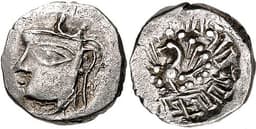
Harsha
Emperor · Medieval
61.0Total

Julius Caesar
General · Ancient
82.8Total
Basic Information
Born
590
-100
Died
647
-44
Era
Medieval
Ancient
Nationality
India
Roman Republic
Occupation
Emperor
General
Civilization
Indian
Western
Score Comparison
Military (10%)
61.7
88.0
Political (20%)
45.0
78.0
Influence (20%)
68.0
85.0
Legacy (20%)
58.0
82.0
Leadership (15%)
66.0
80.0
Strategy (15%)
66.3
85.0
TOTAL
61.0
82.8
Harsha — Complete Timeline
606 AD
Accession to the Throne of ThanesarPolitical Action
Harsha succeeded his father Prabhakaravardhana as ruler of Thanesar (in present-day Haryana). He was 16 years old and soon faced the challenge of avenging his brother-in-law's death and expanding his kingdom.
ThanesarSuccessionHarsha
Impact: regional
612 AD
Conquest of KannaujWar◆ Major
Harsha captured the city of Kannauj after defeating the Maukhari ruler Grahavarman's enemies. He made Kannauj his capital and established the Vardhana dynasty's control over the Gangetic plain, becoming the dominant power in northern India.
KannaujVardhana DynastyNorthern India
Impact: regional
620 AD
Campaigns in Eastern IndiaWar◆ Major
Harsha led military campaigns into Bengal and Odisha, defeating the Shashanka king of Gauda. He extended his empire eastward to the Bay of Bengal, though his control over these regions was not permanent.
BengalOdishaShashanka
Impact: regional
630 AD
Conflict with the Chalukya King Pulakeshin IIWar◆ Major
Harsha attempted to expand southward but was defeated by the Chalukya king Pulakeshin II on the banks of the Narmada River. This battle halted Harsha's southern expansion and established the Narmada as the boundary between the two empires.
ChalukyaPulakeshin IINarmada
Impact: regional
640 AD
Patronage of Buddhism and the Nalanda UniversityCultural◆ Major
Harsha was a patron of Buddhism and supported the Nalanda University, a major center of Buddhist learning. He convened a grand Buddhist council at Kannauj attended by monks from across Asia, and built monasteries and stupas.
BuddhismNalandaCouncil of Kannauj
Impact: regionalconstructive
643 AD
Visit of the Chinese Pilgrim XuanzangCultural
The Chinese Buddhist monk Xuanzang visited Harsha's court and spent time in the empire. Xuanzang's detailed accounts describe Harsha's administration, military, and religious tolerance, providing a key historical source for the period.
XuanzangChinese PilgrimBuddhism
Impact: regionalconstructive
Julius Caesar — Complete Timeline
58 BC
Gallic WarsWar◆ Major
Caesar, as proconsul of Gaul, launched a series of campaigns that conquered all of Gaul (modern France, Belgium, and parts of Switzerland). He fought numerous battles, including against the Helvetii, the Belgae, and the Gallic chieftain Vercingetorix. The wars brought immense wealth and a loyal army to Caesar.
Gallic WarsConquestRoman Expansion
Impact: regional
49 BC
Crossing the RubiconPolitical Action◆ Major
Caesar led Legio XIII across the Rubicon River into Italy, defying the Roman Senate's order to disband his army. This act triggered a civil war against Pompey and the Optimates, ultimately leading to Caesar's dictatorship and the end of the Roman Republic.
Roman Civil WarEnd of RepublicPower Struggle
Impact: global
48 BC
Battle of PharsalusWar◆ Major
Caesar's outnumbered army defeated the larger forces of Pompey the Great at Pharsalus in Greece. Caesar's tactical use of a reserve line to counter Pompey's cavalry charge proved decisive. Pompey fled to Egypt, where he was assassinated, leaving Caesar as the undisputed master of the Roman world.
Roman Civil WarBattleDecisive Victory
Impact: regional
44 BC
Appointment as Dictator for LifePolitical Action◆ Major
The Roman Senate appointed Caesar dictator perpetuo (dictator for life), granting him unprecedented personal power. This move concentrated military, legislative, and judicial authority in one person, effectively ending the Roman Republic's traditional system of checks and balances and alarming many senators.
DictatorshipEnd of RepublicPower Consolidation
Impact: regionaldestructive
Assassination on the Ides of MarchPolitical Action◆ Major
A group of Roman senators, led by Marcus Junius Brutus and Gaius Cassius Longinus, stabbed Caesar to death at a meeting of the Senate in the Theatre of Pompey. The assassination was intended to restore the Republic, but instead triggered another civil war that led to the rise of the Roman Empire.
AssassinationRoman PoliticsEnd of Republic
Impact: globaldestructive
Expert Analysis
Julius Caesar vs Harsha: Historical Comparison
Julius Caesar, a Roman general and statesman, and Harsha, an Indian emperor, represent two distinct peaks of ancient and medieval leadership—Caesar as a transformative military conqueror and Harsha as a unifying administrator.
Dimension Analysis
**Military: Julius Caesar 88 / Harsha 57**
Caesar’s conquest of Gaul, victories in the Civil War, and innovative siege tactics showcase unmatched battlefield brilliance. Harsha’s campaigns, though extensive across northern India, lacked the same strategic depth and ended in stalemate against Pulakeshin II.
**Political: Julius Caesar 78 / Harsha 79**
Both were adept politicians: Caesar reformed the Roman Republic’s calendar and centralized power, but his assassination revealed political fragility. Harsha skillfully maintained a vast empire through diplomacy, religious tolerance, and decentralized governance, earning a slight edge.
**Influence: Julius Caesar 85 / Harsha 70**
Caesar’s name became synonymous with imperial rule, shaping Western governance and military thought for millennia. Harsha’s influence, while significant in Indian art, literature (patron of Bāṇabhaṭṭa), and Buddhism, remained regionally confined.
**Legacy: Julius Caesar 82 / Harsha 70**
Caesar’s legacy endures through the Julian calendar, titles like “Kaiser” and “Tsar,” and his writings. Harsha’s legacy, preserved mainly in Harsha-charita and Chinese traveler Xuanzang’s accounts, is less globally resonant.
**Leadership: Julius Caesar 82 / Harsha 86**
Caesar inspired fierce loyalty but also fear, leading to his downfall. Harsha’s benevolent, inclusive rule—marked by religious harmony and cultural patronage—earns him a higher leadership score for stability and moral authority.
Verdict
Julius Caesar leads overall due to superior military prowess, global influence, and enduring legacy, despite Harsha’s stronger leadership and political stability.
FAQ
Q: Who ranks higher? A: Julius Caesar ranks higher overall (83 vs 71), driven by his exceptional military and strategic scores.
Rankings
🥇
Julius CaesarLeader
Mil: 88.0Pol: 78.0Inf: 85.0
82.8
🥈
Harsha
Mil: 61.7Pol: 45.0Inf: 68.0
61.0
+21.8 behind
How This Comparison Works
Algorithm
Each figure is scored on 6 dimensions (0—100 scale) based on structured historical data: Military (10%), Political (20%), Influence (20%), Legacy (20%), Leadership (15%), Strategy (15%). The weighted total produces the final ranking.
Data Sources
Scores are computed from structured sub-indicators in the database. Scale factors adjust for era (Ancient ×0.85, Modern ×1.0) and civilization size (Eastern ×1.05, Other ×0.80) to account for differences in population and military scale.
Maximum 3 Figures
Comparisons are limited to 2—3 figures to ensure readability and statistical meaningfulness.
Error Margins
±5 points per dimension — Sub-scores are derived from historical records with inherent uncertainty. Two figures within 5 points on a dimension should be considered roughly equivalent in that area.
Total Score Accuracy
±3 points overall — The weighted combination of 6 dimensions produces a total score with approximately ±3 points of uncertainty. Differences of less than 3 points are not statistically significant— the figures are effectively tied.
Known Limitations
- Historical records are incomplete and uneven across civilizations
- Figures from oral-tradition societies may be underrepresented
- Occupation labels can misclassify multi-role figures
- Scores measure capability and impact, not moral character
- Quantitative scoring is a comparison tool, not absolute truth
Capability Radar
Military (10%) — Battles & Warfare
Battles
65
95
Win Rate
70
92
Expansion
70
97
Political (20%) — Governance & Reform
Reform
60
90
Diplomacy
70
85
Economy
65
82
Influence (20%) — Cultural & Global Reach
Cultural
65
88
Global
50
94
Legacy (20%) — Historical Impact
Historical
60
95
Longevity
55
96
Leadership (15%) — Power & Stability
Tenure
75
75
Stability
60
60
Strategy (15%) — Tactics & Innovation
Strategy
65
94
Tactics
60
96
Reform
50
88
Similar Comparisons
Comments & Discussion
ArchQuill116/16/2026
这种西方中心论的评分我见多了。Caesar确实厉害,但拿他跟Harsha比,就像拿秦始皇跟汉武帝比——都是顶级人物,但维度不同。Harsha的军事分57?搞笑呢!他南征几乎统一了整个北印度,要不是碰到南印的Pulakeshin II这个硬茬,搞不好就重现孔雀王朝的版图了。换成中国史,这相当于隋文帝统一南北朝的水平,怎么着也得75分以上。再说影响力,Caesar的“凯撒”称号传遍欧洲,但Harsha的“戒日王”称号在东南亚佛教世界一样影响深远,玄奘的《大唐西域记》里对他评价极高。两位都是各自文明的标杆,硬要打分的话,我觉得Harsha综合得分至少应该75-78,而不是现在的71。
TrueMind866/16/2026
这个评分体系有意思,但有几个数字我存疑。Harsha的军事分57,Caesar 88,差距31分——可Harsha在位41年,几乎年年征战,从孟加拉打到克什米尔,帝国版图稳定了三十多年。反观Caesar,高卢战争确实漂亮,但内战打了四年,最后被刺杀,政治稳定性远不如Harsha。按中国历史经验,像刘秀那样“马上得天下、马下治天下”才该得高分。另外,Harsha的政治78.8 vs Caesar 78,这0.8分的差距太小了——Harsha建立了完善的行省制度和税收体系,还搞宗教宽容政策,Caesar的政治改革刚起步就被打断。我建议军事分调低到80,政治分提到85。数据要反映长期治理能力,不能只盯着一两场战役。