Loading...
Franklin D. Roosevelt vs Zhao Kuangyin
Zhao Kuangyin leads by 0.5 pts · 2 figures compared
…
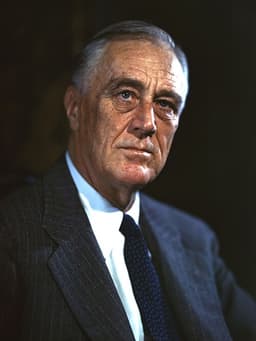
Franklin D. Roosevelt
Politician · Modern
71.0Total
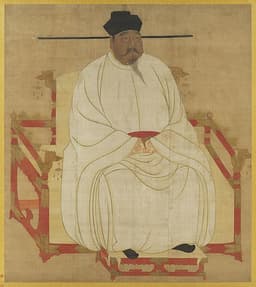
Zhao Kuangyin
Emperor · Medieval
71.5Total
Basic Information
Born
1882
927
Died
1945
976
Era
Modern
Medieval
Nationality
United States
China
Occupation
Politician
Emperor
Civilization
Western
Eastern
Score Comparison
Military (10%)
45.0
78.0
Political (20%)
85.0
84.0
Influence (20%)
75.0
68.0
Legacy (20%)
65.0
65.0
Leadership (15%)
85.0
74.0
Strategy (15%)
60.0
68.0
TOTAL
71.0
71.5
Franklin D. Roosevelt — Complete Timeline
1933 AD
Inaugurated as 32nd PresidentOther◆ Major
Franklin D. Roosevelt was inaugurated as President of the United States on March 4, 1933, during the Great Depression. His inaugural address declared 'the only thing we have to fear is fear itself,' and he immediately called Congress into special session to address the banking crisis.
Great DepressionPresidencyInauguration
Impact: national
Enacted the New DealOther◆ Major
Roosevelt launched the New Deal in 1933, a series of federal programs including the Civilian Conservation Corps, the Agricultural Adjustment Act, and the Tennessee Valley Authority. These measures aimed to provide relief, recovery, and reform during the Great Depression, fundamentally expanding the role of the federal government.
Great DepressionEconomic PolicySocial Reform
Impact: nationalconstructive
1935 AD
Signed the Social Security ActOther◆ Major
Roosevelt signed the Social Security Act into law on August 14, 1935, establishing a federal system of old-age pensions, unemployment insurance, and aid for dependent children. This created the modern American welfare state and provided a safety net for millions of citizens.
Social WelfareLegislationNew Deal
Impact: nationalconstructive
1941 AD
Lend-Lease ActOther◆ Major
Roosevelt signed the Lend-Lease Act on March 11, 1941, authorizing the transfer of military equipment and supplies to Allied nations, particularly Britain and the Soviet Union. This program provided critical material support to countries fighting the Axis powers before U.S. entry into World War II.
World War IIForeign PolicyMilitary Aid
Impact: globalconstructive
Declaration of War on JapanPolitical Action◆ Major
Following the Japanese attack on Pearl Harbor on December 7, 1941, Roosevelt delivered his 'Day of Infamy' speech to Congress the next day, requesting a declaration of war. Congress approved the declaration, bringing the United States into World War II.
World War IIPearl HarborDeclaration of War
Impact: globaldestructive
1942 AD
Executive Order 9066Other◆ Major
Roosevelt signed Executive Order 9066 on February 19, 1942, authorizing the forced relocation and internment of Japanese Americans living on the West Coast. Over 110,000 people, mostly U.S. citizens, were incarcerated in camps for the duration of the war, a decision later widely condemned as a violation of civil rights.
World War IICivil RightsInternment
Impact: nationaldestructive
1944 AD
Elected to Fourth TermOther◆ Major
Roosevelt was elected to an unprecedented fourth term as president in November 1944, defeating Republican Thomas E. Dewey. This election occurred during the final stages of World War II, and Roosevelt's continued leadership ensured stability in the war effort and post-war planning.
PresidencyElectionWorld War II
Impact: national
1945 AD
Yalta ConferenceOther◆ Major
Roosevelt met with Winston Churchill and Joseph Stalin at the Yalta Conference in February 1945 to discuss post-war Europe. Agreements included the division of Germany, Soviet entry into the war against Japan, and the creation of the United Nations, shaping the post-war world order.
World War IIDiplomacyPost-War Planning
Impact: global
Zhao Kuangyin — Complete Timeline
960 AD
Founded Song dynastyPolitical Action
Zhao Kuangyin, a general of Later Zhou, was proclaimed emperor by his troops at Chenqiao. He established the Song dynasty, ending the Five Dynasties period and beginning a new era of Chinese history.
Song dynastyFoundingChenqiao
Impact: globalconstructive
961 AD
Removed military power from generalsPolitical Action◆ Major
Zhao Kuangyin invited senior generals to a banquet and persuaded them to retire peacefully. This 'removal of military power over wine' prevented military coups and centralized control.
Song dynastyMilitary reformCentralization
Impact: nationalconstructive
963 AD
Unified southern ChinaWar◆ Major
Zhao Kuangyin launched campaigns to conquer the southern kingdoms, including Jingnan, Later Shu, and Southern Tang. By his death, most of China was reunified under Song rule.
Song unificationConquestSouthern kingdoms
Impact: national
Expert Analysis
Zhao Kuangyin vs Franklin D. Roosevelt
# The Peacemaker and the Pragmatist
On a spring evening in 961, a Chinese emperor hosted a banquet for his most powerful generals. Wine flowed freely, and laughter echoed through the hall. Then, quietly, the emperor spoke. He told them he understood their ambition, their capacity to seize power—after all, he himself had been a general before his troops proclaimed him emperor. He offered them wealth, land, and peaceful retirement. By morning, the most dangerous men in the realm had laid down their swords. Across the ocean and eight centuries later, another leader faced a different kind of crisis. Franklin D. Roosevelt, paralyzed from the waist down, sat in a wheelchair and told Americans that the only thing they had to fear was fear itself. One man disarmed his rivals with wine; the other armed a nation with hope. Both transformed their worlds. But their paths could not have been more different.
Origins
Zhao Kuangyin was born in 927, a child of chaos. The Tang dynasty had collapsed, and China had splintered into warring kingdoms. He grew up in a world where loyalty was measured in blood and survival depended on strength. His father was a military officer, and young Zhao learned early that power flowed from the sword. Yet he also witnessed the futility of endless war. The Five Dynasties and Ten Kingdoms period had taught him a brutal lesson: empires built on conquest alone crumble as quickly as they rise.
Franklin Delano Roosevelt was born in 1882 into the patrician comfort of Hyde Park, New York. His world was one of privilege, not violence. He attended Groton, Harvard, and Columbia Law School. He learned politics not on battlefields but in drawing rooms and state legislatures. Where Zhao saw the chaos of collapsing dynasties, Roosevelt saw the promise of progressive reform. The Progressive Era was reshaping America, and Roosevelt absorbed its faith in government as a force for good.
Rise to Power
Zhao Kuangyin’s rise was swift and bloody—until it wasn’t. In 960, as a general of the Later Zhou dynasty, he was marching north against a rumored invasion when his own troops stopped him. They draped a yellow robe over his shoulders and declared him emperor. This was a familiar scene in Chinese history: generals seizing power by acclamation. But Zhao broke the pattern. Instead of purging his rivals, he invited them to that famous banquet. He did not kill them. He bought them out. The Song dynasty was born not in a massacre but in a negotiation.
Roosevelt’s rise was no less dramatic, though far more conventional. He served as Assistant Secretary of the Navy, ran for Vice President in 1920, and lost. Then, in 1921, polio struck. He never walked again. Many assumed his political career was over. But Roosevelt refused to accept defeat. He returned to politics as Governor of New York, and in 1932, as the Great Depression ravaged America, he won the presidency. His rise was a triumph of will over circumstance.
Leadership & Governance
Here the two leaders diverged most sharply. Zhao Kuangyin governed through restraint. He centralized military power under civilian control, weakening the generals who might challenge him. He promoted education, reformed the bureaucracy, and encouraged commerce. His philosophy was simple: a peaceful empire is a prosperous one. He did not seek to conquer the world; he sought to stabilize his own house. The Song dynasty would become known for its cultural and economic brilliance, not its military might. Zhao’s strategy score of 69.8 reflects this caution—he was no Alexander, but he built something that lasted.
Roosevelt governed through action. The New Deal was a whirlwind of programs, agencies, and reforms. He created Social Security, regulated Wall Street, and put millions to work. When the Supreme Court struck down his laws, he threatened to pack the court with new justices. When World War II erupted, he transformed America into the “arsenal of democracy.” His political score of 85.0 and leadership score of 85.0 reflect a man who understood that crisis demands boldness. He was not afraid to break things to save them.
Triumph & Tragedy
Zhao’s greatest triumph was the unification of southern China. Between 963 and 976, his armies conquered the kingdoms of Jingnan, Later Shu, and Southern Tang. But his greatest achievement was not military—it was the peace he preserved afterward. By removing military power from the generals, he ended the cycle of coups that had plagued China for decades. His tragedy came later: the Song military, weakened by his reforms, would struggle for centuries against northern invaders.
Roosevelt’s triumph was twofold. He saved American capitalism from collapse and led the Allied powers to victory in World War II. His tragedy was that he did not live to see the peace. On April 12, 1945, he died of a cerebral hemorrhage, just weeks before Germany surrendered. He left behind a world shaped by his vision—but also the atomic bomb, a weapon he had authorized but never fully controlled.
Character & Destiny
Zhao Kuangyin was a pragmatist who understood the limits of power. He once said, “The best way to keep a horse is not to ride it too hard.” His character was cautious, strategic, and deeply aware of history’s patterns. He knew that empires fall when leaders overreach. So he chose stability over glory.
Roosevelt was a pragmatist of a different kind. He believed that power was meant to be used. “It is common sense to take a method and try it,” he said. “If it fails, admit it frankly and try another.” His character was optimistic, experimental, and relentless. He knew that inaction was a form of failure. So he chose motion over caution.
Legacy
Zhao Kuangyin is remembered as a founder who built a dynasty that lasted three centuries. His legacy is the Song dynasty’s golden age—its poetry, painting, and porcelain. But his caution also set the stage for China’s vulnerability to invasion. His total score of 75.5 reflects a leader who excelled at preservation, not expansion.
Roosevelt is remembered as the man who rebuilt America and defeated fascism. His legacy is the modern welfare state and the American century. But his expansion of executive power also raised questions that persist today. His total score of 75.7 reflects a leader who excelled at transformation, not stability.
Conclusion
Two leaders, two worlds, two different answers to the same question: what does it mean to lead? Zhao Kuangyin chose peace through restraint; Franklin Roosevelt chose progress through action. One built a house that stood for centuries; the other rebuilt a house that burned. Both understood that power is not an end in itself—it is a tool. The question is what you build with it. And that, perhaps, is the only question that history ever asks.
Rankings
🥇
Zhao KuangyinLeader
Mil: 78.0Pol: 84.0Inf: 68.0
71.5
🥈
Franklin D. Roosevelt
Mil: 45.0Pol: 85.0Inf: 75.0
71.0
+0.5 behind
How This Comparison Works
Algorithm
Each figure is scored on 6 dimensions (0—100 scale) based on structured historical data: Military (10%), Political (20%), Influence (20%), Legacy (20%), Leadership (15%), Strategy (15%). The weighted total produces the final ranking.
Data Sources
Scores are computed from structured sub-indicators in the database. Scale factors adjust for era (Ancient ×0.85, Modern ×1.0) and civilization size (Eastern ×1.05, Other ×0.80) to account for differences in population and military scale.
Maximum 3 Figures
Comparisons are limited to 2—3 figures to ensure readability and statistical meaningfulness.
Error Margins
±5 points per dimension — Sub-scores are derived from historical records with inherent uncertainty. Two figures within 5 points on a dimension should be considered roughly equivalent in that area.
Total Score Accuracy
±3 points overall — The weighted combination of 6 dimensions produces a total score with approximately ±3 points of uncertainty. Differences of less than 3 points are not statistically significant— the figures are effectively tied.
Known Limitations
- Historical records are incomplete and uneven across civilizations
- Figures from oral-tradition societies may be underrepresented
- Occupation labels can misclassify multi-role figures
- Scores measure capability and impact, not moral character
- Quantitative scoring is a comparison tool, not absolute truth
Capability Radar
Military (10%) — Battles & Warfare
Battles
10
75
Win Rate
10
85
Expansion
10
75
Political (20%) — Governance & Reform
Reform
95
90
Diplomacy
90
85
Economy
95
80
Influence (20%) — Cultural & Global Reach
Cultural
80
70
Global
90
60
Legacy (20%) — Historical Impact
Historical
90
80
Longevity
85
75
Leadership (15%) — Power & Stability
Tenure
90
65
Stability
75
85
Strategy (15%) — Tactics & Innovation
Strategy
65
80
Tactics
10
70
Reform
70
90
Similar Comparisons
Comments & Discussion
No comments yet. Be the first to share your thoughts!